6th Street Bridge Safety and Regulations: Everything You Need to Know
L.A.’s 6th Street Bridge: New Enforcement Rules, Crackdowns, and Safety Realities
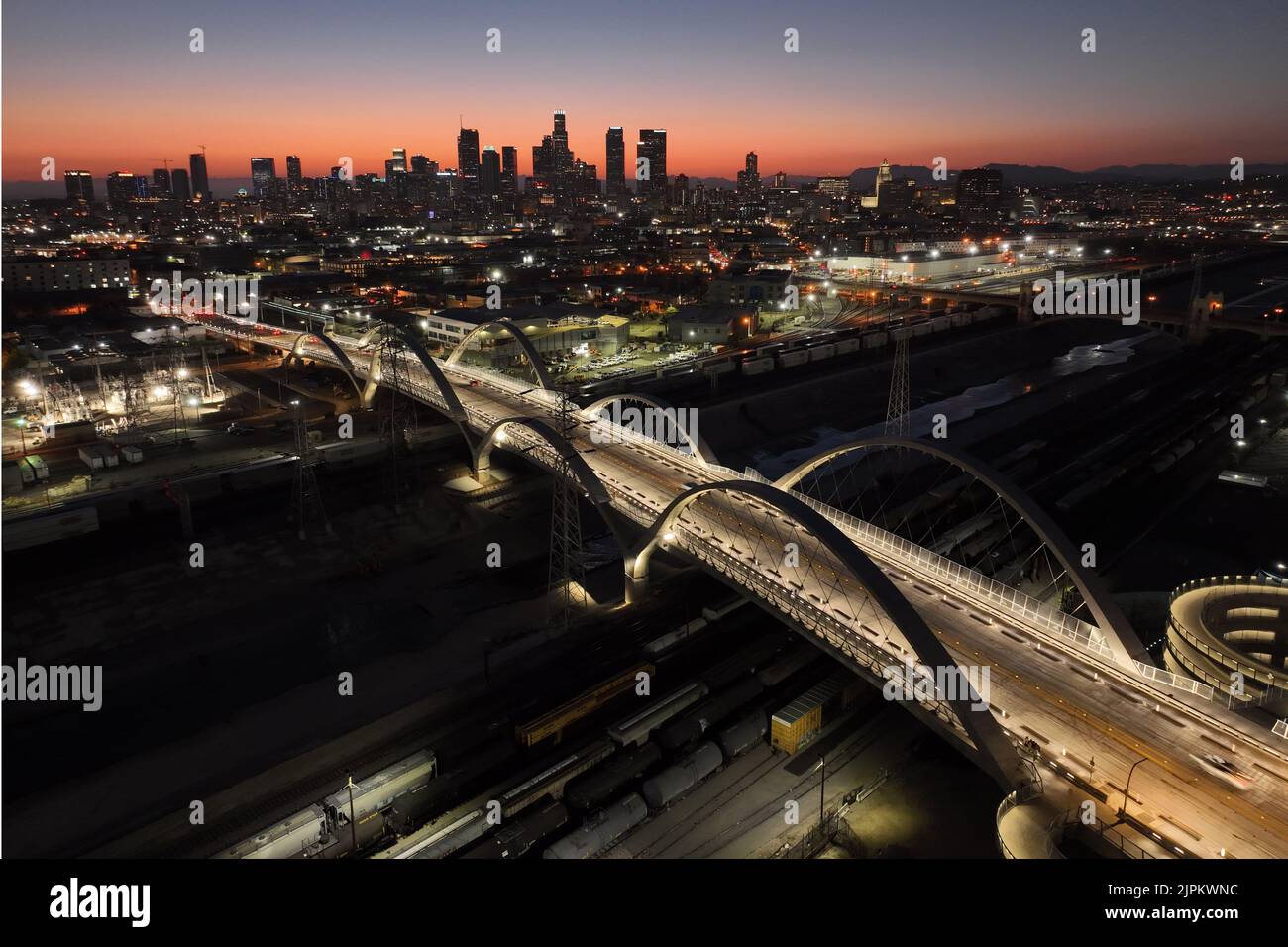
Los Angeles built the 3,500-foot Sixth Street Viaduct to stitch downtown Los Angeles to historic Boyle Heights. Instead, the concrete crossing became an open-air theater for burnout exhibitions, street takeovers, and dangerous social media spectacles. The city responded with intense municipal surveillance and tactical police interdictions. According to an investigative KTLA Report detailing falls and severe injuries along the structure, community scrutiny has peaked as families push back against assumptions that every tragedy stems from reckless thrill-seeking.
Managing the bridge has shifted from standard traffic patrol to containment strategies. Officers routinely execute coordinated tactical closures, boxing in dozens of vehicles during spontaneous takeovers. For tourists, commuting cyclists, and local drivers navigating the ribbon of arches across the Los Angeles River, the rules of passage have fundamentally changed.
📌 Quick Summary:
- Enforcement Surge: LAPD operations employ full-bridge blockades, executing mass citations and vehicle impoundments for unauthorized motorized gatherings.
- Infrastructure Upgrades: Physical anti-climb barriers, protective fencing, and permanent video surveillance curb illegal access to structural arches.
- Visitor Realities: Pedestrian walkways and protected bicycle tracks remain open under strict rules banning unpermitted motorized minibikes, stunts, and unpermitted commercial filming.
How the "Ribbon of Light" Became an Open-Air Thrill Zone
When the $588-million Sixth Street Viaduct opened to the public, city officials celebrated its ten pairs of sweeping concrete arches as an architectural triumph. Designed to replace the crumbling 1932 art deco viaduct, the crossing immediately drew pedestrian crowds eager to walk its broad sidewalks. Within days of ribbon-cutting, that civic optimism met the reality of Southern California car culture. Drivers spun drifting donuts in broad daylight, leaving thick loops of burnt rubber across fresh asphalt. Spectators blocked traffic lanes to film burnouts on handheld smartphones, streaming the chaos directly to digital platforms.
The bridge’s sweeping geometric arches presented an irresistible challenge for climbing influencers. Young thrill-seekers scaled narrow concrete spans without safety harnesses, balancing hundreds of feet above live railway corridors and riverbeds. In response to recurring accidents and chaotic conditions, the Los Angeles City Council and the Los Angeles Police Department (LAPD) instituted immediate rolling shutdowns, sometimes barring traffic for consecutive nights to clear road hazards and clean deliberate damage.
Inside the Minibike Takeovers and Tactical Perimeter Penning
Car clubs originally dominated the illicit gatherings, but unpermitted motorized minibikes soon overtook the viaduct. Crowds of customized, low-displacement bikes, pit bikes, and off-road quads swarmed the span, running through intersections and encircling stranded motorists. Because minibikes lack valid vehicle identification numbers (VINs), turn signals, and mirrors, their operation on public roads violates standard provisions of the California Vehicle Code.
To dismantle these organized gatherings, LAPD Central Division and Hollenbeck Division developed an aggressive containment doctrine known as LAPD perimeter penning. During an operation reported by CBS News and NBC Los Angeles, squads of marked cruisers swept both the Boyle Heights and downtown Los Angeles approaches simultaneously. Officers blocked escape routes across side streets and trapped riders mid-span. The resulting operation led to more than 70 citations issued in a single evening, alongside dozens of street takeover impounds. Deprived of escape corridors, riders forfeited non-street-legal minibikes on flatbed haulers, facing thousands of dollars in accumulated towing charges, storage assessments, and moving violations.
| Violation Category | Legal Classification | Penalties & Operational Impact |
|---|---|---|
| Street Takeovers & Sideshows | Cal. Veh. Code § 23109 (Exhibition of Speed) | Mandatory 30-day vehicle impounds, towing fees totaling $1,500, $2,800, potential misdemeanor booking. |
| Minibike & Pit Bike Operation | Cal. Veh. Code §§ 4000(a), 12500(a) | Direct citations, permanent property seizure for non-registered vehicles, moving violation entries. |
| Climbing Arch Infrastructure | LAMC § 63.44 / Cal. Penal Code § 602 (Trespass) | Arrest for criminal trespass, fines up to $1,000, potential jail time for repeated incidents. |
| Unpermitted Drone Flights | FAA Part 107 / City Drone Ordinances | Equipment confiscation, federal airspace civil penalties scaling from $1,100 to $11,000 per violation. |
The Structural Defense: Hard Barriers and Physical Retrofits
Public works officials quickly recognized that police cruisers alone could not solve structural design vulnerabilities. The city responded with substantial architectural modifications. Crews installed tall climb-deterrent fencing around the base of the arches to prevent thrill-seekers from gaining footholds on the concrete curves. Raised center medians received rounded curbing to make side-to-side drifting maneuvers mechanically destructive to passenger car suspensions.
Pedestrian safety barriers also received critical upgrades. Planners installed protective bollards and reinforced guard fencing separating traffic lanes from the dedicated pedestrian pathways and bike tracks. High-definition camera nodes linked to LAPD dispatch centers now monitor pedestrian and vehicle traffic 24 hours a day, alerting patrol units to staging takeovers before crowds block intersection chokepoints.
Navigating Boyle Heights Access and Community Safety
The bridge sits at an economic and cultural boundary, linking the rapidly gentrifying Arts District with working-class Boyle Heights. For neighborhood residents, recurring bridge closures have disrupted daily life. The crossing serves as a key arterial route for local buses, emergency vehicles heading to White Memorial Medical Center, and service workers commuting into downtown. Sudden street takeovers have repeatedly severed that connection, trapping local commuters in heavy gridlock.
Neighborhood councils have voiced frustration with how the viaduct is treated. Residents see the span as an essential neighborhood connector, not a play area for outside social media accounts. Increased law enforcement patrols curb reckless behavior, but heavy police presence along the Boyle Heights access points also increases scrutiny on ordinary drivers. Maintaining open passage while preserving safety remains a constant balancing act for district leadership.
Rules of Passage: Practical Guidance for Pedestrians, Cyclists, and Drivers
Visitors who want to enjoy the viaduct’s downtown skyline views can do so safely by following standard city regulations. The viaduct remains open to legal vehicular traffic, recreational walking, and active commuting throughout the day and night.
Permitted Activities: Walking along designated pedestrian promenades, crossing in protected bike tracks using pedal-assist e-bikes or standard bicycles, and casual smartphone photography from ground level.
Prohibited Activities: Operating unregistered minibikes, ATVs, or gas-powered go-karts anywhere on the bridge; scaling arch supports or structural cables; flying unpermitted commercial drones over lanes; and staging roadside vehicle exhibitions. Fines for illegal parking along bridge shoulders start at several hundred dollars, and LAPD tows unattended vehicles that block active lanes.
Frequently Asked Questions (FAQ)
Q1: Is the 6th Street Viaduct currently open to pedestrian and vehicle traffic?
Yes. The bridge operates normally for public traffic, cyclists, and pedestrians. LAPD conducts temporary closures late on weekend nights if unpermitted crowds attempt to block traffic, but standard access resumes once roadways are clear.
Q2: Can I ride an electric bike or scooter across the 6th Street Bridge?
Yes, provided it is a standard street-legal bicycle, Class 1, 3 e-bike, or personal electric stand-up scooter operated inside designated bike lanes. Gas-powered minibikes, pit bikes, quads, and motorized recreational toys without vehicle registration are strictly prohibited and face immediate confiscation.
Q3: What are the consequences of participating in a street takeover on the bridge?
Drivers participating in street takeovers face criminal misdemeanor citations, mandatory 30-day vehicle impoundments under California law, and towing and administrative storage fees that routinely top $2,000. Spectators congregating in the street can also receive municipal citations for obstructing public thoroughfares.
What Lies Ahead for the Viaduct Crossing
The Sixth Street Viaduct remains a vital engineering asset for Los Angeles, but it requires active management. City agencies have shifted from reactive closures to permanent structural fixes and fast-acting perimeter tactics. Construction on the public park spaces below the viaduct will soon bring new walking trails, sports courts, and river access to the surrounding neighborhoods. As those ground-level additions take shape, strict municipal enforcement on the roadway above aims to ensure the bridge functions as a dependable public lifeline, not an unlawful stunt track.
