Are Anonymous Texts Truly Untraceable? Digital Paper Trails and Carrier Records Exposed
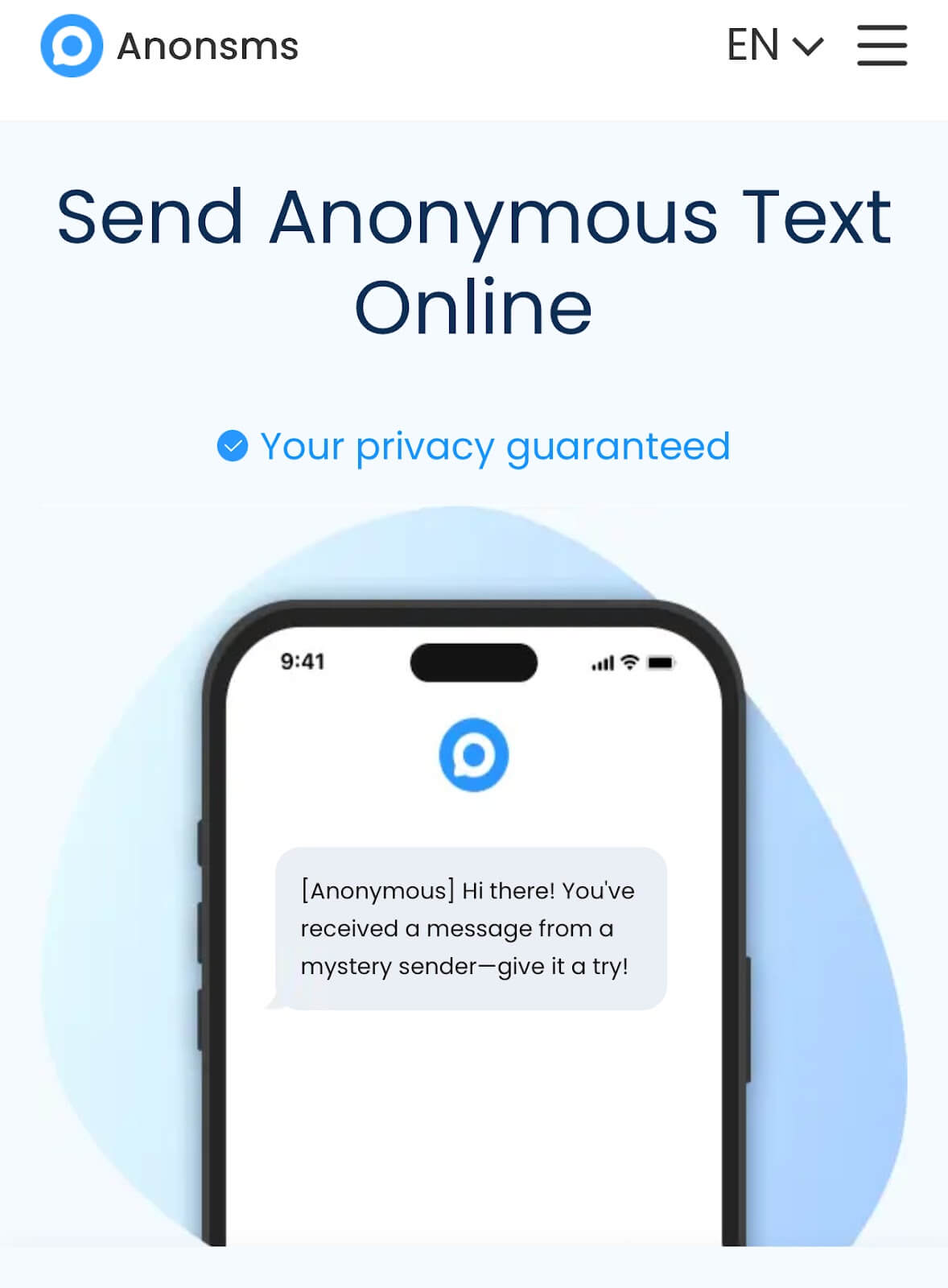
Every month, millions of users search for ways to send an anonymous text online free, hoping to shield their personal identities behind disposable virtual numbers or web-based messaging portals. The assumption that a standard text message can function as an untraceable text message remains remarkably stubborn. It is also technically incorrect. While masking a caller ID or generating a temporary number takes seconds on a smartphone, cellular networks and web hosting providers are built on persistent accountability.
Recent high-profile controversies have shattered the myth of mobile invisibility. In Pennsylvania, an aggressive political smear operation against state representative Chris Rabb unraveled after investigators traced masked messages back to state senator Sharif Street's campaign apparatus and Democratic party figures, a forensic paper trail documented in an inquirer.com Report. From local campaign warfare to international geopolitical intimidation, digital forensics experts routinely demonstrate that obfuscation is not erasure. Whenever a packet moves across the telecommunications grid, someone logs the transaction.
📌 Key Takeaways:
- Forensic Reality: Most free web portals and commercial burner phone apps capture originating IP addresses, device identifiers, and payment tokens that link directly to senders.
- Legal Mechanisms: Attorneys and law enforcement use a carrier records subpoena alongside web host discovery to puncture masked identities in civil defamation and criminal harassment cases.
- Structural Protections: Genuine anonymity requires zero-retention architectures, seen almost exclusively in specialized municipal services such as a crisis anonymous tip line.
The Architecture of SMS Metadata Logs and Carrier Gateways
Short Message Service (SMS) is an aging standard. Designed in the 1980s without end-to-end encryption, it relies on signaling channels managed directly by mobile network operators. When you send an SMS, the message payload represents only a fraction of the transmitted payload. Cellular towers, routing hubs, and Short Message Service Centers (SMSCs) immediately record operational data.
These SMS metadata logs catalog the International Mobile Equipment Identity (IMEI) of the handset, the International Mobile Subscriber Identity (IMSI) tied to the SIM card, and the exact cell tower azimuth that handled the connection. Telecom data retention policies in the United States and the European Union mandate that carriers store Call Detail Records (CDRs) for periods ranging from 12 to 24 months. Even if a user routes an alert through an intermediary, the transit pathway between the origination carrier and termination carrier remains fully documented in signaling transfer points.
Web-to-SMS portals operate under even tighter technical surveillance. When an individual accesses a website offering free texts, the web server writes the visitor's public IP address, user-agent string, and precise timestamp to server access logs. If the user fails to route traffic through an audited, non-logging virtual private network, their domestic internet service provider holds the exact subscriber record matching that IP allocation.
Political Warfare and Intimidation: The Illusion of Untraceable Texts
The belief that masked messages are immune to legal scrutiny has driven widespread misuse in local politics and foreign influence operations. In April 2026, an anonymous mass texting blitz targeted municipal officials in Jacksonville, Florida. While First Amendment attorneys noted that anonymous political speech frequently enjoys legal protections, as reported by News4JAX, civil discovery procedures routinely unmask the funding sources behind such operations when defamation or campaign finance violations are alleged.
Geopolitical actors lean into the same false sense of digital obscurity. In February 2026, thousands of citizens across Iran received threatening, unsigned mobile texts reading "US president man of action. Wait and see" following aggressive rhetoric from Washington, according to reporting by The Times of India. These state-adjacent campaigns often use third-party aggregator gateways to spray messages across regional telecommunication lines. Yet carrier tracing initiatives and STIR/SHAKEN call-authentication protocols quickly identify the commercial aggregators that lease access to these bulk pipelines.
In municipal races, unmasking happens even faster. In the Philadelphia campaign targeting Chris Rabb, political operatives relied on layered digital channels to broadcast attacks without explicit disclaimers. When campaign compliance boards and digital forensic specialists requested routing tables and financial disclosures, the intermediary layers dissolved. The digital paper trail led straight back to registered political committees.
Tracing the Tech: Burner Apps Versus Telecom Data Retention
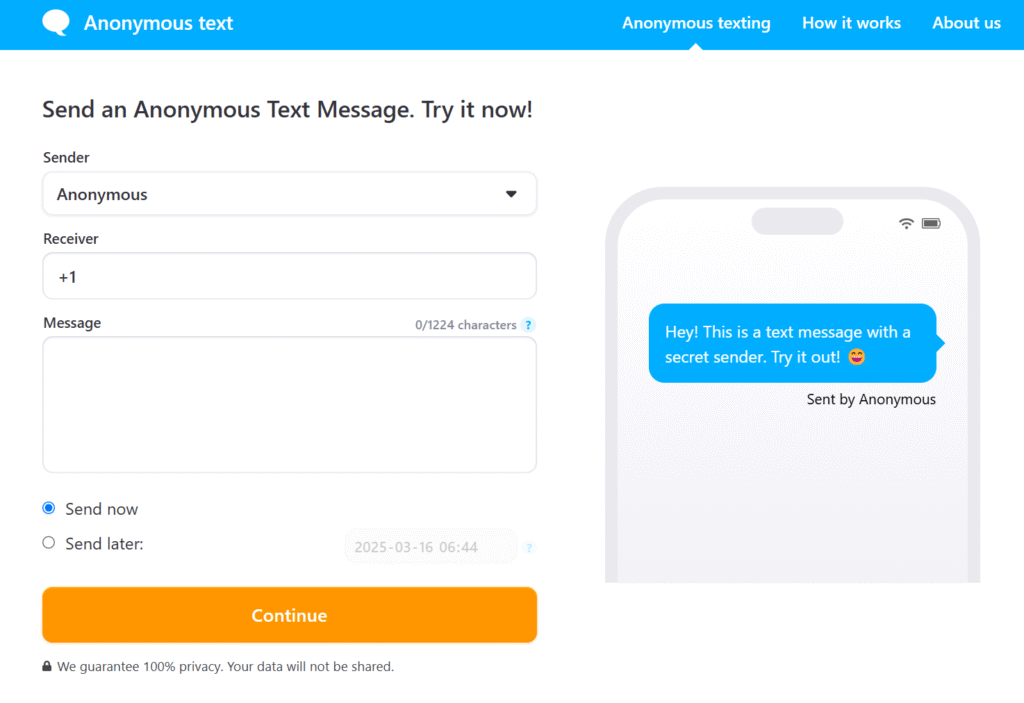
Users seeking to send an anonymous text typically turn to one of four methods: commercial smartphone apps, browser-based portals, spoofing platforms, or cash-bought prepaid phones. Each carries a radically different forensic risk profile.
| Messaging Channel | Retained Identifiers | Storage Window | Investigative Exposure |
|---|---|---|---|
| Free Web-to-SMS Portals | Source IP address, HTTP headers, browser cookies | 30, 90 days | High; resolved via simple ISP subpoena |
| VoIP Texting Services | Payment tokens, Google/Apple ID, device identifiers | 18, 36 months | High; tied directly to commercial app-store accounts |
| Spoofed Caller ID Gateways | Origination SIP headers, upstream gateway logs | 12, 24 months | Moderate to High; caught by automated STIR/SHAKEN traceback |
| Prepaid "Burner" Hardware | Cell tower triangulation, IMEI/IMSI pairing | 12, 24 months | Low to Moderate; requires CCTV or physical device seizure |
Most commercial burner phone apps are powered by business-tier Voice over IP (VoIP) providers such as Twilio, Bandwidth, or Sinch. When an end user buys disposable virtual numbers through an app, that app provider does not function as an offshore redoubt. They comply with court orders under standard terms of service. The user pays with Apple Pay, Google Pay, or a credit card, creating an undeniable financial signature long before the first text leaves the device.
How Subpoenas and Digital Forensics Pierce Virtual Numbers
The unmasking process follows a methodical legal and technical playbook. When a victim of harassment, extortion, or corporate espionage files a complaint, investigators begin with the recipient device. They pull the raw SMS header or incoming carrier log to determine the carrier of record for the sending number.
If the number belongs to a VoIP provider rather than a cellular giant like AT&T or Verizon, the attorney or detective issues a subpoena to that specific provider. Federal law under the Stored Communications Act (18 U.S.C. § 2703) allows legal entities to compel account details. The VoIP provider's records disclose the customer account that leased that virtual number, alongside the exact IP address tracking log used to register the session.
From there, the trail shifts to the internet service provider holding that IP address. Comcast, Charter, or mobile data carriers retain DHCP lease allocations linking dynamic IP addresses to physical service addresses. Unless the actor routed the traffic through nested, specialized anonymization networks without once leaking DNS queries or logging into personal accounts, the identity collapses. Even a spoofed phone number generated through specialized SIP trunking services leaves upstream signaling data in transit carrier switches that traceback consortia can unravel within hours.
When Discretion Matters: Public Safety and Overdose Prevention
Obscurity does have legitimate, life-saving applications when systems are explicitly engineered for metadata minimization. Public health initiatives across the country demonstrate that people in crisis avoid services if their phone numbers are tracked or cataloged by municipal authorities.
In January 2026, an initiative in Indianapolis proved how dedicated SMS infrastructure can reduce fatal overdoses by offering strict anonymity, as covered by Mirror Indy. By providing a channel where individuals can report contaminated drug supplies or ask for clean supplies without fear of police intervention, health workers build immediate trust. Crucially, these platforms do not use conventional commercial SMS backends. They deploy specialized gateways that hash or strip phone numbers before the data hits operator screens, preventing automated logging.
Crime reporting networks operate under similar parameters. When an anonymous tip line is configured properly, it severs the connection between the phone carrier's incoming CDR and the local law enforcement database. The recipient agency never sees the originating caller ID, and incoming packets pass through a one-way cryptographic salt. This distinction highlights an essential boundary: privacy works when the recipient intentionally builds walls against collection, not when a sender tries to outsmart carriers determined to log everything.
Strategic Privacy: Disposable Numbers for Everyday Safety
While an untraceable text message does not exist against a determined legal adversary, disposable virtual numbers provide an indispensable shield against casual intrusion, stalking, and consumer data aggregation.
Consumers selling furniture on peer-to-peer marketplaces or arranging dates through social platforms face genuine risks from reverse-phone-lookup databases. Exposing a personal cellular number gives bad actors immediate access to home addresses, family associations, and voter registration files. Using a secondary virtual number successfully breaks this consumer-level data chain.
The risk emerges when users confuse commercial privacy with legal immunity. A secondary number reliably fools an aggressive stranger or a corporate marketing scraper. It will not fool an internal affairs investigator, an election integrity monitor, or a carrier compliance team investigating network abuse.
Frequently Asked Questions (FAQ)
Q1: Can law enforcement trace a text sent from a free anonymous website?
A1: Yes. Web-to-SMS portals maintain internal connection logs that document originating IP addresses, connection timestamps, and device headers. Investigators serve subpoenas to the website hosting company to obtain those logs, followed by an ISP subpoena to reveal the physical billing address tied to the internet connection.
Q2: Does a VPN make an anonymous text completely untraceable?
A2: A VPN masks your home IP address, but it does not eliminate other forensic markers. If you use a commercial VoIP app, the service provider retains your account data, payment method (such as Apple Pay or Google Play credentials), and push notification tokens. Furthermore, modern browser fingerprinting can tie web sessions to established identities even across encrypted tunnels.
Q3: Is it illegal to send an anonymous text message?
A3: Masking your phone number is not inherently illegal. Millions use secondary numbers daily for business privacy or classified advertisements. However, using masked numbers to commit harassment, deliver death threats, execute fraud, or orchestrate non-compliant political campaign outreach violates state and federal telecommunications statutes, rendering the sender subject to criminal charges and civil litigation.
The Structural Realities of Telecommunications in 2026
The telecommunications grid was never designed to be an anonymous communications medium. Cellular towers exist to coordinate radio frequencies with physical hardware, and that architecture requires precise, continuous tracking of network assets. While consumer privacy tools offer critical buffers against identity theft and nuisance tracking, they operate atop an unforgiving foundation of data retention.
Any individual or organization attempting to use masked texting for malicious purposes is betting against decades of forensic protocol. As digital tracing methods become more automated, the gap between perceived obscurity and actual identification shrinks to near zero. Every text message creates a digital paper trail; the only variable is how motivated someone is to read it.
