Beyond the Canal: The Global Superstars You Never Knew Were Born in Panama
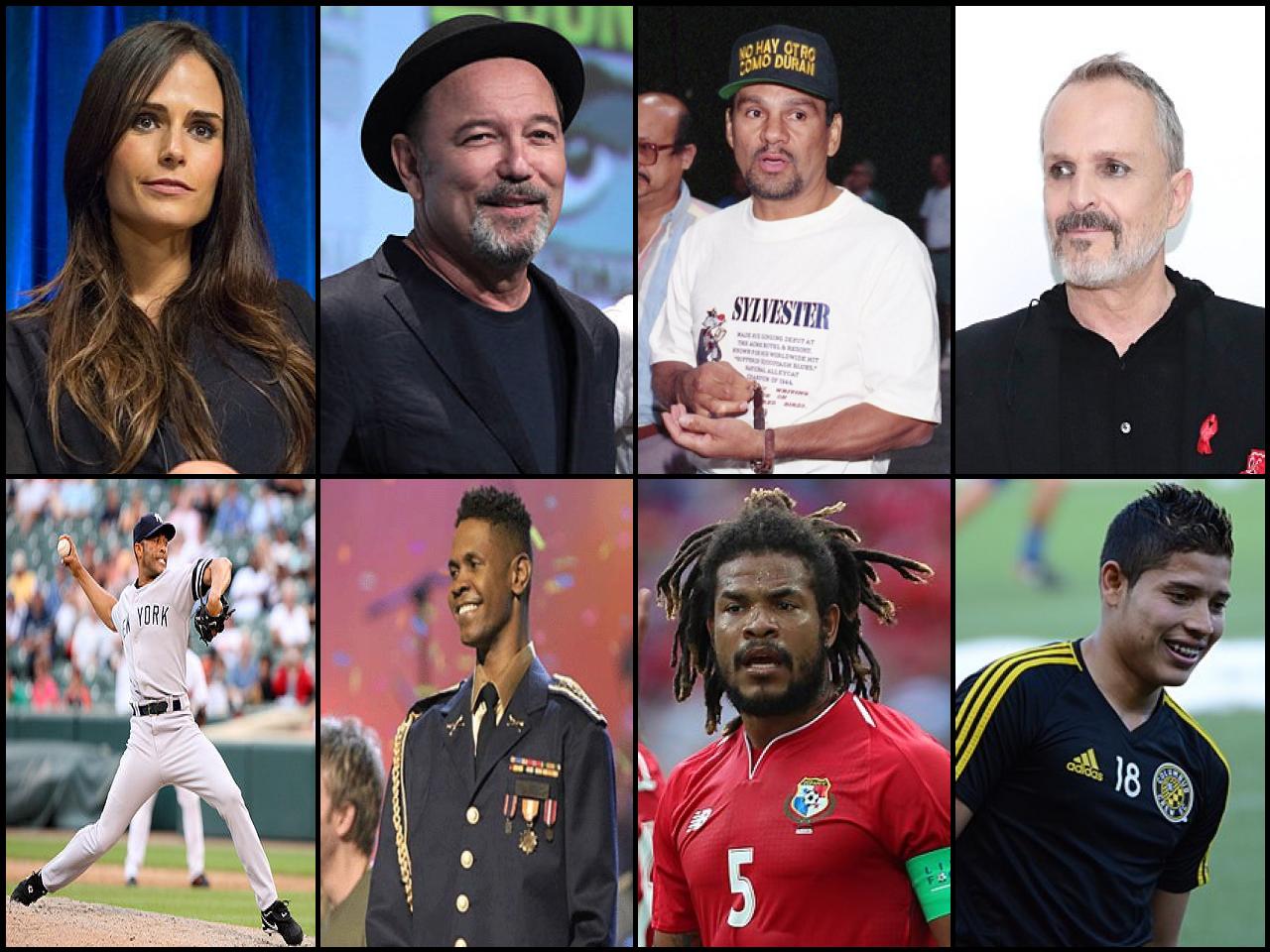
For a nation of 4.4 million residents spanning a narrow strip of land between two oceans, Panama exercises an outsized gravitational pull on international culture. While domestic news cycles in the United States sometimes highlight local namesakes, such as civil rights retrospectives reported by a mypanhandle.com Report covering regional events in Panama City, Florida, the sovereign Central American republic itself has exported icons who reshaped sports, cinema, sound, and geopolitics.
Its soil produced the greatest relief pitcher in baseball history, the most ferocious pound-for-pound fighter of the 20th century, and the intellectual pioneer who changed Latin jazz forever. Panamanian celebrities do not merely represent local talent made good; their careers reflect the complex collisions of global migration, maritime trade, and distinct neighborhood subcultures that define the country.
📌 Key Takeaways:
- Athletic Dominance: Panama claims two elite members of the National Baseball Hall of Fame, including history's only unanimous inductee, and one of the most prolific world champion boxers in modern history.
- Sovereignty and Birthrights: The geopolitical anomaly of the former Panama Canal Zone created unique constitutional history, serving as the birthplace for high-profile figures such as US Senator John McCain.
- Artistic Reach: Panamanian figures have secured multiple Latin Grammy Award honors, starred in multi-billion-dollar Hollywood franchises, and shaped international social policy.
Mariano Rivera and Rod Carew: Cooperstown's Isthmian Royalty
Panama’s footprint inside the National Baseball Hall of Fame in Cooperstown carries historic weight. The country has produced two of the sport’s most technically dominant athletes, each arriving at the major league level through distinct eras of Panamanian development.
Mariano Rivera grew up in the fishing village of Puerto Caimito. As an adolescent, he threw rocks to condition his arm and constructed gloves out of cardboard and discarded fish-cart strapping. Signed by the New York Yankees in 1990 for an unassuming bonus of $3,000, Rivera spent 19 seasons mastering a single pitch: the cut fastball. By the time he threw his final pitch in 2013, Rivera had collected 652 regular-season saves and recorded an unprecedented 0.70 postseason ERA across 141 innings. In 2019, Rivera became the first player ever elected to the Hall of Fame by a 100% unanimous ballot from the Baseball Writers' Association of America.
Decades before Rivera's dominance, Rod Carew established the gold standard for pure contact hitting. Born in 1945 on a segregated train carriage traveling through the town of Gatun in the Panama Canal Zone, Carew was delivered by a physician named Dr. Rodney Cline, the namesake he carried throughout his life. Carew collected 3,053 hits, won seven American League batting titles, and maintained a lifetime batting average of .328 across 19 seasons with the Minnesota Twins and California Angels. Inducted into Cooperstown in 1991, Carew cemented Panama’s status as an undisputed exporter of elite athletic talent.
Roberto Durán and the Fighting Grit of El Chorrillo
Few athletes embody their country’s urban pulse like Roberto Durán. Raised in the impoverished El Chorrillo neighborhood of Panama City, Durán earned the moniker Manos de Piedra (Hands of Stone) through an unrelenting offensive style defined by inside fighting, devastating combinations, and defensive slipping.
Durán turned professional in 1968 at age 16, fighting for minimal purses to support his family. Over a career spanning five separate decades, he compiled a record of 103 wins and 16 losses, with 70 knockouts. Durán captured world titles across four divisions:
- Lightweight (1972, 1979): Regarded by historians as the most dominant lightweight championship run in boxing history.
- Welterweight (1980): Dethroned Sugar Ray Leonard in the famous "Brawl in Montreal."
- Junior Middleweight (1983): Stopped Davey Moore in an emotional victory at Madison Square Garden.
- Middleweight (1989): Defeated Iran Barkley at age 37 in a fight named Ring Magazine’s Fight of the Year.
Durán was more than a prize fighter; he was a national symbol during an era when Panama negotiated full sovereignty over its transoceanic waterway. His battles in the ring mirrored the political resilience of a country defining its identity on the world stage.
Rubén Blades: Salsa Pioneer, Harvard Scholar, and Statesman
The intersection of music and political thought in Latin America finds its clearest expression in Rubén Blades. Born in Panama City in 1948, Blades began his musical development performing in local clubs before earning a law degree from the University of Panama. Relocating to New York City, he initially worked in the mailroom of Fania Records while waiting for an opportunity to compose and record.
Blades transformed salsa from dance-hall entertainment into socially conscious literature. His 1978 collaborative album with trombonist Willie Colón, Siembra, sold over 3 million copies, driven by the sprawling narrative of "Pedro Navaja", an eight-minute track detailing street violence and economic disparity in Spanish Harlem.
Blades did not restrict his intellectual life to the recording studio. In 1985, he earned a Master of Laws in International Law from Harvard Law School. In 1994, he mounted an independent campaign for the presidency of Panama, securing nearly 20% of the national vote with his party, Movimiento Papa Egoró. He later served as the nation's Minister of Tourism from 2004 to 2009. With over 20 Grammy and Latin Grammy Awards, along with high-profile screen roles including a long-running performance on AMC’s Fear the Walking Dead, Blades represents an archetype: the artist as public intellectual and global statesman.

The Panama Canal Zone and the Birth of John McCain
The political history of the Panama Canal Zone, an unincorporated territory controlled by the United States between 1903 and 1979, produced a constitutional quirk during the 2008 United States presidential election. The late US Senator John McCain was born on August 29, 1936, at the Coco Solo Naval Air Station hospital within the Canal Zone, where his father was stationed as a naval officer.
Because Article II of the US Constitution mandates that the president must be a "natural-born citizen," McCain's foreign birth triggered intense scrutiny from legal scholars. In April 2008, the United States Senate unanimously approved Senate Resolution 511, confirming that McCain was a natural-born citizen under the statutory framework granting citizenship to children born to American military personnel serving abroad.
The Canal Zone enclave functioned as a distinct political landscape until the Torrijos-Carter Treaties phased out American administration, culminating in the complete handover of the canal to Panamanian jurisdiction on December 31, 1999. McCain's origin remains one of the clearest examples of how the territory bridged American administrative presence and Central American geography.
Hollywood and Global Pop Culture Connections
The modern entertainment industry includes several prominent names whose Panamanian roots often go unnoticed by mainstream audiences.
Screen actress Jordana Brewster, widely recognized for her portrayal of Mia Toretto in the multi-billion-dollar Fast & Furious film franchise, was born in Panama City in 1980. Brewster spent her early infancy in Panama, where her American investment banker father and Brazilian model mother Maria João were living at the time, before the family relocated to London and later Rio de Janeiro.
In theater and the arts, Daphne Rubin-Vega made Broadway history by originating the role of Mimi Marquez in Jonathan Larson’s Pulitzer Prize-winning musical Rent in 1996, earning a Tony Award nomination. Born in Panama City, Rubin-Vega brought an urban Latin rhythm directly inspired by her early roots to Manhattan's stages. Other figures, such as dancehall and urban music pioneers like El General (Edgardo Franco), laid the foundational beats in Panama during the early 1990s that would later morph internationally into reggaeton, proving that the nation's cultural contributions extend deep into contemporary radio playlists.
Comparing Global Icons Born on Panamanian Soil
Panama's international achievers span sports, statecraft, and entertainment. The timeline below illustrates the scope and variety of their global achievements:
| Figure | Birthplace | Primary Field | Career Highlight |
|---|---|---|---|
| John McCain | Coco Solo (Canal Zone) | US Politics / Military | 2008 Republican Presidential Nominee; six-term US Senator |
| Rod Carew | Gatun (Canal Zone) | Major League Baseball | 3,053 hits; 7 AL batting titles; 1991 Hall of Fame inductee |
| Rubén Blades | Panama City | Music / Public Policy | 20+ Grammy & Latin Grammy wins; Harvard Law LL.M.; Cabinet Minister |
| Roberto Durán | El Chorrillo, Panama City | Professional Boxing | 4-division world champion; 103 career professional victories |
| Mariano Rivera | Puerto Caimito | Major League Baseball | MLB-record 652 saves; first 100% unanimous Hall of Fame inductee |
| Jordana Brewster | Panama City | Film & Television | Star of the global Fast & Furious franchise |
Frequently Asked Questions (FAQ)
Was John McCain legally eligible to serve as US President despite being born in Panama?
Yes. While McCain was born in the Panama Canal Zone at Coco Solo Naval Hospital, he was born to two US citizens. Furthermore, Congress established retroactive statutory citizenship for individuals born in the Canal Zone to American parents under title 8 of the United States Code. In 2008, the US Senate confirmed this bipartisan consensus by passing Senate Resolution 511.
How many Panamanian-born players are in the Baseball Hall of Fame?
Two native-born Panamanian athletes are inducted into the National Baseball Hall of Fame in Cooperstown: Rod Carew, inducted in 1991, and Mariano Rivera, inducted in 2019. Rivera holds the distinction of being the first and only player elected unanimously by the voting body.
What is the connection between Panama and the origins of Reggaeton?
Panama was the birthplace of reggae en español during the late 1970s and 1980s. Afro-Panamanian artists like Renato, Chicho Man, and El General translated Jamaican dancehall and reggae riddims into Spanish, blending them with local urban themes. This musical movement traveled to Puerto Rico, where producers combined it with hip-hop beats to create modern reggaeton.
Did Jordana Brewster live in Panama throughout her childhood?
No. While Jordana Brewster was born in Panama City in 1980, her family relocated to London when she was two months old, and later lived in Rio de Janeiro before moving to Manhattan when she was ten.
The Enduring Cultural Footprint of the Isthmus
Panama’s influence across global culture stems directly from its geographic identity. Long positioned as the bridge of the Americas and the transit hub between the Atlantic and Pacific, the isthmus absorbs external traditions while exporting distinctive creative forces.
Its cultural legacy cannot be understood through shipping statistics alone. The resilience of Roberto Durán inside the ropes, the precision of Mariano Rivera at the mound, the political poetics of Rubén Blades, and the accidental geopolitical status of John McCain all stem from a country spanning less than 30,000 square miles. Panama proves that a nation's global impact is not determined by its landmass, but by the generational reach of the individuals who leave its shores.
