Big Fig Mattress Buyer’s Guide: Firmness, Break-in Period, and Warranties
Standard mattresses sold by direct-to-consumer bedding brands routinely fail sleepers who weigh over 200 pounds. Soft comfort layers compress permanently within eighteen months, creating deep body impressions that leave hips sinking into rigid base foam and spine alignment ruined. The Big Fig mattress was built specifically to counter this structural decay, engineered from base to surface for plus-size bodies and couples needing serious support. Recent head-to-head evaluations, including the latest Mattress Clarity Report, highlight how heavy-duty builds handle chronic pressure points over years of daily use.
Evaluating this hybrid requires looking past standard showroom marketing and examining raw structural specs. With a total weight capacity limit of 1,100 pounds across two sleepers, or 550 pounds for an individual sleeper, the Big Fig operates on an entirely different mechanical threshold than conventional retail beds. Understanding its real feel, long-term durability, and unique setup demands helps prospective buyers determine whether its uncompromising firmness solves their aches or feels like sleeping on a concrete slab.
📌 Key Takeaways:
- Firmness Profile: Sits at a true 7.5 to 8 out of 10 on the mattress firmness scale, requiring a deliberate adjustment period before comfort layers yield.
- Core Durability: Combines 1,600 individually pocketed coils with 16 hand-tufts and 1.8-to-2.5 lb high-density polyfoam to eliminate sagging resistance failures.
- Foundation Demands: Requires a specialized foundation supporting at least 1,200 pounds; standard flexible wooden slats will bow and void the 20-year warranty.
- Trial and Return Realities: Backed by a 120-night sleep trial period with a mandatory 30-night break-in window before return requests can be initiated.
Why Standard Mattresses Fail Heavy Sleepers Within Two Years
Most modern bed-in-a-box products use low-density memory foams clocking in around 2.5 to 3.0 pounds per cubic foot (PCF) and coil gauges hovering around 14 to 15. For average-weight sleepers, these materials cushion pressure points adequately. For heavyweight sleepers weighing between 230 and 450 pounds, those light foams break down fast under sustained pressure. The polyurethane cell structure collapses, creating permanent troughs where the torso and hips rest.
This mechanical breakdown causes lumbar hyperextension. As the pelvis sinks deeper than the shoulders, the natural S-curve of the spine flattens, triggering chronic morning back stiffness and hip discomfort. When independent laboratories and consumer testing groups evaluate long-term mattress resilience, foam softening is the leading cause of early disposal. Standard warranty language frequently excludes impressions shallower than 1.5 inches, leaving owners stuck sleeping in hollowed-out divots that do not technically meet the threshold for replacement.
Big Fig was created by a fourth-generation mattress manufacturing family in Cleveland, Ohio, to correct these specific structural flaws. Instead of simply making a traditional mattress thicker, the design reinforces every component that takes repetitive load. The construction focuses entirely on resisting mechanical shear, dampening partner disturbance, and preserving spinal neutrality for sleepers who overpower conventional retail beds.
Real Firmness Ratings and the Initial Break-in Period
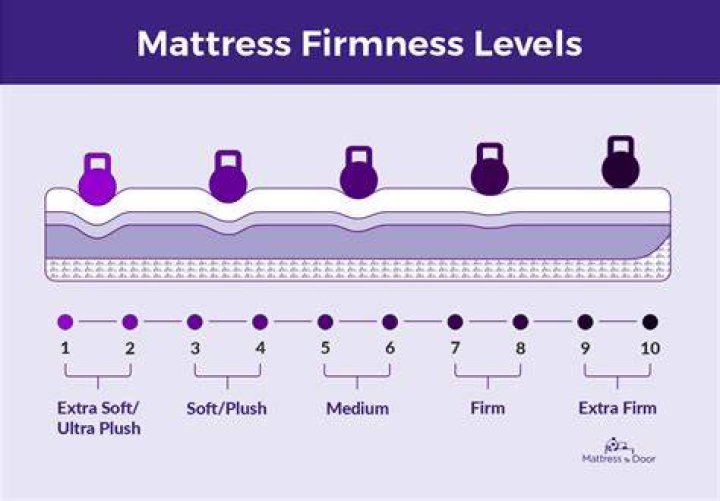
Marketing sheets label the Big Fig as a "medium firm," but real-world testing proves that label misleading. On the standard 10-point mattress firmness scale, where 1 is cloud-soft and 10 is unyielding wood, the Big Fig measures at a stiff 7.5 to 8. Sleepers under 200 pounds will experience it as an outright 8.5 or 9, floating on top of the surface without compressing the comfort layers enough to engage the contouring foams.
For back sleepers weighing over 250 pounds, this rigidity provides immediate back pain relief. The firm pushback keeps the lumbar spine lifted and straight, preventing the pelvis from dipping. Heavy stomach sleepers also benefit directly, as the stiff surface stops hyperextension in the lower spine. Side sleepers, however, face a distinct trade-off. Unless a side sleeper carries substantial weight in the shoulders and hips, the bed can produce harsh pressure against the shoulder joints during the first several weeks.
The required break-in period is real and often jarring. Right out of the box, the dense polyfoams and prestressed coils feel exceptionally unyielding. It takes roughly 30 to 45 nights of continuous use for the hand-tufted materials to relax and adapt to body contours. Buyers shifting from a broken-down, sagging pillowtop often experience transient soreness during week two as back muscles adapt to proper spinal alignment.
Structural Engineering: Big Fig vs. Helix Plus and Standard Hybrids
The longevity of the Big Fig comes from the chemistry of its foam layers, mechanical coil gauge, and external structural ties. Instead of gluing flat foam slabs together, Big Fig installs 16 tufts driven straight through the entire 13-inch profile. These physical tufts lock the comfort layers to the coil unit, preventing internal shifting, bunching, and foam drift.
The coil base utilizes a pocketed coil system with up to 1,600 coils in a king size, manufactured with 15-gauge wire that delivers significantly higher pushback than conventional pocketed springs. Surrounding that internal core is an ultra-dense foam encasement delivering exceptional edge support, allowing sleepers to utilize the entire surface area without feeling like they are sliding off the side when sitting or sleeping near the perimeter.
| Specification Metric | Big Fig Hybrid | Helix Plus (Key Competitor) | Standard Retail Hybrid |
|---|---|---|---|
| Weight Capacity | 1,100 lbs total (550 lbs per side) | 1,000 lbs total (500 lbs per side) | 500, 600 lbs total (250 lbs per side) |
| Firmness Rating | 7.5, 8.0 out of 10 (Firm) | 6.5, 7.0 out of 10 (Medium-Firm) | 5.5, 6.0 out of 10 (Medium) |
| Foam Density Specs | High-density polyfoam (1.8, 2.5 PCF) + Gel Latex | High-density memory foam (2.5, 3.75 PCF) + Dynamic Foam | Standard polyfoam (1.2, 1.5 PCF) |
| Surface Construction | Hand-tufted with 16 nylon ties | Smooth, stretch-knit quilted top | Glued flat layers, non-tufted |
| Warranty Coverage | 20-year non-prorated (0.75-inch indentation) | 15-year limited warranty | 10-year limited (1.5-inch indentation) |
A direct Helix Plus comparison clarifies how feel diverges within the heavy-duty category. While the Big Fig relies on firm, elastic perforated gel-infused latex over dense polyfoam, the Helix Plus incorporates higher-density memory foam in its transition layers. Sleepers looking for a slightly softer surface sink with traditional memory foam hug will prefer the Helix Plus, which clocks closer to a 7 out of 10. Conversely, those seeking an on-top-of-the-bed sensation with springy resilience and maximum airflow benefit more from the Big Fig's latex-hybrid setup.
Foundation Requirements and Preventing Frame Failure
Dropping a 120-pound mattress onto a rickety base creates catastrophic structural failure within months. Heavy sleepers frequently blame their mattress for sagging when the underlying foundation is bowing out of sight. The Big Fig mattress weighs roughly 116 pounds in Queen and 144 pounds in King, not including the sleepers resting on top of it.
Using an old, flexible box spring will immediately compromise support. Traditional box springs have give; the Big Fig requires absolute rigidity. The manufacturer's proprietary foundation uses solid wood framing with 18 wooden slats spanning 2.5 inches wide, reinforced with double center rails and capable of carrying up to 1,200 pounds.
If choosing an existing bed frame or modern platform, verify these structural minimums:
- Slats must be thick, solid wood spaced no more than 3 to 4 inches apart.
- The bed frame must feature a heavy-duty center support rail equipped with at least two floor-contact legs.
- Wire grid platforms and curved euro-slats must be avoided, as wire decks bend under concentrated weight and void the mattress coverage.
Warranty Terms, Return Fine Print, and the 120-Night Trial
Sleep trials offer peace of mind, but returning a mattress built for heavy individuals requires careful attention to the logistics and policy requirements. Big Fig provides a 120-night sleep trial period, matching standard industry timelines. However, buyers cannot simply request an instant pickup three days after delivery.
The company enforces a mandatory 30-night break-in policy. You must sleep on the mattress for a full month before initiating a return or exchange. This policy exists because the high-density polyfoam and perforated latex require weeks of continuous body heat and pressure to break in properly. If, after night 30, you find the mattress genuinely unsuitable, Big Fig arranges a removal service and issues a full refund without restocking fees.
The long-term safety net is its 20-year warranty. Most ten-year manufacturer warranties only cover sagging if a dry measuring string demonstrates a sag of 1.5 inches without weight on the bed. In contrast, Big Fig covers any visible indentation greater than 0.75 inches, half the industry-standard defect depth. Furthermore, the warranty is non-prorated, meaning Big Fig covers repair or replacement costs entirely throughout the 20-year span rather than reducing payout percentages over time. Stains or improper base support will immediately void this coverage.
Frequently Asked Questions (FAQ)
Q1: Is the Big Fig mattress too firm for side sleepers?
A1: For side sleepers weighing under 200 pounds, it is generally too firm and can produce pressure points along the shoulders and hips. Side sleepers over 250 pounds compress the comfort layers enough to achieve comfortable spinal neutrality once the mattress finishes its initial 30-day break-in phase.
Q2: Does the Big Fig sleep hot compared to standard all-foam beds?
A2: No. The Big Fig sleeps noticeably cooler than traditional memory foam models. Its construction incorporates a ThermoGel treated cover, perforated latex foam that vents heat, and an open pocketed coil interior that allows constant airflow through the center of the bed.
Q3: Can I place the Big Fig mattress on an adjustable bed base?
A3: Yes. Despite its thickness and hand-tufting, the pocketed coil system is fully compatible with heavy-duty adjustable bases. Ensure the adjustable mechanism itself is rated for the combined weight of the mattress and its occupants.
Making the Call on Big Fig for 2026
The Big Fig remains an unapologetically purpose-built sleep system. It intentionally ignores the plush, sinking feel favored by mass-market bed brands to deliver durability, rigid support, and long-term sagging resistance.
Heavier back sleepers, plus-size couples, and stomach sleepers who regularly destroy standard retail mattresses will find the engineering behind the Big Fig worth the investment. The hand-tufted build, high-density comfort stack, and lower 0.75-inch warranty threshold address the structural failure points common to direct-to-consumer bedding.
Prospective buyers should skip this bed if they prefer a plush, body-molding hug, or if their combined sleeping weight falls under 350 pounds. For everyone else struggling with sinking beds and misaligned spines, pairing this dense hybrid with an equally sturdy foundation delivers a stable, supportive sleep setup that lasts.
