Birdies Hot Chicken Rapid Expansion: The Secret Fueling East Coast Growth
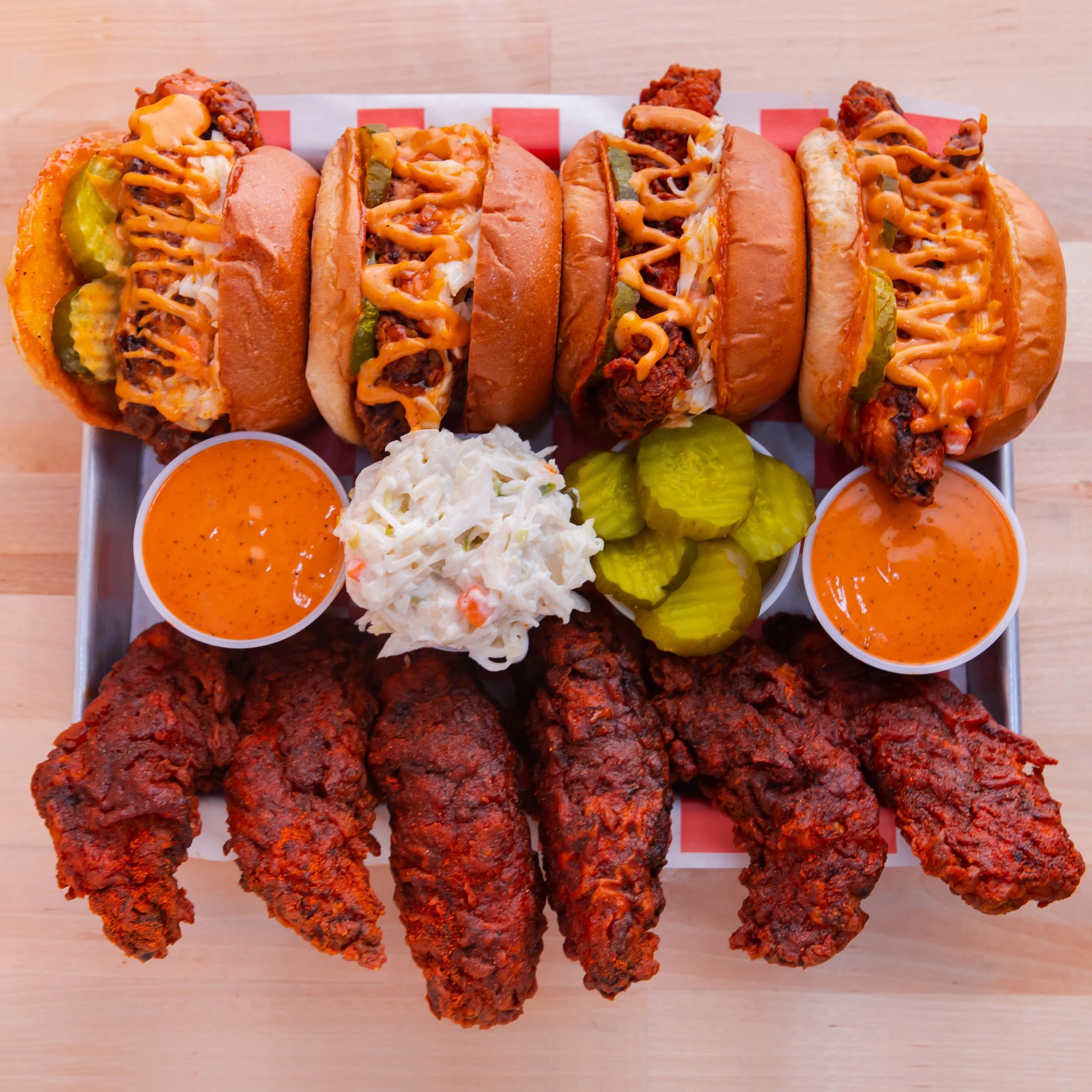
The sidewalk line in downtown Boston moves quickly, but the smell of toasted cayenne, vinegar brine, and sizzling oil travels faster. Just after the midday rush, workers unbox trays of oversized chicken tenders coated in a deep mahogany crust, placing them onto griddled brioche buns alongside neon-yellow pickles and shredded cabbage slaw. Similar scenes played out across the Northeast throughout 2024 and 2025, and the momentum has now pushed southward. As documented in a recent Eater Washington DC Report, the brand's arrival in competitive mid-Atlantic markets like Alexandria signals a deliberate, well-funded territorial offensive against legacy poultry chains.
Birdies Hot Chicken is executing an aggressive push across the East Coast corridor. By parlaying viral social engagement into real estate foot traffic, the brand has sidestepped the quiet growth curves typical of regional fast-casual dining. Their operational model relies on limited menus, high-volume production, and escalating spice heat levels that double as digital marketing fuel. In a dining market where consumer spending faces mounting pressure, Birdies is securing high-density retail leases, drawing both dedicated suburban diners and college-town crowds.
📌 Key Takeaways:
- The Footprint: Rapid real estate acquisitions in Massachusetts, Connecticut, and Virginia demonstrate an intentional push into regional hubs outside traditional Southern territories.
- The Operational Edge: An intentionally narrow menu, anchored by chicken tenders, sliders, crinkle-cut fries, and signature sauce, keeps prep times under 4 minutes while optimizing kitchen throughput.
- The Saturation Challenge: Fast-casual chicken concepts face mounting competition from national brands, requiring Birdies to defend its regional brand loyalty against high customer acquisition costs.
How Nashville Spice Conquered Northern Urban Corridors
Nashville-style hot chicken traces back nearly a century to Prince's Hot Chicken Shack in Tennessee, where cayenne-paste-fried poultry served over white bread with pickles operated as a community staple. For decades, the dish remained tied to its geographic roots. That changed when modern fast-casual mechanics decoupled the flavor profile from full-service southern kitchens, transforming it into a high-speed, portable street food format.
Birdies Hot Chicken timed its emergence to catch a broader shift in diner preferences. Consumers across northern metropolitan areas increasingly bypass traditional, mildly seasoned fast-food chains in favor of heavy seasonings and customizable heat profiles. When MassLive reported on the brand expanding into the Boston location pipeline in early 2024, local food observers saw a deliberate bet on younger demographics willing to wait in line for fiery tenders. Rather than launching with sprawling dining rooms, Birdies prioritized high foot-traffic storefronts near student housing and commercial plazas.
The culinary profile relies on lard- or oil-based pastes mixed with heavy doses of cayenne, garlic powder, paprika, and brown sugar applied immediately after frying. The heat is direct and lingering. For northern markets once considered risk-averse toward assertive spice, the rapid lines across New England proved that regional heat thresholds had fundamentally shifted.
Inside the Rapid Expansion from Massachusetts to Alexandria
The brand's northern anchor expanded methodically before jumping regional boundaries. In early 2025, SouthCoastToday documented the arrival of a New Bedford opening, highlighting how Birdies pushed into mid-sized coastal communities rather than sticking exclusively to dense tier-one city centers. By bringing Nashville-style spicy chicken to Massachusetts working-class hubs, the chain built strong local word-of-mouth before legacy operators could plant their own flags.
From those Massachusetts bases, Birdies initiated its southern push down Interstate 95. Entering Alexandria, Virginia, placed the concept square in the crosshairs of the greater Washington, D.C. dining scene, one of the country's most cutthroat fast-casual battlegrounds. The Virginia launch showed that the company was not content to remain an idiosyncratic New England novelty.
Securing second-generation restaurant spaces, properties already fitted with commercial hoods, grease traps, and walk-in freezers, allowed Birdies to slash build-out timelines from an industry-standard 9 months down to under 14 weeks in several locations. This low-overhead agility allowed rapid store openings without the massive capital outlays that often sink young franchise expansions.
The Flavor Engine: Heat Scale, Crinkle-Cut Fries, and Secret Sauce
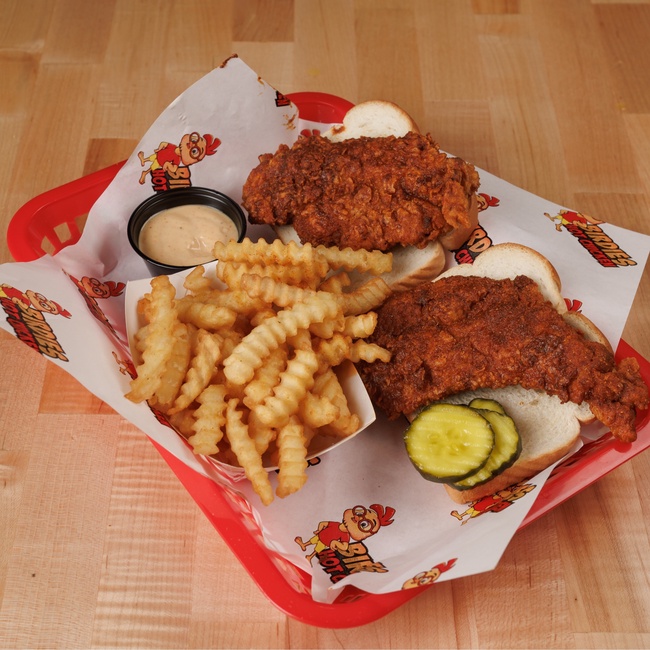
The operational model at Birdies thrives on intentional simplicity. Its core menu relies on essentially four items executed at volume: chicken tenders, sliders, seasoned crinkle-cut fries, and proprietary dipping cups. By eliminating complex sides, the prep line runs with assembly-line precision.
[Buttermilk Marinated Tenders]
│
▼
[Pressure-Deep Frying]
│
▼
[Custom Cayenne Oil Dip] ──► Select Heat: Country to Extra Hot
│
▼
[Final Build: Sliders on Brioche + Slaw + Pickles + Birdies Sauce]
Heat customization sits at the center of the ordering experience. Customers select from defined thresholds:
- No Heat / Country: Classic southern-style batter with garlic, sea salt, and black pepper.
- Mild: Gentle warmth driven by paprika and low-ratio cayenne.
- Medium: The menu's core benchmark, balancing pepper sting with visible brown sugar sweetness.
- Hot: Noticeable capsaicin hit with heavy cayenne coats that induce a lingering burn.
- Extra Hot / Reaper: Heavy oil dip infused with ghost pepper and habanero powders, requiring waiver-style marketing notices.
The signature sauce provides crucial temperature and acid contrast to the spice. A mayonnaise base blended with yellow mustard, Worcestershire sauce, pickle brine, and a touch of smoked paprika cuts directly through the rich fat of the fried poultry. Paired with crinkle-cut fries, engineered with maximum surface ridges to hold dry seasoning without wilting inside steam-vented takeout containers, the menu delivers sensory consistency across every order.
Tracking the Regional Real Estate Strategy: 2023, 2026
Birdies balanced its market entry by targeting a blend of urban infill spaces and dense suburban transit nodes across the Northeast and Mid-Atlantic.
| Location Node | Launch Window | Format Type | Core Customer Driver |
|---|---|---|---|
| Greater Boston (MA) | 2024 | Urban storefront, counter-order | Collegiate foot traffic & late-night dining |
| New Bedford (MA) | 2025 | Suburban strip center | Family takeout & local retail corridor |
| Alexandria (VA) | 2026 | Mixed-use commuter node | Lunch crowd & delivery delivery density |
| Mid-Atlantic Infill | 2026 | Express footprint / low seat-count | Digital delivery apps & grab-and-go |
The geographic distribution indicates an avoidance of exorbitant flagship rent traps. Instead of leasing ultra-prime tourist corridors with punishing baseline expenses, Birdies prioritized locations accessible to late-night delivery fleets and neighborhood foot traffic.
The Tight Margins Behind Fast-Casual Chicken Supremacy
Running a profitable poultry concept in the mid-2020s demands strict cost controls. Wholesale boneless poultry breast meat has historically been subject to volatile price swings. Yet, tenders and sliders offer superior yield economics compared to bone-in fried chicken.
Tenders cook in roughly 3 to 5 minutes, compared to 12 to 15 minutes for bone-in thighs or breasts. That speed cuts ticket wait times in half, preventing kitchen bottlenecks during peak hours. Furthermore, waste is nearly non-existent. A single tender can be served plain, coated in hot oil, diced into a loaded fry box, or nestled inside a brioche slider bun.
Yet, this surge takes place against clear signs of market saturation. Recent coverage from The Tuscaloosa News highlighted how extreme clusters of chicken chains in secondary markets are testing consumer loyalty, with dozens of concepts competing for the same lunch crowd. When a city center hosts four competing hot chicken spots within a two-mile radius, novelty dissipates. Birdies counters this pressure by running lean store teams of just 4 to 6 workers per shift, leveraging automated digital ordering kiosks to keep labor costs near 22% of gross sales.
Local Pushback and Cult Loyalty Across New England
On regional dining forums and Reddit community boards across New England, the initial reaction to Birdies mixed authentic excitement with fatigue over fried chicken expansion. Skeptics pointed out that the Massachusetts food scene had already absorbed multiple waves of Southern imports over the preceding half-decade. Early online commentary often questioned whether a franchise relying on Nashville flavors could carve out permanent residency amid New England's traditional sub shops and seafood stands.
The reviews on the ground, however, shifted once lines formed outside the doors. Diners praised the tender size, which regularly outmeasured portions from legacy competitors like Raising Cane's or Dave's Hot Chicken. The sliders, stacked with slaw and heavily spiced poultry, earned organic traction on visual social platforms, transforming curious first-time visitors into repeat customers.
Quality control across franchised sites remains the central hurdle. Early customer reports from New Bedford and Boston occasionally noted wild inconsistencies in spice application, where a "Medium" on Tuesday brought the capsaicin intensity of an "Extra Hot" on Friday. Correcting spice application via calibrated ladle measurements and centralized oil-temperature monitoring became an operational priority to keep local Yelp ratings anchored above 4.2 stars.
Frequently Asked Questions (FAQ)
Q1: What spice level should a first-time customer order at Birdies Hot Chicken?
A1: First-time guests sensitive to capsaicin should start with Mild or Medium. The heat scales aggressively past Medium, as the "Hot" and "Extra Hot" tiers use concentrated cayenne, habanero, and ghost pepper blends that deliver an intense, prolonged burn.
Q2: How does Birdies differentiate its sliders from traditional chicken sandwiches?
A2: Rather than using a whole battered breast filet, Birdies uses jumbo marinated chicken tenders dipped in spiced chili oil, served on toasted brioche buns with crinkle-cut pickles, vinegar-based coleslaw, and a generous portion of house-made signature sauce.
Q3: Is Birdies Hot Chicken expanding exclusively through franchise agreements?
A3: The brand uses a hybrid expansion model consisting of corporate-owned flagships in high-profile markets alongside regional multi-unit franchise development agreements to rapidly scale across secondary and tertiary East Coast corridors.
The High Stakes of the Fast-Casual Hot Chicken Race
The explosive growth of Birdies Hot Chicken reflects a defining shift in fast-casual dining: specialized, limited-inventory menus engineered for digital virality and kitchen speed. By maintaining focus on core fried chicken staples and rolling out strategic footprint additions across Massachusetts and Virginia, the brand has demonstrated clear staying power outside the South.
Long-term survival will depend on strict operational execution. As the initial novelty of Nashville spice cools into an expected dining staple, consumer retention hinges on portion consistency, spice calibration, and smart real estate overhead management. If Birdies keeps its unit-level economics resilient while navigating volatile commodity wholesale costs, its red-hued spice paste will remain a fixture of East Coast dining strips for years to come.
