Blood Type Compatibility Matrix: Visual Guide to Universal Donors vs Receivers
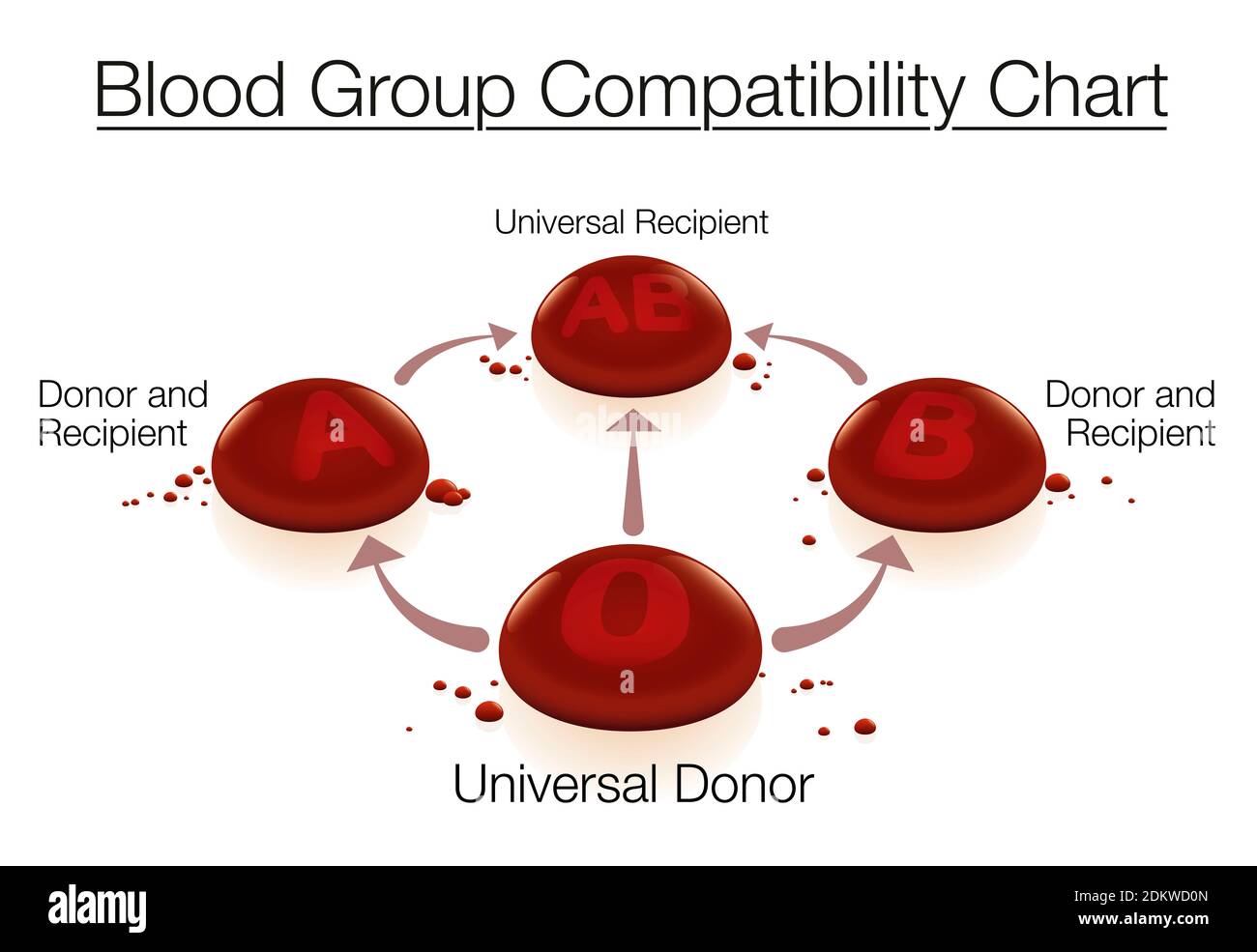
Trauma bays operate on split-second math. When an exsanguinating patient rolls through the emergency bay doors, doctors cannot afford to wait 45 minutes for a complete crossmatch before hanging blood bags. Instead, they reach for uncrossmatched units, relying on the predictable immunology of the ABO blood group system. Understanding which patient can accept which unit forms the backbone of critical care medicine. While public health campaigns frequently praise O-negative donors, the opposite end of the spectrum carries equal biological fascination: the AB positive blood type, recognized worldwide as the universal receiver for red blood cell transfusion.
Every cellular collision inside a patient's veins is governed by strict molecular gatekeepers. The human body tolerates what it already knows and attacks foreign intruders with ruthless chemical hostility. Recent investigations into rare blood phenotypes, highlighted in a BBC Report, demonstrate how fragile global inventory remains whenever rare blood groups collide with supply shortages. Understanding how surface antigens dictate blood compatibility reveals why AB positive individuals occupy a uniquely advantageous position when they require red cells, and why their biological privilege completely flips when donating plasma.
📌 Key Takeaways:
- The Universal Receiver Mechanism: AB positive individuals possess A, B, and Rh antigens on their red blood cells, which means their immune systems produce no anti-A, anti-B, or anti-Rh antibodies, allowing them to receive red blood cells from any ABO/Rh blood type.
- The Plasma Inversion: While AB positive patients can receive red cells from everyone, they can only donate packed red cells to other AB positive recipients; conversely, AB plasma contains zero ABO antibodies, making AB donors the universal donors for blood plasma compatibility.
- Clinical Safeguards: Even for AB positive patients, emergency blood transfusion protocols mandate rapid crossmatching and blood typing to prevent atypical alloantibody reactions beyond the standard ABO and Rh systems.
The Molecular Mechanics of the ABO Blood Group System
Human erythrocytes do not present naked cell walls to the bloodstream. Millions of carbohydrate chains sprout from the lipid bilayer of each red blood cell, functioning as biological identification tags. These markers are A and B antigens. Austrian physician Karl Landsteiner first observed their behavior in 1900 when he mixed blood samples from his staff, watching some vials flow smoothly while others formed dense, toxic clots.
Genetics dictate which sugar molecules your enzymes attach to the red cell scaffold. Type A individuals express the A antigen by tacking on N-acetylgalactosamine. Type B individuals add D-galactose. Type O individuals lack the functional transferase enzyme entirely; their cells display only the unmodified H-antigen core. Type AB individuals inherit alleles for both enzymes, displaying both distinct molecular sugars simultaneously on their cell surfaces.
The immune system generates antibodies against any antigen it does not carry. If you possess type A blood, your plasma circulating system develops anti-B antibodies during infancy through exposure to common environmental microbes. If you have type B, your plasma builds anti-A antibodies. Type O blood produces both anti-A and anti-B antibodies in high concentrations. Type AB produces neither. That absence of circulation-patrolling antibodies lies at the heart of the universal receiver status.
Why AB Positive Blood Type Earns the Universal Receiver Title
To determine what happens when donor blood enters a host, hematologists track the recipient's antibodies, not the donor's. The primary danger during an acute infusion is whether the host's existing immune arsenal will identify the incoming red blood cell membranes as foreign invaders.
AB positive blood carries three defining surface markers: the A antigen, the B antigen, and the Rh factor (specifically the RhD protein). Because an AB positive recipient already recognizes all three molecular structures as native self-tissue, their immune system never synthesizes anti-A, anti-B, or anti-Rh antibodies under normal physiological conditions.
If an AB positive patient receives a unit of universal donor O negative red cells, their immune system shrugs; O negative cells have no ABO or Rh antigens to trigger alarm bells. If that same patient receives Type A positive blood, their body sees familiar A antigens and Rh proteins. If they receive Type B negative blood, their immune defenses recognize the B antigen. The immune response stays silent because nothing unfamiliar has crossed the threshold. This absolute cellular neutrality applies strictly to red blood cell transfusion.
Red Blood Cells Versus Plasma: The Great Transfusion Inversion
Clinical medicine rarely relies on whole blood units anymore. Modern blood banking separates whole donations into distinct components: packed red blood cells, fresh frozen plasma, platelets, and cryoprecipitate. This fractionated reality creates an ironclad biological rule that frequently surprises non-specialists: the rules for red blood cells invert entirely when infusing plasma.
Plasma is the liquid fraction carrying antibodies. If an AB positive person receives plasma from a Type O donor, that Type O plasma contains lethal concentrations of both anti-A and anti-B antibodies. Those infused antibodies will immediately latch onto the AB recipient's native red blood cells, initiating cellular rupture across the vascular network.
Because AB plasma contains neither anti-A nor anti-B antibodies, an AB donor functions as the universal plasma donor. In burn wards, shock units, and massive transfusion trauma activations, emergency staff reach for Type AB plasma when a patient's blood type remains unidentified. The recipient of everything becomes the giver of everything, contingent entirely upon whether the nurse hangs cells or liquid.
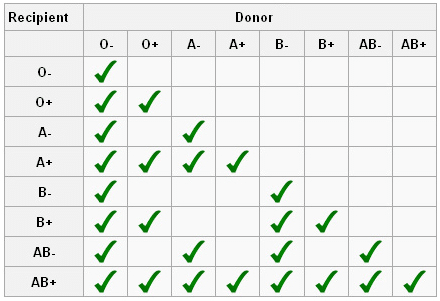
Complete Blood Compatibility Matrix for Red Cell Transfusions
The human population does not distribute these blood phenotypes equally. Global statistics demonstrate that AB positive remains relatively uncommon, accounting for roughly 3% to 4% of blood donors in North America and Western Europe, though rates climb toward 7% in parts of South Asia. The matrix below outlines how red blood cells match across the eight major phenotypic combinations.
| Blood Type | Can Receive Red Blood Cells From | Can Donate Red Blood Cells To | Approx. US Population Share |
|---|---|---|---|
| AB Positive (AB+) | All Blood Types (Universal Receiver) | AB+ only | 3.4% |
| AB Negative (AB-) | O-, A-, B-, AB- | AB+, AB- | 0.6% |
| A Positive (A+) | O-, O+, A-, A+ | A+, AB+ | 35.7% |
| A Negative (A-) | O-, A- | A+, A-, AB+, AB- | 6.3% |
| B Positive (B+) | O-, O+, B-, B+ | B+, AB+ | 8.5% |
| B Negative (B-) | O-, B- | B+, B-, AB+, AB- | 1.5% |
| O Positive (O+) | O-, O+ | O+, A+, B+, AB+ | 37.4% |
| O Negative (O-) | O- only | All Blood Types (Universal Donor) | 6.6% |
Crossmatching, Emergency Transfusions, and Transfusion Reactions
Theoretical compatibility on paper does not guarantee biological peace inside a human body. When blood types are mismatched, such as infusing Type A blood into a Type B patient, an acute hemolytic transfusion reaction erupts within minutes. Pre-existing recipient antibodies bind to the donor red cells, activating the complement cascade. Red blood cells burst en masse, releasing free hemoglobin into the circulation. This debris clogs the nephrons, causing acute kidney injury, systemic shock, disseminated intravascular coagulation, and often death.
Because the stakes are absolute, hospital blood banks execute two distinct safety steps: typing and crossmatching. Typing confirms ABO and Rh status. Crossmatching mixes a micro-sample of patient serum directly with donor red blood cells in test tubes or automated gel cards. This step catches unexpected antibodies outside the ABO system, such as anti-Kell, anti-Duffy, or anti-Kidd, which can still destroy mismatched donor cells.
In acute resuscitation scenarios, clinical teams cannot wait for the standard 30- to 45-minute laboratory crossmatch. When an unidentified patient with severe trauma requires immediate life support, trauma protocols mandate using uncrossmatched O-negative red cells for females of childbearing potential to protect against future Rh sensitization, while many centers allocate uncrossmatched O-positive blood to adult males and older females to conserve limited O-negative reserves. Once laboratory testing confirms an AB positive status, the blood bank immediately switches the patient to type-specific or alternative available units, conserving precious O stock for those who truly have no alternatives.
Beyond ABO: Enzymatic Stripping and Universal Organ Engineering
The rigid barriers separating blood types have challenged transplant specialists and transfusion services for decades. Chronic shortages of O-negative blood strain surgical schedules annually. However, biochemical advances reported between 2025 and 2026 are altering how medicine manages antigenic barriers.
In early 2025, biomedical teams highlighted methods to strip surface sugars from donor red blood cells using specialized bacterial enzymes, effectively converting Type A and Type B units into functional universal donor blood. That research quickly scaled into solid-organ preservation. In October 2025, surgical literature detailed perfusion techniques using synthetic enzymes to dissolve blood group antigens directly from donor kidneys, converting them to neutral Type O profiles prior to implantation.
By February 2026, clinical researchers reported a landmark milestone in organ compatibility: bioengineered donor kidneys successfully transplanted across mismatch barriers without provoking hyperacute rejection. These interventions use engineered glycosidases during hypothermic machine perfusion to cleave terminal A and B saccharides from vascular endothelium. While enzymatic blood conversion remains in multi-center clinical trials, the foundational biological insight remains identical to Karl Landsteiner's discovery: eliminate the offending antigen, and you eliminate the immune attack.
Frequently Asked Questions (FAQ)
Q1: Can an AB positive person donate red blood cells to someone with Type A or Type B blood?
No. An AB positive person carries both A and B antigens on their red cells. If their red blood cells enter a Type A patient, the recipient's anti-B antibodies will attack the cells. If infused into a Type B patient, the host's anti-A antibodies will destroy them. AB positive individuals can only donate packed red blood cells to other AB positive patients.
Q2: What happens if an AB positive patient receives Rh-negative blood?
Nothing adverse occurs. An Rh-positive individual already has the RhD protein on their cell surfaces, meaning their body does not view the lack of an Rh marker on Rh-negative donor cells as a foreign threat. An AB positive individual can safely receive AB negative, A negative, B negative, or O negative red blood cells.
Q3: Why don't emergency departments give AB positive patients AB plasma during trauma resuscitations?
They do whenever it is available. AB plasma contains no anti-A or anti-B antibodies, making it universally safe for all patients. Because of this universal compatibility, blood banks frequently experience severe shortages of AB plasma, reserving it primarily for unidentified emergency trauma cases before typing is complete.
Laboratory Realities and the Future of Transfusion Medicine
The classification of AB positive as the universal receiver remains an immunological marvel. It represents a rare genetic alignment where every dominant ABO carbohydrate and the primary Rh surface protein coexist without provoking self-reactive immune surveillance. In acute medicine, this affords AB positive recipients a critical advantage: when blood inventories drop during regional emergencies, transfusion directors can assign them almost any red blood cell unit on the shelf.
Yet clinical reliance on these natural biological quirks is gradually shifting. As enzyme-driven antigen conversion moves through late-phase clinical evaluation and bioengineered organs demonstrate viability in donor networks, the strict boundaries of Karl Landsteiner's ABO system are becoming malleable. Until cellular enzymatic clearing reaches universal hospital deployment, the fundamental rules of antigen and antibody compatibility continue to govern every drop of blood hung in modern operating rooms.
