BPA-Free Isn't Enough: The Truth Behind Non-Toxic Coffee Maker Marketing and Chemical Claims
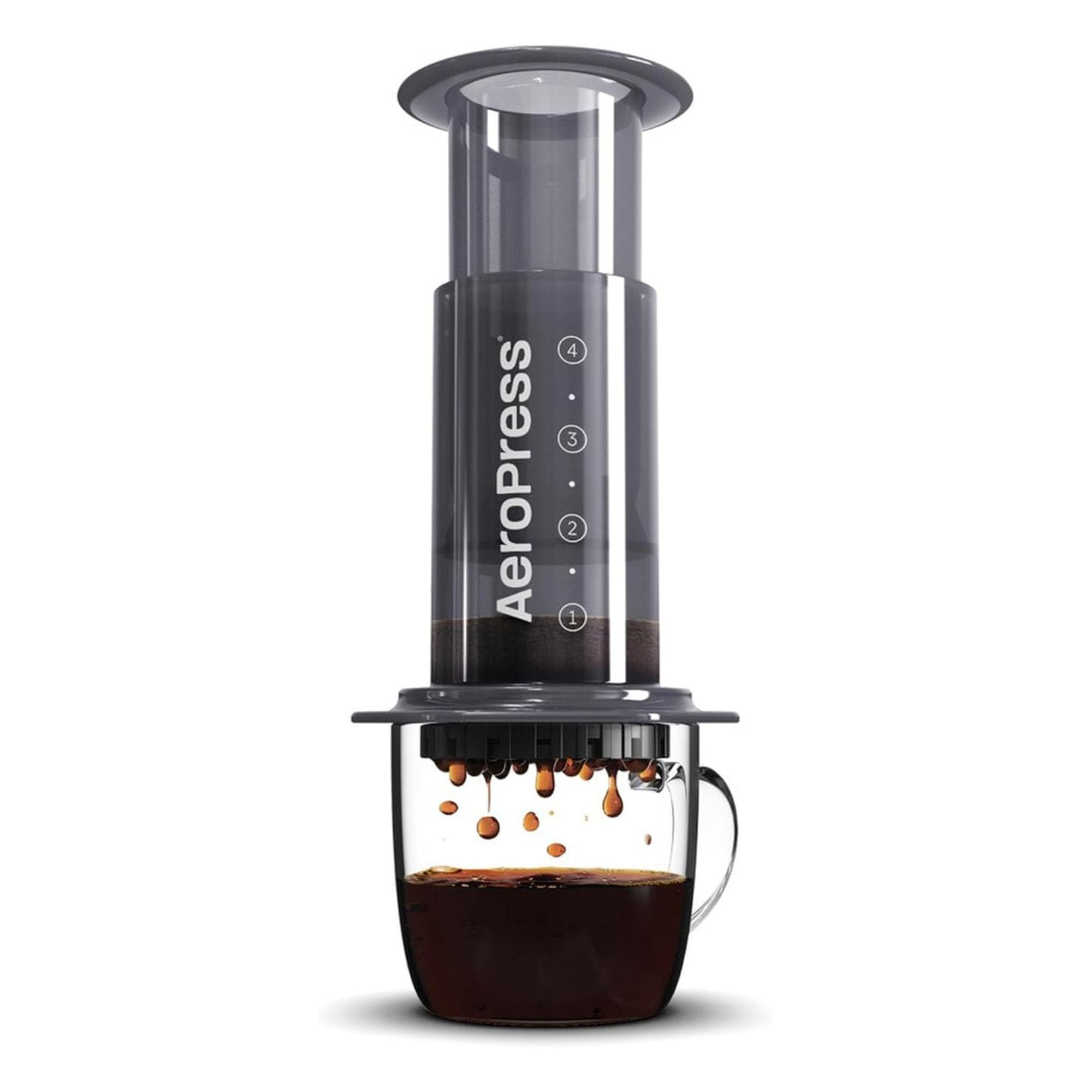
Every morning, millions of coffee drinkers run near-boiling water through intricate plastic tubing, sealed valve assemblies, and heated polymer reservoirs without a second thought. Yet emerging laboratory investigations into microplastics leaching and synthetic chemical migration have turned morning routines into an unexpected health frontier. As consumer scrutiny intensifies, consumer guides such as the Homes and Gardens Report have called attention to premium, design-forward alternatives like the all-metal Aarke coffee brewer, reflecting a massive cultural shift toward plastic-free brewing.
The central problem rests on a pervasive misconception: slapping a "BPA-Free" sticker on a machine does not make it chemically inert. When water reaches the standard extraction range of 195°F to 205°F, even certified food-grade plastics can shed particles and migrate synthetic additives directly into your cup. Understanding what actually enters your coffee demands looking past retail branding and scrutinizing the hidden interior architecture of everyday brewers.
📌 Key Takeaways:
- The Core Finding: Thermal degradation in domestic coffee brewers occurs internally; hot water contact with internal plastic pumps, silicone gaskets, and heating tubes leaches microplastics and chemical analogs even if the carafe is glass.
- The Chemical Loophole: Standard "BPA-Free" claims routinely mask bisphenol substitutes like BPS and BPF alongside industrial plasticizers that act as verified endocrine disruptors.
- The Clean Architecture: True chemical safety relies on unlined borosilicate glass and food-grade stainless steel along the entire fluid path, a standard mostly met by manual drippers and select commercial-grade drip brewers.
The Hidden Plumbing Inside Countertop Drip Brewers
Most commercial marketing highlights the carafe and the exterior body. Brands gladly promote a brushed metal chassis or an elegant glass jug while completely concealing the fluid delivery mechanism. Beneath the exterior panels, water moves through an internal network: cold reservoirs, vibration pumps, check valves, heating elements, and showerheads. In roughly 85% of automated household machines, those water contact materials are made of polypropylene, nylon, or basic fluoropolymer tubing.
Water heated above 190°F acts as an aggressive solvent. Over hundreds of thermal brew cycles, plastics suffer repeated expansion and contraction. The polymer chains gradually break down along internal junctions. When water pulses through the boiler and reaches the brew basket, it scours microplastics and sub-micron nanoplastics from the walls of the internal tubing. A glass carafe catches the finished brew, but the liquid has already traversed several feet of hot synthetic channels.
Laboratory assays using pyrolytic gas chromatography have confirmed that particle shedding spikes sharply once water crosses the 175°F threshold. Cold water running through a plastic hopper exhibits minimal particulate transfer. The moment that same fluid is superheated and pressurized through internal valves, particle counts rise exponentially.
The Substitution Trap: BPA and BPS Alternatives
Regulatory bans on Bisphenol A (BPA) triggered an industry-wide pivot toward chemical siblings that behave almost identically in human biology. Manufacturers replaced BPA with Bisphenol S (BPS), Bisphenol F (BPF), and modified polyamides. These structural analogs carry comparable estrogenic and anti-androgenic potencies, qualifying them as persistent endocrine disruptors.
When a manufacturer markets a machine with phthalate-free tubing, it frequently substitutes alternate plasticizers or thermoplastic elastomers (TPE) to maintain tube flexibility inside tight chassis layouts. Third-party testing reveals that many alternative plasticizers migrate under rapid thermal spikes. Over months of daily descaling with citric or acetic acid, these flexible polymers degrade faster, shedding additives directly into municipal water supplies that enter the machine.
Endocrine disruptors do not require massive concentrations to alter cellular signaling. Biological mechanisms respond to hormones at parts-per-trillion levels. Consuming daily extractions steeped in low-dose synthetic compounds bypasses ordinary digestive filtration, prompting health researchers to examine cumulative exposure from hot domestic appliances.
Material Realities: Testing Chemical Inertness Across Brewer Builds
Evaluating machine safety requires separating structural shells from fluid paths. The table below outlines common coffee maker build materials, their working temperature ceilings, and their documented chemical migration characteristics under daily hot extraction.
| Contact Material | Continuous Heat Tolerance | Documented Chemical Leaching Risk | Common Machine Components |
|---|---|---|---|
| Borosilicate Glass | Up to 900°F (Thermal Shock Resistant) | Zero known leaching; chemically inert to acid and heat | Carafes, manual drippers, laboratory condensers |
| 304/316 Food-Grade Stainless Steel | Above 1,400°F | Zero plasticizers; trace nickel/chromium only under extreme acidity | Boilers, commercial pipe runs, filter baskets, moka pots |
| Platinum-Cured Silicone | Up to 450°F | Extremely low; stable unless exposed to harsh chemical solvents | Gaskets, internal boiler seals, transfer lines |
| Food-Grade Polypropylene (PP) | 212°F, 260°F (Softens near boiling) | Moderate to high microplastics shedding; additive migration over time | Internal water tubes, brew baskets, spray heads, reservoirs |

How Modern Engineering Separates Water from Polymers
Designing an automated machine that eliminates hot-water plastic contact requires substantial mechanical engineering. Unlike budget coffee makers that rely on cheap stamped plastic manifolds, high-end designs use seamless metal casting and mechanical isolation.
The Swedish-designed Aarke coffee brewer illustrates this structural shift. Built almost entirely with a precision-cast aluminum exterior, its engineering prioritizes an internal fluid path anchored by stainless steel and borosilicate glass components. Instead of pushing boiling water through flexible polymer runs, water moves through clean metallic channels before hitting the filter basket. This design prevents thermal fatigue along the wet path.
Stove-top brewing presents a similar evolution. For decades, traditional aluminum moka pots dominated European households, sparking ongoing debates over metal ionization and oxidized residues. The Bialetti Venus moka pot addressed this by using heavy-gauge 18/10 stainless steel for both the lower pressure chamber and the upper collection vessel. Under 1.5 to 2 bars of pressure, the extraction contacts nothing but food-grade metal, completely bypassing internal tubing, synthetic check valves, and degradation risks.
Manual Zero-Plastic Methods: Pour Overs and French Presses
For total control over materials, manual preparation remains the benchmark. Automated machinery contains hidden joints and internal mechanical pumps that are virtually impossible to inspect without taking the housing apart. Manual devices, by contrast, leave the entire fluid path completely visible.
Manual Extraction: Material Isolation Map
[Kettle: 304 Stainless Steel]
│
▼ (Boiling Water: 200°F)
[Dripper: Borosilicate Glass / Ceramic]
│
▼ (Brewed Coffee)
[Server: Borosilicate Glass Carafe]
A manual pour over coffee dripper made of unglazed ceramic or lab-grade borosilicate glass presents an uncompromising, non-reactive environment. When combined with unbleached organic cellulose filters or woven stainless steel mesh, hot water extracts dissolved solids without passing through synthetic polymers.
Similarly, an all-metal French press offers true non-toxic performance when properly constructed. Cheaper models often hide small plastic brackets behind the metal filter screen or use plastic lids that sit directly over the steaming liquid. Premium zero-plastic French presses eliminate these shortcuts entirely:
- Plunger assemblies crafted entirely from solid 304 stainless steel.
- Dual-wall insulated metal or borosilicate carafes.
- Lids with stainless steel undersides to prevent condensation from dripping off hot plastic back into the coffee.
These manual configurations eliminate every blind spot. You never have to wonder what mystery tubing sits hidden behind a control circuit board.
Third-Party Safety Tests and the Regulatory Gap
A major reason hazardous materials linger in kitchen appliances is the gap between legal compliance and modern analytical chemistry. The United States Food and Drug Administration (FDA) and the European Food Safety Authority (EFSA) regulate food-contact plastics through standard extraction tests. Historically, these protocols measure overall mass transfer rather than microscopic particle counts.
Standard regulatory checks do not assess whether sub-micron polymer fragments break free during normal domestic use. If a polymer does not lose substantial bulk mass during testing, it earns food-grade approval. Independent environmental laboratories, utilizing laser direct infrared chemical imaging, tell an entirely different story. Their testing detects tens of thousands of nanoplastic fragments per milliliter in water discharged through standard drip brewers.
Until consumer safety agencies set strict limits on nanoplastic migration, the responsibility falls squarely on the buyer. Choosing appliances with third-party testing certifications for non-estrogenic activity and full material disclosure is the only way to avoid untested industrial substitutes.
Frequently Asked Questions (FAQ)
Q1: Does descaling a coffee maker increase chemical leaching?
Yes. Aggressive chemical descalers or concentrated vinegar solutions etch and degrade internal plastic tubes and lower-grade silicone gaskets over time. This makes them significantly more vulnerable to shedding microplastics during subsequent high-heat brew cycles. Use gentle, food-grade citric acid powders instead, and stick to machines with stainless steel water channels whenever possible.
Q2: Are silicone components inside high-end coffee makers safe?
High-grade platinum-cured silicone is substantially more chemically stable than plastics like polypropylene or PVC. It does not require plasticizers and handles continuous temperatures up to **450°F** without degrading. While purists seek 100% metal-and-glass builds, certified platinum silicone seals along boiler connections carry an exceptionally low risk of chemical leaching.
Q3: Can I make an existing plastic drip machine safer?
You can reduce overall chemical migration by never pouring hot or warm water into a plastic reservoir, which accelerates chemical leaching before brewing even starts. However, you cannot stop the internal heating tubes from shedding microplastics once water reaches extraction temperatures. The only definitive fix is switching to an appliance with an all-metal or glass fluid path.
What Clean Extraction Requires in 2026
Navigating non-toxic claims requires looking past surface-level marketing and focusing on mechanical architecture. A machine is only as clean as the materials that touch hot water. Thin plastic tubing, mystery polymers, and questionable bisphenol alternatives do not belong near boiling liquids.
Eliminating microplastics and endocrine disruptors means prioritizing transparent construction: solid food-grade stainless steel, thick borosilicate glass, and platinum-cured silicone gaskets. Whether you choose the automated engineering of an all-metal drip brewer or the simplicity of a glass pour over, inspecting the internal plumbing is the only way to protect your morning routine.
