Brazilian Real to US Dollar Swing: Why Converting BRL to USD Just Got Harder
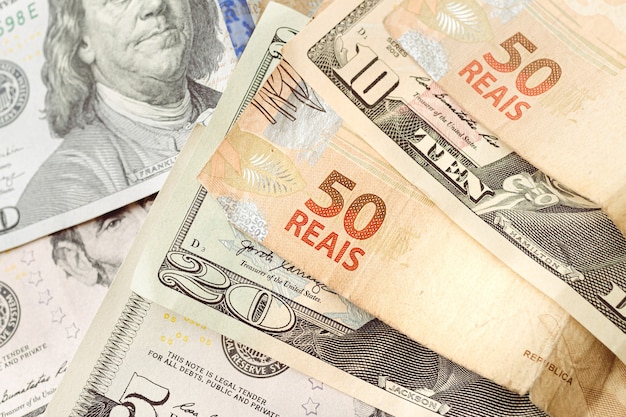
Converting Brazilian reais into US dollars has become an expensive headache for travelers, expatriates, and cross-border businesses. A volatile mix of domestic fiscal friction in Brasília, widening global interest rate differentials, and aggressive currency arbitrage has triggered sharp intraday swings across Latin American foreign exchange desks. While the US dollar index staged periodic retreats against European peers following historic dips reported by Bloomberg Línea, the Brazilian real tells a far more complicated story. Anyone executing a BRL to USD conversion right now faces widened spreads, elevated bank markups, and unpredictable shifts in spot pricing.
The squeeze is not confined to physical currency exchange booths at São Paulo's Guarulhos airport. Corporate treasuries managing cross-border supply chains and individual freelancers invoicing foreign clients are seeing transaction margins erode across traditional wire networks. Even digital asset ramps reflect this structural friction. According to exchange pricing compiled in a recent Bybit Report, retail flows bridging BRL to USDT stablecoins have expanded rapidly as market participants search for liquidity avenues outside legacy banking rails that impose punishing international remittance fees.
📌 Quick Summary:
- Exchange Volatility: Fiscal debates in Brasília and fluctuating US Federal Reserve policy have triggered violent swings in the Brazilian real exchange rate, pushing spreads wider across retail and commercial desks.
- The Dual Rate Trap: The divide between the commercial real and the tourist real continues to burn travelers, with physical cash exchanges costing up to 8% to 12% more than official interbank benchmarks.
- Digital Settlement Alternatives: Disillusioned retail users and cross-border freelancers are increasingly bypassing SWIFT wire transfers in favor of peer-to-peer desks and BRL-to-USDT stablecoin rails to lock in rates instantly.
Fiscal Friction and the Pressures on Banco Central do Brasil
The primary driver behind the real's choppy behavior sits squarely within Brazilian macroeconomic management. Banco Central do Brasil faces an ongoing dilemma balancing its Selic benchmark rate against fiscal spending plans pushed by the federal government. While high nominal interest rates traditionally support the currency via profitable carry trade operations, where international investors borrow cheaply in low-yielding currencies to park funds in high-yielding Brazilian debt, the strategy breaks down when investors question long-term fiscal discipline.
When debt-to-GDP targets slide, capital exits quickly. Foreign asset managers hedge their local equity exposures on the B3 stock exchange by purchasing dollar futures, driving down spot real values within minutes. These rapid portfolio adjustments bypass ordinary retail banking hours. By the time an individual user loads a currency converter calculator on their smartphone, retail quotes already factor in defensive pricing from institutional market makers who widen their bid-ask spreads to avoid getting caught on the wrong side of an intraday slide.
Latin American currencies as a whole experienced mixed fortunes after the dollar's sharp retreat from historical highs, but Brazil remains uniquely sensitive to agricultural commodity export cycles. A softened global price for iron ore or soybeans immediately reduces dollar inflows into Brazilian port cities. Without those corporate trade windfalls balancing the ledger, the central bank must choose between burning foreign exchange reserves through spot interventions or letting the real float lower, directly impacting retail conversion costs.
Commercial Real vs Tourist Real: The Hidden Cost Trap
Most newcomers checking financial portals get misled by the commercial real (câmbio comercial). This rate applies exclusively to wholesale interbank settlements, government trades, and multinational import-export agreements totaling millions of dollars. Everyday buyers, whether tourists heading to Miami or remote workers bringing earnings back home, never trade at commercial prices. They trade at the tourist real (câmbio turismo).
The tourist rate builds in a heavy layer of retail risk, logistics, cash handling insurance, and profit margins. In periods of heightened forex market volatility, physical exchange houses (casas de câmbio) expand this spread aggressively. An individual buying physical dollar banknotes in Rio de Janeiro routinely pays 6% to 9% above the interbank spot quote, before accounting for Brazil's mandatory Financial Operations Tax (IOF).
Brazilian legislation levies the IOF on international financial activities, creating an inescapable drag on currency swaps. Purchasing physical dollar bills carries an IOF rate of 1.10%, while international credit, debit, or prepaid travel cards trigger an additional tax surcharge. When combined with bank fees, buying dollars on plastic often costs consumers nearly 10% to 12% more than the headline interbank rate displayed on Google Finance.
Conversion Mechanics Compared: Timeline and Fee Structures
Understanding where capital bleeds during a transfer requires examining the full transmission chain. The table below illustrates standard costs, settlement timelines, and real-world slippage across common conversion methods currently available for transferring $1,000 USD out of Brazilian reais.
| Transfer Channel | Typical Spread Markup | Settlement Speed | Effective IOF Surcharge |
|---|---|---|---|
| Physical Exchange Booths (Turismo) | 5.5%, 8.5% | Instant (Cash) | 1.10% |
| Major Retail Banks (Wire / SWIFT) | 3.0%, 5.0% + $20, $40 fixed fee | 1, 3 business days | 0.38% (Different Ownership) / 1.10% (Same) |
| Global Multi-Currency Digital Accounts | 0.8%, 1.6% | Minutes to 4 hours | 1.10% |
| BRL-to-USDT Stablecoin Desks | 0.2%, 0.9% (Orderbook Slippage) | Instant to 15 minutes | 0.00% at execution (Subject to tax rules) |
Traditional banks continue to extract the heaviest toll on cross-border transactions through flat wire transfer charges combined with opaque conversion rates. For modest retail sums between $500 and $2,000, fixed intermediary bank fees completely distort the effective exchange rate, sometimes consuming up to 7% of the principal before the recipient's bank in the United States even credits the funds.

The Digital Flight to Dollar Pegs and Multi-Currency Accounts
Frustration over wide retail spreads has accelerated a major shift toward digital alternatives. Expatriates and freelancers working for North American tech firms now routinely avoid domestic wire services altogether. Instead, they funnel earnings through multi-currency debit accounts issued by international fintechs or buy dollar-pegged stablecoins via domestic instant payment gateways like Pix.
Trading BRL directly for digital dollar assets like Tether (USDT) on spot exchanges eliminates SWIFT intermediary banks entirely. Users deposit reais via Pix within seconds, trade against a USDT/BRL orderbook with fractional percentage spreads, and either hold the digital balance or send it to an offshore custodial card. While this process bypasses immediate retail bank spreads, it introduces separate challenges around local tax reporting, regulatory compliance under Brazil's Federal Revenue service (Receita Federal), and custody management.
Online forums like Reddit's r/investimentos and specialized digital nomad channels frequently highlight this split in consumer behavior. Seasoned travelers advise novice vacationers to ditch traditional cash booths entirely, favoring digital payment cards that calculate rates off the mid-market commercial price plus a clear fintech markup, effectively halving the overall cost of holiday spending abroad.
Emerging Market FX Pressures Across Latin America
Brazil does not operate inside an economic vacuum. Emerging market foreign exchange rates face continuous structural head winds when the US Dollar Index (DXY) hardens. Even when US inflation eases, global capital remains hypersensitive to geopolitical developments, global shipping disruptions, and shifting trade tariffs.
When risk aversion flares across international trading desks, capital rushes out of emerging market equities and debt, returning to the relative safety of US Treasuries. Currencies across Latin America, from the Mexican peso and Colombian peso to the Brazilian real, frequently slide in tandem during risk-off episodes. However, while countries like Mexico benefit from direct industrial integration with the US economy, Brazil relies more heavily on domestic consumption and exports to China. If Asian industrial output cools, the real loses one of its primary natural price supports.
Interest rate differentials further complicate central bank planning. If the US Federal Reserve holds interest rates steady while Banco Central do Brasil faces political pressure to reduce the domestic Selic, the spread narrows. Lower yield spreads reduce the profitability of Brazilian carry trades, prompting institutional desks to unwind multi-billion-dollar positions and swap their real back into greenbacks, sending spot conversion prices higher for retail consumers.
Frequently Asked Questions (FAQ)
Q1: Why is the rate on my banking app so much worse than the rate on Google?
A1: Financial search engines display the wholesale interbank commercial rate, which trades in multi-million-dollar blocks between institutions. Retail banking apps add their own profit margin (spread) and must apply statutory Brazilian taxes like the IOF, resulting in a noticeably higher conversion price for retail clients.
Q2: Is it cheaper to buy US dollars in Brazil or after arriving in the United States?
A2: It is almost always significantly cheaper to convert your funds in Brazil or through a digital multi-currency account prior to departure. US airport exchange kiosks and retail American bank branches charge punitive exchange fees and uncompetitive spreads for physical Brazilian banknotes, often costing travelers 15% to 25% in value.
Q3: How does the IOF tax affect my conversion from reais to dollars?
A3: Brazil's Tax on Financial Operations (IOF) is charged automatically on currency transactions. Buying physical US currency incurs an IOF of 1.10%. Sending money to an offshore account in your own name also incurs 1.10%, while sending funds to a third party incurs 0.38%. Credit card purchases made abroad face higher tax brackets, making debit options far more economical.
Navigating BRL to USD Transfers in 2026
Managing currency exchange between Brazil and the United States requires active preparation rather than passive reliance on high-street banks. The days of walking into a retail branch to arrange a standard telegraphic wire transfer without scrutinizing fees are obsolete. For anyone regularly moving money between these two jurisdictions, separating spot rate noise from structural charges makes all the difference.
Prioritize transparent execution methods. For vacation travel and smaller expenses, digital travel debit cards operating on mid-market rates provide significant savings over physical cash booths and traditional credit cards. For larger corporate or personal remittances, establishing verified accounts on competitive peer-to-peer or fintech transfer networks removes intermediary bank fees and keeps retail markups near 1%. Tracking fiscal developments in Brasília and policy statements from Banco Central do Brasil remains essential; entering the market on brief dips in the dollar rather than converting funds under immediate deadlines will always remain the most reliable way to preserve capital.
