Can You Take AR Quizzes at Home? Fact-Checking School Reading Rules
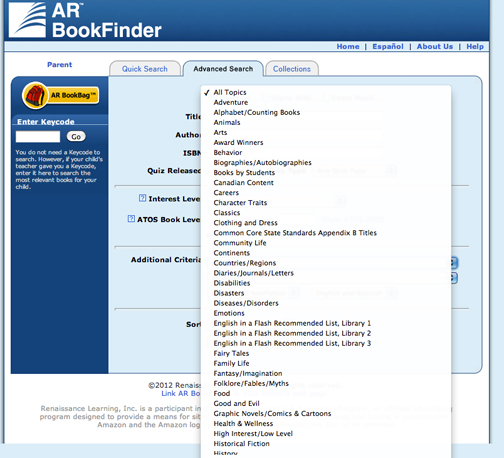
Every grading quarter, millions of elementary and middle school students track their reading quotas through digital points, but parents routinely hit a digital wall when attempting to log in from a living room couch. As families scour the web to find an AR book that fits their child's classroom target, confusion quickly mounts over whether taking AR quizzes at home is actually allowed or intentionally blocked by district network firewalls.
Managing public education software has become a regular household hurdle. Alongside shifting family expenditures tracked across consumer monitors like the Kelley Blue Book Report, parents spend dozens of hours each semester navigating the rigid, gamified mechanics of school literacy trackers. The administrative boundaries set by Renaissance Learning, the parent company behind Accelerated Reader, mean that home access depends entirely on individual campus settings rather than universal platform permissions.
📌 Key Takeaways:
- The Lockdown Protocol: Renaissance Learning software allows remote testing, but the vast majority of school districts restrict testing portals to campus IP addresses to protect academic validity.
- Search Architecture: Accelerated Reader BookFinder remains free and universally accessible for families needing to locate matching titles, ATOS book level metrics, and specific AR quiz numbers.
- Reading Metrics Disconnect: High readability scores do not equal age-appropriate themes, making interest level ratings just as critical as raw Lexile or ATOS calculations.
The District Firewall: Why Home Quiz Logins Fail
The frustration begins at the Renaissance Place login screen. A child enters their standard username and password on a home laptop, only to receive a message stating that testing is unavailable outside approved school hours or authorized locations. This is not a technical glitch. It is an intentional, software-level geofence configured by local school district administrators.
Accelerated Reader was designed primarily as a classroom assessment mechanism. Teachers use the multiple-choice quizzes, typically 5 to 20 questions long, to verify that a student independently read and understood a trade book. When districts purchase annual licenses from Renaissance Learning, IT coordinators are handed a security toggle. Enabling home testing opens the door to unmonitored test conditions, where well-meaning parents or automated browser extensions can influence answers, distorting reading progress data.
While taking the actual test at home is frequently blocked, districts almost always grant access to Renaissance Home Connect. This secondary portal provides a read-only dashboard. Parents can view quiz scores, track point accumulation toward quarterly school reading goals, and review word counts without having access to the testing engine itself.
Locating Approved Titles Through Accelerated Reader BookFinder
Finding books that qualify for school points requires bypassing standard retail search engines. Commercial book descriptions prioritize marketing hooks rather than quantitative readability metrics. The official Accelerated Reader BookFinder platform serves as the open-access master catalog for more than 230,000 titled quizzes currently maintained in the Renaissance database.
Parents do not need an administrative account or school code to query BookFinder. Typing any title or author into the search engine reveals critical metadata: the official AR quiz numbers, the author's designated reading difficulty, and the point total tied to word length. If a book does not register on the BookFinder database, no official quiz exists, and the child cannot log points for reading it.
Public library systems have increasingly indexed these codes directly into their digital lending apps. Major municipal catalogs frequently allow patrons to filter physical and electronic loans through a dedicated public library AR catalog filter. This enables families to borrow qualifying literature without spending money on retail paperbacks that might lack an official assessment.
Reading Metric Benchmarks: Comparing ATOS, Lexile, and Guided Systems
Schools rarely use a single literacy metric. A teacher might assign a reading target using Guided Reading Levels (letters A through Z), while the district standardized assessment outputs a Lexile score conversion, and the Accelerated Reader portal demands an ATOS book level. Understanding how these quantitative formulas overlap is essential to picking the correct reading material.
| Grade Range | ATOS Book Level | Lexile Measure | Guided Reading Level |
|---|---|---|---|
| Grade 1 (Early) | 1.0, 1.9 | BR, 190L | A, G |
| Grade 2 | 2.0, 2.9 | 200L, 420L | H, M |
| Grade 3 | 3.0, 3.9 | 420L, 650L | L, P |
| Grade 4 | 4.0, 4.9 | 650L, 770L | Q, S |
| Grade 5 | 5.0, 5.9 | 770L, 860L | T, V |
| Middle Grades (6, 8) | 6.0, 8.9 | 860L, 1010L | W, Z |
The ATOS readability formula assesses average sentence length, average word length, and the vocabulary difficulty tier of the entire text. A score of 4.5 indicates readability typical of a fourth-grader in the fifth month of the academic year. However, text complexity calculations cannot measure content appropriateness, which brings parents to an often-overlooked metric.

The Danger of Ignoring Interest Level Ratings
One structural flaw in school point quotas is that technical readability does not equal emotional readiness. A literary classic like George Orwell's Animal Farm registers at a modest ATOS 3.7, yet its political allegory and darker themes make it ill-suited for a typical third-grader looking for quick points.
To combat this, the database attaches an interest level rating to every entry:
- LG (Lower Grades, K, 3): Tailored for emerging readers, focusing on visual literacy, simple conflict resolution, and age-appropriate themes.
- MG (Middle Grades, 4, 8): Addresses complex narrative structures, historical tensions, and mild thematic conflict suitable for pre-teens.
- MG+ (Middle Grades Plus, 6 and up): Bridges middle school and high school literature, frequently containing mature references or intense scenarios.
- UG (Upper Grades, 9, 12): Demands emotional maturity to navigate graphic themes, violence, or advanced sociological concepts.
Ignoring this tag leads to reading fatigue. Students who chase high point tallies by picking low-level vocabulary texts with adult themes often struggle with the comprehension questions, resulting in failed tests and missed quarterly targets.
The Mechanics of AR Point Values and Point Formulas
Reading goals are not structured around how many books a child completes; they are governed by AR point values. Renaissance uses a strict mathematical formula to assign worth to every title: Points = [(10 - ATOS Level) / 10] x (Words in Book / 10,000).
A short picture book might yield 0.5 points, requiring a 100% or 80% passing score on a 5-question test to earn full or partial credit. Conversely, J.K. Rowling's Harry Potter and the Goblet of Fire carries a 32.0 point value due to its massive word count, despite having an accessible ATOS score of 6.8. A student who scores 70% on that test receives only a fraction of the available 32 points.
Educators regularly debate whether this gamified system fosters a genuine love of literature. Critics argue that calculating literacy by points pushes students to read solely for length rather than depth. When children focus exclusively on hitting an arbitrary point threshold by Friday afternoon, they lean heavily toward short, repetitive series rather than challenging, narrative-rich books.
Frequently Asked Questions (FAQ)
Can parents purchase an Accelerated Reader account for home use?
No. Renaissance Learning sells enterprise software licenses directly to accredited school districts, private academies, and educational institutions. Individual parents cannot buy a personal home subscription to administer official AR tests.
Why does my child's login work at school but show an error at home?
District administrators frequently restrict the testing portal by whitelisting specific IP address ranges belonging to school buildings. Additionally, many portals are locked outside standard classroom hours (e.g., after 4:00 PM and on weekends).
Can a student take a quiz on a smartphone or tablet?
Technically, yes. Renaissance software runs inside standard web browsers on tablets and mobile devices. However, the school's IP restriction policies still apply regardless of the hardware used.
What score is required to earn points on an AR quiz?
For short 5-question quizzes, a student must score at least 60% or 80% (depending on school policy) to earn points. On 10- and 20-question tests, the passing threshold is typically set at 70%. Scoring below the minimum awards zero points for that book.
Navigating Literacy Metrics in the Modern Classroom
Accelerated Reader remains an administrative assessment tool rather than a comprehensive reading curriculum. Its internal point formulas and readability grades were built to help classroom instructors confirm that students spend time with books they can actually decode, not to act as a barrier separating parents from their child's educational progress.
When tracking reading targets outside the classroom, treat the database as a navigational guide rather than an absolute rulebook. Use Accelerated Reader BookFinder to discover captivating stories, check interest ratings to confirm that themes match your child's maturity, and leave the testing window where district policy intends it to stay: at the classroom desk.
