Chef Tineke Younger’s Recipe Deconstructed: Testing the Science Behind the Virality
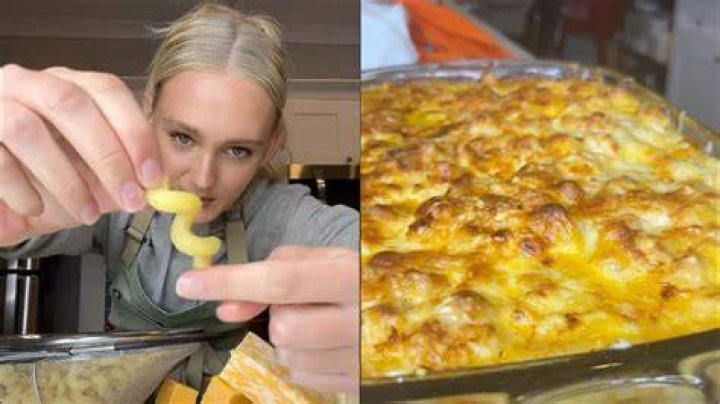
Every holiday season, social media feeds drown in bubbling pans of molten dairy, but few recipes have captured the collective appetite quite like the baked macaroni and cheese popularized by Chef Tineke Younger. Known across TikTok simply as "Tini," the culinary creator transformed a holiday staple into an internet obsession that generated tens of millions of views and prompted mass shortages of block cheese in suburban grocery aisles. According to a Rolling Stone Report, her methodical approach to holiday comfort food cemented her standing as TikTok’s reigning Thanksgiving Queen, establishing her platform as the gold standard for home cooks seeking restaurant-grade decadence.
Behind the hyper-stylized camera cuts and satisfying audio cues lies a serious exercise in food science. What separates Younger’s formula from ordinary cafeteria bakes is not a mystery ingredient, but a precise manipulation of starch gelatinization, casein protein stabilization, and fat emulsification. Stripping away the algorithmic fanfare reveals a meticulously engineered casserole designed to solve the two biggest flaws of holiday mac and cheese: grainy cheese sauces and dry, spongy pasta.
📌 Key Takeaways:
- The Structural Foundation: Cavatappi replaces standard elbow macaroni, using tight corkscrew spirals and external ridges to lock in heavy cheese sauce without collapsing during a double bake.
- The Anti-Grain Strategy: Evaporated milk paired with heavy cream provides a concentrated dose of milk micellar caseins, preventing high-fat cheeses from splitting into an oily film.
- The Melting Protocol: Freshly shredded Colby Jack and sharp cheddar bypass the starches found in pre-shredded bags, ensuring a velvet emulsion and a blistered, crispy cheese crust.
How Chef Tineke Younger Reengineered Holiday Macaroni
Traditional baked macaroni and cheese is notoriously temperamental. Bake it five minutes too long, and the sauce breaks into a yellow grease slick pooled around grainy cheese curds. Pull it too early, and the dish turns into a bland, soupy mess lacking structural integrity. When Chef Tineke Younger published her version of the dish, she bypassed the usual shortcuts that sabotage home cooks.
Younger, an alumna of Gordon Ramsay’s culinary competition Next Level Chef, approached the Thanksgiving classic with classical kitchen discipline. She avoided processed cheese blocks and bagged shreds, building the dish from scratch using an enriched roux, layers of hand-grated cheeses, and a heavy-handed seasoning blend featuring garlic powder, smoked paprika, onion powder, and black pepper. The internet responded with unprecedented enthusiasm. Videos featuring home cooks replicating her measurements took over cooking channels in late 2024 and 2025, sparking widespread debate about whether her high-dairy, high-fat ratio was culinary perfection or coronary excess.
The Physics of Cavatappi: Why Pasta Geometry Dictates Texture
Elbow macaroni has served as the default vehicle for American baked pasta for over a century. It is also fundamentally unsuited for a heavy, decadent cheese sauce. Standard smooth elbows lack the mechanical grip required to hold thick emulsions, allowing sauce to slide directly to the bottom of the casserole dish during the baking cycle.
Younger selects cavatappi, a thick-walled, spiral macaroni ribbed with exterior ridges (known in Italian pasta making as rigati). The geometric advantages are tangible:
The hollow helical tube acts as a capillary siphon. As the cheese sauce simmers during the bake, liquid enters the internal tube and remains trapped even as the casserole rests. Simultaneously, the exterior ridges dramatically increase total surface area, providing frictional resistance that anchors the sauce against gravity. Most crucially, cavatappi maintains an al dente bite far better than thin-walled elbow macaroni. Because the pasta undergoes two separate cooking cycles, a brief boil followed by nearly thirty minutes in a hot oven, a robust pasta shape is vital to prevent the finished product from degenerating into baby food.
Dairy Chemistry: The Role of Evaporated Milk and Heavy Cream
The core innovation in Younger’s recipe is her liquid blend. While standard home recipes call for whole milk or skim milk poured into a roux, Younger utilizes a mixture of evaporated milk and heavy whipping cream. This combination addresses the underlying chemistry of cheese emulsions.
Natural cheeses like sharp cheddar are unstable emulsions of water, milk fat, and casein proteins held together by calcium bonds. When exposed to heat over 160°F (71°C), those proteins contract and squeeze out liquid, causing the sauce to separate. Whole milk contains roughly 87% water, which dilutes the emulsion and accelerates separation. Evaporated milk, by contrast, has had approximately 60% of its water content removed through vacuum evaporation without caramelizing the sugars.
This process concentrates the milk's native proteins, particularly casein micelles. These concentrated proteins act as natural surfactants, surrounding fat droplets and suspending them uniformly throughout the sauce. Paired with heavy whipping cream, which delivers a 36% milk fat minimum, the liquid base creates an elastic, viscous suspension that can absorb massive quantities of hard, aged cheddar without breaking or turning chalky.
The Cheese Matrix: Balancing Sharp Cheddar, Colby Jack, and Mozzarella
No single cheese can deliver flavor, stretch, and moisture simultaneously. Aged cheeses bring depth and acidity, but their moisture content is low and their proteins separate easily under heat. Young cheeses melt smoothly, but their flavor profile is muted. Younger solves this dilemma with a tri-cheese blend:
| Cheese Variety | Structural Role | Melting Behavior & Chemistry |
|---|---|---|
| Extra Sharp Cheddar | Flavor backbone, acid cut | Aged 9, 12 months; lower moisture (approx. 36, 39%); breaks easily if overheated |
| Colby Jack | Emulsion binder, body | Washed-curd process removes lactic acid; high moisture (42, 44%); fluid, creamy melt |
| Low-Moisture Mozzarella | Elasticity, top crust snap | Pasta filata structure aligns protein strands; delivers maximum visual pull without excess grease |
One non-negotiable rule runs through Younger's tutorials: never use pre-shredded cheese. Factory-shredded products are dusted with cellulose powder and potato starch to prevent the shreds from clumping in the bag. While these starches keep the cheese separated on supermarket shelves, they absorb moisture in the pan, creating a gritty, floury coating on the tongue. Grating the cheese fresh from 1-pound blocks preserves the natural moisture of the cheese surface, allowing direct protein-to-protein bonding during melting.
Executing the Roux and Navigating Heat Management
The culinary failure point for most cooks occurs at the stove burner. A roux made of equal parts all-purpose flour and unsalted butter provides the physical matrix that thickens the liquid base. Flour's amylose and amylopectin molecules absorb water and swell at roughly 180°F (82°C), forming a viscous gel.
Younger cooks her blonde roux for two to three minutes to remove raw wheat flavors without developing dark nutty notes that would clash with the dairy. Once the dairy is whisked in and thickened, the critical step begins: the heat must be turned off completely before any cheese is introduced.
Dumping shredded cheese into a simmering white sauce guarantees a broken emulsion. The residual heat stored in a heavy-bottomed Dutch oven or enameled cast iron pan is more than enough to melt cheese shreds smoothly. Incorporating the cheese in three or four gradual additions allows each handful to disperse into the warm fat-protein matrix without dropping the pot's temperature abruptly or shocking the proteins into contraction.
Common Execution Pitfalls: Avoiding mush and grease pools
Even with the right ingredients, minor timing mistakes will ruin the finished casserole. Field testing the recipe reveals specific failure points that home cooks must navigate:
The primary error is over-boiling the cavatappi. If the pasta box specifies nine minutes for standard al dente, boil it for no more than six minutes. The pasta should remain firm, with a visible white starch ring in the cross-section. It absorbs a substantial volume of moisture from the cheese sauce while baking in a 375°F (190°C) oven. Fully boiled pasta will swell, disintegrate, and leave the dish devoid of sauciness.
The second hazard is improper layering. Younger layers half the pasta, pours over a portion of the cheese sauce, layers shredded cheese, and repeats the process. Dumping all the cheese on top creates a thick rubber seal that traps steam, causing the underlying sauce to boil vigorously and curdle. By weaving cheese throughout the layers and reserving a moderate blanket for the top, steam escapes evenly while forming the signature blistered, golden-brown crust.
Frequently Asked Questions (FAQ)
Can Tini’s mac and cheese be assembled in advance and baked later?
Yes, but adjustments are essential. If you assemble the dish, refrigerate it overnight, and bake it cold, the cavatappi will absorb much of the liquid, producing a dry interior. To avoid this, cool the cheese sauce slightly before combining it with the pasta, wrap the casserole dish tightly in plastic wrap and aluminum foil, and bring it to room temperature for 45 to 60 minutes before baking. You may also need to increase the bake time by 10 minutes to ensure the center heats thoroughly.
Why did my cheese sauce turn greasy and separate in the oven?
Sauce separation occurs when the emulsion breaks, usually triggered by excessive heat or uneven fat distribution. Melting your shredded cheese over direct stove flame rather than residual heat is the most common cause. Another culprit is using pre-grated bagged cheese, which lacks the surface moisture needed to form a cohesive sauce, or baking the casserole at a temperature higher than 375°F (190°C).
Is cavatappi mandatory, or can other pasta shapes work?
Cavatappi is ideal because of its wall thickness and spiral shape, but you can substitute other ridged, hollow shapes. Campanelle, cellentani, or large ribbed elbows (gomiti) perform well. Avoid smooth shapes, delicate noodles like farfalle, or standard small elbows, which cannot support the weight of a heavy cream and evaporated milk sauce.
The Evolution of Modern Holiday Cooking Standards
The sustained popularity of Chef Tineke Younger’s mac and cheese signals a broader shift in consumer cooking habits. Online audiences have largely moved past low-effort shortcut recipes in favor of foundational culinary techniques explained without condescension. By openly demonstrating why certain cheeses melt predictably and why dairy ratios determine emulsion stability, Younger demystified a historically difficult side dish.
This dish is not light fare. It is intentionally rich, expensive to produce, and labor-intensive, requiring multiple blocks of cheese, extensive hand-grating, and careful heat calibration. Yet its explosive viral reach proves that home cooks are willing to invest both time and effort when the mechanical steps yield consistently spectacular results. In an internet culture saturated with fleeting novelties, Younger’s baked macaroni remains anchored by classic kitchen fundamentals that deliver on their promise every single time.
