Choking Emergency or Harmless Spasm? The Truth About Reverse Sneezing in Dogs
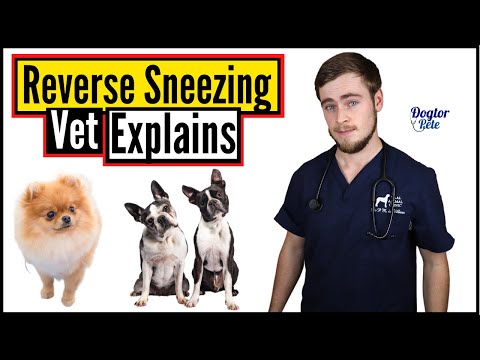
A dog suddenly stiffens its front legs, extends its neck, and pulls violent, snorting gasps through its nose. The sound resembles an asthmatic honk or an animal choking on a bone. Terrified owners routinely rush to emergency veterinary clinics in the middle of the night, convinced their pet is suffocating. In reality, the vast majority of these terrifying episodes are paroxysmal respiration, commonly known as a reverse sneeze. While the condition itself is non-fatal and self-limiting, veterinary clinics are seeing an influx of cases driven by aggressive environmental shifts. As highlighted in a recent Adopt a Pet Report, warming weather patterns and extended pollen blooms mean seasonal canine allergies are intensifying, triggering chronic upper airway flare-ups that leave dogs gasping for relief.
The sound is violent, but the anatomy behind it is straightforward. When particulate matter, viral pathogens, or trapped mucus irritate the nasopharynx, the body fires an involuntary reflex to clear the passage. Understanding the exact mechanical remedies to break this spasm can save owners thousands in emergency bills while keeping pets calm during sudden episodes.
📌 Key Takeaways:
- The Direct Mechanism: A reverse sneeze is a sudden mechanical nasal spasm provoked by soft palate irritation, pulling air violently inward rather than expelling it outward.
- The Immediate Intervention: Employing the covering nostrils trick alongside a steady throat massage technique stimulates the swallowing reflex, resetting the pharyngeal muscles within seconds.
- Underlying Medical Drivers: Persistent clusters of spasms point beyond simple dust; seasonal canine allergies, nasal mites, foreign body obstruction, or rare nasal tumors require definitive veterinary workups.
The Mechanical Reality of the Nasopharyngeal Spasm
A conventional sneeze forces air outward through the nostrils to expel irritants from the nasal cavity. A reverse sneeze does the precise opposite. Medically documented as inspiratory paroxysmal respiration, this reflex occurs when the sensitive mucous membranes of the nasopharynx or soft palate become inflamed. In response, the dog's pharyngeal muscles lock into rapid, rhythmic contractions. The dog draws air rapidly and noisily into the trachea, pulling the elongated soft palate downward over the larynx.
The resulting sound, a raspy, mechanical snort that can last anywhere from 10 seconds to two minutes, sounds life-threatening to an unsuspecting owner. The dog's eyes may bulge slightly, and the chest expands forcefully with every inhalation. Yet, despite the dramatic presentation, the airway is not entirely blocked. Oxygenation remains stable during isolated episodes, and the dog returns to normal behavior immediately after the spasm subsides.
Certain dogs face a distinct anatomical disadvantage. Brachycephalic breeds, such as French Bulldogs, Pugs, and Boston Terriers, possess compressed facial skeletons where an elongated soft palate routinely drapes into the airway. For these dogs, even a minor change in humidity or mild excitement can trigger continuous bouts. Small breeds like Chihuahuas and Yorkshire Terriers also display heightened sensitivity due to their compact pharyngeal geometry.
Two Physical Maneuvers That Halt an Active Spasm
Watching a dog struggle through an airway spasm is distressing, but owners can physically interrupt the cycle. The goal of any physical remedy is singular: force the dog to swallow. Swallowing mobilizes the pharyngeal muscles, resets the epiglottis, and clears the soft palate from its misplaced position over the windpipe.
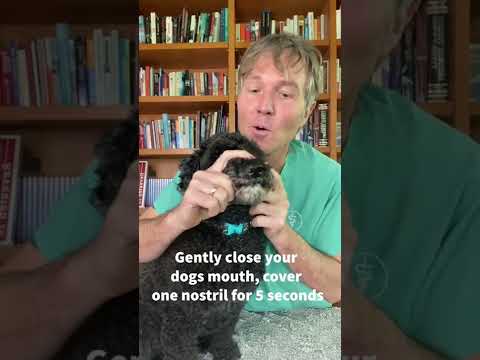
The first intervention is the covering nostrils trick. Gently seal both of the dog’s nostrils with your thumb and forefinger for approximately two seconds while keeping the mouth closed. This brief occlusion forces the dog to open its mouth to breathe or, more commonly, triggers an immediate swallow reflex. The moment the dog swallows, the pharyngeal spasm breaks, and normal respiration resumes instantly. This technique must be executed with gentle pressure; never clamp down forcefully or restrict the airway for extended periods.
The second reliable method is the targeted throat massage technique. Place flat fingers against the dog’s upper throat, just behind the jawline near the base of the skull. Stroke downward along the trachea in smooth, rhythmic motions while speaking in a calm, level tone. This physical stimulation relaxes the tense laryngeal tissues and induces salivation, encouraging the dog to swallow naturally. Cupping your hand over the dog's muzzle and blowing a short, soft puff of air directly into its face can also shock the nervous system into a reflexive swallow, ending the event.
Distinguishing Reverse Sneezes From True Respiratory Emergencies
The core diagnostic dilemma for pet owners is distinguishing between an uncomfortable but benign spasm and a lethal airway crisis. Kennels, dog parks, and public trails expose dogs to pathogens and physical hazards that produce respiratory distress mimicking a reverse sneeze.
A critical step is kennel cough differentiation. While reverse sneezing is strictly inspiratory, drawing air inward, kennel cough produces an expiratory retch. Dogs with infectious tracheobronchitis produce a dry, hacking cough that sounds like a goose honk, often followed by a white, frothy gag. Tracheal collapse, prevalent in aging toy breeds, creates an ongoing, persistent wheeze that worsens with exercise or collar pressure. Foreign body obstruction presents with panic: the dog will aggressively paw at its mouth, salivate excessively, and exhibit pale or blue-tinged gums.
| Condition | Airflow Direction | Distinguishing Acoustic Sound | Typical Clinical Duration |
|---|---|---|---|
| Reverse Sneeze | Inspiratory (Inward) | Rapid, rhythmic snorting or backward honking | 15, 120 seconds per episode |
| Kennel Cough (Bordetella) | Expiratory (Outward) | Harsh goose-like honk with terminal retch | Persistent daily coughing over 7, 21 days |
| Tracheal Collapse | Mixed / Variable | High-pitched click or dry, dynamic musical wheeze | Chronic, progressive episodes during activity |
| Foreign Body Obstruction | Obstructed Inhalation | Silent choking, violent gagging, stridor | Continuous emergency until removed |
Environmental Triggers: Mold, Mites, and Deep Airway Irritants
When reverse sneezing shifts from an occasional curiosity to a daily ordeal, environmental irritants are almost universally responsible. Mold spores lurking in damp basements, synthetic household fragrances, aerosol deodorants, and cigarette smoke inflame the delicate lining of the nasopharynx. In hunting and hiking breeds, a single inhaled foxtail grass awn or microscopic seed can lodge in the caudal nasal cavity, causing relentless, clustered spasms as the tissue swells around the foreign body.
Biological parasites represent another overlooked culprit. Pneumonyssoides caninum, commonly known as the nasal mite, colonizes the nasal passages and sinuses of canines. These microscopic parasites scuttle across mucosal linings, provoking intense itching and chronic spasms that mimic allergies. A dog suffering from nasal mites will often exhibit facial pawing, head shaking, and frequent reverse sneezing that fails to respond to standard home remedies.
Household dust mites and seasonal ragweed also drive significant soft palate inflammation. In urban environments, exhaust particulates and ozone pollution aggravate the pharyngeal gag reflex during daily walks. Identifying whether spasms cluster indoors or outdoors is the single most valuable data point an owner can provide during a medical evaluation.
Medical Management: Antihistamines, Steroids, and Targeted Therapies
For dogs experiencing recurrent flare-ups tied to seasonal allergies, veterinary medicine relies on pharmacological management to lower histamine release. First-generation and second-generation antihistamines remain the primary defense. Veterinarians frequently prescribe hydroxyzine, diphenhydramine, or cetirizine to soothe mucosal irritation.
Correct antihistamine dosage must always be determined by a licensed veterinarian based on exact weight. Human formulations often combine antihistamines with decongestants such as pseudoephedrine or phenylephrine, compounds that are fatal to dogs even in minute quantities. Standard veterinary dosing protocols typically outline:
- Diphenhydramine (Benadryl): Administered at roughly 1 mg to 2 mg per pound of body weight, up to three times daily, inducing mild sedation.
- Cetirizine (Zyrtec): Dosed at approximately 0.5 mg per pound once or twice daily, offering non-drowsy relief for chronic environmental reactivity.
- Hydroxyzine HCl: Prescribed by clinicians at 0.5 mg to 1 mg per pound two to three times daily for severe atopic flare-ups.
When antihistamines fail to control symptoms, long-term immunotherapy treatment provides a durable alternative. Allergen-specific immunotherapy, delivered via subcutaneous injections or sublingual drops, desensitizes the canine immune system to dominant pollens, molds, and dust mites over a period of 6 to 12 months. In severe cases involving severe soft palate swelling, a short course of oral corticosteroids such as prednisone or topical nasal fluticasone provides immediate anti-inflammatory relief.
Veterinary Intervention Criteria: When Spasms Signal Structural Disease
While an isolated reverse sneeze poses zero mortal danger, persistent or evolving episodes require a professional diagnostic workup. Strict veterinary intervention criteria dictate that owners seek immediate clinical care if spasms occur multiple times an hour, last longer than two continuous minutes, or are accompanied by systemic signs.
The presence of unilateral nasal discharge, mucus or blood draining from just one nostril, is an immediate clinical red flag. This symptom rarely points to benign allergies; instead, it frequently indicates an advanced foreign body obstruction, a severe fungal infection like Aspergillus, an abscessed tooth root eroding the nasal cavity, or a nasal tumor such as adenocarcinoma or chondrosarcoma.
Veterinarians employ specialized diagnostics to look deep inside the nasopharynx. Rhinoscopy allows clinicians to pass a small, illuminated camera directly into the nasal passages under general anesthesia, visualizing structural defects, harvesting biopsy samples, or grasping embedded grass awns. Paired with computed tomography (CT) scans, this imaging isolates the precise tissue structure of the skull, ruling out invasive masses that mimic benign mechanical spasms.
Frequently Asked Questions (FAQ)
Q1: Can a dog suffocate or die from a reverse sneeze?
A: No. Reverse sneezing is physically incapable of suffocating a dog. While the airway narrowing sounds dramatic, the dog continues to receive oxygen throughout the episode. The spasm naturally resolves once the pharyngeal muscles fatigue and reset.
Q2: Should I give my dog human Benadryl when an episode happens?
A: Never administer human over-the-counter allergy medication without explicit veterinary guidance. Many human products contain decongestants, acetaminophen, or artificial sweeteners like xylitol, which are highly toxic to canines. Plain diphenhydramine must be dosed strictly according to veterinary weight guidelines.
Q3: Why does my dog suddenly start reverse sneezing in old age?
A: Late-onset reverse sneezing warrants a diagnostic vet visit. While young dogs often spasm due to breed anatomy or seasonal allergies, senior dogs presenting with new, frequent episodes must be screened for dental root abscesses, polyps, nasal mites, or neoplastic growths in the upper respiratory tract.
Proactive Management for Canine Airway Health
A reverse sneeze sounds terrifying, but it is an involuntary, mechanical reflex rather than an impending tragedy. Recognizing the distinctive posture, snorting cadence, and sudden onset allows dog owners to respond with calm precision rather than emergency panic. Simple, targeted physical interventions, gently covering the nostrils or running flat fingers along the throat, reliably break the cycle by forcing the pharynx to swallow.
Long-term management hinges on observing patterns. When spasms intensify during specific seasons or following exposure to household irritants, eliminating synthetic aerosols and discussing clinical allergy protocols with a veterinarian resolves the root cause. By tracking frequency, noting nasal discharge, and knowing how to mechanically clear the soft palate, owners can confidently navigate these alarming airway spasms.
