Cinema's Greatest Masters of Disguise: From Val Kilmer's The Saint to Carvey's Cult Hit
Hollywood has spent decades trying to convince audiences that a pair of wire-rimmed glasses, a fake goatee, or a latex nose can instantly fool trained intelligence operatives. The archetype of the shapeshifting operative reached its stylish apex in 1997 with Phillip Noyce’s The Saint, where Val Kilmer slipped between a dozen distinct personas while dodging Russian oligarchs. Kilmer's depiction of Simon Templar is undergoing a critical reappraisal following Paramount's recent 4K UHD transfer, as detailed in a comprehensive cinapse.net Report examining how Kilmer anchored pulpy spy thriller tropes with deep Catholic guilt.
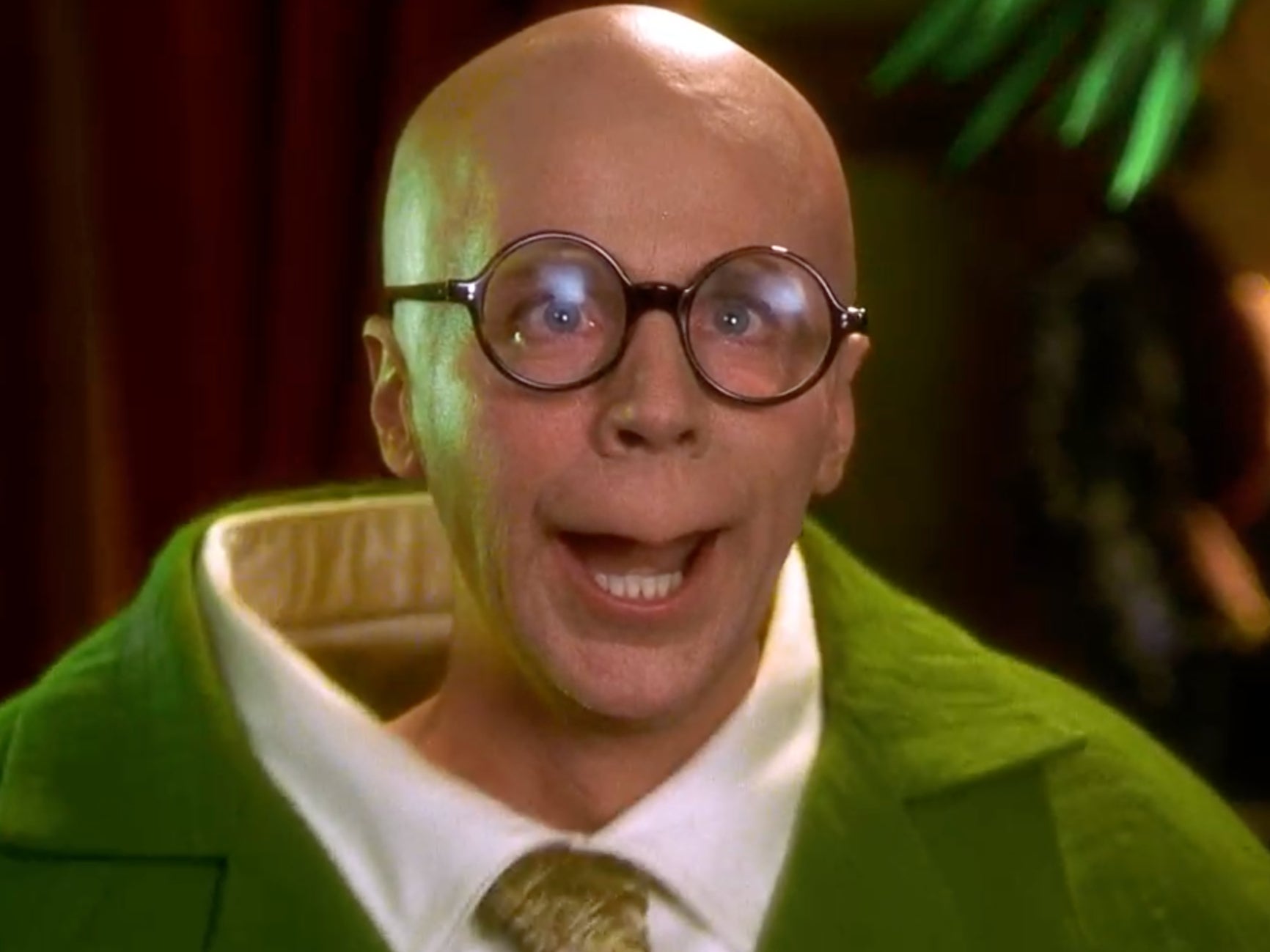
Five years after Kilmer adopted the names of Catholic saints to steal cold-fusion formulas, Dana Carvey took the identical premise into pure cinematic surrealism with 2002’s The Master of Disguise. Carvey’s slapstick vehicle became an instant critical punching bag that eventually settled into bizarre cult status. Disguise cinema exposes a fundamental tension in filmmaking: audiences want to see movie stars disappear into completely different human beings, yet the camera invariably reveals the edges of the silicone and the familiar face underneath.
📌 Key Takeaways:
- The Genre Divide: Disguise plots swing violently between gritty identity thrillers like The Saint and cartoonish physical comedy like The Master of Disguise, using the exact same makeup principles for opposing emotional payoffs.
- The 4K Scrutiny Problem: Modern ultra-high-definition remasters expose the seams of practical 1990s prosthetic appliances while accentuating the subtle physical craft of chameleon actors.
- Psychological Framing: Audiences accept preposterous costume changes when screenplays tether character transformations to severe internal trauma, identity crises, or familial legacy.
Val Kilmer's Catholic Guilt and Cold War Identities in The Saint
Phillip Noyce took Leslie Charteris’s 1928 literary thief and stripped away the polished, martini-sipping charm Roger Moore brought to the 1960s television series. Kilmer’s Simon Templar is an orphan who witnessed systemic abuse in a Catholic boarding school, fleeing institutional trauma by constantly reinventing his external identity. When Templar infiltrates the inner circle of Russian billionaire Ivan Tretiak, he adopts aliases named exclusively after canonized Catholic saints: Thomas More, Vincent de Paul, Martin de Porres, and Bruno.
Kilmer spent months collaborating with dialect coaches and makeup designer Lois Burwell to make each persona physically distinct. As Martin de Porres, Templar presents as a gay artist sporting a long blonde wig, flamboyant silk scarves, and a whispery transatlantic cadence. As Thomas More, he dons a scruffy beard and heavy wool trench coat to look like a hardened Eastern European dissident. In lesser hands, these rapid wardrobe swaps would tilt into pantomime. Kilmer holds the thread together by letting the audience see the immense emotional exhaustion behind Templar’s eyes. Every costume is an armor plate designed to deflect genuine intimacy, particularly when he encounters Elisabeth Shue’s cold-fusion scientist, Dr. Emma Russell.
The film's pacing gives Templar's transformations mechanical credibility. Kilmer does not merely swap costumes between scenes; Noyce’s camera lingers on Templar hurriedly packing specialized theatrical kits, applying liquid adhesive to cheekbones in cramped train bathrooms, and using early digital cellphones to route fake credentials. Disguise in The Saint functions as professional tradecraft rather than cinematic sorcery.
The Fine Line Between High-Stakes Espionage and Slapstick Comedy
The technical apparatus required to deceive an enemy general is identical to the setup needed to execute a broad vaudeville routine. Both rely on silicone appliances, vocal mimicry, specialized silhouettes, and an audience willing to suspend disbelief. When a spy thriller stumbles, it instantly becomes comedy. When a comedy commits fully to prosthetic craft, it can rival the budget of a major espionage feature.
Director Perry Andelin Blake’s The Master of Disguise leaned directly into that structural absurdity. Dana Carvey played Pistachio Disguisey, an Italian waiter who discovers he descends from an ancient lineage of secret agents capable of blending into any environment. Produced by Happy Madison Productions on a $16 million budget, the film tasked legendary makeup artist Kevin Yagher with transforming Carvey into dozens of caricatures: an elderly German scientist, a turtle-suited human, a flatulent cherry pie vendor, and an uncanny caricature of George W. Bush.
Carvey treated prosthetic makeup as an engine for pure physical improvisation. The film was eviscerated by critics in August 2002, landing a brutal 1% rating on Rotten Tomatoes, yet it grossed $43.4 million worldwide because young audiences gravitated toward the relentless silliness of the physical transformations. The production became an accidental cultural artifact, heavily scrutinized years later when internet sleuths realized the infamous "Turtle Club" sequence had been filmed on September 11, 2001, resulting in a surreal moment where the cast and crew observed a national moment of silence while Carvey stood in full green, bulbous reptilian prosthetics.
Prosthetic Craft Meets the Cold Eye of Ultra-High-Definition Scrutiny
The transition from standard-definition home video to 4K Blu-ray transfers has fundamentally altered how audiences view practical character transformations. 1990s films were shot on 35mm film stock and color-timed for standard theatrical projection and 480i CRT televisions, allowing makeup artists to blend latex edges into skin using fine theatrical powders that blurred naturally on screen. High-dynamic-range (HDR) transfers pull those seams directly into the spotlight.
Paramount’s 4K restoration of The Saint showcases this tension with startling clarity. In native 3840x2160 resolution, the texture of Kilmer's false facial hair and the precise borders of his skin prosthetics become visible during bright outdoor sequences in Red Square. The transfer exposes the sheer craftsmanship of the crew: rather than looking cheap, the visible handiwork highlights Kilmer’s physical dedication. His vocal inflections, posture shifts, and facial ticks do far more work to sell the illusion than the physical silicone ever did.
| Film & Year | Production Budget | Primary Disguise Technique | 4K Visual Resilience |
|---|---|---|---|
| The Saint (1997) | $68 million, $90 million | Theatrical wigs, subtle latex facial pieces, accent work | High; actor's physical posture and vocal work mask edge seams |
| The Master of Disguise (2002) | $16 million | Full-head silicone appliances, exaggerated fat suits, body puppets | Moderate; deliberate rubbery artificiality fits the cartoonish tone |
| Mission: Impossible (1996) | $80 million | Seamless latex pull-off masks, vocal modulation chips | Exceptional; clever editing conceals the boundary line cuts |
| Fletch (1985) | $8 million | Low-tech costume shop props, false teeth, verbal bravado | High; works because the disguises are explicitly improvised and cheap |
Practical effects age differently than computer-generated imagery. When an actor wears a physical prosthetic on a 35mm film set, ambient studio lights bounce off the silicone exactly as they do off natural skin. Even when 4K scans reveal the adhesive line near Kilmer’s hairline in The Saint, the eye reads the object as a physical entity sharing real space with the other actors. That tactile weight is what keeps 1990s thrillers feeling grounded compared to contemporary blockbusters that paint digital faces over stunt doubles with visual effects.

The Mechanics of the Undercover Alias in Modern Pop Culture
Writers rely on disguise because it solves an essential dramatic puzzle: how does a solitary protagonist penetrate an impenetrable fortress without firing a weapon? In The Saint, Simon Templar does not carry a firearm. He infiltrates Ivan Tretiak’s Moscow headquarters using forged identification, an imported suit, and the persona of a haughty British collector. Disguise shifts the narrative tension from gunplay to social engineering.
This dynamic has made chameleon characters a staple of global entertainment:
- Psychological Disassociation: The protagonist risks losing their original personality inside the alias. Kilmer’s Templar repeatedly reveals that he cannot remember his real birth name, having traded it away during childhood.
- Disguises degrade over time. Sweat dissolves spirit gum, rain destroys facial hair adhesive, and close proximity invites detection. The audience constantly monitors the physical stability of the fake nose or wig.
- Disguise plots typically force characters across rigid social hierarchies. In The Saint, Templar effortlessly shifts from a Russian street vagrant begging for coins into an aristocrat eating caviar in a luxury penthouse.
Brian De Palma pushed this mechanic into pure techno-fetishism with the Mission: Impossible franchise, inventing the hyper-realistic latex face mask that tears off in a single dramatic motion. That single trope dominated late-90s action cinema. Noyce consciously pushed back against it in The Saint, opting instead for realistic theatrical makeup kits that Templar carried in a customized leather briefcase. The result feels much closer to real-world espionage tradecraft, where operatives rely on subtle changes in posture, clothing, and hair coloring rather than science-fiction silicone masks.
Why Slapstick Caricatures Refuse to Die in Cult Film Communities
The critical evisceration of The Master of Disguise in 2002 should have buried the film permanently. Critics labeled it unwatchable, pointing to its razor-thin plot and Carvey’s hyperactive vocal routines. Yet across TikTok, Letterboxd, and YouTube essays, the movie maintains a persistent, vocal cult following.
Cinema subcultures love high-concept failures that commit entirely to their own absurd premises. Carvey did not hedge his bets; he threw himself into every ridiculous character with the exact same frantic energy he displayed during his peak years on Saturday Night Live. When Pistachio Disguisey disguises himself as an anthropomorphic turtle to infiltrate an exclusive gentleman's club, the sheer commitment to the bit creates an uncanny surrealism that feels almost experimental decades later.
Audiences reevaluating early-2000s comedies find a weird innocence in The Master of Disguise. It arrived right as Hollywood was transitioning away from practical physical comedy toward CGI-driven family entertainment. Kevin Yagher’s prosthetic work on Carvey was undeniably world-class, even if the surrounding screenplay was paper-thin. Seeing that tier of Oscar-caliber prosthetic craft applied to a grown man doing bizarre impressions of a cherry pie remains fascinatingly unhinged.
Frequently Asked Questions (FAQ)
Q1: Why is Val Kilmer’s performance in The Saint receiving renewed attention?
A1: Paramount's recent 4K UHD release of the 1997 film spurred fresh critical evaluations, with reviewers praising Kilmer’s grounded physical acting and complex emotional subtext across his twelve distinct undercover aliases.
Q2: Did Val Kilmer do his own makeup transformations in The Saint?
A2: Kilmer worked directly with Academy Award-winning makeup artist Lois Burwell. While Burwell applied the detailed silicone prosthetics, Kilmer personally developed the distinct physical mannerisms, gaits, and vocal cadences for each saint persona.
Q3: Why did The Master of Disguise become such a famous cult failure?
A3: Dana Carvey's 2002 family comedy received near-universal critical disdain for its chaotic plotting, yet its outlandish makeup effects and infamous production stories, such as filming the Turtle Club scene on September 11, 2001, cemented its status as an internet cult curiosity.
Q4: How do 4K home video remasters affect practical disguise makeup?
A4: Ultra-high-definition scanning exposes fine details like adhesive seams, wig lines, and makeup texture. However, practical latex and silicone still blend more naturally into film grain and camera lighting than early 2000s digital visual effects.
The Lasting Power of Physical Metamorphosis on Screen
Digital face-swapping software and artificial intelligence tools have made character transformation instantaneous in contemporary filmmaking. Marvel productions routinely de-age actors or paste digital stunt faces onto performers with the click of a mouse. Yet these computer-generated shortcuts lack the immediate, tactile thrill of watching an actor alter their flesh through physical commitment.
When Val Kilmer slouches his shoulders, drops his vocal register, and walks into a room wearing a glued-on mustache in The Saint, the audience witnesses an athletic feat of acting. The disguise is not merely a costume; it is an internal psychological shift that changes how the performer moves through space. The camera captures the sweat, the tension of the glue against the jawline, and the terror of a persona slipping mid-conversation.
Whether played for Cold War espionage stakes or lowbrow comedic farce, the master of disguise remains one of cinema’s most durable archetypes. It taps directly into the foundational human fantasy of shedding one's troubles, stepping into an entirely new skin, and walking freely through the world undetected. As physical filmmaking continues to battle sterile digital homogenization, these tactile 1990s and 2000s transformations stand out as masterclasses in practical screen craft.
