Complete 2026 Guide to Discover Student Credit Cards: Application, Benefits, and Pitfalls
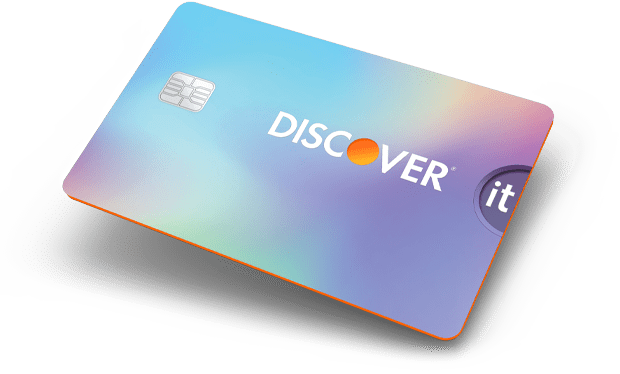
Navigating the financial transition to college involves tough decisions, and establishing credit from scratch remains one of the trickiest. Without an existing credit file, conventional lenders treat young adults as invisible or unviable risks. The Discover it Student Cash Back card has dominated campus financial discussions precisely because it removes that structural barrier. According to an extensive nerdwallet.com Report analyzing credit lines for young adults, starter products have evolved rapidly into sophisticated instruments offering rewards rates that rival premier adult cards.
Securing approval, however, demands an accurate understanding of federal lending rules, income reporting, and card mechanics. Young applicants often underestimate how fast small revolving balances spiral under double-digit interest rates.
📌 Key Takeaways:
- Approval Accessibility: With no credit history required, undergrads can qualify with independent income from part-time jobs, stipends, or allowances, even without an established credit score.
- The First-Year Multiplier: Discover automatically matches all accumulated rewards at the end of month 12 through its Cashback Match program, doubling effective returns on everyday spending.
- Structural Discipline: While the card charges no annual fee and zero foreign transaction fees, standard variable purchase APRs often exceed 20%, making full monthly balance payoffs essential.
Navigating the Starter Credit Landscape Without a Prior Score
Traditional credit scoring models require at least six months of reported trade-line activity before generating an official score. This paradox leaves millions of young consumers locked out of entry-level loans. Discover mitigates this issue by offering solid starter credit card approval odds tailored to enrolled students who bring zero credit history to the table. Instead of penalizing an empty file, the underwriting system weighs enrollment credentials alongside verified cash inflows.
The Credit Card Accountability Responsibility and Disclosure (CARD) Act sets strict parameters for applicants under age 21. Federal regulations require young adults to establish independent financial capability to handle debt obligations. That means you cannot list anticipated parental gifts or casual, unearned pledges as primary earnings. Acceptable income sources include wages from summer jobs or on-campus work-study positions, academic grants after tuition deductions, and formal allowances deposited into personal checking accounts.
Credit score requirements are functionally nonexistent for pure beginners applying to the student tier. Discover performs a hard pull on your credit report, primarily to confirm you have not incurred recent delinquencies, charge-offs, or collections. If you have already damaged your profile through an unpaid retail account or utility default, an unsecured approval becomes considerably tougher. For true blank slates, the pathway remains exceptionally clear.
Breaking Down the Discover it Student Cash Back Rewards Structure
The primary appeal of the Discover it Student Cash Back product stems from its tiered rewards format. Cardholders earn 5% cash back on quarterly categories that shift throughout the year, capped at $1,500 in combined purchases per quarter after manual activation. All other spending earns an unlimited 1% cash back.
Typical quarterly categories target typical undergraduate budgets:
- Quarter 1 (January, March): Grocery stores and select streaming platforms
- Quarter 2 (April, June): Gas stations, EV charging stations, and public transit
- Quarter 3 (July, September): Restaurants and digital wallet transactions (Apple Pay, Google Pay)
- Quarter 4 (October, December): Amazon.com and target retail outlets
The standout mechanism remains the signature Cashback Match. At the end of your first twelve billing cycles, Discover tallies every dollar earned and deposits an identical sum into your rewards bank. Maxing out the 5% category cap each quarter yields $300 in baseline rewards. Once matched at year-end, that payout expands to $600 cash, effectively transforming the initial 5% return into a massive 10% yield on routine purchases.
The account carries no annual fee, so these earnings remain intact rather than being consumed by maintenance overhead. Cash back does not expire while the account remains open, and redemptions start at just one cent for direct deposits or statement credits.
Discover vs Capital One: Comparing Top Student Credit Cards
Deciding on a first card often comes down to an analysis of Capital One vs Discover student options. While Discover emphasizes high-percentage rotating categories, Capital One leans toward steady, fixed-percentage spending categories.
The following comparison details how these primary contenders structure their financial terms and reward rates in 2026:
| Card Feature | Discover it Student Cash Back | Capital One SavorOne Student Cash Rewards | Discover it Student Chrome |
|---|---|---|---|
| Annual Fee | $0 | $0 | $0 |
| Top Reward Tiers | 5% rotating categories (up to $1,500/quarter with activation) | 3% dining, entertainment, popular streaming, and grocery stores | 2% at gas stations and restaurants (up to $1,000/quarter combined) |
| Base Cash Back | 1% on all other spending | 1% on all other spending | 1% on all other spending |
| Welcome Bonus Structure | Unlimited Cashback Match at end of Year 1 | $50 or $100 after spending $100 in initial 3 months | Unlimited Cashback Match at end of Year 1 |
| Foreign Transaction Fees | None | None | None |
| Category Activation | Required every three months | Automatic / No tracking required | Automatic / No tracking required |
Students who dislike remembering calendars or manually enrolling via an app often find Capital One easier to manage day to day. Those focused on squeezing maximum returns out of planned expenditures, like holiday retail or summer road trips, generally walk away with higher cash returns using Discover.
Building Credit History and Graduating to Higher Credit Limits
Securing an account is only the preliminary step; building credit history responsibly requires deliberate operational habits. Discover reports transaction behavior each month to all three major credit bureaus: Experian, TransUnion, and Equifax. To craft an exceptional score, keep your credit utilization ratio, your reported balance divided by your assigned credit limit, under 10% to 30%.
Starter credit lines for college students usually open between $500 and $1,500. With a $500 limit, spending $250 pushes your utilization to 50%, which temporarily depresses your score even if you pay the bill on time. To avoid this trap, submit mid-cycle payments via the mobile app before your billing statement closes.
Discover bundles continuous FICO Score tracking directly into its mobile platform and online portal. This dashboard displays your actual TransUnion FICO Score 8 alongside key score factors, including payment consistency, total debt, and the age of your credit accounts. Watching this metric tick upward offers tangible confirmation of your progress.
After six to twelve months of on-time payments, the algorithm systematically reviews the account for a credit limit increase. You can also request a line bump manually through the app. Maintain updated income records in your user profile to boost your odds of an adjustment. Once you graduate, you do not lose the card. Discover transitions your account into a standard adult portfolio product, preserving your account history and protecting your credit score from an abrupt drop in average account age.
Avoiding Common Student Card Pitfalls
The most severe trap awaiting young cardholders is the variable annual percentage rate (APR). Discover often offers an introductory 0% purchase APR for the first six months. Once that promotional window shuts, the standard variable APR jumps to roughly 18% to 28%, depending on federal prime interest benchmarks.
Carrying a rolling $1,000 balance at a 25% APR costs around $250 a year in pure interest. That penalty erases any benefits earned through cash-back bonuses. A credit card is not an emergency extension of personal cash; it functions simply as an electronic charge mechanism and a credit-building tool. Pay the statement balance in full every single month without exception.
Another major hurdle concerns merchant acceptance overseas. Discover proudly charges no foreign transaction fees, making it an appealing option for study-abroad programs. Unlike Visa and Mastercard, however, Discover's payment network runs on independent bilateral partnerships, such as JCB in Japan or UnionPay in China. In several European and South American destinations, smaller shops and independent restaurants decline Discover cards. Anyone traveling abroad should pair their Discover account with a backup Visa or Mastercard debit or credit product.
Community feedback across finance forums like Reddit's r/CreditCards frequently highlights account lockups triggered by sudden fraud flags. Students moving from their home state to campus often run into security freezes when making distinct cross-state purchases. Prevent this headache by logging your campus relocation and updating your home-versus-school address records in the app before term begins.
Application Playbook: Steps to Take Before Hitting Submit
Submitting an application without preparation can lead to unnecessary delays or identity verification holds. Gather the necessary records before navigating to the application page.
Checklist for submission:
- Identity Verification: A valid Social Security Number (SSN) or Individual Taxpayer Identification Number (ITIN), alongside government-issued identification.
- College Enrollment Data: Accurate name of your accredited two- or four-year educational institution, along with your projected graduation year and current academic status.
- Income Documentation: W-2 statements, recent paystubs, or bank statements showing recurring personal deposits. If asked, you must prove the figures entered on the screen.
- Housing Details: Clear distinction between your current campus dwelling and your permanent parental mailing address.
Take advantage of pre-approval tools online before initiating a formal application. Discover offers a soft credit pull tool on its website that assesses eligibility without touching your actual credit score. If the pre-approval algorithm signals green, proceed to the full application form. Approvals are frequently automated and issued within 60 seconds, with physical cards landing in your mailbox within five to seven business days.
Frequently Asked Questions (FAQ)
Q1: Do I need an existing credit score to qualify for the Discover student card?
A1: No. Discover intentionally underwrites these cards for individuals with no established credit file. Having no credit history will not trigger an automatic denial, provided you demonstrate sufficient personal income and verified college enrollment.
Q2: What happens to my student card when I finish college?
A2: Your account continues running normally without disruption. Discover does not cancel your line or downgrade your rewards upon graduation. The system automatically converts your profile to a standard consumer account, keeping your credit line, earned cash rewards, and account age completely intact.
Q3: Does Discover charge fees when using the card abroad?
A3: No. Discover charges 0% in foreign transaction fees on all purchases outside the United States. Merchant acceptance of the Discover network can be spotty in parts of Europe and Latin America, so carry a secondary Visa or Mastercard when traveling overseas.
Q4: Can international students studying in the U.S. qualify?
A4: Yes, provided you hold a valid Social Security Number (SSN) or Individual Taxpayer Identification Number (ITIN). F-1 visa students working permitted on-campus roles or approved internships can use those verifiable domestic earnings to qualify.
Smart Financial Foundations for Life Beyond Campus
Entering adulthood with an established credit profile creates distinct structural advantages. It translates directly into lower auto insurance premiums, seamless apartment lease approvals, waived utility deposits, and rock-bottom rates on future vehicle or home purchases. The Discover it Student Cash Back remains an outstanding starter vehicle for building that record from scratch.
Treat your credit card like cash. Keep your monthly utilization low, set your account to auto-pay the statement balance in full, activate your quarterly categories promptly, and let the initial Cashback Match work to your advantage. Approached with clear discipline, your student card transforms from an administrative chore into a lucrative, career-launching financial foundation.
