Complete Guide: How to Say 6 and 7 in French for Tennis Fans and Learners
How to Say 6 and 7 in French: The Ultimate Phonetic and Roland Garros Scoring Guide
Every spring, global tennis audiences tune in to Court Philippe-Chatrier only to stumble over the cadence of the chair umpire. When a set reaches a dramatic climax, the scorekeeper does not say "six-seven." Instead, the microphone crackles with a crisp, rhythmic announcement that sounds foreign even to people who took high school French. The confusion peaked during emotional farewell matches at Roland Garros, where veterans Stan Wawrinka and Gaël Monfils bid their final goodbyes to the Parisian clay, as captured in a Field Level Media report detailing the tournament's changing eras. Between grinding baseline rallies and tiebreaks, the numbers six and seven become the soundtrack of Paris.
Mastering these two digits requires unlearning basic spelling instincts. In French, the letters on the page routinely disguise the sounds coming out of native speakers' mouths. The number six changes its ending consonant depending on what word follows it, while seven harbors an invisible trap that trips up non-native speakers worldwide. Understanding the phonetics of these two numbers unlocks the secrets of French numeral phonetics, everyday street transactions, and professional sports refereeing.
📌 Key Takeaways:
- Core Phonetics: In isolation, six is pronounced "seess" (/sis/) with an audible terminal S sound, while sept is pronounced "set" (/sɛt/) with a strictly silent 'p'.
- Contextual Mutation: The terminal sound of six shifts dramatically across three phonetic environments: it sounds like /sis/ alone, /si/ before consonants, and /siz/ before vowels.
- Courtside Application: Roland Garros score callers announce "six, sept" as separate standalone numbers (/sis sɛt/), never linking them into conversational prose during tiebreak counts.
The Clay Court Catalyst: Why Roland Garros Confuses Global Listeners
Tennis broadcasts provide the most rigorous global listening exam for French numbers. When Taylor Fritz dropped a stunning match to world No. 148 on the Parisian dirt, or when Frances Tiafoe engaged in verbal spats with Jaime Faria across grueling five-set marathons, the chair umpire served as the official metronome of the drama. During tense moments, the umpire chants scores like "six jeux à sept" (six games to seven) or calls out tiebreak tallies point by point: "six, sept."
Umpires speak through compressed stadium audio systems. The sound echoes across 15,000 spectators, stripping subtle vocal frequencies from the transmission. What listeners at home hear is a sharp hiss followed by a sharp stop: "seess... set."
The confusion deepens because English speakers expect the 'x' in six to sound like a hard "ks" (as in "sixteen") and the 'p' in sept to mirror the Latin root found in "September." When the French umpire ignores the printed English logic, fans wonder if they misheard the scoreline entirely. The umpire is simply following strict French consonant pronunciation rules that date back centuries.
Deciphering "Six": The Three-Way Phonetic Chameleon
The French numeral 6 (six) is one of the most volatile words in the language. Its pronunciation shifts entirely based on syntax and the sound of the word that follows. Unlike static English numerals, six changes between three distinct phonetic endings.
When spoken in isolation, at the end of a sentence, or when announcing a tennis tiebreak score, six is pronounced /sis/ ("seess"). The 'x' functions as a soft unvoiced 's'. If an umpire calls out "six" after a player wins their sixth point, the final 's' sound is crisp, short, and unmistakable.
The rule flips when six modifies a noun starting with a consonant. In the phrase six balles (six balls), the final 'x' drops completely. The phrase becomes /si bal/ ("see-bal"). Pronouncing the 's' here sounds clumsy to native ears. If an amateur player asks for six tennis balls and says "seess balles," they instantly mark themselves as a beginner.
The third variation occurs before nouns starting with a vowel or a mute 'h'. Here, the mandatory liaison rule takes control. The final 'x' transforms into a vibrating /z/ sound. Consider the phrase six arbitres (six umpires). It is pronounced /si-zar-bitr/. The silent consonant awakens to bridge the vowel gap, creating a fluid sonic chain.
Cracking "Sept": The Mystery of the Silent 'P'
If six is a shapeshifter, sept is a deliberate linguistic trap. The word contains four letters, but you must only pronounce three: /sɛt/ ("set"). It rhymes directly with the English words "net," "bet," and "let."
The letter 'p' inside sept is completely silent. You must never say "sep-t" or attempt to pop your lips before releasing the 't'. The intrusion of the letter 'p' traces back to Renaissance scholars. During the 16th and 17th centuries, French etymologists deliberately inserted silent Latin letters into Old French words to show off their scholarly heritage. Old French spelled the number set, reflecting how people actually spoke. Academics wedged the 'p' back inside to align the spelling with the Latin septem. Spoken French refused to adopt the awkward consonant cluster, leaving modern learners with a permanent visual stumbling block.
Unlike six, the word sept maintains its terminal 't' sound before consonants. Sept raquettes (seven rackets) is pronounced /sɛt ra-kɛt/. When followed by a vowel, such as sept ans (seven years), the 't' links naturally into the vowel: /sɛ-tɑ̃/.
| Numeral Context | Written Form | IPA Phonetic | Approximate English Sound |
|---|---|---|---|
| 6 (Standalone / Score) | six | /sis/ | "Seess" |
| 6 + Consonant | six jeux | /si ʒø/ | "See zheu" |
| 6 + Vowel (Liaison) | six heures | /si-zœʁ/ | "See-zurr" |
| 7 (Standalone / Score) | sept | /sɛt/ | "Set" |
| 7 + Consonant | sept balles | /sɛt bal/ | "Set bal" |
| 7 + Vowel (Enchaînement) | sept échanges | /sɛ-te-ʃɑ̃ʒ/ | "Set-ay-shonzh" |
| The Combo: "6, 7" | six, sept | /sis sɛt/ | "Seess, set" |
From Court to Street: When Liaison Rules Shift the Sounds
Everyday French speech relies heavily on vocal rhythm. While chair umpires pause deliberately to maintain match tension, everyday Parisians string their numbers together rapidly. This conversational speed triggers specific phonetic mutations when counting or providing phone numbers.
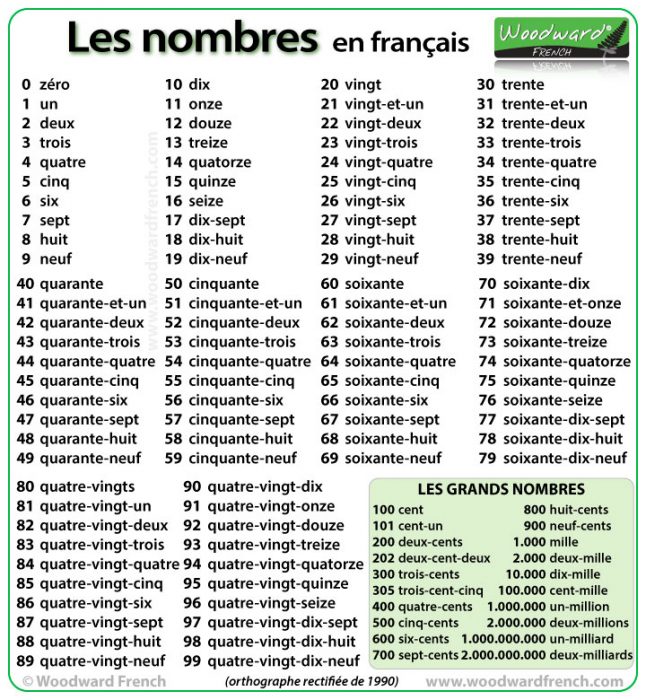
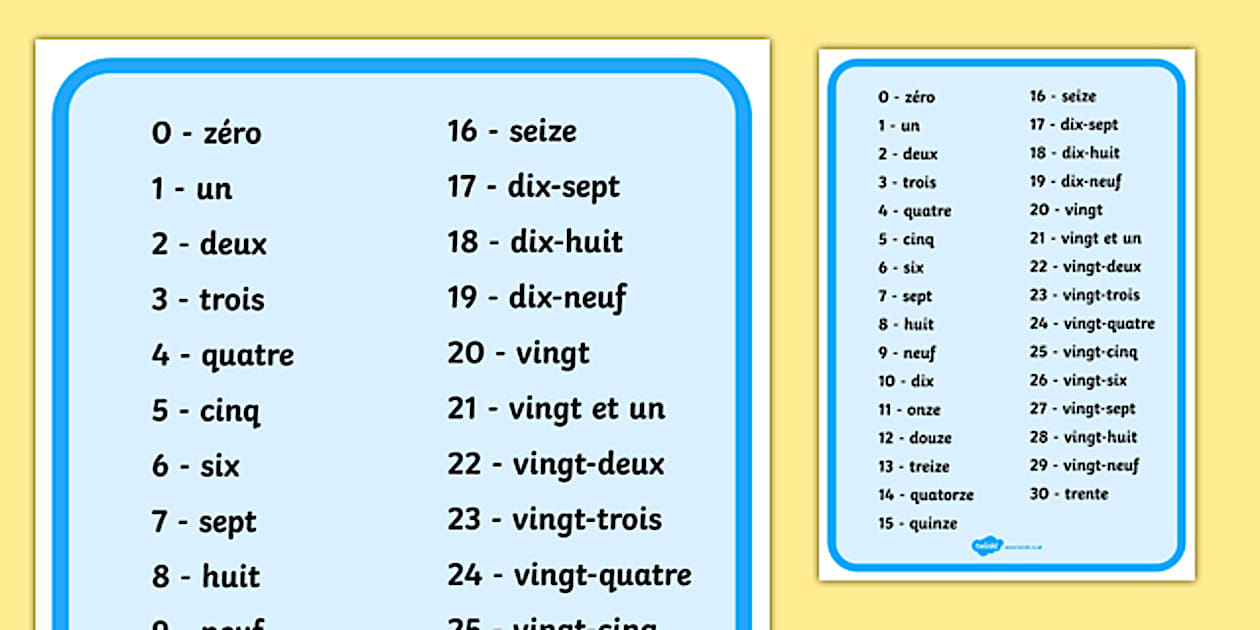
When reciting numbers in sequence, such as counting from 1 to 10 (un, deux, trois, quatre, cinq, six, sept, huit, neuf, dix), the rules for isolation apply. Speakers pause slightly between digits. In this sequence, six is pronounced /sis/ and sept is pronounced /sɛt/. The transition between the two produces a sharp double-sibilant sound: /sis... sɛt/.
The phrase six et sept (six and seven) introduces another common trap. In French, the conjunction et (and) is pronounced as a closed vowel: /e/. Crucially, French grammar strictly forbids liaisons after the word "et."
However, liaison before the word et is optional in casual speech and common in formal diction. When saying six et sept quickly, many native speakers pronounce it /si-z-e-sɛt/ ("see-zay-set"). The 'x' latches onto the vowel of et, producing a smooth transition before the speaker hits the hard dental stop of sept.
Novice learners often overcompensate by attempting to pronounce every letter they see on paper. Doing this disrupts the natural musical flow of the language. If you articulate the 'p' in sept, you force your mouth into an awkward pause that immediately halts conversational pacing.
Roland Garros Umpire Score Announcements
At Roland Garros, umpires are not just scorekeepers; they are actors in an international sports spectacle. Umpire announcements follow strict, formal protocols governed by the French Tennis Federation (FFT) and the International Tennis Federation (ITF). These professional announcements showcase French numeral phonetics under extreme real-world scrutiny.
Official officiating protocols require umpires to declare games using clear phrasing:
- "Jeu premier set, Nadal, sept jeux à six": (First set, Nadal, seven games to six). Notice that because sept precedes the noun jeux, the terminal 't' remains audible: /sɛt ʒø/. When six arrives at the absolute end of the sentence, the umpire hits the terminal 's' hard: /sis/.
- "Égalité, six jeux partout": (Deuce, six games all). In this phrasing, six sits directly in front of the consonant-led noun jeux. The umpire drops the final consonant sound entirely: /si ʒø paʁ-tu/. The word sounds identical to the English verb "see."
- "Sept, six": (Tiebreak score). Point-by-point calls during a tiebreak require clear, unlinked delivery. Umpires say /sɛt/ followed by a deliberate breath, then /sis/. They never blend the two scores into a continuous word.
Disputes often erupt over calls from the chair. During recent French Open tournaments, controversies over officiating consistency sparked intense debate among players and fans. The sport relies heavily on the authority of the chair, and clear, standardized score announcements are vital for keeping international players aligned during high-stakes pressure points.
Frequently Asked Questions (FAQ)
Q1: Why do I hear some native speakers pronounce the 's' in "six" and others completely drop it?
A1: It depends entirely on the word following it. When six stands alone or sits at the end of a sentence, the 's' is always pronounced (/sis/). When it is directly followed by a word starting with a consonant (e.g., six balles), the terminal sound is silenced (/si/). When followed by a vowel, it converts into a 'z' sound (/siz/).
Q2: Is the 'p' in "sept" ever pronounced in regional French dialects?
A2: No. Across standard metropolitan French, Canadian French, Belgian French, and Swiss French, the 'p' in sept is universally silent. You will only ever hear /sɛt/. Pronouncing the 'p' is an error made exclusively by foreign language learners.
Q3: How do you say a tennis tiebreak score of "7, 6" in French?
A3: You pronounce it simply as "sept, six" (/sɛt sis/). If you want to say "seven games to six," say "sept jeux à six" (/sɛt ʒø a sis/).
Q4: Does the number 10 (dix) follow the same phonetic rules as 6 (six)?
A4: Yes. The numbers six and dix follow identical consonant mutation rules. In isolation, dix is /dis/ ("deess"). Before consonants, it becomes /di/ ("dee"). Before vowels, it becomes /diz/ ("deez").
Q5: What is the biggest pronunciation mistake English speakers make when counting 6 and 7?
A5: The single most common mistake is pronouncing six like the English word "six" with a "ks" sound. The French six must always end in a pure "ss" sound (/sis/), never a hard "ks". The second most common mistake is pausing to articulate the silent 'p' in sept.
Mastering French Numbers in Fast-Paced Speech
The rules governing French numbers seem counterintuitive when viewed purely on a printed page. Alphabetic spelling reflects centuries of historical compromises, royal decrees, and etymological meddling. The spoken tongue, however, operates on a much cleaner system designed for vocal rhythm, musicality, and fluid transitions between words.
Next time you tune in to Roland Garros or practice counting from 1 to 10, stop trying to sound out every written letter. Remember that six is a vocal chameleon that strips away its ending before consonants, while sept will always remain a clean three-letter word disguised in a four-letter suit. Once you internalize the cadence, the stadium calls of Paris cease to sound like indecipherable code and become the natural, fluid rhythm of standard French.
