Costco's Island Way Sorbet Craze: Why Shoppers Are Hoarding the Real Fruit Shells

Every spring, an unmistakable frenzy sweeps through warehouse freezers across North America. Pallets stacked with glossy 12-count boxes of Island Way Sorbet arrive, and within days, warehouse carts are piled three boxes high with them. While ice cream trends come and go, this South African export has sparked a dedicated annual ritual. As highlighted in a recent Southern Living Report tracking member-voted grocery obsessions, the tropical treat has become one of the wholesale club's most elusive, fiercely pursued seasonal staples.
The dessert itself is refreshing, smooth, and fruit-forward. Yet the persistent buying frenzy extends far past the taste buds. Shoppers are stripping store shelves clean as much for the packaging as the dessert itself: hand-carved, frozen real fruit rinds that double as durable kitchen ramekins, cocktail vessels, and garden decor long after the dessert disappears.
📌 Key Takeaways:
- The Cult Phenomenon: The Island Way Sorbet variety pack returns seasonally to the Costco frozen dessert aisle, selling out rapidly between late spring and mid-summer.
- The Repurposing Craze: Consumers preserve and sanitize the natural real fruit shells, converting them into cocktail cups, charcuterie vessels, and decorative household items.
- Recipe & Dietary Reality: While marketed alongside dairy free frozen treat options, select flavors contain trace skim milk or cream base, making close label reading essential for strict dietary needs.
The South African Origins Behind the Warehouse Phenomenon
Island Way Sorbet did not originate in an American food incubator. The concept traces back to Dynamic Food Ingredients in Port Elizabeth (now Gqeberha), South Africa. The company perfected an industrial method in the late 1990s to flash-freeze hand-scooped fruit halves without destroying the structural integrity of the outer rind. Instead of discarding the discarded shells from commercial fruit processing, the South African sorbet manufacturer transformed lemons, oranges, pineapples, and coconuts into biodegradable, natural vessels.
Costco buyers caught wind of the product during international food expos in the early 2000s. Introduced as a trial run in coastal American locations, the novelty won over warehouse members immediately. The tactile sensation of holding a frosty, textured coconut shell or thick lemon peel stood in stark contrast to flimsy wax-paper cups and plastic tubs. What started as an experimental import blossomed into a signature Costco membership frozen find that sparks nationwide social media alerts every March.
Because processing natural fruit rinds at scale requires intensive manual preparation, dynamic production cannot simply ramp up overnight. Each rind is cored, washed, flash-frozen, and hand-filled. This labor-heavy operational chain caps international production runs, which creates natural scarcity and drives the recurring summer dessert hype when local warehouses finally receive their limited pallet allotments.
Why Shoppers Hoard and Repurpose the Real Fruit Shells
Most commercial frozen desserts generate single-use packaging waste. Island Way flips that dynamic completely. Once the spoon clears the final bite of mango or passion fruit, consumers are left with a sturdy, organic bowl. Online lifestyle communities and home-entertaining forums have turned the preservation of these reusable fruit bowls into an art form.
Cleaning them requires minimal effort. A gentle hand-wash in cool water removes leftover fruit sugars without softening the rind. Once air-dried, shoppers freeze them for later use. Home mixologists employ hollowed-out lemon and orange rinds to serve frozen daiquiris and tropical mezcal cocktails at backyard gatherings. The thick peel acts as an insulating layer, keeping drinks colder longer than standard glassware while leaving no glass shards near swimming pools.
Beyond home bars, the natural shells have migrated to culinary presentation and home crafts. The sturdy coconut shells frequently appear on dinner tables as salt cellars, mise en place bowls, or individual serving cups for ceviche and spicy dips. In gardening circles, succulent lovers drill tiny drainage holes into the citrus bottoms, using the organic hulls as biodegradable starter planters that break down naturally when planted directly in soil.
Inventory Tracking, Warehouse Pricing, and Flavor Breakdowns
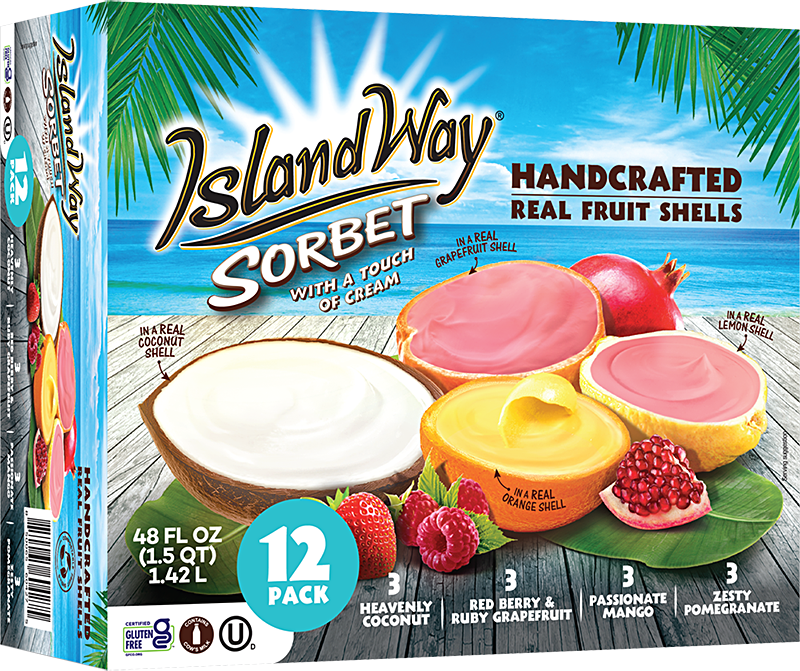
Pinpointing the product during seasonal warehouse availability requires basic warehouse savvy. Island Way Sorbet generally operates under Costco item number #34440 (varying slightly by regional packaging updates). Pricing holds steady across regions, typically retailing between $14.99 and $16.99 for a 12-count variety pack. At roughly $1.25 to $1.41 per individual serving, it undercuts restaurant-grade fruit sorbet presentations by a wide margin.
| Flavor Profile | Serving Shell | Calories per Unit | Dairy Status |
|---|---|---|---|
| Heavenly Coconut | Real Coconut Half | 150, 170 kcal | Contains Dairy (Cream/Milk) |
| Ruby Berry / Passion Fruit | Natural Lemon Rind | 80, 95 kcal | Contains Whey/Skim Milk Base |
| Mango Orange | Natural Orange Half | 75, 90 kcal | Contains Trace Milk Protein |
| Pina Colada / Pineapple | Natural Pineapple Shell | 80, 100 kcal | Contains Whey/Dairy Solids |
Costco managers rotate seasonal SKUs quickly. When supplies arrive in April or May, cases often sit in the high-visibility endcap freezers. Once July rolls in, remaining stock is condensed into the center aisles. Spotting the dreaded asterisk on the shelf tag, the internal warehouse symbol signifying an item will not be restocked, signals that remaining inventory will vanish until the following calendar year.
The Dairy Catch Behind the Sorbet Label
One widespread misconception catches health-conscious shoppers off guard every season. In traditional culinary terms, sorbet contains water, sugar, and fruit puree, making it inherently dairy-free. Sherbet, by contrast, includes milk fat. Island Way brands its product as sorbet, yet the recipe incorporates small measures of milk solids, whey, and cream to achieve a silky texture reminiscent of Italian gelato.
Anyone managing severe lactose intolerance or sticking to a strict vegan diet must inspect the ingredient panel closely. Coconut flavors utilize a rich milk cream base, pushing calories up to 160 calories per portion while imparting a velvety, dessert-like mouthfeel. Even the citrus selections incorporate reconstituted skim milk powder to smooth out the sharp acidity of raw passion fruit and lemon puree.
For those tracking calories and nutrition facts, the individual portion sizes provide natural portion control. Ranging between 75 and 170 calories, each self-contained serving eliminates the temptation to over-scoop from an open gallon tub. The fat content remains low across all citrus varieties (under 1.5 grams), though the coconut option naturally contains around 7 grams of fat due to coconut oil and dairy cream.
Navigating Seasonal Stockouts and Warehouse Restocks
Securing these boxes before supplies dry up requires systematic planning. Because Costco relies on regional distribution centers, inventory trickles across the country unevenly. Sunbelt warehouses in California, Texas, and Florida typically see inventory landings by late March, whereas Midwestern and Northeast locations often wait until late May for pallet shipments.
Relying solely on casual warehouse visits often leads to empty-handed disappointment. Members who prioritize tracking the product utilize the Costco mobile app warehouse inventory tool, checking SKU #34440 across surrounding zip codes. When inventory registers in store systems, calling the warehouse administration desk and pressing extension 1 connects members to staff who can view incoming trucks and unmanifested pallets.
When stock hits the floor, freezer capacity becomes the main constraint. The corrugated cardboard box is bulky, measuring roughly 14 by 10 inches to protect the fragile shells from crushing. Many buyers unbox the 12 individually wrapped shells in the parking lot or garage, sliding the individual sealed wrappers into narrow gaps within chest freezers to maximize space.
Frequently Asked Questions (FAQ)
Q1: Are Island Way Sorbets completely dairy-free and vegan?
A1: No. Despite the sorbet label, all current flavors sold in the Costco variety pack contain trace milk ingredients, including skim milk, cream, or whey powder, to achieve a smooth texture. They are not suitable for strict vegans or individuals with severe dairy allergies.
Q2: How should I sanitize the fruit rinds if I plan to reuse them?
A2: Wash them gently by hand in cold water with mild dish soap immediately after eating. Avoid dishwashers or hot soaking water, as high heat softens the natural fruit rind and strips the protective outer oils. Let them air-dry completely on a drying rack before freezing or refilling.
Q3: How long do unopened boxes last in the freezer?
A3: Each box carries an official manufacturer "Best By" date stamped roughly 18 to 24 months from the production date. Keep the individually wrapped shells in airtight freezer bags if removing them from the original box to prevent freezer burn on the exposed sorbet top.
The Broader Appeal of Costco's Frozen Finds
The annual run on Island Way Sorbet reflects a broader shift in grocery buying habits. Warehouse club members no longer hunt strictly for commodity staples like paper towels and chicken breasts; they hunt for affordable luxuries that elevate home dining. Serving dessert in a sculpted, frozen lemon rind offers restaurant flair for slightly over a dollar per person.
By blending playful packaging, clean fruit purees, and unexpected secondary utility, this South African staple maintains an iron grip on member loyalty. As summer approaches, checking freezer endcaps remains the best strategy for snagging a box before the inventory tag marks the end of another seasonal run.
