Downtown San Francisco Leasing Timeline: Major Moves at 405 Howard St
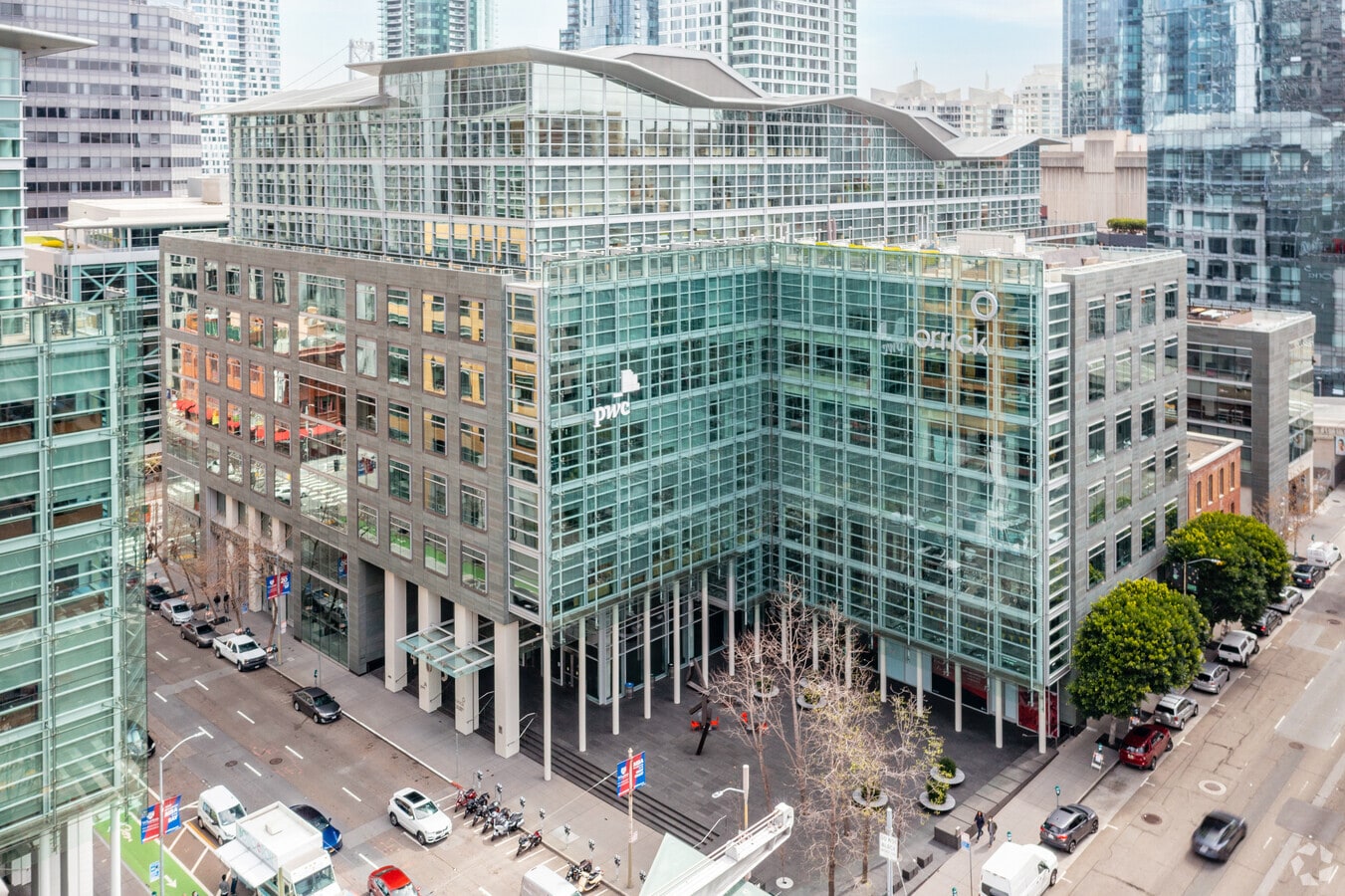
The narrative surrounding downtown San Francisco commercial real estate has shifted from distress to active defense. For three years, empty desks and sublease signs defined the South of Market corridor. Now, institutional tenants are locking down prime Class A space years before their contracts expire. At 405 Howard Street, professional services giant PricewaterhouseCoopers (PwC) made a decisive bet on the Transbay District, executing an early lease recommitment to protect its regional corporate hub against aggressive moves by artificial intelligence firms.
According to a recent CoStar Report, PwC moved well ahead of its deadline to solidify its position in the building, reflecting rising tenant competition across top-tier downtown blocks. Rapid physical expansions from companies like OpenAI and Anthropic have absorbed large contiguous blocks of premium real estate, forcing traditional corporate anchors to safeguard their footprints.
📌 Key Takeaways:
- Early Corporate Defense: PwC secured an early lease extension at 405 Howard Street, heading off displacement risks as available Class A contiguous inventory tightens.
- The AI Catalyst: Aggressive leasing by foundational AI developers, documented by the San Francisco Business Times, has ignited intense competition for trophy properties across the Transbay and SoMa corridors.
- Bifurcated Recovery: While older Class B and C assets still face record vacancy numbers, high-amenity Transbay buildings are seeing rising effective rents and shrinking concession packages.
Foundry Square and the Transbay Shift
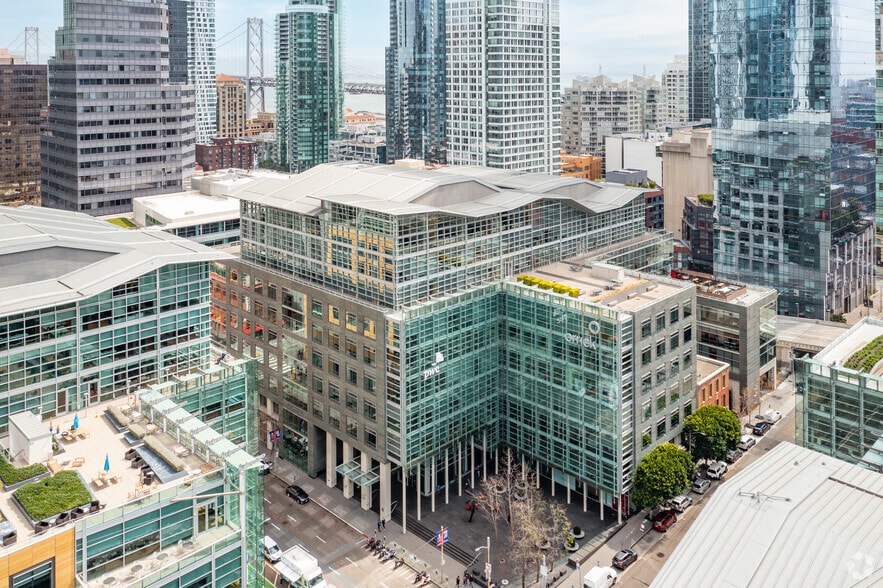
Constructed as part of the four-corner Foundry Square master plan, 405 Howard Street anchors the intersection of Howard and 1st Street. Completed in the early 2000s, the 10-story, roughly 370,000-square-foot structure sits one block south of the Salesforce Transit Center. Its large floor plates, floor-to-ceiling glass lines, and direct access to regional transit made it a centerpiece of the Transbay District office space boom.
Location remains decisive. During the depths of the office market downturn between 2021 and 2024, tenants vacated mid-market properties and aging financial towers along California and Montgomery streets. However, buildings clustered near the transit terminal retained an architectural advantage. Commuters arriving via AC Transit transbay buses or Caltrain connections favor the shorter walking radius. 405 Howard Street offered institutional tenants a modern physical footprint that helped draw workers back to their desks without the friction of cross-town commutes.
PwC Secures Its Footprint: Early Renewal Dynamics
PwC has maintained its San Francisco headquarters inside 405 Howard Street for nearly two decades, serving as the property's primary anchor. By deciding to recommit ahead of schedule, the firm sent a clear message to the local market. Corporate hub consolidation has replaced footprint downsizing as the dominant operational strategy for multinational accounting and advisory firms.
Under normal market circumstances, large tenants wait until 12 to 18 months before lease expiration to extract maximum concessions, tenant improvement allowances, and rent abatements from landlords. That calculus broke down over the past six months. Commercial tenant competition intensified as venture-funded technology companies began hunting for fully furnished, high-spec blocks exceeding 100,000 square feet. Had PwC let its lease run toward term, landlord Foundry Square I would have had substantial leverage to market the space to expanding software firms eager for immediate move-in readiness.
Commercial Leasing Timeline: 405 Howard and the SoMa Market
The progression of San Francisco's commercial real estate from post-pandemic shock to today's selective bidding war reveals a segmented, uneven recovery. While headline citywide vacancy hovered around 35% to 37% in early 2025, premium assets told an entirely different story.
| Timeframe | Key Tenant & Property Action | Strategic Market Impact |
|---|---|---|
| 2021, 2023 | Widespread remote transitions; sublease space spikes across SoMa and Downtown. | Direct market rents drop 30%, 40%; landlords offer unprecedented tenant improvement packages. |
| Mid-2024 | AI companies initiate large-scale space requirements (OpenAI, Anthropic). | High-end inventory south of Market Street sees sudden reduction in direct Class A availability. |
| Mid-2026 | Anthropic and OpenAI close massive downtown expansion deals (per San Francisco Business Times). | Trophy spaces along Howard, Mission, and Fremont face multiple competing bids. |
| Late 2026 | PwC executes early recommitment at 405 Howard Street. | Signals defensive moves by traditional corporate tenants to block displacement. |
The AI Expansion Pressure on Transbay Office Space
The SoMa office market rebound is driven directly by artificial intelligence balance sheets. As reported by the San Francisco Business Times, both OpenAI and Anthropic have methodically acquired real estate across the eastern neighborhoods of San Francisco. Their growth plans require contiguous space where engineering, research, and executive teams can sit within walking distance of each other.
That dynamic changed the options for non-tech tenants. In 2023, an enterprise firm could browse dozens of premium full-floor listings across downtown. By mid-2026, top-grade spaces vanished. According to reporting from the San Francisco Examiner, the city's commercial market turned a decisive corner this summer, spurred almost entirely by AI demand. When fast-growing tech firms tour buildings with checkbooks backed by tens of billions in capital, legacy tenants must act quickly or risk being pushed into secondary properties.
San Francisco's Divided Real Estate Market
The flurry of dealmaking at 405 Howard Street masks a deep split in downtown San Francisco commercial real estate. The market is not recovering uniformly. Instead, a stark divide separates modern Class A assets from mid-century Class B and C properties.
Tenants want buildings that validate mandatory return-to-office policies. Modern mechanical systems, outdoor terraces, on-site fitness facilities, and immediate transit access help ease the friction of in-person work. Properties meeting these specifications enjoy falling vacancy rates and firming price structures. In contrast, older buildings along Market Street and deeper within the Financial District continue to contend with double-digit vacancies and restructuring loans. 405 Howard Street stands on the winning side of that divide, proving that premium physical space remains highly resilient.
Frequently Asked Questions (FAQ)
What is 405 Howard Street in San Francisco?
405 Howard Street is a 10-story Class A commercial office building located in San Francisco's Transbay District within the South of Market (SoMa) submarket. It is part of the Foundry Square development and serves as the long-term San Francisco headquarters for accounting and consulting firm PwC.
Why did PwC renew its lease early at 405 Howard Street?
PwC recommitted early to secure its corporate hub against growing competition for Class A contiguous office space. With leading artificial intelligence companies rapidly leasing premium properties nearby, traditional corporate tenants faced the real risk of losing prime real estate if they waited until lease expiration.
Is San Francisco's downtown office vacancy rate improving?
The market is sharply bifurcated. While total municipal vacancy remains high due to struggling Class B and C inventory, modern Class A spaces in the Transbay and South of Market submarkets are experiencing tightening supply and renewed leasing competition driven by tech and AI industry expansion.
The Transbay Anchor in 2026 and Beyond
PwC's decision to extend its commitment at 405 Howard Street clarifies the path ahead for San Francisco's commercial core. The city is not seeing a uniform downtown renaissance, but rather an intense concentration of capital and headcount in modern spaces adjacent to regional transit. For enterprise tenants, securing long-term positions in Class A buildings has once again become a high-stakes priority. As AI research labs and advisory firms compete for physical presence, 405 Howard Street proves that downtown's most accessible, amenity-rich blocks still command the confidence of major business institutions.
