Fact-Check: Why Everyone Confuses Yves Saint Laurent and Saint Laurent Paris
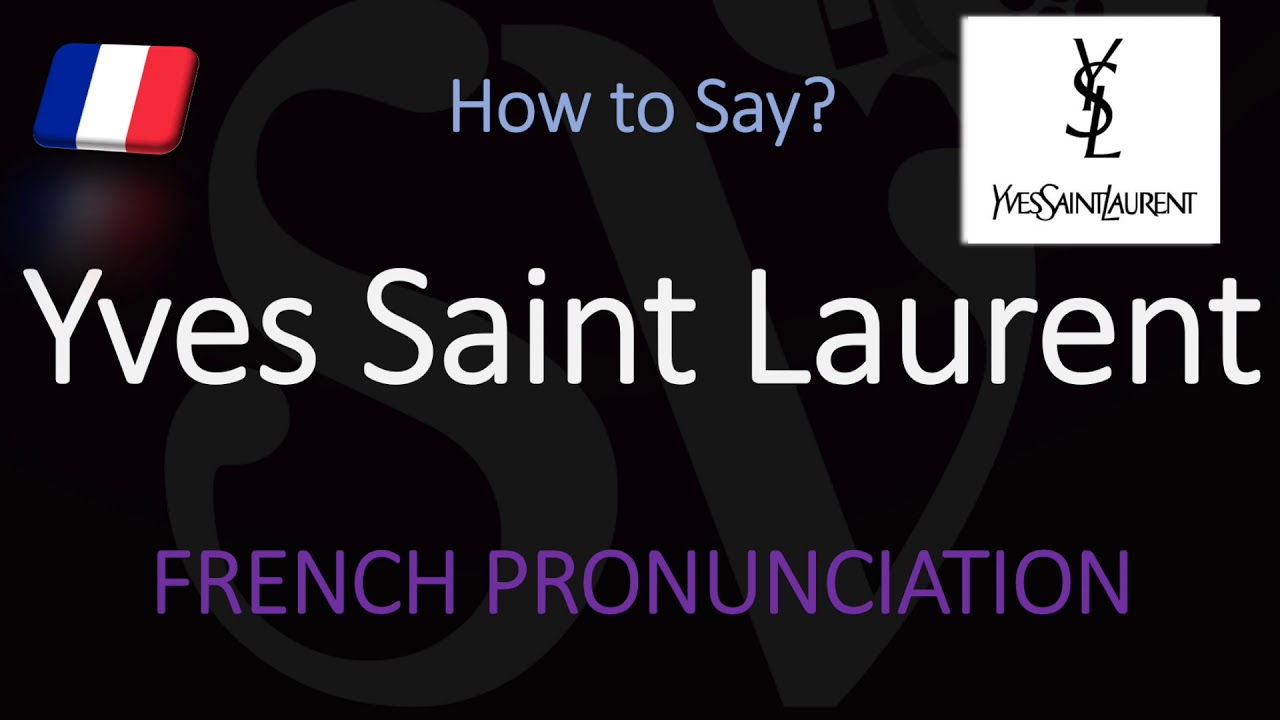
Stepping into a boutique on Avenue Montaigne or ordering fragrance online frequently exposes one of the fashion world's most enduring linguistic hurdles: pronouncing Yves Saint Laurent. For decades, English speakers have wrestled with the designer's three-word moniker, stumbling over silent consonants and swallowed vowels. The confusion worsened when creative director Hedi Slimane overhauled the label's ready-to-wear arm, splitting public perception between the heritage name and modern store signage.
Pronunciation anxiety reached such a pitch during the brand's major North American exhibition that museum officials intervened directly. As documented in a Denver Art Museum Report, the institution's director produced a dedicated video tutorial to help thousands of visitors correctly articulate the French syllables before walking through the retrospective galleries.
📌 Key Takeaways:
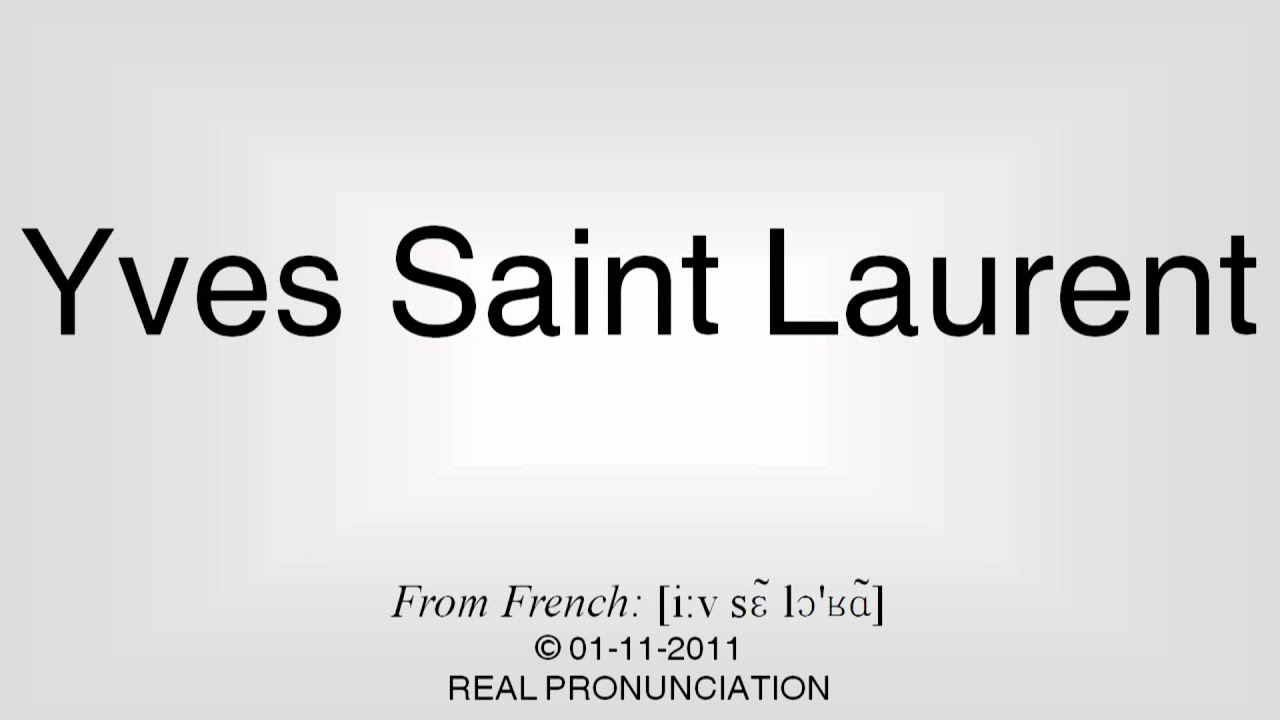
- The Exact Phonetics: Yves Saint Laurent is pronounced "Eve San Loh-Rahn" (/iv sɛ̃ lɔ.ʁɑ̃/), omitting all terminal "t" sounds and the letter "s" in Yves.
- The Rebrand Rationale: In 2012, Hedi Slimane rebranded the ready-to-wear collection to Saint Laurent Paris, paying homage to the 1966 "Saint Laurent Rive Gauche" line while keeping the corporate parent and beauty divisions under YSL.
- Corporate Division: Kering runs the fashion house under Saint Laurent, while L'Oréal operates YSL Beauty under an exclusive licensing agreement that retains the classic Cassandre monogram.
The French Phonetic Breakdown: Silent Letters and Nasal Vowels
Mastering luxury fashion house pronunciation requires understanding the mechanics of French phonology, where written letters frequently disappear in spoken speech. The full french phonetic transcription for the designer's name reads `/iv sɛ̃ lɔ.ʁɑ̃/`. To an English speaker, the closest intuitive rendering is eve san loh-rahn.
The first name, Yves, eliminates both the "y" glide and the trailing "s." In French, "Y" functions as a pure vowel identical to the "ee" in "feet," while final consonants like "s" are consistently silent letters in French unless followed by an immediate vowel liaison. The result is a clipped, monosyllabic "Eve." Pronouncing it as "Eves," "Why-ves," or "Ee-vus" immediately marks an untrained speaker.
The surname components carry two distinct french nasal vowels. In "Saint," the vowel cluster "ai" before "n" creates an open nasal sound roughly akin to the "a" in "sang," but stopped before the tongue hits the roof of the mouth. The "t" remains completely silent: "San." For "Laurent," the "au" produces an open "oh," while the final "ent" forms a deep, rounded nasal vowel originating at the back of the throat. The trailing "t" vanishes: "Loh-rahn." Uttering a hard dental "t" at the end of either word breaks the rhythm of proper French accent audio.
Why Hedi Slimane Dropped Yves from the Ready-to-Wear Label
The persistent naming confusion among consumers is not merely linguistic; it stems from a corporate shake-up. In June 2012, newly appointed creative director Hedi Slimane initiated the high-profile Hedi Slimane brand name change, dropping "Yves" from the ready-to-wear line and introducing crisp Helvetica typography that read simply "Saint Laurent Paris."
The decision ignited outrage among traditionalists who viewed the removal of Yves as historical erasure. Yet Slimane acted with the explicit blessing of Pierre Bergé, Saint Laurent's longtime business and romantic partner. Bergé publicly defended the shift, pointing out that when Yves launched his pioneering ready-to-wear boutique in 1966, he named it Saint Laurent Rive Gauche, deliberately setting it apart from his custom haute couture salon. Slimane's update revived that historical precedent, modernizing the ready-to-wear aesthetic while preserving archival boundaries.
Corporate Realities: Saint Laurent Paris Versus YSL Beauty
Shoppers frequently ask why department stores display two radically different identities side by side. On the ground floor cosmetics counter, gold compacts and Rouge Pur Couture lipsticks still showcase the iconic 1961 interlocking monogram designed by graphic artist Adolphe Mouron Cassandre. Meanwhile, the apparel boutique on the third floor features stripped-back black marble stamped with "Saint Laurent."
This dual identity reflects a deliberate corporate division that emerged over two decades of corporate restructuring:
| Division | Operational Brand Name | Phonetic Guide | Corporate Controller |
|---|---|---|---|
| Haute Couture & Heritage | Yves Saint Laurent | Eve San Loh-Rahn (/iv sɛ̃ lɔ.ʁɑ̃/) | Kering / Fondation Pierre Bergé |
| Ready-to-Wear & Leather Goods | Saint Laurent (Paris) | San Loh-Rahn (/sɛ̃ lɔ.ʁɑ̃/) | Kering Luxury Group |
| Fragrance, Makeup & Skincare | YSL Beauty | Why-Ess-Ell Byoo-tee (/i.vɛs.ɛl/) | L'Oréal Luxe (Long-term License) |
| Museums & Archival Sites | Musée Yves Saint Laurent | Mew-zay Eve San Loh-Rahn | Fondation Jardin Majorelle |
In 2008, cosmetics giant L'Oréal completed its acquisition of the luxury brand's fragrance and beauty license from YSL Beauté Holding for approximately €1.15 billion. Because the global commercial recognition of the Cassandre logo on perfume bottles (such as Black Opium and Libre) is unmatched, L'Oréal maintained the YSL Beauty nomenclature. Kering, the French luxury conglomerate that owns the fashion house, retained Saint Laurent Paris for leather bags, shoes, and ready-to-wear garments.
Debunking Common Verbal Blunders Across Haute Couture
Haute couture designer names represent a minefield of counterintuitive pronunciation rules for non-native speakers. The errors heard in luxury retail settings fall into predictable categories:
- The Over-Anglicized "Saint": Saying "Saynt" as in Saint Nicholas. French phonology treats "aint" as an unrounded nasal sound, requiring the speaker to drop the hard English "ay."
- The Hard Dental "T": Snapping the tongue against the teeth at the end of "Laurent." In standard Parisian French, pronouncing that final consonant makes the speaker sound as if they are saying the feminine name Laurence or the adjective lente.
- The Misplaced Throat Friction: Forcing a harsh, guttural German "ach" sound for the French "R." The French uvular rhotic is softer and produced simply by letting air pass gently across the back of the tongue.
These traps mirror difficulties found across other major European luxury houses. Christian Louboutin (/kʁis.tjɑ̃ lu.bu.tɛ̃/) routinely suffers from speakers pronouncing the final "n" like the English preposition "in." Givenchy (/ʒi.vɑ̃.ʃi/) is often mangled with a hard "G" as in "gift," rather than the soft, sighing "zh" sound of the French "J."
Mastering the Oral Posture Without Over-Exaggeration
The secret to pronouncing French label names convincingly lies in mouth position rather than vocal theatrics. English speakers tend to diphthongize their vowels, letting them slide from one tone into another, pronouncing "no" as "noh-oo." French vowels, by contrast, are monophthongs: crisp, pure, and completely static from start to finish.
To articulate "Yves," pull the corners of the mouth wide into a flat smile and emit a short, clipped "Ee," immediately cutting off air with the lower lip against the upper teeth for the "v."
For "Saint," keep the mouth slightly open, lower the jaw marginally, and push vocal resonance through the nasal passage without allowing the tongue tip to touch the palate.
For "Laurent," round the lips as if preparing to say "law," roll through a gentle throat friction for the consonant, and finish with a wide, open nasal breath. If your tongue touches the front teeth at any point during "Saint" or "Laurent," you have accidentally voiced an unwanted consonant.
Frequently Asked Questions (FAQ)
Q1: Is it considered rude or wrong to say "YSL" instead of the full name?
A1: Not at all. Fashion industry professionals, stylists, and retail staff widely use the acronym "YSL" (pronounced phonetically in English as "Why-Ess-Ell"). It is accepted shorthand, especially when discussing cosmetics, accessories, and the brand's mid-century vintage archives.
Q2: When should I say "Saint Laurent" versus "Yves Saint Laurent"?
A2: Use "Yves Saint Laurent" when referring to the historical founder himself, the couture collections produced between 1961 and 2002, the museum foundations, or the beauty and fragrance line (YSL Beauty). Use "Saint Laurent" when speaking about the modern ready-to-wear collections, runway shows, and retail stores produced under Kering since the 2012 rebrand.
Q3: Did the brand ever change its name back after Hedi Slimane left?
A3: No. When Anthony Vaccarello took the creative helm in 2016, he maintained the "Saint Laurent" name across retail, signage, and apparel lines. However, Vaccarello actively integrated the vintage YSL monogram back into accessories, heels, and hardware, harmonizing both aspects of the company's identity.
The Enduring Power of the Cassandre Legacy
Understanding the linguistic nuance of French fashion houses reveals the discipline that built Paris as the center of global style. Whether uttering the full, historic name curated by Pierre Bergé or referencing the stripped-down ready-to-wear lines popularized on today's runways, clarity comes from stripping away unnecessary consonants.
Yves Saint Laurent changed how women dressed by introducing Le Smoking in 1966, proving that menswear tailoring could express feminine authority. Saying his name correctly honors that heritage. Drop the trailing letters, hold the vowels steady, and allow the French cadence to carry the weight of three syllables that redefined modern luxury: Eve San Loh-Rahn.
