Fact-Checking Mackenzie Shirilla on TV: What 'Killer Cases' and True-Crime Shows Got Right
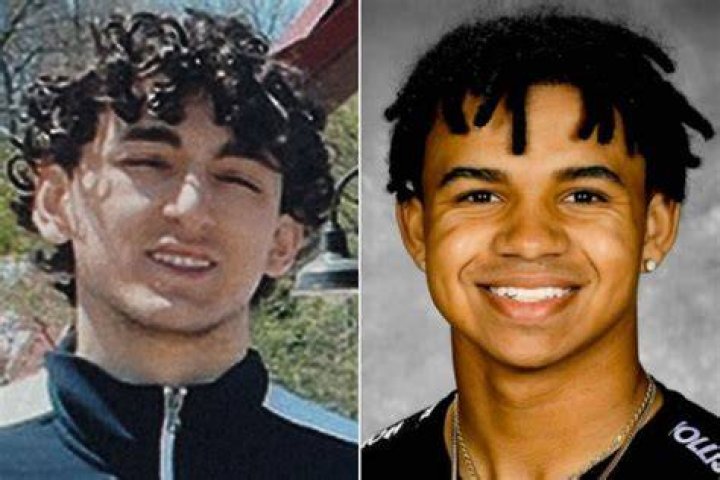
When a 2018 Toyota Camry slammed into the brick facade of a commercial building at 100 mph in Strongsville, Ohio, the physical wreckage told only half the story. The July 2022 impact killed 20-year-old Dominic Russo and 19-year-old Davion Flanagan instantly, while the driver, 17-year-old Mackenzie Shirilla, survived with severe injuries. Shirilla’s subsequent murder trial transformed into a viral internet phenomenon, propelled by surveillance video showing zero brake engagement, hostile text messages, and a judge who characterized her actions as pure, calculated malice.
As streaming services unpack the tragedy, true-crime audiences find conflicting narratives. While broad overviews summarize the fatal minutes in suburban Cleveland, in-depth accounts like the Killer Cases episode expose crucial trial dynamics that popular streaming edits bypassed. A comprehensive People.com Report tracking the sprawling documentary catalog highlights just how divided these retellings have become, leaving viewers searching for the boundary between sensational television and courtroom fact.
📌 Key Takeaways:
- The Legal Reality: Shirilla was convicted on four counts of murder, four counts of felonious assault, and aggravated vehicular homicide, receiving two concurrent life sentences with parole eligibility after 15 years.
- The Streaming Disconnect: Mainstream features like Netflix's The Crash focused heavily on relationship volatility, while forensic programs like Killer Cases presented black-box telemetry proving intentional full-throttle acceleration.
- The Prison Revelations: Inmate interviews broadcast by NewsNation highlighted post-conviction behavior, including claims from fellow prisoners that Shirilla attempted to cultivate a "Regina George" persona behind bars.
The Strongsville Collision That Shook Cuyahoga County
The crash occurred at 6:15 AM on July 31, 2022, inside the Progress Drive Business Park in Strongsville, an area Shirilla had driven through days earlier. Forensic analysis of the vehicle’s event data recorder showed that Shirilla accelerated down the dead-end corridor with the accelerator pegged at 100% throttle, reaching exactly 100 mph without touching the brake pedal. Dominic Russo sat in the front passenger seat; Davion Flanagan was in the back, having accepted a ride home after a late night out.
Investigators rapidly dismantled the defense's initial claim of a mechanical failure or medical emergency. Surveillance cameras captured Shirilla's Camry navigating side streets at normal speeds before making a deliberate turn onto Progress Drive. Once aligned with the commercial brick building, Shirilla pushed the accelerator to the floorboard. The vehicle struck the wall with enough violent force to breach the masonry and instantly crush the passenger cabin.
Flanagan’s presence in the vehicle represented a catastrophic twist of circumstance. Acquaintances and trial testimony confirmed he had simply asked for a ride, unaware of the volatile relationship between Shirilla and Russo. The Cuyahoga County prosecutor’s office zeroed in on that distinction during the bench trial: Flanagan had no conflict with the driver, yet his life was extinguished as Shirilla targeted Russo in a homicidal rage.
Where 'The Crash' on Netflix Fell Short Compared to 'Killer Cases'
Streaming adaptations often compress dense legal proceedings to heighten emotional pacing. Netflix's documentary The Crash zeroed in on high-school drama, social media posts, and grief-stricken interviews with surviving family members. The edit leaned heavily into the psychological unraveling of a suburban romance, framing the collision largely around Shirilla’s turbulent obsession with Russo.
Viewers who migrated to A&E's Killer Cases episode received a radically different, evidence-first evaluation. Rather than relying on teen gossip and TikTok clips, *Killer Cases* unpacked the state's technical cross-examinations. The episode highlighted how prosecutors used the car's internal computer to prove Shirilla steered precisely to hit the apex of the brick wall, ruling out any erratic swerving from intoxication or panic.
Online forums and true-crime communities immediately noted the disparity. While The Crash presented the collision as the tragic boiling point of an unstable relationship, *Killer Cases* methodically showcased evidence of premeditation, including audio recordings of Shirilla threatening to destroy Russo’s life weeks prior to the impact.
Tale of the Tape: Documentaries, Evidence, and Legal Reality
Understanding the Shirilla case requires separating high-production dramatizations from the hard evidence entered into the trial record at the Cuyahoga County Court of Common Pleas.
| Core Evidence & Focus | Netflix's 'The Crash' | A&E's 'Killer Cases' / Official Trial Record |
|---|---|---|
| Telemetry & Black Box | Briefly mentioned; frames speed as an emotional outburst. | Detailed technical breakdown: 0% braking, 100% throttle, deliberate steering inputs. |
| Pre-Crash Threats | Emphasizes mutual volatility and typical teenage relationship spats. | Introduces specific videos and texts where Shirilla threatened to crash her car intentionally. |
| Toxicology & Impairment | Explores party culture, mushrooms, and THC metabolites broadly. | Confirms THC was above legal limits, but emphasizes driver retained full motor planning capability. |
| Judge’s Final Ruling | Focuses on the courtroom tears and the viral "hell on wheels" quote. | Presents legal rationale under Ohio law for finding purpose and intent without a jury. |
The Prison Yard 'Regina George' Comparison and Trial Revelations
During the August 2023 bench trial, Judge Nancy Margaret Russo did not mince words. She described Shirilla's behavior as an act of calculated violence, stating, "She had a mission and she executed it with precision. The decision was hers alone to make a literal hell on wheels." Public fascination spiked when social media videos emerged showing Shirilla partying and modeling on TikTok in the months between the crash and her formal indictment, showing zero outward remorse.
That image followed her directly into the correctional system. In an interview broadcast by NewsNation, an inmate incarcerated alongside Shirilla at the Ohio Reformatory for Women in Marysville described her institutional conduct. The inmate claimed Shirilla sought to assert social dominance inside the facility, drawing comparisons to a teenage archetype.
"She wanted to be like Regina George," the inmate stated during the broadcast, referencing the ruthless antagonist of the film *Mean Girls*. The reporting indicated that Shirilla attempted to maintain an air of untouchable privilege, curating social cliques even while wearing state-issued prison uniforms. While Shirilla’s defense team repeatedly insisted that her outward bravado was a coping mechanism for post-traumatic shock, the persona only deepened the public's conviction that she lacked fundamental empathy.
Inside the Ohio Reformatory: Where Mackenzie Shirilla Stands Today
Shirilla remains housed at the Ohio Reformatory for Women, serving two concurrent life terms. Under Ohio sentencing guidelines for non-capital murder, she must complete a mandatory minimum of 15 years before she can petition the state parole board for release. That places her first potential parole hearing in 2038, when she will be 34 years old.
Her appellate attorneys have sought post-conviction relief, arguing that the trial court erred in inferring purposeful murder from vehicular trajectory and that her young age impaired her impulse control. The appellate filings assert that the Cuyahoga County judge substituted emotional moral judgment for measurable legal standards of intent. However, state appellate courts have repeatedly upheld similar bench convictions when black-box data proves an absence of evasive maneuvers.
For the families of Dominic Russo and Davion Flanagan, the ongoing true-crime media boom serves as a double-edged sword. While documentaries prevent the victims from being forgotten, sensationalist titles and exploitative "Mean Girl" framing frequently cheapen the reality of two young lives violently taken on an early Sunday morning.
Frequently Asked Questions (FAQ)
Q1: What episode of 'Killer Cases' covers Mackenzie Shirilla?
A1: Shirilla's trial and forensic crash data are featured in Season 4 of A&E's Killer Cases, titled "The 100 MPH Crash." The episode focuses on the event data recorder analysis presented during the Cuyahoga County bench trial.
Q2: Why was Mackenzie Shirilla tried by a judge instead of a jury?
A2: Shirilla and her legal defense team voluntarily waived her constitutional right to a jury trial, electing to have Cuyahoga County Common Pleas Judge Nancy Margaret Russo decide both the verdict and the sentence directly.
Q3: Did drugs or alcohol play a role in the crash?
A3: Toxicology reports confirmed Shirilla tested positive for THC metabolites exceeding Ohio’s statutory limits. However, the prosecution successfully demonstrated that she was fully conscious, alert, and capable of operating the vehicle with precise intent when she initiated the 100 mph acceleration.
The Real Cost of Sensationalized Courtroom Media
Documentaries covering high-speed fatal crimes routinely face a choice between forensic accountability and algorithmic drama. The media storm surrounding Mackenzie Shirilla proves how readily television production can turn a calculated double murder into high-school melodrama. Packaging lethal violence as a story about social cliques and mean-spirited teenagers obscures the catastrophic loss suffered by the Flanagan and Russo families.
Court transcripts, black-box telemetry, and judicial rulings remain the definitive sources of truth. The telemetry recorded on Progress Drive revealed no hesitation, no brake pressure, and no attempt to steer away from the impact zone. While streaming algorithms will continue to repackage the tragedy under viral headlines, the verified legal record proves this was not an accident driven by teen rebellion, but a deliberate act that destroyed two innocent lives in a matter of seconds.
