Fact-Checking Viral ASL Swears: What Internet Videos Get Wrong About Vulgar Signs
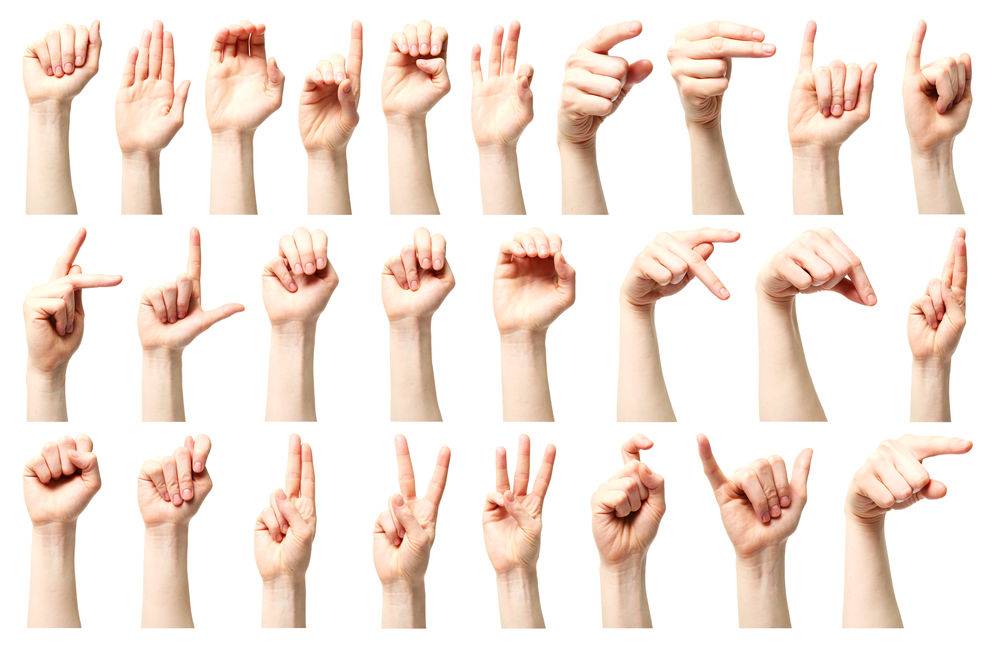
Every few months, a short clip rockets across TikTok and Instagram claiming to teach hearing viewers how to say "fuck you" in American Sign Language. Some show creators aggressively signing the manual letter "F" and jabbing a finger outward. Others teach elaborate, multihand pantomimes that look more like broken martial arts katas than natural language. Millions of users bookmark these posts, circulate them in group chats, and repeat them under the impression that they just learned real ASL swear words. Most of the time, they are practicing nonsense.
The spread of bogus sign language tutorials mirrors a wider digital crisis of manufactured authority. Digital audiences routinely accept confident delivery as verified truth, a media dynamic documented by investigative debunkers in reports like the recent Snopes.com Report on viral fabrications. In the visual ecosystem of ASL, hearing creators often invent vulgar signs in ASL to harvest engagement, completely bypassing the linguistic infrastructure, non-manual markers, and social norms that govern authentic Deaf culture profanity.
📌 Key Takeaways:
- The Direct Equivalent: Directed vulgarity in ASL relies on specific directional signs and shared physical insults like the middle finger gesture, not word-for-word fingerspelled translations.
- Grammar Beyond Hands: Facial expressions in ASL and non-manual markers dictate whether a sign registers as a lethal insult, sarcastic teasing, or meaningless motion.
- Cultural Boundaries: Treating Deaf communication exclusively as novelty vulgarity violates established Deaf community etiquette and ignores centuries of complex linguistic history.
The Algorithmic Myth Machine of Short-Form Sign Tutorials
Social media algorithms reward quick shock value. Teaching complex spatial grammar, agreement verbs, and classifiers does not generate millions of views in six seconds; showing an edgy gesture does. Hearing influencers routinely film themselves demonstrating fake signs, banking on the reality that the vast majority of their viewers cannot verify the information with a fluent Deaf signer.
One persistent viral ASL myth involves fingerspelling the letter "F" and flicking it at the camera. In actual American Sign Language, that motion conveys nothing close to an expletive. At best, it looks like a clumsy attempt to sign the number nine or an awkward initialism. Another recurring trend pairs the sign for "milk" or "meet" with an aggressive sneer, convincing millions of gullible viewers that standard vocabulary doubles as secret obscene slang.
Linguists classify ASL as a complete, natural human language with its own morphology, phonology, and syntax. It does not transcribe spoken English onto fingers. Spoken English employs the phrase "fuck you" across an enormous range of pragmatic tasks: as a furious threat, an expression of disbelief, a dismissive brush-off, or friendly camaraderie. ASL uses distinct, dedicated lexical items for each of those situations rather than forcing one English idiom into every context.
How Directed Hostility Operates in Natural Sign Linguistics
When native signers want to deliver a harsh, targeted vulgarity comparable to an aggressive English dismissal, they do not invent a phonetic translation. The most direct equivalent in everyday physical culture remains the universally recognized middle finger gesture. Within the Deaf community, signers frequently integrate the extended middle finger directly into the grammar of directional verbs.
Linguistically, this is executed by orienting the bent or extended middle finger handshape outward from the chest toward the target of the aggression. The path of movement carries pragmatic weight. An abrupt, snapping motion outward conveys a sharp, hostile dismissal equivalent to "fuck off" or "screw you." If the movement circles inward toward the signer, the meaning flips entirely, transforming into a self-deprecating comment about getting cheated or exploited.
There are also established, historical signs that translate to concepts like "bullshit," "get lost," and "screw over." The standard sign for "bullshit" uses an iconic horn handshape that snaps shut against an opposing wrist or forearm. It conveys skepticism or disgust without matching the exact syntax of English sentence structures. The language prioritizes visual economy and direct spatial delivery over literal English phrases.
Contrasting Viral Fabrications with Authentic ASL Grammar
To grasp why internet tutorials fail, compare how viral channels portray profanity against how fluent Deaf signers construct insults in sign language.
| Concept | Viral Video Trope | Authentic Linguistic Reality |
|---|---|---|
| Direct Hostility ("F*** You") | Fingerspelling letter "F" followed by pointing to the listener. | Outward thrust of a middle finger handshape or targeted dismissive signs with intense facial grammar. |
| Calling Out Lies ("Bullshit") | Literal compound of signing "bull" followed by signing "feces." | A single fluid lexical sign using horns/clasped forearms or the informal "BS" finger-blend. |
| Dismissive Sarcasm | Clumsy clapping or flapping hands near the waist. | Sharp hand flick combined with raised chin, head tilt, and a pursed-lip non-manual marker. |
| Intensity & Adjectives | Adding extra speed or aggressive whole-body shaking. | Specific eye gaze, squinting, jaw tension, and deliberate change in sign movement speed. |
The Non-Manual Element: Why the Face Carries the Weight
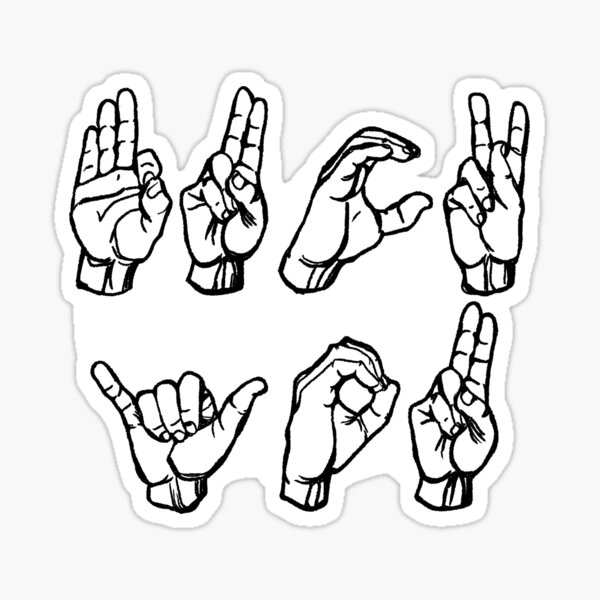
Hearing people tend to look exclusively at hand movements. In signed communication, hands perform only half of the work. Non-manual markers, including mouth morphemes, eyebrow positioning, cheek tension, and head shifts, serve as the inflection, cadence, and grammatical case of ASL.
If you produce the handshape for a vulgar dismissal with neutral eyes and a relaxed jaw, the expression fails. It registers as a mechanical exercise or a student running drills. To turn a sign into an authentic insult, your facial expressions in ASL must coordinate with the manual gesture.
Narrowing the eyes, locking gaze directly onto the listener, and jutting the chin forward during an outward motion supplies the aggression that a raised voice provides in spoken communication. Conversely, pulling the shoulders back and softening the brow transforms that exact physical gesture into sarcastic bantering among close friends. Without non-manual markers, ASL has no volume, no tonal inflection, and no emotional bite.
Culturally Specific Insults and ASL Slang Terminology
The English word "fuck" serves as a Swiss Army knife of profanity, but Deaf culture maintains its own distinct vocabulary for critical, cutting insults. Many of the most biting signs have no direct one-to-one translation in English.
Consider the cultural sign loosely translated as "hearing-minded." Executed by pointing to the forehead and rotating the index finger outward, it criticizes a Deaf person for adopting hearing prejudices or looking down on their own community. It does not contain an English four-letter curse, yet within the community, it carries immense sting.
Other ASL slang terminology targets character flaws directly. The signs for being hollow-headed, hypocritical, or two-faced use precise spatial metaphors that strike much deeper than generic vulgarity. By forcing visual communication into the mold of English swear words, viral videos erase this nuanced linguistic ecosystem in favor of cheap online spectacle.
Ethical Boundaries and Deaf Community Etiquette
Sign language carries a long, fraught history of suppression. For decades following the 1880 Milan Conference, educational institutions banned sign language, punishing Deaf children for using their hands and forcing oralism upon them. Signers fought for generations to achieve legal, academic, and social recognition for ASL as a legitimate language.
When hearing creators treat ASL as a locker-room novelty or a collection of party tricks, they tap into an uncomfortable dynamic. Profanity in any language is deeply tied to cultural nuance, shared trauma, and in-group humor. Learning how to swear in a language before learning how to say "hello," "thank you," or "my name is" treats an entire minority culture as a prop.
Observing respectful Deaf community etiquette requires recognizing that ASL belongs to the Deaf community. Anyone interested in learning how signers communicate raw emotion should learn it directly from qualified Deaf educators rather than chasing algorithm-driven party tricks on video feeds.
Frequently Asked Questions (FAQ)
Q1: Is there a literal sign for "fuck" in American Sign Language?
A1: ASL does not feature a single literal translation that matches every spoken use of the English word. While there are established signs for sexual intercourse and specific vulgar hand gestures like the directed middle finger, the English word's broad uses, such as expressing frustration or serving as an intensifier, are communicated through facial markers, signs like "terrible" or "destroy," and grammatical inflection.
Q2: Can you simply fingerspell profanity in ASL?
A2: Yes. Deaf signers often use fingerspelling for emphasis, irony, or precise English quotation. Fast, lexicalized fingerspelling of words like "BS" or explicit four-letter words occurs naturally in conversation, though it is usually accompanied by emphatic facial markers to convey the intended emotional weight.
Q3: How do Deaf signers adjust the severity of an insult?
A3: Severity in sign language is governed by movement dynamics and non-manual markers. Extending a handshape faster, holding the final strike longer, narrowing the eyelids, and snapping the head or shoulders forward intensifies the sign, turning a mild critique into a blistering, hostile insult.
Q4: Why do so many viral videos teach incorrect sign language?
A4: Short-form video platforms reward high engagement, bizarre visuals, and crude humor rather than accuracy. Many creators invent gestures or repurpose innocent vocabulary because they know their primarily hearing audience has no framework to verify the claims.
Navigating ASL Beyond Internet Sensationalism
Natural signed languages possess the full expressive range of human speech, from soaring poetry to devastating, vicious put-downs. Reducing that linguistic depth to a series of fabricated hand waves does a disservice to learners and native signers alike.
Understanding how people express hostility in ASL requires looking past the hands. It demands an appreciation for spatial grammar, facial morphology, and community history. Next time a flashy social media clip claims to teach a secret new obscenity, treat it with the skepticism it deserves: true language is far richer than whatever fits into a viral trend.
