Fami's Hidden Clues: Visual Evidence and Devil Contracts Exposed
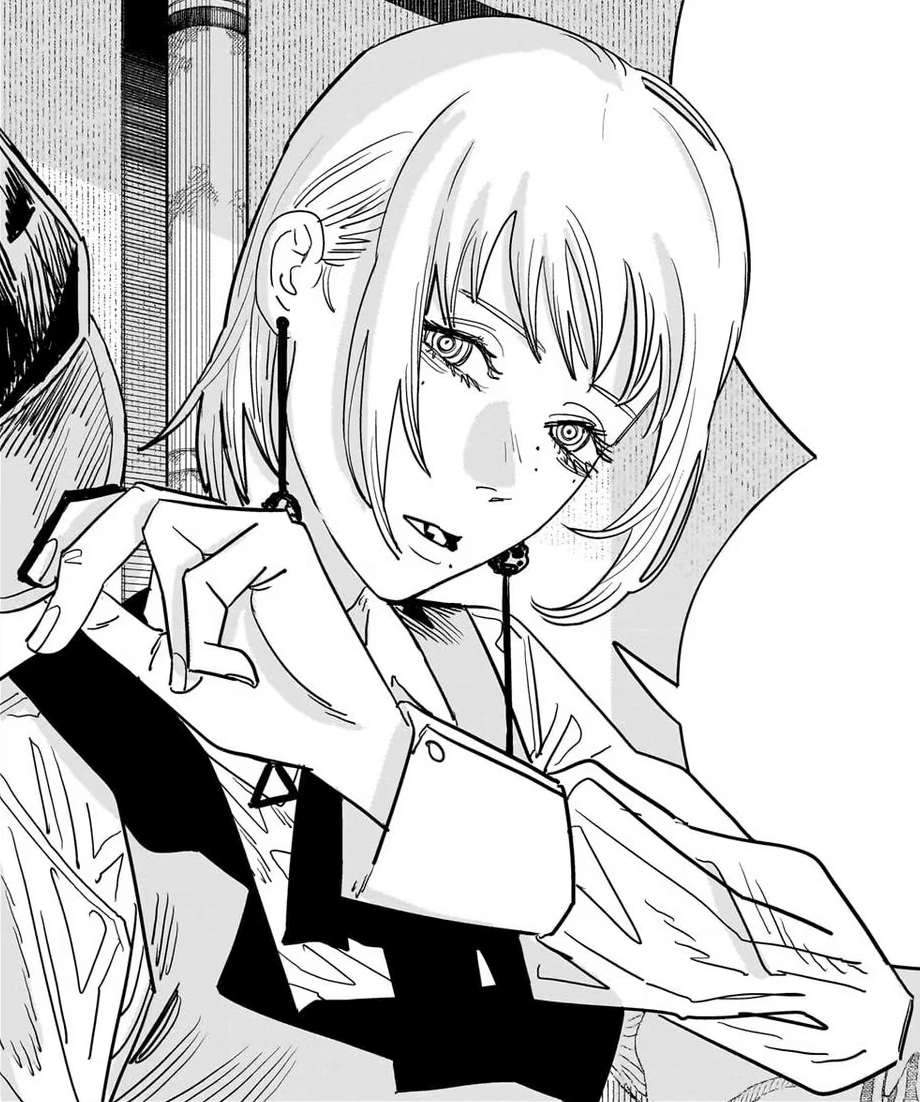
When Tatsuki Fujimoto introduced the Famine Devil under the high school alias "Kiga," readers expected another bombastic, razor-fanged monster. Instead, Fujimoto delivered a dead-eyed high schooler tilting her neck at an unnatural forty-five-degree angle, sporting spiral irises and triangular scale-shaped earrings. Yet beneath that detached persona lies one of the most terrifying puppet masters in modern shonen. As highlighted in a recent ScreenRant Report examining Fujimoto's habit of upending narrative expectations with devastating plot twists, Chainsaw Man Part 2 has quietly rewritten the power hierarchy of its universe through Fami's precise, bureaucratic cruelty.
Fami does not fight in the trenches. She dines. She negotiates. She pulls the strings of humanity and hellish abominations alike, establishing an unsettling brand of leverage that caught readers completely off guard. By manipulating Asa Mitaka, weaponizing the Devil Hunter Club, and summoning Primal Fears directly onto the streets of Tokyo, Fami has turned the existential horror of starvation into an inescapable geopolitical crisis.
📌 Key Takeaways:
- Subjugation Mechanic: Fami commands any entity that experiences starvation, whether that hunger is literal, psychological, or metaphysical.
- Primal Domination: Her control over the Falling Devil broke established series lore by proving that even transcendent, unkillable Primal Fears can be turned into pawns.
- The Horsemen Endgame: Fami aims to prevent the Nostradamus prophecy by using Asa Mitaka, War Devil Yoru, and Denji to starve and empower Pochita for an ultimate confrontation.
The Subtle Architectural Geometry of Tatsuki Fujimoto's Fourth Horseman
Fujimoto’s visual presentation of Fami is an exercise in deliberate restraint. While Makima exuded corporate poise and Nayuta radiated feral childhood innocence, Fami embodies sensory numbness. Look closely at the paneling in her debut chapters: Fujimoto consistently frames her head tilted sideways, breaking the horizontal lines of normal dialogue scenes. This head-tilt mirrors the canted balancing beams of a mechanical scale. It is a direct visual nod to the Third Horseman of the Apocalypse from the Book of Revelation, traditionally depicted holding a pair of balance scales to ration grain during catastrophic famine.
Her earrings reinforce this motif. They are not simple jewelry; they are miniature representations of justice scales, swaying subtly between panels. Fujimoto pairs these biblical cues with the standard Fourth High School uniform, stripping Fami of visible demonic armor. Her deadpan, unblinking expressions force readers to search the background art for clues. In every sequence where Fami appears, shadows stretch unnaturally, food plates are cleared with robotic speed, and the perspective warps slightly toward her, framing her not as a brawler, but as an inescapable black hole pulling matter into her orbit.
How Fami Chained the Falling Devil and Bypassed Primal Fear Rules
The turning point of Chainsaw Man Part 2 arrived when the Falling Devil dropped from the sky. Up until that arc, Primal Fears were established as absolute forces of nature. The Darkness Devil in Part 1 dismantled Public Safety hunters without moving a muscle. Yet when the Falling Devil materialized to serve human flesh dishes, she addressed Fami with reverent, kitchen-staff deference. How did a Horseman bend an ancient, unkillable entity to her will?
The answer rests entirely on the condition of Fami's Devil contracts. Fami revealed that her power activates when a target is "starved." In the Falling Devil's case, starvation was not about an empty stomach; it was culinary and conceptual deprivation. By dangling the prospect of human ingredients and structured slaughter, Fami placed the Primal Fear in a subservient role. The visual evidence in the manga shows the Falling Devil emerging from a pocket-dimension purse, compressed into a pocket-sized familiar before expanding into an undulating colossus of severed limbs. This visual metaphor is staggering: Fami treats a cosmic terror like an executive treats an outsourced contractor.
Tactical Breakdown: Fami's Manipulation Matrix Across Part 2
Fami's actions across Part 2 are not random outbursts of violence. Every appearance coordinates a specific target, a tailored form of leverage, and a cold calculation aimed at manipulating Denji and Asa Mitaka.
| Encounter / Entity | Manifestation Method | Form of Starvation Exploited | Strategic Target |
|---|---|---|---|
| Asa Mitaka & Yoru | Aquarium Trap & Devil Hunter Club | Isolation, moral guilt, romantic desperation | Forcing Asa to turn Denji into a weapon |
| Falling Devil | Summoned directly from Hell as a chef | Culinary purpose & human sacrifice deficits | Feeding Asa to Hell to starve the War Devil |
| Chainsaw Man Church | Mass youth recruitment & media cults | Adolescent identity crisis & social hunger | Creating mass terror to artificially power up Yoru |
| Control Devil Nayuta | Direct negotiations over family dining | Craving for comfort food & domestic safety | Attempting to recruit Control against the Great King of Terror |

The Sibling Dynamic: Fami, War Devil Yoru, and Control Devil Nayuta
The Four Horsemen of the Apocalypse are defined by their sibling rivalries. Makima wanted to erase her sisters using Chainsaw Man's erasure ability. In contrast, Fami takes an approach that resembles twisted maternal stewardship. She repeatedly calls Yoru her "foolish little sister" and claims her true goal is to preserve human civilization simply because human society produces pizza and Chinese food.
Yet her treatment of Asa Mitaka proves how hollow her domestic justifications are. Fami isolates Asa in the Tokyo aquarium, cuts off food supplies, and waits for panic to take hold. She understands Yoru's fundamental weakness: the War Devil cannot forge powerful weapons from objects she does not feel genuine guilt over acquiring. By starving Asa emotionally and physically, Fami accelerates Yoru’s power scaling. Her conversations with Nayuta over Chinese food further illustrate this dynamic. When Nayuta chose school life and Denji over Horsemen solidarity, Fami didn’t get angry. She walked away, knowing that societal breakdown would eventually force the Control Devil into a corner regardless.
Devil Contracts Under Starvation: Fujimoto's Rules of Spiritual Debt
In standard devil contracts, flesh, blood, lifespans, or senses are traded for power. Fami operates on an entirely different contractual register: dependency. Her ability to command devils like the Falling Devil or the Justice Devil copycats does not require signed mutual pacts. It requires a deficit.
Fujimoto visually emphasizes this deficit through constant dining scenes. Fami is shown ordering entire restaurant menus, piling empty bowls higher than her head while maintaining a flat, unmoving stomach. She consumes endlessly without gaining sustenance, serving as a walking emblem of consumption without satisfaction. When she grants power to humans through the Chainsaw Man Church or directs Devil Hunter Club leader Haruka Iseumi, she feeds their ideological hunger while systematically stripping their autonomy. The victims believe they are choosing to serve the hero Chainsaw Man; in reality, they are livestock being prepped for slaughter to trigger the collective terror needed to challenge the prophecy of Nostradamus.
Frequently Asked Questions (FAQ)
Q1: Is Fami stronger than Makima was in Part 1?
A1: Fami's raw ability to subjugate entities through starvation allows her to control higher-tier beings like the Falling Devil, something Makima achieved through direct defeat or perceived superiority. However, Makima's contract with the Japanese Prime Minister gave her near-infinite defensive regeneration, making her functionally harder to kill in open combat.
Q2: Why does Fami constantly tilt her head when speaking?
A2: Fujimoto uses the tilted head as visual iconography representing the balance scales of the biblical Third Horseman of the Apocalypse (Famine). It breaks conversational geometry and visually signals her unnatural, unhinged internal state.
Q3: Does Fami want to kill Denji or protect him?
A3: Fami wants to separate the red Chainsaw Man (Denji) from the black Chainsaw Man (Pochita). Her stated objective is to use Pochita's concept-erasing bite to consume the death devil and stop the apocalypse, keeping Denji as a sacrificial trigger rather than an enemy she actively hates.
The Apocalypse Scenario Fujimoto Is Engineering for Denji and Asa
Fami's real danger does not lie in hand-to-hand combat, but in how she architects trauma. By pushing Asa Mitaka into corner after corner, she turned a depressed high school outcast into an international terrorist icon. By weaponizing the Chainsaw Man Church, she stripped Denji of his hard-won normal life with Nayuta and forced him back into the bloody chainsaw harness he desperately tried to escape.
Every plate Fami clears and every deadpan sideways glance she gives is a countdown. The Falling Devil incident was not an isolated rampage; it was a proof of concept. In Fujimoto's unforgiving urban wasteland, starvation is not just a biological failure. In Fami's hands, it is the ultimate geopolitical lever, leaving Denji, Asa, and humanity itself waiting for the other side of the scale to drop.
