Franklin the Turtle Pete Hegseth Meme Controversy: Everything You Need to Know
A gentle woodland turtle known for learning how to share his toys suddenly found himself weaponized in a maritime drug interdiction campaign. When Pete Hegseth shared an altered image depicting Canadian children's literary icon Franklin the Turtle firing heavy weaponry during military operations against alleged cartel drug vessels, the reaction was swift and fierce. As detailed in a CBS News Report, the book series publisher immediately denounced the narco-terror post, triggering a fierce cross-border argument over political irony, aggressive military rhetoric, and intellectual property theft.
The post transformed an earnest staple of bedtime reading into an avatar for kinetic military force. For millions who grew up reading about Franklin conquering his fear of the dark, seeing the character superimposed into lethal offshore combat felt surreal. Yet for the creators and corporate stewards of the franchise, the viral meme crossed clear legal and moral boundaries.
📌 Key Takeaways:
- The Spark: Pete Hegseth published an altered image featuring Franklin the Turtle opening fire on suspected narcotics smugglers during high-speed boat interdictions.
- The Pushback: Kids Can Press, the Canadian publisher behind the franchise, issued a formal rebuke denouncing the unauthorized character use and disavowing any association with violent militarism.
- The Stakes: The controversy exposes the collision between informal social media meme culture and the strict intellectual property protections shielding nonviolent children's literature.
From Storybook Shell to Military Hardware: How the Post Surfaced
The controversy began when Hegseth shared a manipulated image across social feeds illustrating aggressive tactics against maritime narcotics trafficking. In the visual, Franklin, clad in his trademark red neckerchief, was framed operating tactical weaponry directed at ocean-going drug skiffs. The caption framed kinetic boat strikes as an uncompromising answer to illicit border crossings and cartel trafficking.
Internet users recognized the visual joke instantly. Military social media pages have spent years repurposing docile children's media to inject shock value into hardline foreign policy discussions. Arthur, Bluey, and Paddington Bear have all been spliced into tactical gear by anonymous accounts looking for cheap engagement.
The equation changed the moment Hegseth posted the image. When a private user shares an irreverent image, it evaporates into the digital noise. When a high-profile political figure with significant institutional sway uses an innocent character to promote lethal force, the message carries genuine policy weight. Within hours, the image moved from niche defense forums onto mainstream feeds, prompting an immediate outcry from Canadian cultural figures and parents alike.
Inside the Publisher's Condemnation of Hegseth's Post
The response from Toronto was immediate and unsparing. Kids Can Press, the historic Canadian publishing house that has shepherded the Franklin the Turtle series since author Paulette Bourgeois and illustrator Brenda Clark debuted the character in 1986, released a pointed rebuke rejecting the imagery.
The publisher emphasized that Franklin was designed to teach young children emotional literacy, peaceful conflict resolution, and community cooperation. Dropping that character into an extrajudicial boat strike scenario was completely antithetical to the books' foundational philosophy. Kids Can Press clarified that Hegseth's office had neither sought nor received authorization to adapt the intellectual property, calling the depiction an egregious misuse of a beloved cultural trademark.
The authors supported this position. For nearly four decades, the creative team has guarded Franklin's brand against commercial exploitation that could alienate young readers. The studio has turned down countless aggressive commercial partnerships to keep the character accessible. Watching Franklin conscripted into an aggressive geopolitical campaign felt like a direct assault on the property's gentle legacy.
The Clash Between Gentle Canadian Heritage and Hardline Policy
| Date / Timeframe | Key Entity Involved | Action Taken | Broader Impact |
|---|---|---|---|
| Late 2025 | Pete Hegseth | Shared altered meme showing Franklin engaging in armed maritime interdictions | Viral distribution across defense circles and mainstream social networks |
| Dec 2, 2025 | Kids Can Press | Issued public condemnation detailing unauthorized use and brand dilution | Sparked widespread international news coverage on copyright boundaries |
| Dec 2, 4, 2025 | Canadian Broadcasters & Public | Widespread social media backlash and mockery across Canadian news networks | Reinforced cross-border cultural tensions regarding militarized messaging |
| Ongoing | Legal & Intellectual Property Counsel | Reviewing parody defenses against international trademark dilution claims | Establishes key benchmark for political appropriation of copyrighted IP |
The friction went far beyond standard copyright disputes. It exposed a fundamental cultural divide. In Canada, Franklin the Turtle is not merely merchandise; it represents a foundational pillar of early childhood education. With over 65 million books sold worldwide in more than 30 languages, the character embodies a distinctively Canadian approach to narrative conflict: quiet patience, personal responsibility, and emotional compromise.
Superimposing that character onto lethal counter-narcotics strikes created cognitive dissonance. Many Canadian commentators viewed the meme as cultural appropriation drained of all original meaning. The visual turned an ambassador of childhood safety into an endorsement of aggressive armed interdiction.
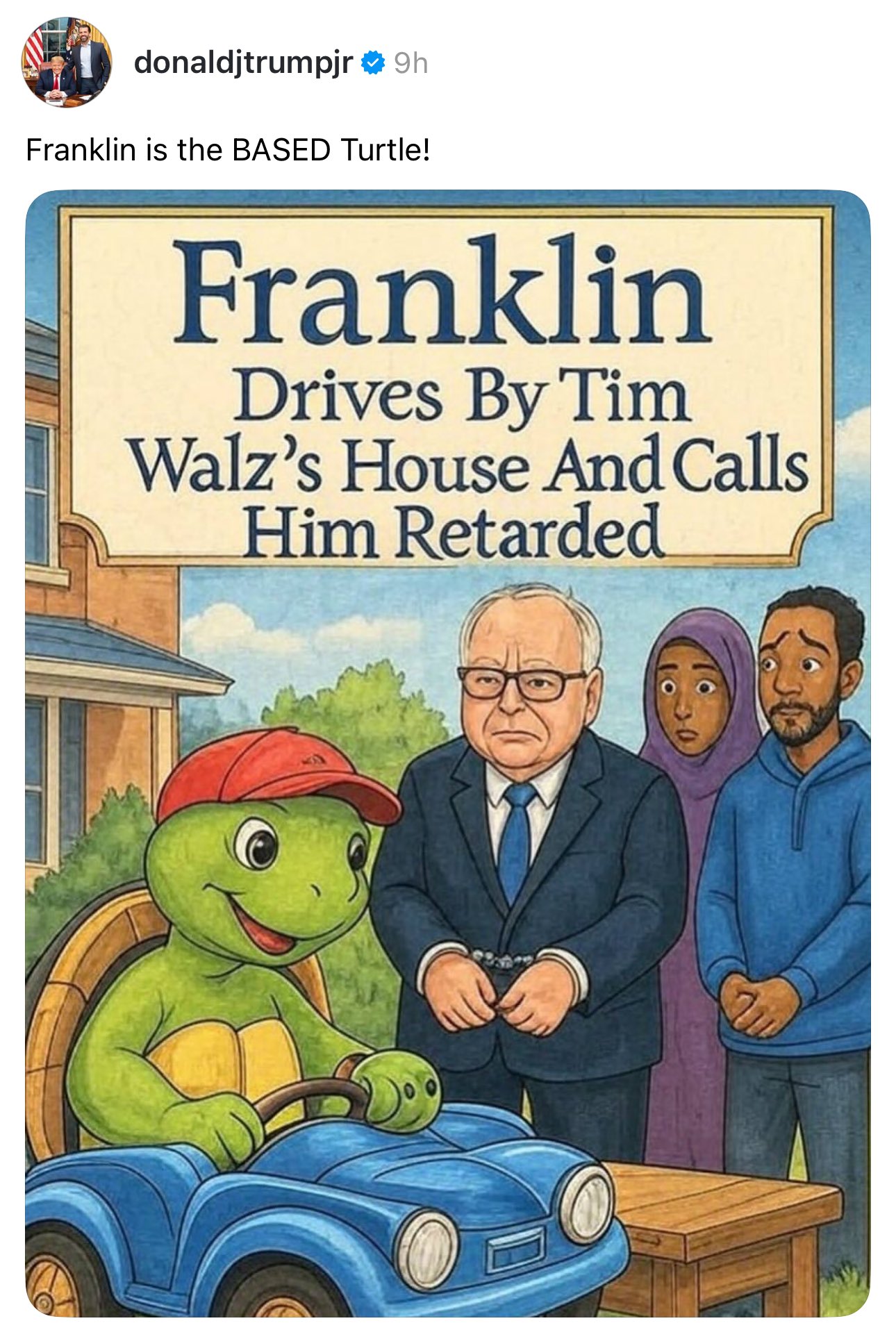
Fair Use Defense Meets Intellectual Property Protection
From a legal perspective, political memes operate in a notorious gray zone. Political figures often claim parody exemptions under the Fair Use doctrine of the U.S. Copyright Act. They argue that altered imagery is transformative commentary rather than commercial theft.
Intellectual property attorneys note that defense has critical vulnerabilities:
Transformative parody typically requires commenting directly on the original work itself. Hegseth's post did not parody Franklin's childhood trials or critique the Canadian book series. Instead, it used the character's familiar silhouette as an eye-catching vehicle for an unrelated defense policy argument. In copyright jurisprudence, that falls under satire rather than pure parody, offering much weaker legal protections.
Trademark dilution presents an even steeper hurdle. Because Franklin the Turtle is an active commercial trademark aimed squarely at young children, associating the character with lethal violence threatens the goodwill and financial value built over decades. If a brand owner fails to contest unauthorized, high-profile uses of its registered marks, it risks weakening its legal right to protect those marks against future misuse.
Why Political Meme Warfare Keeps Hijacking Childhood Nostalgia
The incident demonstrates how modern political campaigns rely on hijacked nostalgia to command attention. Attention spans are short. Nuanced policy papers regarding littoral combat tactics or maritime surveillance rarely generate engagement. A preschool turtle firing a weapon, by contrast, stops users from scrolling immediately.
This tactic depends on the weaponization of innocence. By placing a harmless storybook character inside a violent theater of operations, creators generate cheap shock value. The contrast makes extreme policy ideas look casual, turning lethal force into an inside joke.
Online audiences remain sharply divided over the tactic. Supporters dismissed the outrage as performative overreaction to an obvious internet joke, arguing that satirical memes are standard online political speech. Critics countered that when government figures use childhood icons to sanitize lethal military strikes, they undermine civil discourse and trample creative rights. The resulting debate turned a simple picture book into an international political lightning rod.
Frequently Asked Questions (FAQ)
Q1: Why did Pete Hegseth post a meme featuring Franklin the Turtle?
A1: The image was shared to promote hardline counter-narcotics policies, using Franklin's gentle image for shock value to draw attention to maritime boat strikes against drug cartels.
Q2: Who owns the rights to Franklin the Turtle?
A2: The character was created by author Paulette Bourgeois and illustrator Brenda Clark. The intellectual property and publishing rights are held by the Canadian publisher Kids Can Press, a division of Corus Entertainment.
Q3: Can public officials legally use copyrighted cartoon characters in social media memes?
A3: While non-commercial online parody often avoids legal action, public figures face distinct risks. Using a protected trademark to promote policy positions without critiquing the original work weakens Fair Use claims and exposes the user to trademark dilution challenges.
Q4: Did the publisher take legal action over the boat strikes post?
A4: Kids Can Press publicly condemned the post and demanded an end to the unauthorized use. While formal infringement lawsuits were not immediately filed in federal court, the public rebuke successfully established that the publisher never authorized the violent imagery.
The Shifting Boundaries of Weaponized Pop Culture
The battle over the Franklin the Turtle meme exposes the growing friction between viral political messaging and traditional intellectual property. As public figures lean harder into internet irony to drive political engagement, the boundaries protecting nonviolent cultural works continue to erode.
For decades, storybook characters offered a shared space free from partisan hostility. By co-opting those symbols to dramatize armed conflict, internet campaigns strip away that innocence for quick clicks. The publisher's swift pushback draws an essential line in the sand: children's literature does not belong on the geopolitical battlefield.
