From 2002 to Today: The Complete Timeline of the McDonald's Dollar Menu Evolution
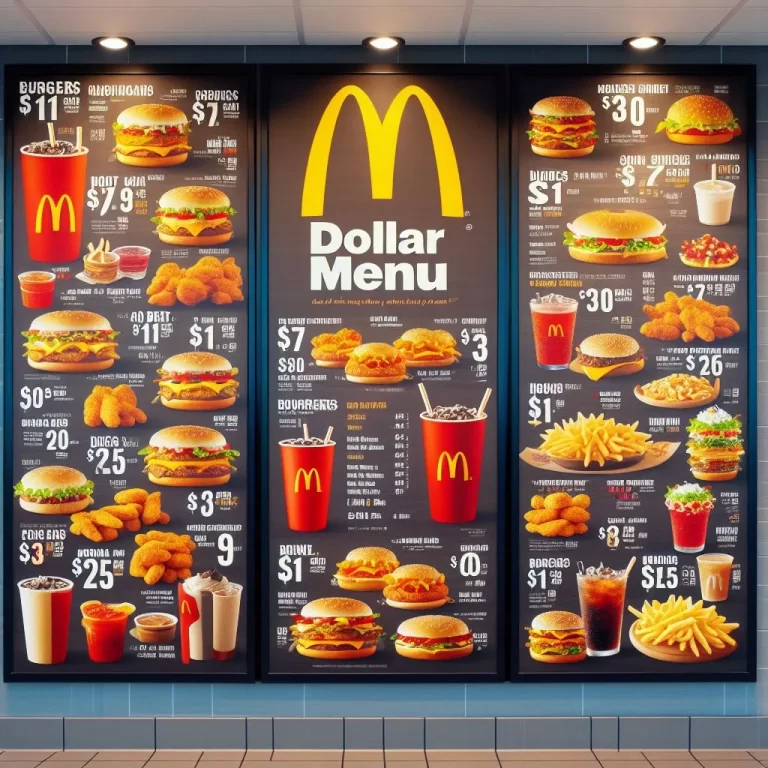
A crumpled one-dollar bill once bought a hot, double-patty burger at any McDonald's drive-thru in the United States. Today, that same greenback cannot purchase a small soft drink or a single hash brown in most major metropolitan areas. As chains look to recapture alienated foot traffic through nostalgic product rollouts and retro packaging, evidenced in a recent thestreet.com Report charting decades of legacy item revivals, a bitter economic reality confronts the counter: the classic entry-level price point is dead.
The transformation of fast food value reflects decades of escalating commodity expenses, labor adjustments, and a strategic corporate shift from physical roadside boards to algorithmic phone applications. What began as a desperate market-share gamble at the turn of the millennium reshaped American dining expectations. Its collapse created an ongoing trust deficit between the Golden Arches and the working-class customers who fueled its empire.
📌 Key Takeaways:
- The Historic Pivot: Introduced nationwide in 2002 to stem falling market share, the original Dollar Menu established a flat $1 expectation that ultimately collided with global commodity inflation.
- The Margin Crisis: Skyrocketing beef prices forced operators to strip a slice of cheese from the Double Cheeseburger in 2008 to create the McDouble, buying five years of survival before the flat-pricing model collapsed entirely.
- The Algorithmic Trap: Modern promotional pricing no longer exists on physical drive-thru boards; corporate leadership has moved actual discounts behind the McDonald's mobile app to harvest user data and enable personalized pricing.
The 2002 Price War That Changed Fast Food Forever
McDonald's entered 2002 in unusual distress. Same-store sales were tumbling, Burger King was running aggressive promotions, and Wendy's dominated budget dining with its 99-cent value selection. Facing its first quarterly corporate loss since going public, Oak Brook headquarters greenlit an aggressive national roll-out: a nationwide fast food value menu where every single featured item cost exactly $1.00.
The 2002 launch timeline debuted with eight signature offerings. Diners could walk up to the counter and choose among the Double Cheeseburger, the McChicken, a small fry, two apple pies, and a handful of introductory breakfast dollar menu items such as the Sausage McMuffin. The consumer response was immediate and overwhelming. Foot traffic spiked dramatically, driving total transaction volumes to historic highs. By 2003, the company pulled out of its operational slump, crediting the budget selection for turning around domestic sales momentum.
The strategy worked because it was simple. Diners knew exactly what their loose pocket change could buy without scanning fine print. But the menu carried an inherent design flaw: corporate took a fixed royalty percentage from gross sales, while independent operators absorbed every penny of food and paper cost inflation.
The Cheese Slice Retreat: How Inflation Killed the Double Cheeseburger
By 2007, runaway global beef prices made the centerpiece of the value program unsustainable. Franchisees were losing money on every single Double Cheeseburger pushed across the counter. Ground beef wholesale costs had surged by more than 30% across a three-year window, turning the chain's biggest customer hook into an operational cash bleed.
The solution became a famous case study in manufacturing cutbacks: the McDouble pricing history. In late 2008, McDonald's officially removed one slice of processed American cheese from the Double Cheeseburger, introduced the single-cheese "McDouble" at the $1.00 price mark, and moved the traditional Double Cheeseburger up to $1.19. Removing a single slice of dairy per sandwich saved store owners an estimated 6 cents per order, preserving tens of millions of dollars in collective restaurant operating margins.
It proved to be a temporary band-aid. By 2013, the relentless inflation impact fast food operators weathered meant even single-slice burgers could not break even at one dollar. Wholesale beef hit all-time highs of roughly $2.40 per pound, and local minimum wage standards began climbing across dozens of states. The flat, unalterable single-dollar price ceiling had run out of road.
The Death Spiral: Extra Value, McPick 2, and the $1 $2 $3 Tier System
In late 2013, corporate officially retired the standalone concept, rolling out the "Dollar Menu & More." This initial attempt introduced tiered pricing up to $2.00, but customers balked at the sudden price hikes. The brand entered an erratic four-year experimental cycle, launching short-lived promotions to arrest slipping guest visits.
The company rolled out the Extra Value Menu alongside rotating McPick 2 deals in 2016. These allowed patrons to select two mid-tier items, such as a McDouble, McChicken, mozzarella sticks, or small fries, for $2.00, and later $5.00 for premium items like Big Macs and Quarter Pounders. While bundles supported transaction totals, they stripped away the spontaneous impulse purchasing that made the early 2000s drive-thru humming with business.
In January 2018, corporate launched the $1 $2 $3 Dollar Menu with massive marketing fanfare. Designed as a structured value hierarchy, the tier system featured drinks and Sausage Biscuits at $1, small McCafé drinks and bacon McDoubles at $2, and Happy Meals or Triple Cheeseburgers at $3. Within two years, actual $1 options dwindled down to basic soft drinks. Today, the name remains on certain overhead panels, yet physical stores rarely carry a single hot food entry for one dollar.
| Era | Value Framework | Flagship Item Price | Franchisee Economic Reality |
|---|---|---|---|
| 2002, 2008 | Original Dollar Menu | Double Cheeseburger ($1.00) | High volume, thin unit margins; sustainable via low wholesale beef costs. |
| 2008, 2013 | Dollar Menu & More Transition | McDouble ($1.00), Double Cheese ($1.19) | Eliminated one cheese slice; operators rebelled against mounting losses. |
| 2014, 2017 | McPick 2 & Value Bundles | 2 for $2 (early), 2 for $5 (late) | Customer confusion mounted; guest traffic dropped despite bigger bundle checks. |
| 2018, 2023 | $1 $2 $3 Dollar Menu | Sausage McMuffin ($1.00, $1.50), McDouble ($1.99, $2.79) | Local pricing autonomy took over; pure $1 food items vanished from boards. |
| 2024, 2026 | Mobile App Deals & Fixed Bundles | $5 Meal Deal, Digital BOGOs | Discounts subsidized by corporate; margin protected via app data collection. |

Franchisee Rebellions and the War Over Profit Margins
McDonald's does not operate like a unified, top-down retailer. Roughly 95% of domestic locations are owned by independent franchisees who set their own menu prices. When corporate executives mandate deep discounts on national broadcasts, store owners absorb the hit to their bottom lines. This structural divide fueled tension for nearly twenty years.
Franchise advocacy groups consistently fought against national price locks. Store operators face geographic overhead disparities that corporate promotions rarely address. A franchise owner paying $20 an hour for crew labor alongside steep coastal property leases cannot afford to sell sandwiches at the same price point as an operator running a rural location in Mississippi. These economic strains directly altered the physical ordering experience across the country.
Store owners responded by re-engineering their premises. High-volume operators quietly adjusted interior graphics and carried out permanent drive-thru menu board changes, pushing low-margin items off main displays into obscure visual corners. If customers didn't see a $1.29 sandwich explicitly highlighted, they were far more likely to order a $9.00 combination basket. The physical board ceased to be an objective price catalog; it turned into an active upselling filter.
Why Modern Value Lives Exclusively on Your Phone
Walk up to a contemporary drive-thru speaker without an open smartphone, and you pay full retail. Order the exact same food through registered digital profiles, and the total cost can drop by 30% to 40%. This split reflects a major shift in retail philosophy: individual discounts are no longer broadcast on plastic boards; they are traded behind login screens.
The push toward proprietary McDonald's app deals solves corporate's oldest operational hurdle: subsidizing budget-conscious diners without surrendering margin on affluent customers. When anyone pulling into the drive-thru could buy four Double Cheeseburgers for $4, wealthy families and budget diners received the exact same discount. Algorithmic applications allow the chain to practice dynamic segmentation, targeting discounts exclusively at users on the verge of abandoning the service.
This explains the recent reliance on standardized fast food meal bundles like the $5 Meal Deal over loose à la carte items. Selling four curated items, a four-piece McNugget, small fry, small drink, and small sandwich, for five dollars guarantees a predictable basket size. It prevents the budget diner from spending only $1.29 while taking up valuable drive-thru capacity during peak lunch hours. The company replaced open-ended volume discounts with strict corporate transaction control.
Frequently Asked Questions (FAQ)
Q1: Why did McDonald's officially stop selling items for $1.00?
A1: Unrelenting inflation in wholesale food commodities, chiefly ground beef and dairy, alongside climbing minimum wage rates meant operators lost money on raw production costs for every $1 sandwich sold.
Q2: Can you still buy any items for $1 at McDonald's in 2026?
A2: No hot sandwiches or signature breakfast foods cost $1 today. In select local markets, a basic soft drink, plain drip coffee, or small hash brown may occasionally hit that threshold, but pricing is determined by local franchise operators.
Q3: Is the $1 $2 $3 Dollar Menu still operational?
A3: The branding remains in use across select store signage and app layouts, but the pricing does not reflect literal single-dollar bills. Items grouped within the category often cost between $2.29 and $4.49 depending on regional markets.
Q4: Why are prices so much lower on the mobile app than in the drive-thru?
A4: Digital discounts allow the company to trade discounts in exchange for actionable personal data, location tracking, and repeat visits, all while charging full walk-up prices to travelers and less price-sensitive customers.
Where Fast Food Value Goes Next
The original Dollar Menu succeeded because it reflected a straightforward compact: high volume, cheap meat, and honest, transparent pricing. As supply chain volatility persists and real-estate overhead climbs, the economics that supported cheap fast food no longer exist. Fast food was built on inexpensive inputs and high transactional velocity; both pillars have eroded under structural economic pressures.
Consumer resistance has already disrupted corporate plans. Consecutive quarters of declining lower-income foot traffic forced management to roll out emergency value bundles and extended promotions. Yet returning to literal one-dollar pricing remains economically impossible for independent operators. Fast-food convenience has separated permanently from rock-bottom cost, leaving the era of the $1 double burger firmly in the past.
