From 90s Grunge to Viral Sensation: The Evolution of Men's Middle Part Fades
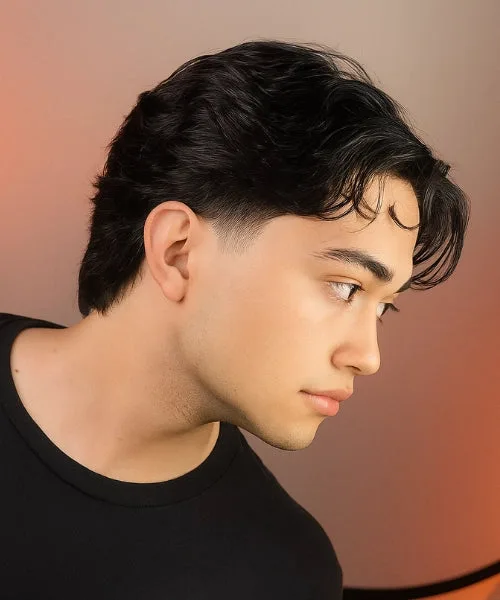
Walk into any premier barbershop across London, New York, or Seoul this year, and you will hear the exact same request echoing over the drone of cordless clippers. Clients want the center split, but they no longer want the floppy, unkempt bowl shape that defined 1990s suburban youth. The style dominating editorial shoots and city sidewalks is the taper fade curtains middle part, a hybrid haircut that fuses the effortless movement of vintage fringe with the surgical discipline of modern barbering.
Industry analysts documenting this shift, including a detailed style survey published in the Man of Many Report, track the hairstyle’s ascent from an underground counterculture artifact to the undisputed standard in modern grooming. By replacing heavy, unblended bulk around the ears and neckline with an intentional taper, barbers have solved the primary flaw of vintage curtains: the dread of the dreaded triangular head.
📌 Key Takeaways:
- The Hybrid Shift: Modern curtains abandon the unblended mushroom shape of the 1990s by pairing textured length on top with skin-close tapers at the temples and nape.
- Structural Longevity: Incorporating a low taper fade or drop fade preserves the hair's silhouette for three to four weeks, preventing the sloppy weight drop common in historic versions.
- Styling Mechanics: Success relies on tension control; pre-styling damp hair with sea salt spray and blow drying with a round brush creates natural root lift without rigid pomades.
How 90s Grunge Hair Revival Sparked the Modern Curtain Cut
The return of center-parted fringe did not happen overnight. In the early 1990s, the curtain cut functioned as a visual middle finger to the rigid, hair-sprayed pomp of 1980s corporate culture. Musicians like Kurt Cobain and actors like River Phoenix let their hair fall forward organically, parted down the center without pomade or excessive shaping. By the late 1990s, pop groups sanitized the cut into smooth, blow-dried drapes framing bleached center parts.
When the style resurfaced around 2019, driven by TikTok creators and the eboy aesthetic trend, it arrived as an intentional imitation of vintage anime and alternative fashion. Young men wore it long, dark, and flat against the scalp. The silhouette worked under studio ring lights, but in practical life, the excessive weight around the ears and neck made faces look rounder and necks shorter.
By 2024, the cut entered its second life in professional barbershops. Master barbers recognized that the textured curtain fringe possessed timeless appeal, provided someone carved away the unflattering side bulk. Removing the hair around the temporal crest and the lower occipital bone eliminated the boxy profile. Today, the 90s grunge hair revival lives on, but it is anchored by high-contrast clipping that makes the center part wearable for professionals, athletes, and street stylists alike.
Re-Engineering the Silhouette: Vintage Boybands Meet Precision Tapers
The classic boyband cut had a fatal engineering flaw: zero perimeter graduation. The sides fell directly over the ears, creating a mushroom-like perimeter as the hair grew past the temple points. Modern barbering eliminates this issue through weight distribution.
[ Textured Curtain Fringe (4, 6 inches) ]
\ /
\ Center Part /
\__/
| Temporal Transition | <- Interior Graduation
| Low/Mid Taper | <- #1 Guard to Skin
| ___ |
|---|
When designing modern wavy hair curtains, barbers create an internal weight line that sits just above the ear, then deploy clippers to transition into skin down to the sideburn. This achieves two crucial optical illusions:
- Facial Elongation: The tight temporal fade pulls the visual focus inward toward the eyes and nose bridge, accentuating jawlines that loose fringe traditionally hid.
- Dynamic Volume: Removing bulk underneath allows the upper curtain panels to fall freely, bouncing when the wearer moves rather than resting heavily on thick sideburns.
The cut is no longer passive. It uses architectural contrast between the blunt perimeter of the fade and the feathered, razor-cut edges of the front fringe.
The Generational Shift: Tracking Curtains Through Five Decades
The curtains haircut has cycled through distinct phases, mutating from blue-collar practicality to suburban pop before settling into contemporary technical grooming.
| Era & Movement | Perimeter Engineering | Weight Line Placement | Primary Styling Agent |
|---|---|---|---|
| 1991, 1995 (Grunge) | Blunt shear cut, natural bulk | At or below earlobe | Natural oils, bar soap residue |
| 1996, 2001 (Pop Mainstream) | Undercut or scissor-tapered sides | Mid-ear level | Alcohol mousse, heavy hairspray |
| 2019, 2022 (E-Boy Viral Wave) | Soft scissor taper, heavy nape | High temple to parietal ridge | Straightening flat irons, argan oil |
| 2024, 2026 (Technical Fade) | Skin taper fade or drop fade | Compressed above temple point | Sea salt spray, matte hair clay |
This progression reveals a clear truth: contemporary grooming demands longevity. Clients are unwilling to deal with hair that grows into an unruly tangle after seven days. Blending a taper fade curtains middle part ensures the haircut keeps its shape even as top strands lengthen.

The Mechanics of the Cut: Mid Taper vs Drop Fade Dynamics
Deciding between fade placements dictates how the curtain fringe interacts with the head shape. Choosing the wrong fade pattern can compromise the look.
A low taper fade restricts the clipper work strictly to the lowest centimeter of the sideburns and the bottom corner of the neckline. This option leaves maximum hair along the mastoid process behind the ear, providing an ideal base for wavy hair curtains. It delivers an understated aesthetic, suiting men who must wear tailored suits by morning and casual streetwear by night.
Low Taper: [Sideburn Skin] -> [Ear: Full Length] -> [Low Neckline Skin]
Drop Fade: [High Temple] -> [Dips Behind Ear] -> [Low Occipital Skin]
When evaluating a mid taper vs drop fade, head shape determines the winner. A drop fade cuts higher at the front temples, then swoops sharply behind the ear to drop below the occipital bone. This arc carves out deep negative space on the skull's flanks, which dramatically accentuates jawlines and breaks up heavy cheek contours.
If you bring reference images into a salon, carry a structured barber consultation guide:
- Tell the barber explicitly where you want the fade to break, ask for a low skin taper if you have a longer face, or a drop fade if you need to slim wider cheekbones.
- Request texturizing shears or slide-cutting through the fringe to remove blockiness.
- Direct the barber to leave fringe length reaching at least the bridge of the nose when wet, which shrinks to brow-length once dried.
Mastering the Middle Part Styling Technique at Home
A sharp haircut fails if the client cannot recreate the volume at their bathroom mirror. The middle part styling technique relies on dynamic heat rather than heavy holding agents.
Start with hair that is roughly 80% towel-dried. Coat the root zones evenly with sea salt spray. This deposit of magnesium sulfate adds mineral grip, ensuring the hair clings together instead of falling limply against the temples.
Step 1: Apply Sea Salt Spray to damp roots
Step 2: Establish the Part (Align with nose bridge)
Step 3: Blow dry using a round brush (Lift up, curve back)
Step 4: Cool Shot (Lock the root volume)
Step 5: Emulsify nickel-sized Matte Hair Clay (Roots to tips)
Next, establish the part using a wide-tooth comb lined up with the bridge of your nose. Avoid a mathematically dead-straight line; a slightly irregular split looks natural and unforced.
Blow drying with a round brush comes next. Take a front section of the fringe, wrap it over the barrel of a ceramic round brush, and pull upward and backward under medium heat. Direct the air nozzle down the hair shaft to smooth down the cuticle. Once the strand is dry, hit the cold shot button for 5 to 8 seconds. This rapid temperature drop instantly locks hydrogen bonds, preventing the roots from collapsing.
Finish with a nickel-sized amount of matte hair clay. Rub the product between your palms until clear, then massage it through the underside of the hair before styling the tips. Matte clay offers pliable grip and an earthy, non-greasy texture that holds the arch all day.
Face Geometry: Balancing Round Faces and Embracing Wavy Textures
The most common fear surrounding center parts is that the curtains will frame the face like parentheses, emphasizing wide cheeks or a soft chin. This concern is valid when dealing with unblended cuts, but round face shape balance comes down to weight placement.
For a round or square face, your barber must maintain high root lift while pulling the side taper down to the skin. By reducing horizontal width at the temples and adding vertical volume at the crest, the haircut visually lengthens facial proportions. Barbers should thin the curtain edges with point-cutting, ensuring the hair ends angle outward toward the cheekbones rather than curling inward around the jaw.
Those with wavy hair curtains hold a distinct advantage. Natural curl patterns give fringe an effortless sweep that straight-haired clients spend twenty minutes engineering with hot tools. The trick for wave patterns is moisture control. Avoid alcohol-heavy drying mousses. Swap them for light styling creams mixed with sea salt spray, letting the hair dry via diffuser. The resulting movement breaks harsh lines and accentuates natural angles in the face.
Frequently Asked Questions (FAQ)
Q1: How long does my hair need to be to pull off a taper fade curtains cut?
A: Your front fringe must reach at least the bridge of your nose when pulled straight down, which equates to roughly 4 to 6 inches of length. The sides only need about 1 to 2 inches initially, since the barber will taper them down to the skin.
Q2: What should I ask my barber to ensure I don't leave with a 90s mushroom cut?
A: Tell your barber you want a low or mid taper fade on the sides, disconnected internal layering, and textured point-cutting along the fringe. Explicitly instruct them to remove the excess bulk behind and above the ears so the curtains hang flat against a faded base.
Q3: How often does the taper fade curtains middle part require maintenance?
A: The taper portion demands upkeep every 2 to 3 weeks to keep the skin transitions crisp. The fringe on top requires a maintenance trim only every 6 to 8 weeks to eliminate split ends and manage bulk.
Q4: Can I pull off this style if I have a receding hairline?
A: A deep center part can expose recession at the temples. If your hairline is moving back, ask your barber for an off-center parted curtain (a 60/40 split) and keep the front layers shorter to drape diagonally across the corners of your forehead.
The Lasting Architecture of Contemporary Men's Hair
The taper fade curtains middle part has survived the volatility of internet trend cycles because it solves a fundamental grooming challenge: balancing expressive length on top with crisp discipline around the perimeter. It combines relaxed style with clean execution.
By understanding the relationship between the taper's height, fringe texturing, and heat styling, men can abandon flat pompadours and formless buzz cuts. This evolution demonstrates that style movements rarely die; they shed their practical flaws, borrow superior techniques from barbering culture, and return with sharper silhouettes.
