From Coachella to Late-Night Teases: The Concrete Clues Pointing to White Chicks 2
.jpg)
Tens of thousands of festivalgoers in Indio, California witnessed an unexpected collision of early-2000s cinematic nostalgia and modern pop stardom during Coachella Weekend 2 in April 2026. Stepping onto the stage during Sabrina Carpenter's headline set, an appearance that already featured surprise drop-ins from Madonna and Geena Davis, Terry Crews tore off his button-down shirt and launched into an uninhibited, shirtless rendition of Vanessa Carlton's 2002 piano anthem "A Thousand Miles." Within minutes, the crowd erupted, capturing video clips that racked up over 40 million impressions across social feeds before sunrise.
The stunt immediately transcended standard festival hype. As detailed in a recent Yahoo Report, co-creator and star Marlon Wayans noted that Crews' spontaneous crowd-pleaser provided the exact cultural spark required to push long-dormant negotiations for a White Chicks sequel into active motion. For over twenty years, rumors of a follow-up have drifted through trade papers and late-night television interviews. This impromptu desert performance has transformed casual studio nostalgia into tangible production momentum.
📌 Key Takeaways:
- The Spark: Terry Crews surprised attendees at Coachella Weekend 2 during Sabrina Carpenter’s set, performing his iconic, shirtless "A Thousand Miles" routine as Latrell Spencer.
- The Direct Response: Marlon Wayans confirmed that the viral reaction directly reignited creative and financial conversations among the Wayans brothers regarding White Chicks 2.
- The Industry Reality: Moving the project past development requires balancing theatrical studio economics, digital streaming bidding, and modern cultural sensibilities that differ sharply from 2004.
The Desert Spectacle That Reignited Latrell Spencer
Pop festivals rely heavily on surprise guest appearances, yet Terry Crews managed to upend expectations entirely during the second weekend of the Coachella music festival. Sabrina Carpenter’s set had already captured headlines by hosting Madonna for an impromptu vocal trade and bringing out veteran actress Geena Davis. When the opening piano chords of "A Thousand Miles" echoed across the grounds, audiences expected a conventional tribute. Instead, Crews emerged, flexed his pectorals, and tore through his clothing in a live recreation of pro-athlete billionaire Latrell Spencer from the 2004 cult classic.
The reaction was deafening. The 57-year-old actor exhibited the exact kinetic energy that defined his breakthrough film role twenty-two years earlier. Fans recognized the exact head bob, wide-eyed grin, and exaggerated falsetto synchronization that elevated the original car scene into pop culture canon. Backstage footage verified that the performance was engineered in complete secrecy, orchestrated between Carpenter’s production team and Crews to deliver maximum viral shock value.
Online response arrived instantly. Platforms like TikTok and X registered hundreds of thousands of organic re-shares within hours. For younger attendees who discovered the film through cable syndication and short-form video loops, the routine carried identical cultural weight to contemporary mainstream pop hits.
Marlon Wayans Responds to the Desert Viral Wave
Industry veterans understand that viral moments fade quickly unless primary stakeholders act on them. Marlon Wayans did not let the moment pass. Speaking publicly days after the Indio performance, the comedian directly credited Crews' shirtless spectacle with revitalizing interest among both distributors and creative leads.
Wayans observed that Hollywood studios frequently monitor public engagement algorithms before greenlighting comedy properties. A live audience of 100,000 people screaming every lyric to a two-decade-old movie gag provides unambiguous market validation. Wayans stated that he had already traded text messages with Crews within twelve hours of the performance. The conversation centered on whether the timing had finally aligned to assemble the original creative core, including brothers Shawn Wayans and director Keenen Ivory Wayans.
The comedic ensemble has maintained sporadic communication about a sequel since 2014. Yet previous attempts stalled over scheduling conflicts, financial hurdles, and uncertainty over how contemporary audiences would receive high-concept physical comedy. Wayans pointed out that Crews' sheer physical readiness proved the characters remain viable on screen without requiring awkward generational recasting.
Tracking Two Decades of White Chicks Sequel Rumors
The journey from the original release to present-day development conversations has moved through multiple false starts, studio reorganizations, and shifting distributor mandates. Tracking these key benchmarks reveals why the 2026 development cycle holds far greater weight than previous online speculation.
| Phase & Timeline | Primary Creative Catalyst | Industry Outcome |
|---|---|---|
| Original Theatrical Run (2004) | Revolution Studios & Sony Pictures release directed by Keenen Ivory Wayans. | Grossed $113.1 million worldwide against a $37 million production budget. |
| First Sequel Attempt (2009, 2010) | Sony briefly announced White Chicks 2 in early pre-production meetings. | Shelved due to budget allocations and studio executive shifts. |
| Talk-Show Resurgence (2019, 2021) | Terry Crews stated on Watch What Happens Live that negotiations were active. | Marlon clarified that deals were premature; production stalled during pandemic shutdowns. |
| Coachella Catalyst (April 2026) | Crews' surprise live performance with Sabrina Carpenter goes viral globally. | Marlon Wayans formally confirms renewed talks; studio interest resurfaces. |
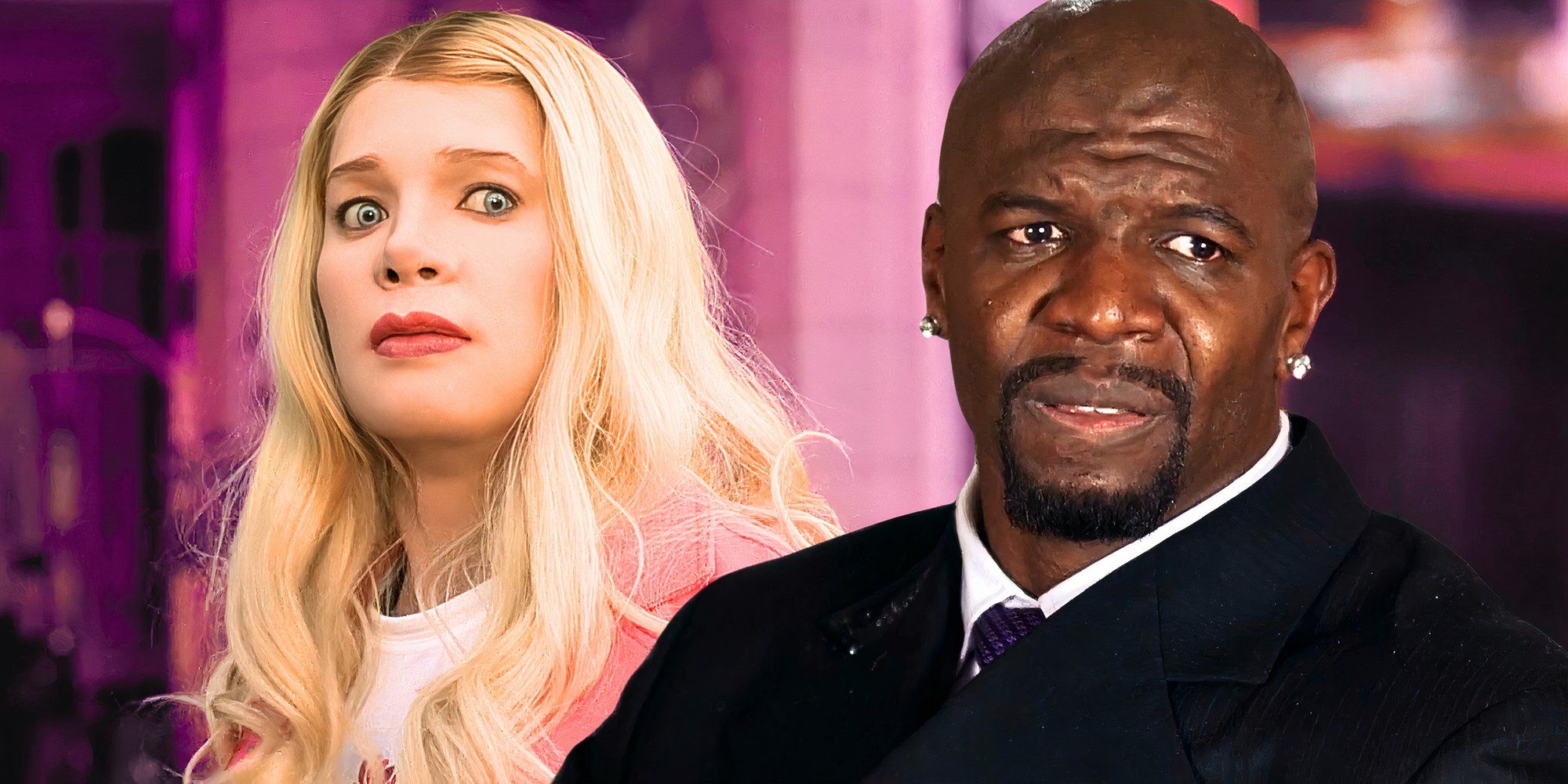
The Cultural Longevity of Latrell Spencer
Most mid-budget studio comedies from the mid-2000s have aged out of everyday conversation. White Chicks, however, built an enduring presence across demographic boundaries. Central to that survival is Terry Crews’ portrayal of Latrell Spencer, an absurdly confident professional football player who mistakes an undercover FBI agent in heavy prosthetics for his ideal romantic partner.
The sequence where Latrell listens to Vanessa Carlton while driving remains an elite example of subverting hyper-masculine stereotypes through pure musical farce. Rather than playing the scene with subtle irony, Crews committed with complete physical sincerity. That commitment turned an otherwise dated disguise comedy into an evergreen internet staple. Over the past decade, audio snippets from the track have populated millions of user-generated clips, insulating the film from becoming a relic of its release year.
Carlton herself has repeatedly praised Crews for giving her signature single an unexpected second life. The Coachella performance united that musical legacy with modern festival demographics, demonstrating that the joke functions just as effectively for audiences born after the film's initial theatrical window.
Studio Economics and Creative Obstacles in 2026
Fan excitement does not instantly resolve Hollywood financing hurdles. The studio landscape of 2026 presents operational challenges that did not exist when Revolution Studios financed the original comedy for $37 million. Major theatrical distributors now direct the majority of their capital toward established comic book IP, franchise animation, and high-budget horror.
A contemporary sequel faces two potential distribution pathways. The first involves a traditional theatrical release, which requires roughly $45 million to $60 million in production funding plus an equal amount for worldwide marketing. Securing those numbers for an R-rated or hard PG-13 physical comedy demands ironclad proof of cross-generational draw. The second pathway involves a competitive bidding war among premium streaming services like Netflix or Prime Video, where mid-budget comedies reliably pull top viewership numbers without box-office risk.
Creative balance presents another genuine hurdle. The original script relied on rapid-fire physical transformations, broad racial satire, and extreme prosthetic makeup that required hours of application each day for Shawn and Marlon Wayans. Modern filmmaking tech could streamline the prosthetic process via digital rendering, but the screenwriting team must update their satirical framework to reflect modern social dynamics without flattening the unapologetic absurdity that made the original work.
Frequently Asked Questions (FAQ)
Q1: Has White Chicks 2 been officially greenlit by a studio?
A1: No formal greenlight or production start date has been announced by a major studio. However, Marlon Wayans confirmed that active creative discussions and preliminary pitching resumed immediately following Terry Crews’ viral Coachella appearance in April 2026.
Q2: Why did Terry Crews perform "A Thousand Miles" at Coachella?
A2: Crews joined pop star Sabrina Carpenter during her Coachella Weekend 2 set as a surprise guest, executing his famous shirtless musical performance alongside guest appearances by Madonna and Geena Davis to generate viral festival engagement.
Q3: Will the original cast and director return for a potential sequel?
A3: Marlon Wayans has stated repeatedly that any legitimate sequel requires the core creative group: himself, Shawn Wayans, Terry Crews, and director Keenen Ivory Wayans. Crews has consistently confirmed his readiness to reprise Latrell Spencer whenever contracts are finalized.
What Lies Ahead for the Wayans Brothers in 2026
The path forward for White Chicks 2 hinges entirely on converting desert festival buzz into contracted studio commitments. Terry Crews proved that physical comedy, performed with genuine joy and zero cynicism, still connects with stadium-sized crowds. His spontaneous performance demonstrated that the character of Latrell Spencer remains culturally vibrant, bypassing standard nostalgic wear and tear.
For Marlon, Shawn, and Keenen Ivory Wayans, the task involves packaging that audience hunger into a script that matches modern distribution realities. If Hollywood financiers recognize the clear commercial signal sent from the Indio desert, this viral revival will not end as an isolated festival memory. It will mark the decisive turning point that finally brought one of comedy's most durable ensembles back to the soundstage.
