From Local Food Trucks to Brick-and-Mortar: The Rapid Rise of West African Dining in the US
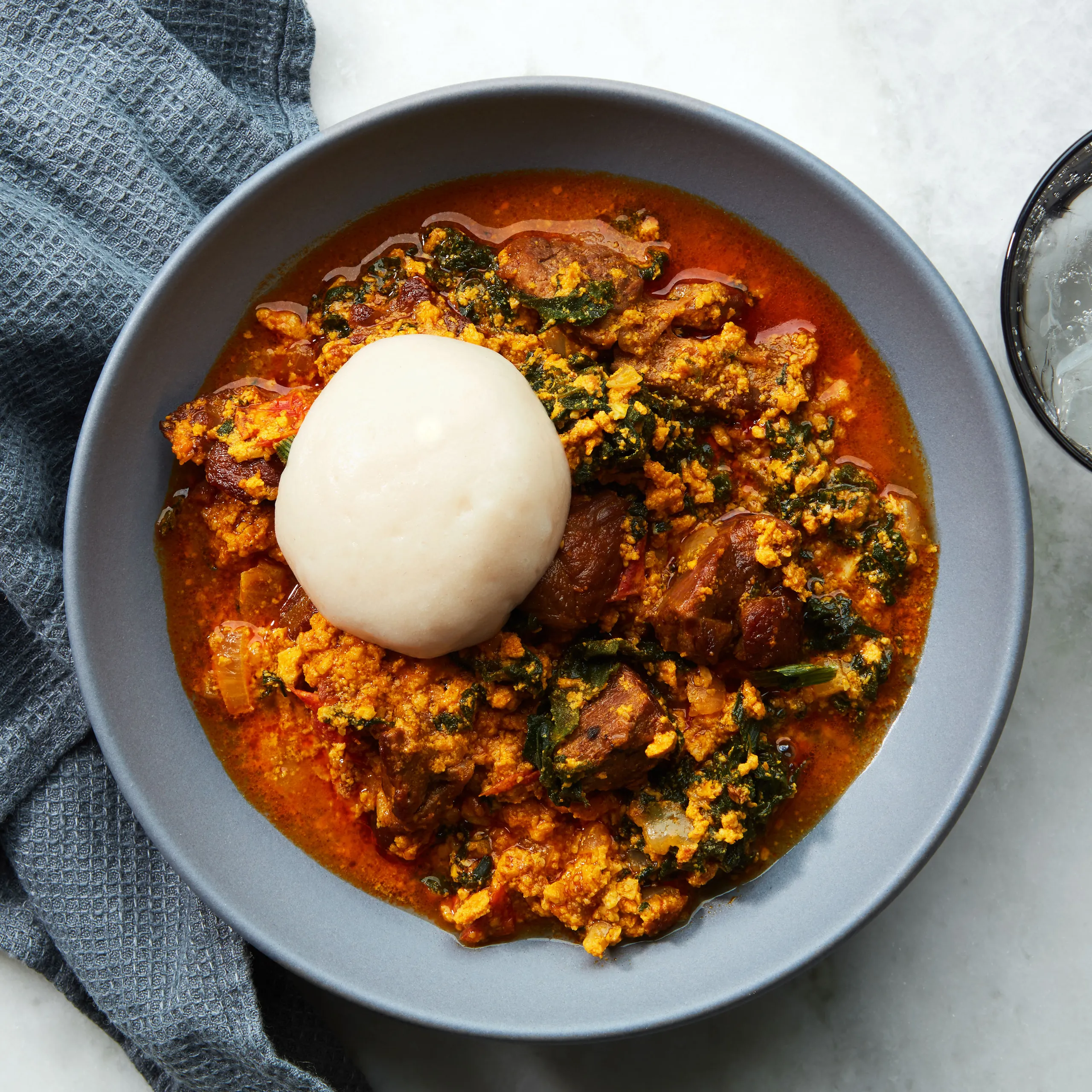
Across urban centers and quiet Midwestern retail corridors, the distinct aroma of red palm oil, fermented locust beans, and smoked fish is redefining strip mall dining. What started as diaspora-focused cooking in Columbus food trucks and home catering networks has exploded into a nationwide restaurant movement. Eaters who first watched influencers tear into spongy mounds of starch on social feeds now line up outside commercial kitchens in Indiana, Texas, and Ohio to experience the tactile satisfaction of fufu paired with rich Nigerian egusi soup.
This culinary migration is rapidly rewriting expectations for casual sit-down food in the United States. Media outlets have documented the friction and fascination surrounding this growth, from taste tests showcased in a buzzfeed.com Report to deep local profiles by the South Bend Tribune detailing how family-run operators like Kate’s Kitchen saw foot traffic surge when curious diners sought authentic swallow plates. The dish is no longer confined to insular cultural enclaves. It has entered mainstream commercial dining.
📌 Key Takeaways:
- Commercial Real Estate Shift: West African cuisine has migrated rapidly from temporary stalls and mobile trucks into high-traffic, African brick-and-mortar restaurants across suburban and regional US markets.
- Tactile Dining Appeal: The surging interest in fufu with egusi relies heavily on traditional hand-eating etiquette, offering a physical, multi-sensory contrast to conventional American fork-and-knife dining.
- Regional Diversity: Consumer demand is driving education around the precise distinctions between Ghanaian fufu varieties and Nigerian swallow staples, moving the conversation past broad generalizations.
From Columbus Food Trucks to Rust Belt Storefronts
Columbus, Ohio, hosts one of the largest West African diaspora populations in North America. For years, food trucks parked along Cleveland Avenue and Morse Road operated as communal lifeboats, serving steaming plastic containers of cassava swallow, jollof rice, and pepper soup to logistics workers and university students. By early 2024, that localized ecosystem had burst open. Operators who spent years navigating diesel generator repairs and seasonal Midwestern deep freezes began signing multi-year commercial leases in conventional shopping plazas.
The pattern quickly repeated in smaller markets. In South Bend, Indiana, Kate's Kitchen became an unexpected regional destination after digital platforms sent waves of curious local eaters through its doors. Owner Kate Annan, whose kitchen initially served a tight-knit circle of local African families, found herself explaining the mechanics of finger dining to college students and suburban families. Similar stories surfaced in secondary markets like Fargo, North Dakota, and border towns across the Rio Grande Valley, where independent African brick-and-mortar restaurants took over vacant diner spaces and pizzerias.
The speed of this transition exposed real operational friction. Commercial bank lenders frequently misunderstood menus that relied on seasonal imports from Lagos and Accra. Local health inspectors, unaccustomed to communal warm-water hand basins and large pots of cooling fermented starch, initially scrutinized kitchens with disproportionate intensity. Independent restaurateurs persevered by formalizing supply agreements with specialized importers and redesigning open-kitchen layouts to introduce guests to West African cuisine transparently.
Deconstructing the Bowl: Melon Seeds, Palm Oil, and Swallow
At the center of this dining movement sits an ancient culinary pairing built on technical precision. Egusi soup gets its name, texture, and density from ground melon seeds sourced from the wild gourd Cucumeropsis mannii. Unlike sweet watermelon seeds, these kernels possess high fat and protein concentrations. When pulverized and simmered in a seasoned palm oil stew, the seed proteins coagulate into rich, curd-like clusters that absorb the flavors of crayfish, scotch bonnet peppers, and meat stock.
The complexity compounds through layered proteins. A proper pot of Nigerian egusi soup integrates seared goat meat and smoked fish, often alongside tender chunks of cow foot or tripe. The fish, typically smoked catfish or dried stockfish, injects an earthy salinity that cuts through the dense richness of the red palm oil. Bitterleaf or fresh ugwu leaves (fluted pumpkin greens) fold in at the final stage of simmering, introducing an herbal bitterness that prevents the fat-heavy sauce from overwhelming the palate.
Fufu functions as the essential counterbalance. Serving as a neutral, elastic vehicle, this cassava swallow provides structural mass. Chefs produce traditional versions by pounding boiled cassava and green plantains together until the starches align into a silky, bouncy mass. Modern high-volume commercial kitchens frequently use dehydrated cassava flour, yam flour, or fermented cassava dough stirred over open flames. The result is a smooth, dense dumpling that softens the fiery punch of the soup while providing substantial satiety.
The Expansion Metrics: Tracking West African Dining (2022, 2026)
The evolution from diaspora-focused operations to mainstream dining destinations shows clearly in retail performance data across secondary and tertiary markets.
| Operational Phase | Primary Operating Footprint | Average Check per Diner | Customer Base Composition |
|---|---|---|---|
| Informal Mobile Era (2020, 2022) | Mobile food trucks, home catering, pop-up events | $12.00, $16.00 | 85% West African diaspora, 15% broader community |
| Storefront Transition (2023, 2024) | Suburban strip malls, repurposed fast-casual locations | $17.50, $24.00 | 55% diaspora, 45% first-time digital-discovery diners |
| Commercial Maturation (2025, 2026) | Full-service dining spaces, dedicated swallow bars | $25.00, $38.00 | 35% diaspora, 65% general dining audience |
Average ticket values climbed as operators shifted from takeout-only models to full sit-down service. Diners routinely pair their soup bowls with side orders of fried sweet plantains (dodo), malt beverages, and imported sodas. The jump in spending reflects growing comfort with higher menu prices as patrons begin viewing West African cuisine through the lens of specialty comfort food trends rather than quick-service cheap eats.
The Cultural Divide: Ghanaian Textures Meet Nigerian Staples
As popularity grew, so did scrutiny over culinary authenticity. The West African diaspora is not monolithic, and the cross-border dialogue between Ghanaian and Nigerian preparations spilled directly into restaurant dining rooms. Media experiments testing cross-border recipes sparked passionate debates over whose kitchen techniques yielded superior flavor balance.
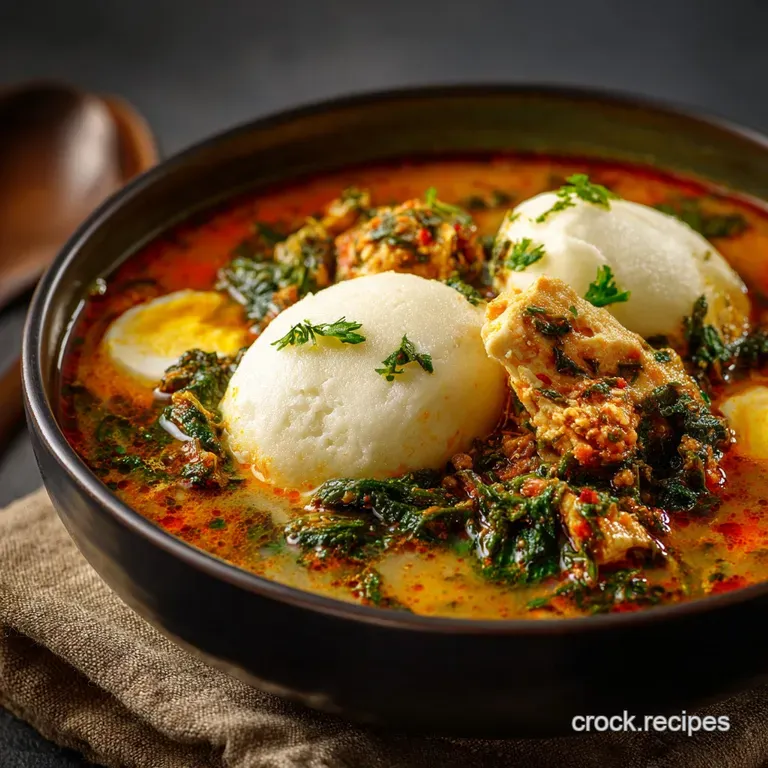
The differences run deep through raw ingredients and preparation rituals. Ghanaian fufu varieties lean heavily on pounded green plantain blended with cassava, resulting in a lighter, mildly sweet swallow with an ivory-yellow tint. In Ghana, diners typically pair this swallow with thin, intensely spiced light soups, peanut butter stews, or palm nut broths. Egusi, while consumed in Ghana under the name agushie, is more commonly incorporated into vegetable-heavy stews rather than serving as the thick, rich vessel seen across southeastern Nigeria.
Nigerian preparations, by contrast, treat egusi as an architectural centerpiece. The texture is intentionally thicker, leaning on pounded yam or fermented cassava flour (eba) to scoop up dense clusters of ground seeds. Nigerian cooks often incorporate iru (fermented carob or locust beans), which releases a pungent, savory aroma that defines the pot. Kitchens that navigate both styles successfully have learned to print distinct menu explanations, guiding unfamiliar diners away from mismatched pairings.
Viral Misinformation and the Reality of Table Manners
The internet’s fixation on West African cuisine has brought unwelcome distortions alongside genuine curiosity. In early 2026, social channels circulated a widely shared clip showing American military personnel supposedly eating egusi soup during field operations in Nigeria. Investigative journalists at FactCheckHub reviewed the footage and proved the video was completely synthetic, fabricated using generative AI software to capture algorithmic traffic from food-discovery audiences. The episode underscored how easily the food's viral reputation can be exploited for online engagement.
Inside actual dining rooms, the educational curve focuses on traditional hand-eating etiquette. The practice carries strict cultural rules. Diners wash their hands thoroughly before the bowl hits the table, using only the right hand to handle food. Etiquette demands pinching off a golf-ball-sized portion of swallow, rolling it smooth against the palm, and pressing an indentation into the center with the thumb. That pocket scoops the egusi and rich stock cleanly without soaking the fingers.
Crucially, swallow is designed to be swallowed whole, not chewed. The smooth surface allows the ball to slide comfortably down the throat with minimal mastication, carrying the heat and spice of the broth along with it. Watching newcomers struggle to use forks or attempting to chew thick mouthfuls of pounded yam has prompted many independent operators to place visual etiquette guides on tables, preserving cultural integrity while putting tentative patrons at ease.
Navigating the Menu: Flavor Profiles and Ordering Profiles
Egusi soup is assertive, intensely aromatic, and rich in structural fats. Not every guest finds an immediate comfort zone within its uncompromising flavor profile. Understanding which variations match individual taste thresholds prevents disappointing dining room experiences.
Ideal Diner Profiles:
Diners who gravitate toward bone broths, slow-braised meats, Southeast Asian shrimp pastes, and Latin American mole sauces will find immediate kinship with egusi. The earthy funk of smoked fish, paired with the umami of fermented locust beans and the heat of blended habanero peppers, offers an unforgettable depth. Those open to tactile dining and thick, gluten-free starches like pounded yam or plantain mash generally embrace the dish on their first attempt.
Profiles That Require Caution:
Eaters sensitive to pungent aromas or oily textures should approach the dish deliberately. Authentic egusi relies entirely on red palm oil, which sits visibly atop the stew and carries a rich, earthy flavor profile distinct from neutral cooking oils. Diners averse to whole-carcass butchery, where goat meat retains skin and gelatinous connective tissue, should ask servers for boneless cuts or chicken breast substitutions. Starting with eba (fermented cassava) can also be challenging for palates unprepared for mild sour notes; pounded yam offers a softer, more neutral point of entry.
Frequently Asked Questions (FAQ)
Q1: Do I have to eat fufu with my hands at a restaurant?
While traditional etiquette emphasizes eating with the clean fingers of the right hand, restaurants will provide silverware upon request. However, pinching and dipping the swallow by hand gives you far better control over the thick soup than a metal spoon.
Q2: Why is egusi soup sometimes served with small bones and fish skin?
West African culinary traditions place immense value on the rich collagen, marrow, and flavor found in bone-in meats and whole smoked fish. These cuts simmer directly in the stew to build a deeply savory broth. Diners navigate small bones with their fingers as they eat.
Q3: Is fufu gluten-free?
Traditional fufu made purely from cassava roots, green plantains, or yams is naturally gluten-free. Some commercial restaurants mix wheat flour into their swallow blends to improve elasticity during large batch production. Diners with celiac disease or gluten sensitivity should confirm the kitchen’s starch recipe before ordering.
The Permanent Shift in American Comfort Dining
The emergence of fufu and egusi across the United States marks the end of West African food's era as an obscure culinary novelty. What began as a mobile lunch option for immigrant communities in Columbus and Houston has matured into a nationwide culinary infrastructure. Brick-and-mortar storefronts now run robust commercial operations, backed by established supply lines delivering authentic melon seeds, fresh leafy greens, and specialty palm oil directly to the American heartland.
This expansion demonstrates how adventurous modern diners have become. By embracing dishes that demand tactile interaction and uncompromising, fermented flavors, Americans are expanding their definitions of comfort food. As second-generation operators refine these operations and open secondary outposts across small towns and suburbs, West African kitchens are securing a permanent, visible place in the everyday fabric of American hospitality.
