From Mascot Makeovers to Pop-Tarts: The Visual Transformation of Cinnamon Apple Jacks
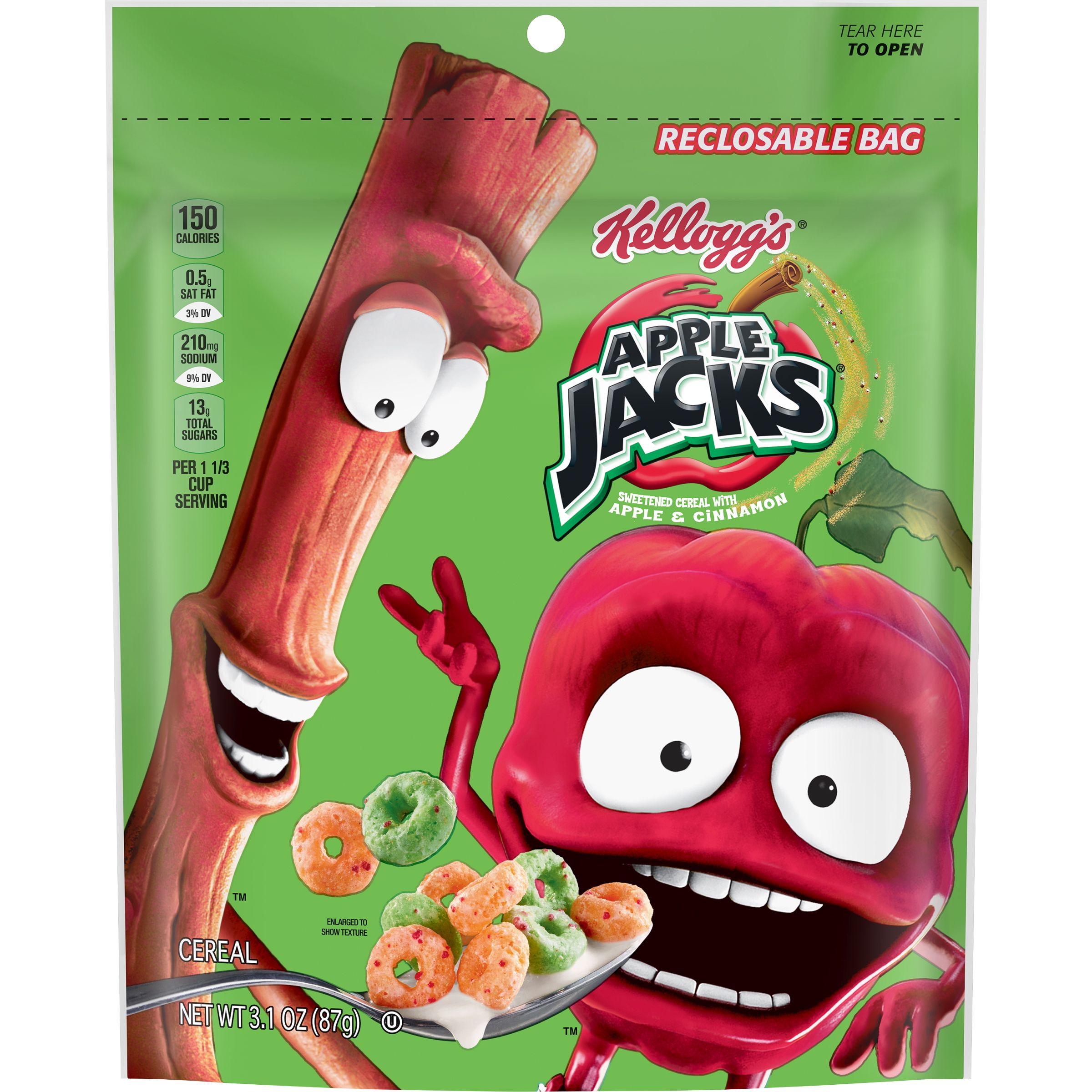
For decades, Apple Jacks held a distinct corner of Saturday morning television by leaning into a deliberate sensory contradiction: the cereal never tasted much like apples. Introduced by Kellogg in 1965 as "Apple O's" before being rechristened in 1971, the sweetened apple cinnamon breakfast cereal survived generations not by revising its sugar-forward profile, but by continuously rewriting its visual identity. From mid-century animated box art to the chaotic slapstick of the mid-2000s commercials, the brand consistently adjusted its aesthetics to mirror shifting youth cultures.
That visual evolution hit two major cultural milestones over recent years. First came a sharp online reckoning in mid-2022, when social video creators sparked a widespread debate over the corporate sanitization of its longtime character, CinnaMon. Soon after, the brand leapt out of the cereal bowl entirely. As tracked in an industry [bakingbusiness.com Report](https://news.google.com/rss/articles/CBMijAFBVV95cUxNZW5OUnpoU0ViQnJWWUg3M1VNRVJaVFd1WV9ic3lwR1dCWDRyTWV0RTc3Sm1TdXYwSFRENzl3YTRneFF0amM4SXJJRVZKTHpiQy1udVVJaE1FemQ2eUZyMWFrNE1KQk8yU2lhOTduLXowNmJqeHVOX0ctLTU5M3VocDIzcHRrSXhDd0QxOA?oc=5), parent entity Kellanova orchestrated a major cross-category expansion, uniting the cinnamon-apple profile with its flagship pastry in the release of Apple Jacks Pop-Tarts. Together, these moves illustrate how legacy consumer packaged goods navigate generational nostalgia, design trends, and shifting cultural norms.
📌 Key Takeaways:
- The Character Rebrand: Kellogg systematically stripped away the dreadlocks, beanie, and vocal caricature from its CinnaMon mascot, transitioning the character into a generic digital rendering following persistent consumer scrutiny.
- The Category Expansion: The rollout of Apple Jacks Pop-Tarts marked a calculated push to capture dual-aisle grocery revenue by repurposing core cereal flavor profiles into portable snacks.
- The Corporate Shift: Following the late-2023 corporate reorganization that created Kellanova, the company accelerated nostalgic snack crossovers to engage adult millennials and social-first Gen Z shoppers.
From Apple O's to Saturday Morning Staples
The origins of Apple Jacks trace back to 1965, when Kellogg launched Apple O's. The original recipe leaned on dried apples alongside milled corn and oat flour, wrapped in a muted package design. When sales lagged, the marketing team renamed the product Apple Jacks in 1971, rolling out an early mascot named "Apple Jack", a caricature of a boy whose hat resembled an apple stem.
Throughout the 1970s and 1980s, the cereal’s visual branding cycled through several identities, including a kangaroo named Jack and animated sequences developed in partnership with vintage commercial studios. By the early 1990s, the company hit on a simple, counterintuitive campaign slogan: "Apple Jacks doesn't taste like apples." The advertising framed the cereal as an irreverent rebellion against parental health consciousness. Children in the commercials openly proclaimed that they ate the cereal not for fruitiness, but for the cinnamon sweetness. This campaign solidified the product's market position, yet the brand lacked the singular, defining mascot rivalries enjoyed by competitors like Frosted Flakes or Trix.
The 2004 Rivalry: How CinnaMon and Bad Apple Captured Cult Status
In 2004, Kellogg commissioned advertising agency Leo Burnett to overhaul the brand's narrative. The resulting campaign abandoned children altogether, introducing a dynamic duo locked in perpetual comedic pursuit: CinnaMon and Bad Apple. CinnaMon was a laid-back, dreadlock-sporting cinnamon stick wearing a knit beanie, while Bad Apple was a neurotic, grouchy apple desperate to stop children from reaching the bowl.
The commercials followed a rigid, slapstick structure. Bad Apple devised elaborate, Rube Goldberg-style traps to prevent CinnaMon from beating him into a bowl of milk. Invariably, CinnaMon’s effortless cool and surprising agility dismantled Bad Apple's schemes. The dynamic inverted traditional cereal advertising tropes; the apple, historically associated with health and wholesome nutrition, became the cartoon villain, while the hyper-sugary cinnamon stick served as the laid-back hero.
For roughly a decade, this conflict anchored the cereal's television presence. It also shifted consumer demographics. Young millennials and Gen Z viewers memorized the commercials line for line, buying into the hyper-kinetic, stop-motion-infused 3D animation style that characterized mid-2000s children's entertainment.
The TikTok Reckoning and the Flattened Cereal Mascot Redesign
By the time corporate parent Kellogg revamped its digital assets in the early 2020s, the original design of CinnaMon had grown complicated for brand managers. The character's visual features, specifically the caricature of Jamaican patois, knitted rasta-style tam, and braided dreadlocks, sparked mounting scrutiny regarding racial stereotyping in legacy consumer packaging.
In June 2022, social platforms forced the issue into the mainstream. A surge of videos under the TikTok viral mascot debate questioned why current cereal boxes featured an unrecognizable, sanitized version of CinnaMon. The dreadlocks were gone. The expressive facial sculpt and textured bark had been smoothed into a rounded, rubbery cinnamon stick sporting nondescript sneakers and a minimalist cap.
The redesign matched a broader trend across packaged goods: transitioning expressive, complex 3D mascots into flat, corporate-friendly vector graphics easily rendered on smartphone screens and mobile shopping applications. While the modification avoided the persistent cultural critiques directed at the 2004 original, it alienated vocal online communities who viewed the shift as another example of modern brand homogenization erasing childhood personality.
Tracking the Packaging and Brand Milestones
The visual history of Apple Jacks reflects the broader arc of post-war food marketing, moving from functional agricultural illustration to personality-driven character comedy, and finally to modern platform-agnostic branding.
| Era | Visual Strategy | Core Narrative Hook | Packaging Distribution |
|---|---|---|---|
| 1965, 1971 | Mid-century clean typography; "Apple O's" naming | Direct fruit-and-grain breakfast positioning | Traditional grocery store cereal aisles |
| 1972, 1992 | Animated hand-drawn mascots (Jack the boy, kangaroo) | Wholesome morning energy and kid-focused sweetness | Standard box sizes with back-of-box games |
| 1993, 2003 | Live-action children with high-contrast typography | "Doesn't taste like apples" anti-parent messaging | Introduction of multi-packs and jumbo sizes |
| 2004, 2019 | 3D CGI character animation (CinnaMon & Bad Apple) | Adversarial slapstick comedy; race to the bowl | Full character renders dominating front display |
| 2020, 2026 | Simplified vector design; cross-brand pastry licensing | Portable indulgence; nostalgic comfort crossovers | Dual placement (cereal aisle & toaster pastry shelf) |
Portable Nostalgia: The Apple Jacks Pop-Tarts Crossover
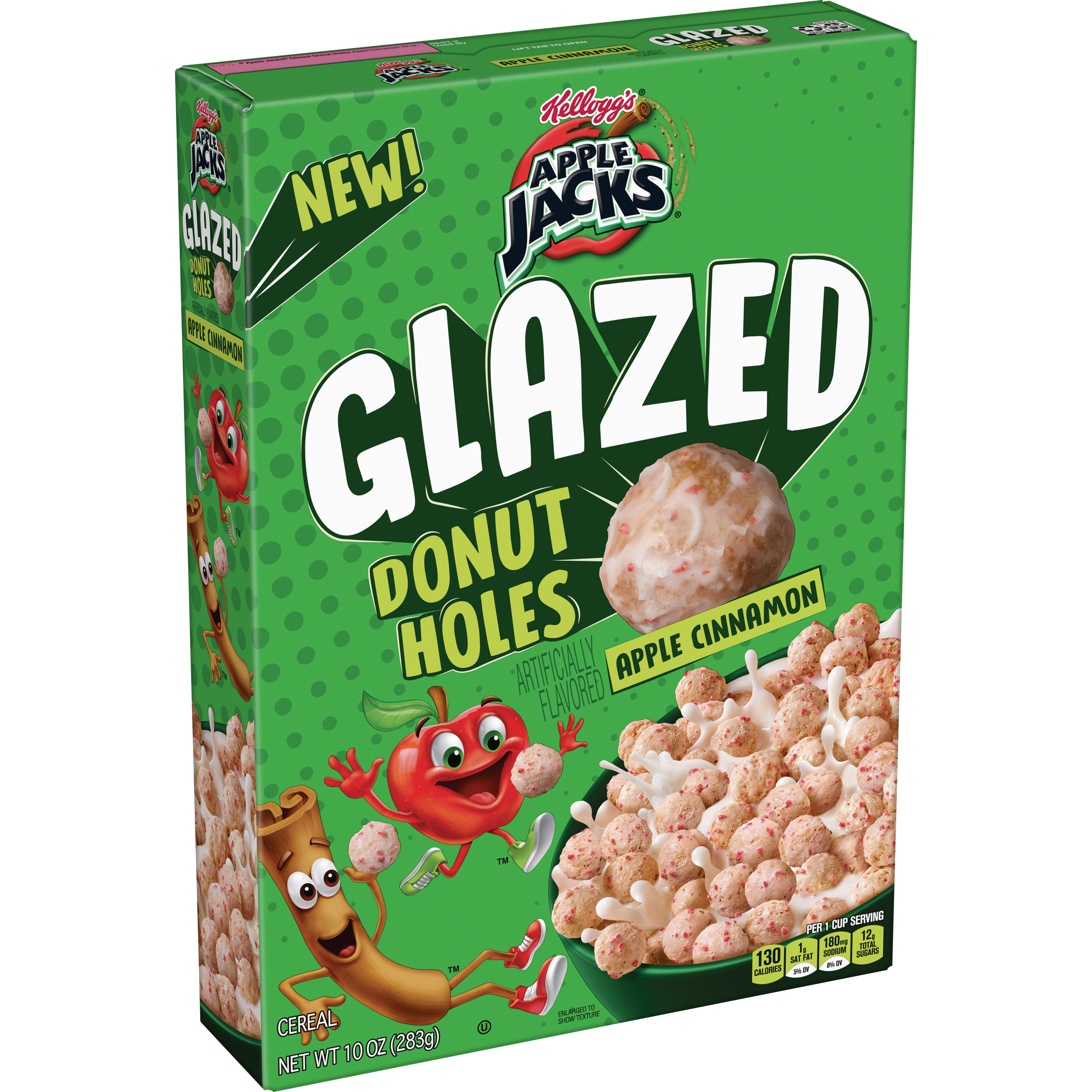
Faced with stagnating breakfast cereal volume across North America, Kellogg executed a calculated category extension. In February 2023, the company officially launched Apple Jacks Pop-Tarts. The product brought the distinct green-and-orange flecked profile of the cereal into a standard toaster pastry shell, topped with a cinnamon-apple flavored filling and vibrant green and orange icing sprinkles.
The strategy went deeper than mere novelty. Cereal consumption at breakfast tables had declined steadily among consumers aged 18 to 34, who increasingly favored high-protein alternatives or portable, hand-held items. By translating the recognizable aroma and aesthetic of Apple Jacks into a Pop-Tart, the company solved a crucial operational challenge: keeping a legacy intellectual property inside household pantry rotations without relying on morning milk consumption.
When Kellogg split into two separate publicly traded entities in late 2023, WK Kellogg Co for legacy North American cereal and Kellanova for global snacking, the Pop-Tarts crossover served as an early blueprint for Kellanova's playbook. Licensing brand assets across distinct shelf spaces created immediate visibility, drawing adult buyers who hadn't bought a green-and-orange cereal box in twenty years.
The Mechanics of Modern Snack Mergers
The convergence of cereal branding and convenience snacks reveals how consumer packaged goods corporations handle IP preservation. Today, food brands face intense competition from private labels and fast-casual alternatives. Relying solely on breakfast shelf space exposes legacy lines to slow obsolescence.
Visual cues carry significant financial weight. The sensory combination of bright neon green, warm orange, and stylized cinnamon imagery functions as instant consumer shorthand. When packaged food giants modernize these elements, they walk a thin line between cultural caution and consumer alienation. Flattening a mascot's design minimizes social-media liability, but it also risks stripping away the eccentricity that earned brand loyalty in the first place.
The Apple Jacks Pop-Tart hybrid proved that consumer sentiment responds far more warmly to playful product crossovers than to corporate mascot redesigns. When brands merge two distinct nostalgia vehicles into a single SKU, retail buyers overlook the missing dreadlocks on the box in favor of the familiar taste profile inside the wrapper.
Frequently Asked Questions (FAQ)
Q1: Why did Kellogg change CinnaMon's mascot design?
A1: Kellogg updated the CinnaMon mascot to modernize its packaging for digital formats and address lingering concerns regarding cultural stereotyping, specifically the use of exaggerated dreadlocks, a rasta-styled knit cap, and vocal mannerisms that had drawn online criticism.
Q2: When did Apple Jacks Pop-Tarts officially hit store shelves?
A2: The crossover officially rolled out to nationwide retail shelves in March 2023, following official trade announcements by Kellogg and industry monitors in late February 2023.
Q3: Does Apple Jacks cereal actually contain real apples?
A3: Yes, modern ingredient formulations include apple juice concentrate and dried apples, though the dominant flavor profile remains driven by cinnamon, sugar, and enriched grain flours rather than distinct tart fruit flavors.
Q4: Which company currently owns the Apple Jacks and Pop-Tarts brands?
A4: Following the corporate reorganization in late 2023, Kellanova manages Pop-Tarts and associated global snack innovations, while WK Kellogg Co manages the traditional North American boxed cereal operations, maintaining cooperative licensing agreements for cross-brand releases.
The Road Ahead for Cereal Brand IP
The evolution of Cinnamon Apple Jacks underscores the reality facing legacy packaged goods: generational staying power requires continuous adaptation. The brand survived its transition from a 1960s dried-fruit cereal to a 1990s rebellious anti-fruit staple, found peak character recognition through the early 2000s dynamic of CinnaMon and Bad Apple, and successfully navigated modern category contraction by jumping into toaster pastries.
As food companies evaluate their historical catalogs, visual identity remains their primary defensive asset. The challenge moving forward lies in retaining genuine character distinctiveness while navigating rapid online discourse. For Apple Jacks, survival has meant shedding controversial caricatures and embracing shelf-stable, dual-category portability, ensuring that even as Saturday morning cartoons disappear, the taste of cinnamon-dusted breakfast stays securely in the shopping cart.
