From Texas Roadhouse to Ruth's Chris: How Viral ‘Carnivore’ Blue Steak Orders Took Over the Internet

A server sets a sizzling plate on a white tablecloth, and the phone camera zooms in. Across social feeds, millions of viewers watch a self-described carnivore influencer slice through a thick filet, hunting for an untouched purple-red core. When the knife reveals warm pink flesh instead of a chilled interior, the creator sighs on camera, telling her followers that commercial kitchens simply refuse to respect customer specifications.
The friction between extreme dietary trends and traditional kitchen protocols reached a boiling point following a widely shared brobible.com Report documenting a patron who ordered a blue rare steak at Ruth's Chris Steak House. After cutting into her meat, she openly wondered whether kitchen staff treated her request as a personal insult. The moment crystallized an escalating dining room war that stretches from budget-friendly Texas Roadhouse roadhouses to legacy corporate chops.
📌 Key Takeaways:
- The Spark: Social media carnivore advocates increasingly demand blue rare cuts at high-volume chains, sparking fierce pushback from line cooks and servers.
- The Operational Clash: Classic steakhouse infrastructure, specifically plates heated up to 500°F, cooks meat at the table, making true blue rare preparations functionally impossible to serve without modifications.
- The Culinary Reality: While whole-muscle beef carries minimal internal bacterial risk, executing an ultra-cold core with a flash-charred crust requires specific techniques that standard commercial broilers rarely accommodate.
The Carnivore Diet Trend Meets Mainstream Dining Rooms
The current wave of ultra-rare orders did not emerge from traditional gastronomy. It grew directly out of wellness algorithm feeds. Followers of the zero-carb carnivore movement advocate for unprocessed, nutrient-dense animal proteins, frequently arguing that minimal heat exposure preserves essential enzymes and delicate fats. For creators broadcasting daily consumption logs, eating nearly raw beef functions as a visual signature.
Casual chain restaurants bear the brunt of these online challenges. Diners walk into busy Texas Roadhouse locations during peak dinner hours and request thick-cut ribeyes cooked for barely 60 seconds per side. High-volume kitchens operate on speed, consistency, and strict internal temperature targets. When an order ticket demands an item that falls well outside typical consumer preferences, the line grinds down. Cooks must isolate a steak, pull it off the grill before muscle fibers firm up, and verify that the outer surface meets baseline sanitation rules.
High-end establishments face different headaches. Legacy chophouses built their reputations on proprietary aging regimens and high-heat broilers designed to render fat evenly. Carnivore creators arrive with distinct demands, ordering large cuts with no seasonings, no compound butters, and almost zero cook time. Tensions arise immediately when patrons accuse seasoned grill masters of deliberately ruining meals for sport.
Slicing Raw Muscle on a 500-Degree Plate
The physics of steakhouse service explain why so many viral orders fall apart at table delivery. Ruth's Chris Steak House famously serves its prime cuts on trademark ceramic platters heated to 500°F, bathed in clarified butter. The concept guarantees that every bite stays warm throughout the meal. That exact equipment makes preserving a cold red center virtually impossible.
A cut of beef pulled from a 1,800°F overhead infrared broiler at an internal temperature of 110°F continues cooking the moment it touches the plate. Residual conduction elevates internal meat temperature rapidly. Within three minutes of sitting on table-side porcelain, a legitimate blue rare steak drifts directly into standard medium-rare territory. When influencers slice into the cut five minutes into a live recording, they see warm pink meat and cry foul.
Texas Roadhouse utilizes a completely different service model, relying on seasoned cast flat-tops and charbroilers before plating on room-temperature or gently warmed dinnerware. Even there, cooks struggle with execution. Ribeyes feature thick veins of intramuscular fat and connective tissue. Unrendered beef fat at 105°F remains waxy, tough, and chewy. Line cooks frequently flash the cut longer out of habit, trying to spare the restaurant an inevitable customer send-back.
Decoding Doneness: Internal Meat Temperature and Searing Chemistry
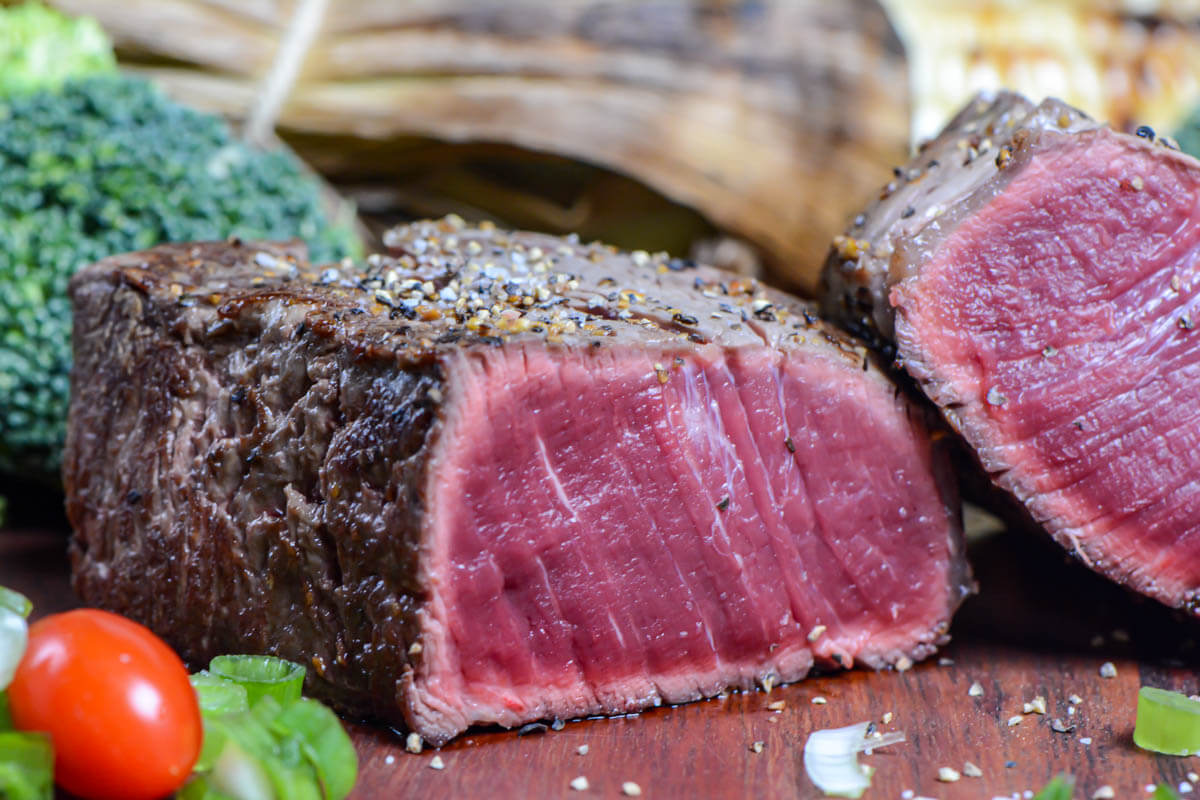
True culinary blue, known historically in French kitchens as bleu, is not simply an undercooked rare steak. It requires rapid searing technique that applies extreme surface heat for mere seconds to pasteurize the exterior while leaving interior structural proteins uncontracted and cool.
| Doneness Level | Target Internal Temperature | Visual & Textural Profile | Core Cooking Technique |
|---|---|---|---|
| Blue Rare (Bleu) | 100°F, 115°F | Deep red to purple core; soft, cool or lukewarm interior; thin crust. | Flash-sear on blistering heat (60, 90 seconds per side); immediate removal. |
| Pittsburgh Rare | 110°F, 120°F | Heavily charred, blackened crust; bright red, cold-to-cool center. | Direct open flame or screaming-hot cast iron with butter/tallow to induce char. |
| Traditional Rare | 120°F, 125°F | Bright red throughout; warm center; soft yielding texture. | High-heat sear followed by short indirect resting period. |
| Medium Rare | 130°F, 135°F | Warm pink center; fully rendered fats; balanced firmness. | Standard commercial grill or broiler cycle with controlled carryover rest. |
Regional variations complicate diner expectations. Steelworkers in Pennsylvania originated Pittsburgh rare, often termed "black and blue", by throwing cold meat directly against industrial machinery pipes or superheated foundry iron. That method demands a heavily carbonized, blackened exterior contrasting with a cold interior. A standard blue rare steak, by contrast, avoids heavy charring, aiming only to kill surface bacteria while locking in natural juices.
Myoglobin, Food Safety Standards, and the Red Juice Myth
Online comment sections under blue steak videos overflow with public panic about food poisoning and visible "blood." Both claims misstate basic biology.
The red liquid pooling beneath an ultra-rare cut contains zero blood. It is water mixed with myoglobin, an iron-rich protein responsible for delivering oxygen to muscle cells. Beef turns brown during cooking because heat degrades myoglobin into hemichrome around 140°F. When meat stays below that threshold, myoglobin retains its deep red pigmentation.
From a regulatory perspective, whole-muscle beef cuts operate under different food safety standards than ground meats. Bacteria like Escherichia coli and Salmonella colonize the exterior surfaces of intact beef during slaughter and processing. The dense internal muscle fibers remain sterile. Searing the outside of a strip loin to at least 160°F eliminates pathogens instantly, even if the center never climbs above 105°F.
Risk escalates when meat undergoes mechanical tenderization. Industrial blade tenderizers puncture the surface with tiny needles, pushing surface microbes straight into the deep core. High-end chops butcher whole primals on-site, making them safe for blue preparation. Lower-cost cuts processed with mechanical needles carry distinct contamination risks if consumed cold in the middle.
Line Cook Realities and Unspoken Dining Room Etiquette
For kitchen crews, blue rare tickets represent an operational trap. Experience teaches line cooks that nine out of ten customers who order a steak "as rare as humanly possible" will return it the moment they feel a room-temperature center. A rejected steak hits food cost metrics directly. Kitchen managers routinely instruct grill cooks to give orders an extra 30 seconds of heat to protect against refunds.
Proper chef etiquette requires clear communication at the point of ordering rather than performative confrontations online. Guests seeking an authentic blue rare cut must clearly articulate their expectations:
- Request that the steak arrive on an unheated plate to halt residual cooking.
- Select lean cuts like tenderloin or flat iron; avoid ribeyes, which turn unpleasantly greasy when unrendered.
- Confirm that the cut is intact whole muscle and has not been mechanically tenderized.
- Explicitly tell the server you understand the core will be cold, waving off standard kitchen safety warnings.
Blaming kitchen teams for misunderstanding a specialty request ignores how production lines run. A restaurant executing hundreds of covers an hour relies on standardized muscle memory. Deviating from standard steak doneness levels demands deliberate cooperation between the diner, the front-of-house staff, and the grill master.
Frequently Asked Questions (FAQ)
Q1: Is eating a blue rare steak safe at any restaurant?
A1: It is generally safe only with intact whole-muscle beef cuts, such as prime filet mignon or New York strip, sourced from reputable purveyors. Avoid ordering blue rare if the kitchen uses mechanically tenderized meat or non-intact cuts, as surface bacteria can be pushed into the center.
Q2: Why do steaks ordered blue at Ruth's Chris often arrive medium-rare?
A2: Ruth's Chris serves steaks on signature plates heated to 500°F. This extreme radiant heat continues cooking the meat at the table. To maintain a blue core, guests must request an unheated plate.
Q3: Which steak cut works best for a blue rare preparation?
A3: Tenderloin (filet mignon) is the ideal choice. Because it contains minimal connective tissue and low intramuscular marbling, it remains tender even when unheated. Highly marbled cuts like ribeye require higher temperatures to render their fat properly.
Steakhouse Culture in the Age of Performance Dining
Dining rooms have always adapted to shifting culinary fads, but social video platforms have compressed the feedback loop. What once lived as an obscure menu modification favored by traditional European diners has turned into a high-visibility digital engagement tool.
Kitchens are beginning to adjust their floor scripts. Several national chop chains now instruct servers to confirm internal temperature expectations the moment a customer utters the word "blue." Clear communication defuses unnecessary arguments before plates leave the pass. A successful meal ultimately depends on respecting culinary realities: searing technique creates flavor, heat transfer respects no camera angles, and a hot plate will always finish what the grill cook started.
