From Underground Trend to Mainstream Craze: Rise of the Blowout Taper Fringe
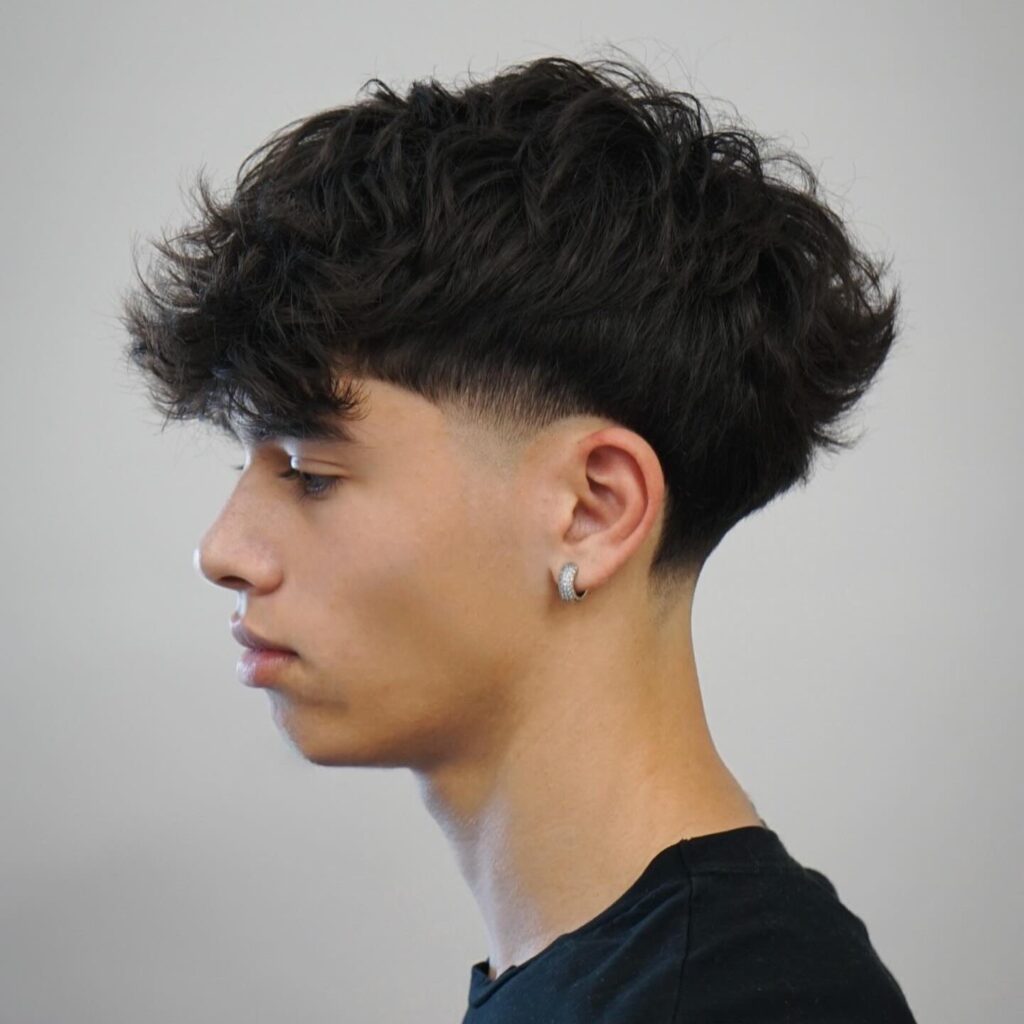
Walk into any American middle school or high school hallway on a Monday morning, and the silhouette is unmistakable. Hundreds of teenage boys sport the exact same canopy of tousled, forward-swept curls tapering down to skin right above the ears. As detailed by a recent Yahoo Report tracking youth grooming habits, parents are routinely shelling out upwards of $100 for salon perms and precision tapers. What began as localized styling across Dominican and Black barbershops in Philadelphia and New York has evolved into the defining youth aesthetic across the country.
The look blends contrasting vintage aesthetics: the 1990s Italian-American blowout and the mid-2000s indie fringe. Barbers execute it using aggressive weight distribution, contrasting tight skin tapers with heavy density up top. The result is casual yet technically complex. It marks a decisive cultural turn away from the rigid comb-overs and slick undercuts that ruled men's grooming for over a decade.
📌 Key Takeaways:
- The Signature Cut: A heavy, forward-falling scissor-cut layered fringe paired with clean sideburn and neckline tapers that preserve crown volume.
- The Perm Boom: Adolescent clients with straight strands are spending $80, $140 every three months on chemical perms to achieve effortless wave patterns.
- Product Shift: Greasy high-shine pomades have vanished, replaced by sea salt spray, volumizing texture powder, and matte styling clay.
Viral Reels Reshape School Hallways
Short-form video algorithms drive this styling wave with unprecedented speed. Barbers who once relied on word-of-mouth walk-ins now stage multi-camera productions to capture transformations. A client enters with flat, lifeless hair. Thirty seconds of syncopated editing later, they step out with bouncy, aerodynamic waves resting above their eyebrows. These clips register tens of millions of views weekly, turning neighborhood barbers into micro-influencers.
Behind the viral clips sits a structural change in adolescent behavior. Gen Alpha grooming trends display an unprecedented consumer sophistication. Pre-teens and teenagers no longer ask for "a trim on top and a two on the sides." They walk into appointments holding phones paused on exact frames of TikTok creators. They ask for negative space, natural hair volume techniques, and explicit graduation. Barbers report that clients as young as eleven now debate the textural difference between a drop fade vs taper before settling into the chair.
This trend has redefined barbershop economics. A baseline haircut that cost $25 four years ago has morphed into a $65 service because of the detailing required. Adding chemical texture services pushes the total tab past triple digits. Barbershops are actively booking out weeks ahead of back-to-school windows and school dances, driven entirely by requests for a single cut.
Dissecting the Anatomy: Fringe, Drop Fade, and Taper Dynamics
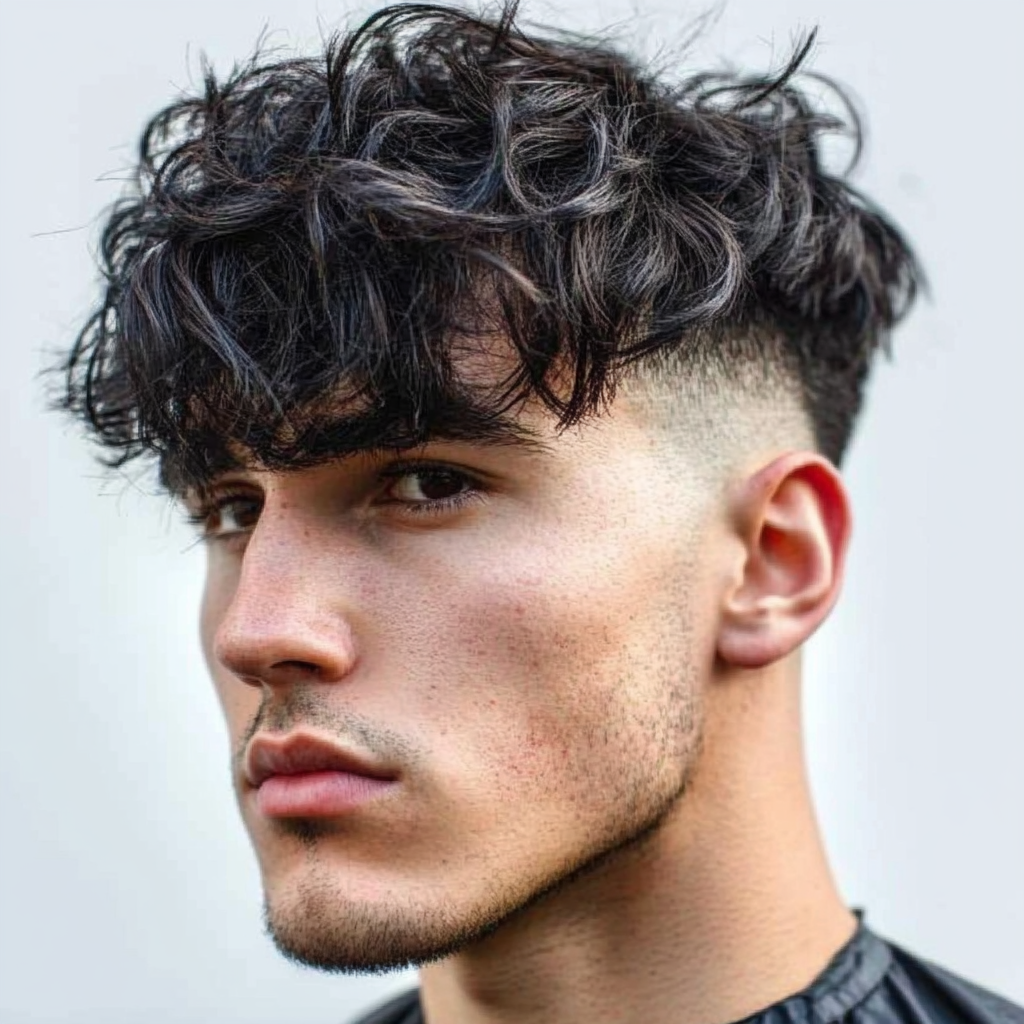
The silhouette succeeds because it flatters nearly every face shape, softening harsh angles while framing the forehead. At its core, the style relies on a scissor-cut layered fringe that leaves hair anywhere from three to five inches long across the crown, directed forward toward the brow line. Rather than cutting a straight, blunt line, the barber point-cuts into the ends. This technique removes bulk, creates separation, and allows individual strands to float freely.
Where the cut departs from historical crops is the perimeter work. A standard textured fringe fade strips weight from the entire parietal ridge, exposing the skull and creating a vertical profile. In contrast, the low taper blowout clears hair only at the temple points and the base of the nape.
By leaving the area behind the ear untouched, the barber preserves maximum density around the occipital bone. The hair billows outward before snapping back into skin at the natural hairline edges. This preserved fullness allows teenagers to flick their hair upward or let it cascade forward without exposing scalp.
| Haircut Style | Perimeter & Fade Work | Maintenance Cycle | Styling Product Arsenal |
|---|---|---|---|
| Low Taper Blowout | Faded only at sideburns and nape; leaves maximum volume behind ears. | 2, 3 weeks (sides need frequent cleanups) | Sea salt spray, blow dryer diffuser, volumizing powder |
| Textured Fringe Drop Fade | Skin fade that curves downward behind the ear toward the nape. | 1, 2 weeks (high scalp visibility) | Matte styling clay, light sea salt mist |
| Classic Scissor Crop | Uniform scissor work or conservative clipper taper; no bare skin. | 4, 5 weeks (grows out evenly) | Water-based pomade, styling cream |
The Perm Boom and Barber Economics
Clients with naturally straight hair face a mechanical dilemma: the style collapses without internal curvature. To solve this, young men are embracing chemical processing at rates unseen since the late 1980s. A wavy hair perm has become a routine rite of passage for middle school athletes and suburban teens alike.
Salons report massive surges in teenage bookings specifically asking for large-rod alkaline or cold-wave perms. Rather than tight corkscrews, stylists use oversized rollers placed haphazardly across the top section to introduce loose movement. The service runs between $80 and $150, taking roughly 90 minutes.
Because hair grows roughly half an inch each month, these young men return every 10 to 12 weeks for touch-ups. This behavior has permanently bridged the gap between traditional male barbershops and unisex salons. Men's grooming is no longer a ten-minute pitstop; it is a recurring luxury subscription.
The Modern Chemistry of Styling: Powders, Clays, and Diffusers
The shift in cutting techniques has triggered an overhaul in hair cosmetics. The slick finishes favored by millennials are obsolete among today's students. Modern teens want their hair to move when they walk and bounce back when shaken, demanding a matte, grit-heavy hold.
The daily routine centers on three fundamental products:
- Sea Salt Spray: Sprayed onto towel-damp hair as a pre-styler. The salt absorbs excess natural oils and shrinks the hair shaft slightly, establishing structural grip and baseline volume.
- Volumizing Texture Powder: Made primarily of silica silylate, this ultra-fine powder is dusted directly onto dry roots. It acts like microscopic Velcro, gripping adjacent strands to keep the fringe elevated without weighting it down.
- Matte Styling Clay: Applied sparingly to individual tips to create piecey separation and lock the fringe in place without leaving any visible residue.
The application technique matters as much as the formulas. A standard nozzle blow-dry leaves strands flattened against the scalp. Instead, users rely on a diffuser blow dry, cupping the hair gently from underneath on low heat. The diffuser distributes airflow evenly across a wide surface area, locking curls into place without breaking apart the natural wave bundles.
Barber Consultation Guide: Avoiding Disasters in the Chair
Miscommunication between clients and barbers often leads to haircuts gone wrong. When a client simply asks for a "blowout taper," an unprepared barber might deliver a severe 1990s Jersey blowout or shave the sides too high, ruining the foundational shape. Precision requires clear language and realistic expectations.
Clients sitting down for this cut must establish three structural rules before the clippers turn on:
- State the Taper Boundaries: Explicitly ask for a low taper, not a mid or high fade. The skin exposure must remain confined strictly to the bottom half-inch of the sideburns and the bottom curve of the neckline.
- Protect the Parietal Ridge: Instruct the barber not to clip into the curve of the head. That hair creates the "blowout" ledge necessary to support the textured top.
- Request Point-Cutting on the Fringe: Ask for a scissor-cut layered fringe with texture shears or razor graduation, keeping the length touching the middle of the bridge of the nose when pulled straight. When dry and wavy, it will bounce up to sit right at eyebrow level.
Hair texture dictates the final outcome. Clients with coarse, pin-straight hair cannot achieve this aesthetic with clippers alone; they must commit to either chemical perming or daily heat styling. Clear communication around home maintenance saves clients from spending $60 on a haircut they cannot replicate after their first shower.
Frequently Asked Questions (FAQ)
Q1: What is the main difference between a low taper blowout and a traditional fade?
A traditional fade cuts hair down to the skin around the entire circumference of the head, removing weight on the sides and back. A low taper blowout only removes hair down to the skin at the sideburns and the very bottom of the neckline, keeping the hair behind the ears dense and full.
Q2: How do you maintain a wavy hair perm when getting regular haircuts?
Schedule perimeter taper cleanups every two to three weeks to keep the neckline and sideburns tidy without touching the top. The permed fringe should only be trimmed with point-cutting shears every six to eight weeks to preserve the curl structure.
Q3: Can someone with thin or fine hair pull off a textured fringe blowout taper?
Yes, but fine hair requires extra assistance from volumizing texture powder and sea salt spray rather than heavy pomades. The point-cutting technique creates natural separation that gives fine strands the illusion of greater density.
The Cultural Evolution of Youth Grooming Standards
The explosion of this hybrid cut reflects a permanent evolution in how younger generations perceive self-care. Grooming has shed its utilitarian past, trading generic cuts for calculated personal expression. Teenagers now treat their morning routine as an aesthetic discipline, armed with technical vocabulary and salon-grade styling products.
As the textured fringe blowout taper moves from viral novelty to established barbershop standard, it cements a broader reality: modern men's style is defined by movement, texture, and technical precision. The haircut may continue to evolve, but the days of the low-effort buzz cut have firmly come to an end.
