Gaten Matarazzo’s Health Journey: A Complete Timeline of His Surgeries and Career Milestones

When Netflix premiered Stranger Things in July 2016, audiences immediately fell in love with Dustin Henderson, the quick-witted, walkie-talkie-wielding kid from Hawkins, Indiana. Yet behind his distinctive lisp and broad, toothless grin sat a genuine medical condition that Hollywood casting directors had spent years rejecting. Gaten Matarazzo was born with cleidocranial dysplasia (CCD), a rare genetic bone disorder that fundamentally alters the formation of the skull, collarbones, and dental arches.
Rather than hiding the condition beneath prosthetics or heavy makeup, series creators Matt and Ross Duffer wrote it directly into the script. Over the course of five seasons and a decade of public life, Matarazzo turned a lifelong medical struggle into a platform for rare disease advocacy. His physical transformation, driven by multiple complex dental extractions, orthodontic traction procedures, and surgeries, has redefined how developmental conditions are represented on screen.
📌 Key Takeaways:
- The Diagnosis: Cleidocranial dysplasia (CCD) is a genetic condition affecting 1 in every 1 million births, primarily disrupting bone growth, dental eruption, and clavicle formation.
- The Surgical Path: Matarazzo has undergone at least four major operations, including a four-hour oral surgery in 2020 to pull down adult teeth trapped beneath his gums.
- The Philanthropic Impact: Through his non-profit partnership with CCD Smiles, Matarazzo has raised hundreds of thousands of dollars to fund life-changing maxillofacial care for families priced out of treatment.
How Cleidocranial Dysplasia Shapes Gaten Matarazzo's Life
Cleidocranial dysplasia stems from a mutation in the RUNX2 gene, an instruction manual for the master protein responsible for osteoblast differentiation. Without a fully functional copy of this gene, bone ossification slows down drastically. The body struggles to form hard skeletal tissues on normal developmental timetables.
For Matarazzo, this genetic profile manifest primarily in two visible ways: altered collarbone development and delayed dental growth. Individuals with CCD often have hypoplastic or completely absent clavicles, allowing them to bring their shoulders together in front of their chests, a physical trait Matarazzo demonstrated during early press junkets. Cranial sutures close far later than normal, sometimes leaving soft spots well into adulthood.
The dental consequences prove even more demanding. Children with CCD typically retain their primary baby teeth far past the normal age. Meanwhile, adult secondary teeth fail to erupt naturally because the overlying gums and alveolar bone remain unusually dense. Compounding this delay is hyperdontia: the growth of supernumerary teeth. These extra, rogue dental buds crowd the jawline below the surface, locking adult incisors and canines in place and creating a biological bottleneck that requires extensive oral surgery to untangle.
The Audition That Forced Hollywood to Change Its Rules
Before booking the role of Dustin Henderson, Matarazzo faced continuous rejections across Broadway and commercial casting rooms. Producers routinely cited his height, his voice cadence, and his missing front teeth as disqualifiers. By age 12, he was wearing temporary dental prosthetics and fake dentures to look like an average child actor during screen tests.
During his initial chemistry read with the Duffer brothers, Matarazzo candidly explained why his speech sounded unique and showed the directors his hyper-flexible shoulders. The creators realized that Dustin's natural authenticity was far more compelling than a polished archetype. They discarded the original character concept and re-engineered Dustin to share Matarazzo's exact medical condition.
In the pilot episode, when school bullies mock Dustin by barking that his "teeth are gonna come in," he snaps back with clinical precision: "I told you a million times, my teeth are coming in. It's called cleidocranial dysplasia." That single line of dialogue brought an ultra-rare skeletal condition into living rooms across the world, generating a surge of public awareness overnight.
Timeline of Surgeries and Dental Milestones (2015, 2026)
Correcting the structural dental anomalies caused by CCD is not a matter of standard braces. It requires years of collaborative work between craniofacial specialists, oral surgeons, and orthodontists. Practitioners must cut through dense cortical bone, excise extra tooth buds, attach surgical brackets directly to buried teeth, and slowly pull those teeth down using gold chains.
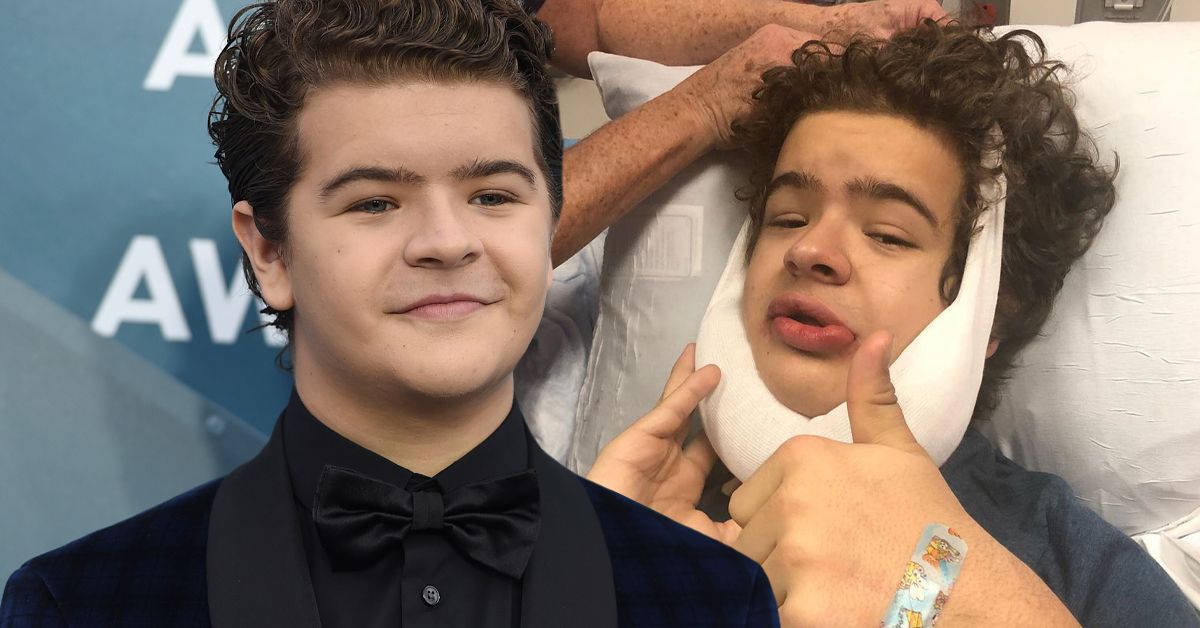
As documented in a detailed People.com report, Matarazzo took to social media in early 2020 to confirm that his fourth major operation was a "complete success," marking a pivotal transition in his long-term treatment plan.
| Date / Era | Clinical Procedure | Outcome & Significance |
|---|---|---|
| 2015, 2016 | Use of removable prosthetic teeth; initial pediatric oral evaluations | Wore temporary bridges for non-acting functions; starred unadorned in Season 1 |
| 2017 | Third major oral surgery; preliminary extraction of supernumerary teeth | Removed redundant buds crowding his upper jaw; paved the way for orthodontic chains |
| January 2020 | Four-hour surgical intervention; 14 supernumerary teeth removed | Exposed six unerupted adult teeth; bonded brackets to initiate slow traction downward |
| 2021, 2023 | Active orthodontic extrusion and arch stabilization | Adult teeth steadily guided into position; noticeable structural shift during Stranger Things 4 |
| 2024, 2026 | Final cosmetic alignment, occlusal refinement, restorative veneers | Complete reconstruction of functional bite plane for adult theater and screen work |
His January 2020 procedure was arguably the most gruelling phase. Surgeons worked for over four hours to cut away deep gingival tissue and extract 14 extra teeth that were choking his jawbone. Once cleared, they located six adult permanent teeth embedded high within the palate, affixed brackets to their surfaces, and anchored them with surgical sutures so orthodontics could gradually tug them down.
The Financial Realities of Specialized Craniofacial Care
While Matarazzo had access to elite surgical teams, his family faced severe insurance hurdles early in his life. Health insurance providers routinely classify the surgeries needed for CCD as "cosmetic dental care" rather than reconstructive bone surgery, leaving ordinary families with immense medical debt.
A single round of oral surgery to remove supernumerary teeth can cost between $15,000 and $30,000 out of pocket. Comprehensive, multi-year orthodontic traction and surgical exposures frequently exceed $50,000 to $100,000 over a patient's adolescent lifetime. Because the disorder affects fewer than 1,000 diagnosed individuals in the United States at any given time, research grants and insurance coverage mandates remain painfully scarce.
Recognizing this disparity, Matarazzo partnered with CCD Smiles, a non-profit organization founded to help families handle these surgical bills. Through charity galas, merchandise sales, and direct appeals during international press tours, Matarazzo has helped raise over $500,000 for clinical grants, giving dozens of low-income teenagers access to corrective oral surgery.
How Dustin Henderson Evolved On-Screen Alongside Matarazzo
The progression of Matarazzo's mouth mirrors Dustin Henderson's coming-of-age story across the five seasons of Stranger Things. In Season 1, the character is gap-toothed and unbothered. By Season 2, Dustin arrives at the middle school dance showing off temporary fake dentures, a development Matarazzo himself navigated in real life.
In Season 4, as Matarazzo's adult teeth were actively being guided into place by surgical hardware, Dustin's look matured naturally. Viewers watched a real adolescent medical intervention play out across a multi-billion-dollar franchise. The visual evolution of his smile was completely authentic, showing the slow, messy reality of surgical reconstruction instead of relying on sudden cinematic makeovers.
This visibility reshaped public conversations on platforms like Reddit and TikTok, where young people with rare genetic disorders began sharing their own orthodontic milestones. Matarazzo proved that an unconventional appearance is not an obstacle to landing leading roles on Broadway or in Hollywood blockbusters.
Frequently Asked Questions (FAQ)
Q1: What medical condition causes Gaten Matarazzo’s missing teeth?
A1: Gaten Matarazzo has cleidocranial dysplasia (CCD), an inherited genetic bone condition that impairs bone ossification, prevents the timely eruption of adult teeth, and causes supernumerary (extra) teeth beneath the gumline.
Q2: Did Gaten Matarazzo get fake teeth or real implants?
A2: He used temporary dentures and snap-in prosthetic teeth during early auditions and seasons of Stranger Things. His current smile, however, is largely his own natural adult teeth, which were surgically exposed and pulled down into his jaw using complex orthodontic traction over several years.
Q3: How many oral surgeries has Gaten Matarazzo had?
A3: He has undergone at least four major surgical operations. His most intensive procedure took place in January 2020, lasting four hours to extract 14 supernumerary teeth and expose six buried permanent teeth.
Q4: Can people with cleidocranial dysplasia live normal, healthy lives?
A4: Yes. CCD does not impact cognitive function or general life expectancy. It requires targeted medical management, primarily orthopedic evaluations and specialized oral-maxillofacial surgery to correct dental anomalies and monitor bone density.
Beyond the Hawkins Horizon
As the final curtain falls on Stranger Things, Matarazzo's public journey stands as an exceptional case of Hollywood inclusion. By refusing to mask his cleidocranial dysplasia, he stripped away the stigma that often shadows rare physical disorders. His decade of surgeries and orthodontic recovery was never hidden behind a publicist's filter; it was shared openly with millions of fans.
Today, Matarazzo moves seamlessly between Broadway roles in Sweeney Todd and major feature films with a functional, healthy smile that took ten years of meticulous surgical care to build. More importantly, through CCD Smiles, he has established an enduring support system for thousands of children who will never have to face the operating room alone.
