Greek Yogurt vs. Cottage Cheese: Which Dairy Star Makes Superior Protein Pancakes?
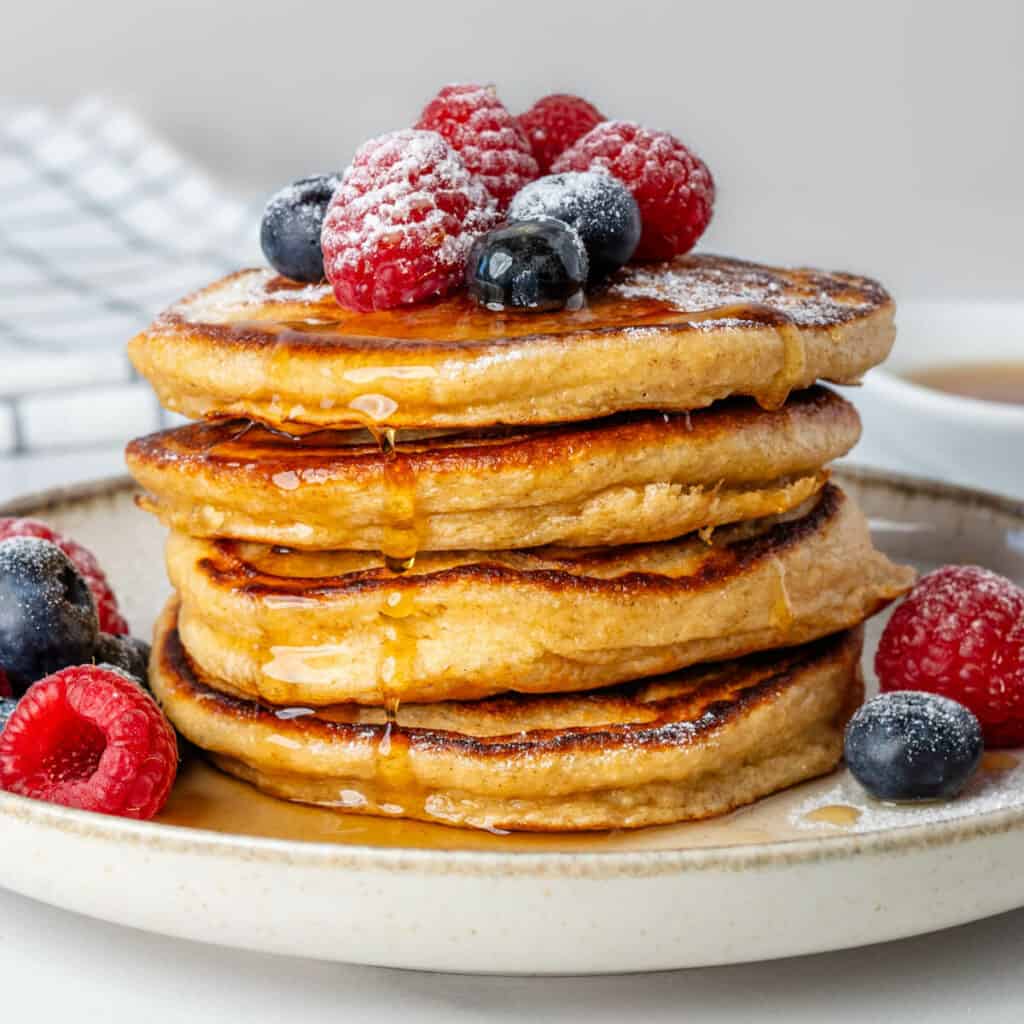
Kitchen griddles have become the testing ground for a major shift in macro-friendly baking. Millions of home cooks are tossing out chalky powders and artificial binders, turning instead to whole-food cultured dairy to craft fluffy protein pancakes that taste like traditional weekend fare. According to a comparative analysis highlighted in a Good Housekeeping Report, dietitians evaluating whole-dairy staples discovered distinct nutritional splits between strained yogurt and curd-based cheeses that alter everything from crumb structure to morning satiety.
When folded into griddle batter, Greek yogurt and cottage cheese produce radically different results. One delivers an airy, golden lift powered by chemical leavening reactions, while the other creates a custard-like, molten interior packed with savory richness. Understanding the culinary science behind pancake batter acidity, curd moisture, and protein integrity settles the debate on which dairy base deserves your morning skillet.
📌 Key Takeaways:
- Acidity and Lift: Greek yogurt carries a low pH of 4.4, 4.6, activating baking soda instantly to generate towering, airy height.
- Moisture and Richness: Cottage cheese features larger casein curds that melt under heat, yielding a denser, crepe-adjacent texture with higher natural sodium.
- Nutritional Trade-Offs: Greek yogurt delivers fewer milligrams of sodium and zero post-cooking curd texture, while blended cottage cheese provides a milder flavor profile for sensitive palates.
The Kitchen Exodus Away From Whey Protein Powders
For over a decade, fitness enthusiasts accepted dry, rubbery pancakes as the mandatory price of hitting morning macronutrient targets. Traditional whey protein concentrate and isolate strip batter of its natural moisture, binding rapidly with water and seizing on hot cast iron. The resulting flapjacks often feel closer to corrugated cardboard than diner short stacks.
Cultured dairy fundamentally changes this dynamic. Incorporating thick dairy provides a whole-food whey protein alternative that carries structural moisture, natural fats, and emulsifiers into the starch matrix. The natural water-protein emulsion prevents gluten strands from tightening aggressively, yielding tender bites even when cooks substitute whole wheat or rolled oats for refined all-purpose flour. Strained dairy turns high-protein breakfast ideas into sustainable daily habits rather than tests of endurance.
Batter Acidity and the Leavening Chemistry of Greek Yogurt
The signature loft of diner-style pancakes relies on rapid carbon dioxide gas expansion before the griddle heat sets the starch matrix. Greek yogurt acts as an aggressive chemical catalyst in this process because traditional straining concentrates lactic acid, driving the yogurt’s pH down between 4.4 and 4.6.
When this acid encounters alkaline baking soda (sodium bicarbonate), an immediate acid-base reaction triggers:
$$ \text{NaHCO}3 + \text{H}^+ \rightarrow \text{Na}^+ + \text{H}2\text{O} + \text{CO}_2 \uparrow $$
Carbon dioxide bubbles populate the wet batter instantly, creating micro-pockets that expand the moment the batter hits a 350°F pan. Because cottage cheese undergoes curd washing during production, its pH hovers closer to 4.8 to 5.2, offering markedly less free acid to react with baking soda. Without adding lemon juice or cream of tartar, cottage cheese batters rely strictly on baking powder’s secondary heat-activated phase, yielding flatter cakes with a heavier internal crumb.
Head-to-Head Kitchen Metrics: Texture, Macros, and Lift
Chefs and nutritional analysts measure batter performance across moisture retention, leavening height, and sodium content. Below is the direct comparison of both dairy bases tested across identical flour and egg ratios.
| Culinary Metric | Strained 0%, 2% Greek Yogurt | Low-Fat 2% Cottage Cheese |
|---|---|---|
| Protein Per 100g | 10.0g, 10.5g | 11.0g, 12.0g |
| Acidity (pH Range) | 4.4, 4.6 (High natural acid) | 4.9, 5.2 (Mildly acidic) |
| Average Sodium Per 100g | 35mg, 50mg | 350mg, 410mg |
| Average Cooked Height | 18mm, 22mm (Tall, porous crumb) | 10mm, 13mm (Dense, custardy) |
| Griddle Behavior | Even browning via lactose caramelization | Curds melt into soft, wet interior pockets |
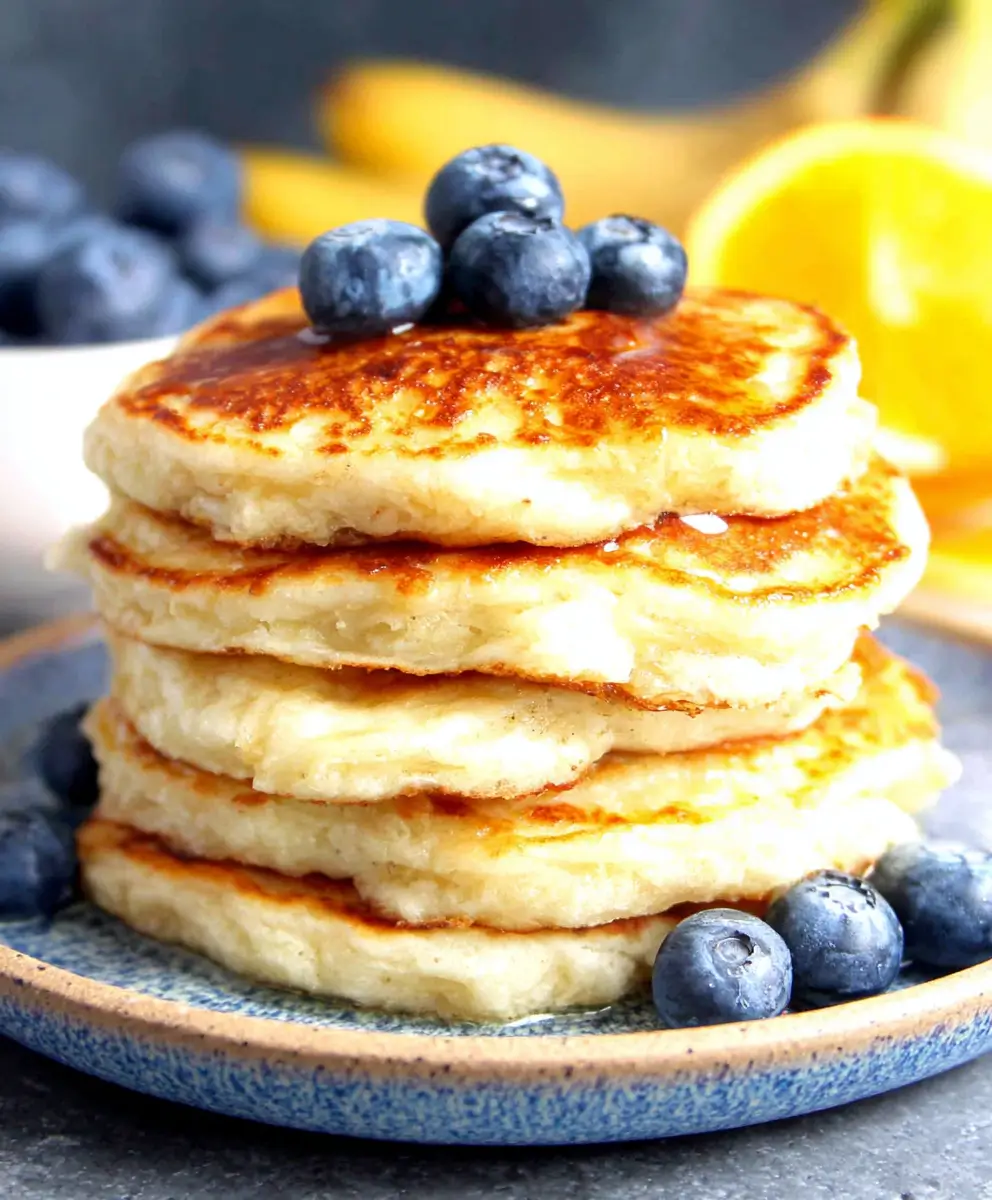
Formulating Oat Flour Greek Yogurt Pancakes for Meal Prep
A major challenge in healthy meal prep pancakes is preventing starch retrograde, the process where cooked starches recrystallize and turn hard after chilling in the refrigerator. Whole-grain oat flour pairs effectively with Greek yogurt because oat groats contain soluble beta-glucan fibers that hold water alongside dairy proteins.
To build a reliable batch:
- Whisk 1 cup of finely ground oat flour with 1 teaspoon of baking soda and a pinch of cinnamon.
- Blend 3/4 cup of plain Greek yogurt, 2 large eggs, and 2 tablespoons of milk until uniform.
- Combine wet and dry ingredients gently, avoiding vigorous whipping that collapses air bubbles.
- Let the batter rest for 5 minutes at room temperature. This resting window hydrates the oat bran and lets the initial acid leavening establish tiny air pockets throughout the bowl.
- Spoon onto a medium-low skillet greased lightly with avocado oil. Cook for 3 minutes until the edges lose their shine, flip, and finish for 90 seconds.
These cool flat on a wire rack and freeze between sheets of parchment paper. A 60-second reheat in a standard toaster oven restores the outer crispness without drying out the interior crumb.
Dietitian Perspectives on Heat, Probiotics, and Satiety
Consumers often choose cultured dairy because yogurt ranks high among probiotic breakfast foods. Nutrition professionals point out an important biological reality: live active cultures cannot survive cooking temperatures. Griddle surfaces reach 350°F, 375°F, driving batter internal temperatures past 185°F within minutes. Beneficial bacteria like Lactobacillus bulgaricus denature rapidly above 120°F.
Cooking eliminates probiotic benefits, but it leaves macronutrient values untouched. Dietitians emphasize that the primary value of dairy-based pancakes lies in protein density and slow gastric clearance. Strained dairy contains high ratios of casein to whey. Casein coagulates in the stomach, releasing amino acids slowly over three to four hours. When combined with dietary fiber from oats or ground flax, the meal blunt spikes in postprandial glucose, suppressing appetite far longer than traditional refined flour stacks.
Matching Your Nutrition Goals to the Right Dairy Base
Choosing between these two kitchen workhorses comes down to health priorities and personal taste preferences.
Choose Greek Yogurt If:
- You monitor daily sodium intake: A single cup of cottage cheese can introduce upwards of 700mg of sodium before adding any tabletop salt, whereas Greek yogurt delivers under 80mg.
- You demand traditional pancake aesthetics: The rapid acid-base reaction gives you high, fluffy flapjacks that absorb pure maple syrup evenly without dissolving into mush.
- You want zero prep steps: Greek yogurt whisks smoothly into dry ingredients with a simple hand fork, requiring no mechanical blender to break up solid cheese curds.
Choose Cottage Cheese If:
- You dislike sour or tangy flavor profiles: Heat neutralizes mild cottage cheese curds, delivering an almost sweet, neutral dairy backdrop that mirrors traditional buttermilk.
- You favor custardy, crepe-like textures: The intact dairy curds soften into rich, creamy centers that mimic Swedish pancakes or French toast centers.
- You want maximal casein protein density: Cottage cheese retains slightly more pure protein per dry gram than unstrained or lightly strained yogurts.
Frequently Asked Questions (FAQ)
Can I use nonfat Greek yogurt, or does the recipe require whole milk dairy?
Nonfat (0%) Greek yogurt works cleanly for tall protein pancakes because the acid content and casein density remain identical to full-fat versions. Adding a single whole egg to the batter supplies enough dietary lipids to keep the crumb tender and prevent sticking on hot griddles.
Why do my cottage cheese pancakes turn out soggy in the center?
Cottage cheese holds loose water inside its curd matrix. If you drop cold batter straight onto a high-heat griddle, the exterior browns before interior moisture evaporates. Run the cottage cheese through a blender first, lower your cooking temperature to 325°F, and extend your cook time by 60 seconds per side.
Can I substitute baking powder directly for baking soda in Greek yogurt batter?
Baking powder already contains a dry acid (usually monocalcium phosphate), so relying on it alone leaves the yogurt's natural lactic acid unneutralized, creating a tart, sour pancake. Use pure baking soda to neutralize the acid while generating the volume lift you want.
Building a Better Morning Griddle Routine
Macro-friendly breakfast baking no longer relies on artificial fillers and chalky powders. Cultured dairy gives home cooks precise control over pancake crumb, moisture, and nutritional density using simple grocery staples. Greek yogurt remains the top choice for classic, high-rising flapjacks due to its high acidity and low sodium profile, while cottage cheese provides a rich, custardy alternative for cooks who prefer a mild flavor. Dialing in your leavening ratios and cooking temperatures turns healthy morning meal prep into an easy daily routine.
