How a 1997 Simpsons Joke Ignited a 2026 World Cup Phenomenon
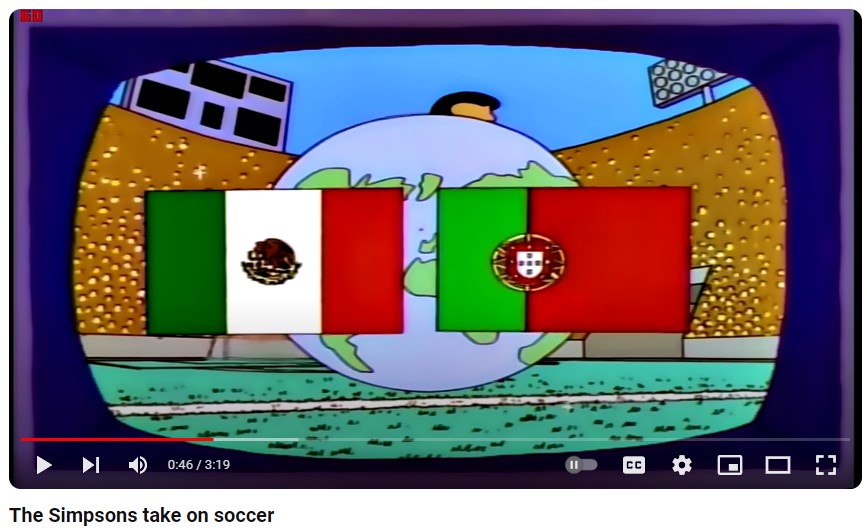
When writers gathered in 1997 to pen an absurd cold open for an animated comedy, they had no intention of orchestrating a global sports narrative nearly three decades later. Yet as the FIFA World Cup 2026 sweeps across stadiums in the United States, Canada, and Mexico, a five-minute gag from television history has hijacked digital discourse. Soccer fan communities from Mexico City to Lisbon are obsessing over a fictional television broadcast that declared an international football tournament final between Mexico and Portugal to settle "which nation is the greatest on Earth." As detailed in a recent DAZN Report, the resurfaced clip has transformed an ancient piece of network television satire into a full-scale social media obsession among supporters daring to dream of silverware.
The scene originally served as an elaborate excuse to send Homer Simpson to a local gun shop, but today's internet treats it as sacred text. With Mexico co-hosting the expanded 48-team tournament and Portugal fielding one of the most talent-dense squads in Europe, sports forums have turned an offhand animated sequence into a global conversation about coincidence, mathematical probability, and pop culture mysticism.
📌 Key Takeaways:
- The Viral Resurgence: A 1997 sequence from The Simpsons depicting an international clash between Mexico and Portugal has re-emerged as the internet's favorite narrative for the FIFA World Cup 2026.
- The Original Context: Written by comedy icon John Swartzwelder, the scene satirized late-1990s American indifference toward professional soccer rather than predicting future tournament brackets.
- Tournament Reality: While an expanded 48-nation knockout format makes a Mexico vs Portugal final technically feasible, oddsmakers view the pairing as an extraordinary long shot.
The Port Springfield Origins of a Global Football Sketch
The sequence first aired on November 2, 1997, during the opening minutes of "The Cartridge Family," the fifth episode of the show's ninth season. Written by reclusive comedy genius John Swartzwelder and directed by Pete Michels, the episode uses an international soccer match simply to trigger a chaotic neighborhood riot. Homer Simpson takes Bart, Lisa, and Marge to the local arena after seeing a dramatic television ad promising an epic clash: "It's all here: fast-kicking, low-scoring, and ties? You bet!"
The animated stadium announcer introduces the two World Cup finalists: "Match of the century! To determine once and for all which nation is the greatest on Earth: Mexico or Portugal!" Instead of high-octane drama, spectators watch players pass the ball aimlessly across the midfield circle while the Portuguese commentator yawns and the English-speaking voice droningly repeats, "Holds it, holds it, holds it..."
Within minutes, sheer boredom sparks the Springfield stadium riot. Fans tear down goalposts, set bleachers on fire, and clash in the concourses. That unrest sends Homer directly to "Blood体会 & Beyond Guns" to purchase a revolver for home defense. The entire scene operated as a sharp parody of how mainstream American audiences viewed association football throughout the 1990s, a sport perceived by domestic sports networks as low-scoring, defensive, and prone to supporter violence.
How the 2026 Bracket Math Recharged the Myth
The revival of the 1997 Simpsons soccer joke did not happen in a vacuum. During both the 2014 tournament in Brazil and the 2018 edition in Russia, fragments of the video surfaced on Reddit and YouTube. Fans noted that Mexico and Portugal were strong enough to advance out of group stages, but the bracket pathways never aligned.
The stakes shifted radically once FIFA announced North America as host for 2026. Mexico entered the tournament as a co-host with home matches at the iconic Estadio Azteca, while Portugal's golden generation matured into genuine title contenders. Across platforms like TikTok, X, and Instagram, soccer influencers started treating the clip not as comedy, but as an authentic Matt Groening prophecy.
Viral posts dissecting the animated predictive programming reached tens of millions of views heading into June 2026. For supporters of El Tri, the cartoon offered emotional catharsis. Mexico has historically wrestled with the psychological barrier of the round of 16, and the idea that an American cartoon ordained their path to the title match struck a chord with passionate supporters looking for cosmic reassurance.
The Fiction Versus Reality of Springfield Predictions
Online culture frequently credits the show with supernatural foresight, conflating satirical exaggeration with clairvoyance. A sober review of the show's pop culture predictions reveals that writers succeeded primarily through longevity, sharp political awareness, and volume. Having broadcast well over 750 episodes across nearly four decades, the production staff tossed thousands of wild scenarios against the wall.
| Event or Prediction | Episode Air Date | Actual Real-World Outcome |
|---|---|---|
| Mexico vs Portugal Final | Nov 2, 1997 | Both nations remain major contenders, but have never met in a World Cup final. |
| Donald Trump Presidency | Mar 19, 2000 | Written as an absurd hypothetical in "Bart to the Future"; materialized 16 years later. |
| Disney Buys 20th Century Fox | Nov 8, 1998 | A background studio sign in "When You Dish Upon a Star" preceded the 2019 $71.3B acquisition. |
| Smartwatch Technology | Mar 19, 1995 | Lisa's fiancé speaks into his wrist in "Lisa's Wedding," anticipating wearable tech by two decades. |
When examined alongside genuine forecasting, the Homer Simpson soccer match reveals how confirmation bias operates. Audiences forget the hundreds of comedic storylines that never came to pass, such as Springfield being enclosed under a giant glass dome or the local nuclear power plant experiencing a catastrophic meltdown, while amplifying every coincidence that edges close to current headlines.

The Psychology Behind the Viral Fan Theory
Why does a 29-year-old animated short continue to dominate sports discussions during a live tournament? The answer lies in how digital fandom processes tension during major athletic competitions. Sporting events carry immense unpredictability. Fans naturally construct patterns to manage anxiety and build compelling personal storylines.
The viral soccer fan theory functions as communal folklore. When European sports networks, Mexican talk shows, and American podcasts revisit the clip, they are not acting on genuine belief in prophetic cartoons. Instead, they embrace a shared cultural language. Millennial and Gen Z fans who grew up watching syndicated reruns of The Simpsons find collective humor in connecting childhood television memories with high-stakes international soccer.
Former showrunners have repeatedly addressed these phenomena. Longtime executive producer Al Jean has stated across various panel discussions that the writing room never possessed prophetic capabilities. The staff consisted primarily of Harvard-educated mathematicians, political satirists, and cultural critics who extrapolated absurd trends to their logical extremes. Selecting Mexico and Portugal in 1997 was deliberately comical: Mexico represented the neighboring football giant familiar to American audiences, while Portugal provided a European counterpart known for technical, possession-heavy play that contrasted sharply with American sports pacing.
Can the Matchup Actually Happen on the Pitch?
Setting comedy aside, the sporting logistics of 2026 present a challenging road for this fictional final to become reality. The 2026 tournament features an unprecedented 48 teams competing across 12 groups, expanding the single-elimination phase into a grueling Round of 32.
To reach the championship match at MetLife Stadium in East Rutherford, New Jersey, both teams must navigate five consecutive knockout rounds without defeat. Portugal boasts world-class squad depth across the Premier League and La Liga, giving them legitimate championship odds. Mexico enjoys intense home-field support across group matches in Guadalajara and Mexico City, yet advancing past traditional powerhouses like Argentina, France, and Brazil requires unprecedented tactical consistency.
Oddsmakers in Las Vegas and London currently price an exact Mexico vs Portugal final at odds longer than 80-to-1. It remains a mathematical possibility, but one dependent on tournament bracket placement and multiple underdog upsets in the quarterfinal and semifinal stages.
Frequently Asked Questions (FAQ)
Q1: Did The Simpsons explicitly mention the year 2026 in the soccer episode?
A1: No. The 1997 episode "The Cartridge Family" never specifies a year for the match. Online commentators attached the 2026 date because Mexico is co-hosting the tournament, making the matchup seem contextually plausible.
Q2: Who won the game between Mexico and Portugal in the episode?
A2: The winner was never shown. The match ended prematurely when bored spectators started a massive stadium riot while the score was tied 0, 0, sending Homer on his quest to purchase a gun.
Q3: Has The Simpsons ever correctly predicted a major sporting champion?
A3: Yes, with notable precision. In the 1992 episode "Lisa the Greek," the show correctly picked the Washington Redskins to win Super Bowl XXVI days before the game. When the episode was re-dubbed for subsequent years, writers also accurately predicted victories for the Dallas Cowboys and San Francisco 49ers.
When Satire Outruns the Beautiful Game
The enduring obsession with Springfield's soccer match exposes how modern sports culture cannibalizes entertainment history to manufacture hype. Thirty years ago, John Swartzwelder and Matt Groening's staff crafted a miniature masterpiece of anti-soccer satire, poking fun at low scorelines, endless midfield passing, and exaggerated fan reactions. Today, international audiences celebrate that same sequence as an affectionate badge of honor.
Whether Mexico and Portugal eventually walk out onto the turf in New Jersey matters less than the digital momentum the sketch has already generated. The cartoon tapped into football's peculiar blend of global tribalism and self-deprecating humor. Even if the bracket falls apart in the Round of 16, the television clip will return to social feeds during the next tournament cycle, waiting for the real world to finally catch up with Springfield.
