How the 'Baby Seal Pushed Me Yesterday' Trend Took Over TikTok and Social Feeds Overnight
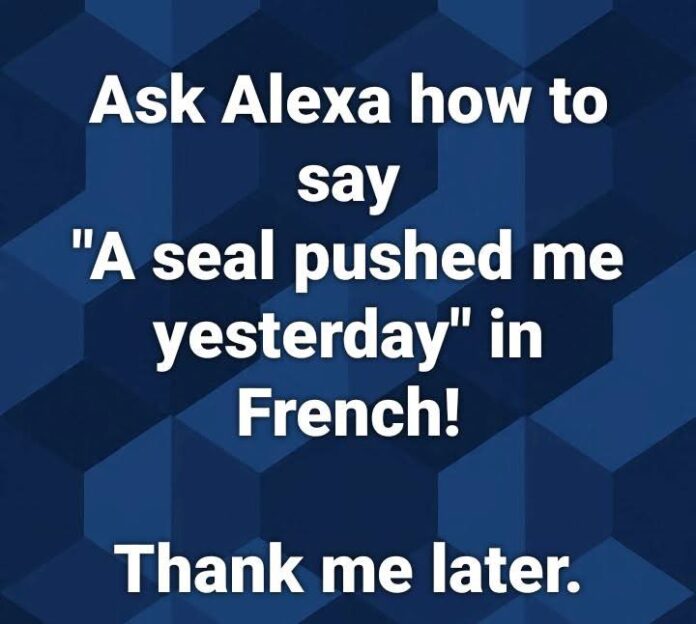
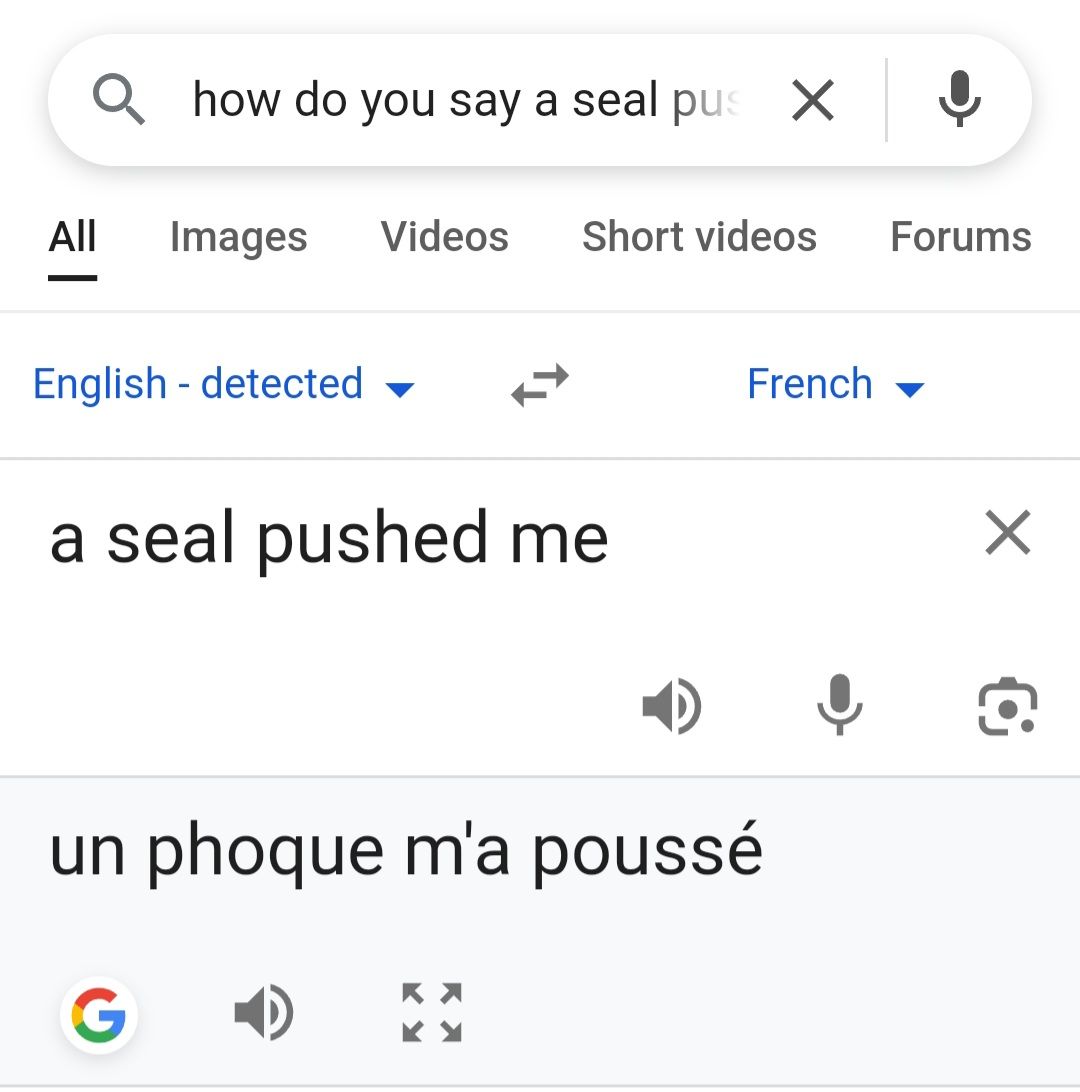
Millions of smartphone users spent early August typing a harmless phrase into automated translation tools: "a baby seal pushed me yesterday." Translating the sentence into French yields un bébé phoque m'a poussé hier. When fed into Google Translate, Siri, or TikTok's automated text-to-speech engine, the robotic French voice produces a string of sounds that an English-speaking ear instantly registers as graphic profanity. The resulting audio loop kicked off a wildfire cycle of reaction clips, classroom pranks, and algorithmic shares across social platforms.
The mechanics behind the gag are deceptively simple. As documented by a recent Yahoo News Singapore Report, the trend relies on auditory pareidolia, the brain's tendency to impose familiar linguistic patterns onto foreign speech sounds. Creators record themselves asking unsuspecting parents, teachers, or coworkers to play the translation out loud. The contrast between an innocent marine animal and the scandalous English homophone provided the exact tonal friction needed to dominate feeds.
📌 Key Takeaways:
- The Linguistic Gag: The standard French phrase un bébé phoque m'a poussé hier phonetically mimics explicit English slang when recited at native cadence.
- The Algorithmic Trigger: Text-to-speech tools and Google Translate audio outputs removed human variation, standardizing the comedic timing across short-form video apps.
- The Digital Impact: Reaction videos racked up tens of millions of views within 72 hours, demonstrating how bilingual phonetic confusion reliably drives high engagement.
The Phonetic Mechanics Behind 'Un Bébé Phoque M'a Poussé Hier'
The joke hinges on accidental bilingual homophony. In standard French, the noun for seal is phoque, pronounced phonetically as /fɔk/. It rhymes closely with the English word dock, but carries a clipped vowel that English speakers immediately associate with an expletive. The word bébé (/be.be/) adds an extra syllable that creates the cadence of baby.
The second half of the sentence delivers the punchline. M'a poussé hier translates directly to "pushed me yesterday." In spoken French, poussé (/pu.se/) sounds identical to the English slang term pussy, while hier (/jɛʁ/) clips the trailing sound with a guttural French R that English listeners often interpret as hair or yeah.
Put together in a continuous sentence, un bébé phoque m'a poussé hier registers to an English listener as a crude declarative phrase. The phonetic resemblance is not subtle. Because the translation engines deliver the sentence with flat, unemotional French diction, the delivery deadpans the vulgarity, amplifying the shock value for whoever hears it without context.
How Algorithmic Text-to-Speech Fueled the Prank Wave
Bilingual phonetic puns existed long before social media, but automated text-to-speech engines gave this specific phrase runaway velocity. On platforms like TikTok and Instagram Reels, creators rarely spoke the French themselves. Instead, they handed their phones to friends with the Google Translate speaker icon cued up, or filmed their computer monitors while clicking the audio playback button.
The synthetic voice provides two advantages that human speakers cannot match: uniformity and clinical detachment. When a human tells a joke, cadence and smirking often give away the punchline. When a neutral digital assistant reads un bébé phoque m'a poussé hier, the pronunciation remains grammatically pristine.
This robotic precision created an ideal template for reaction videos. Creators staged bait-and-switch scenarios: teenagers asking their mothers for help with French homework, office workers asking colleagues to verify an email to a Montreal supplier, or drivers asking car infotainment systems to translate road trip queries. The ensuing shock, confusion, and delayed laughter formed an infinitely repeatable loop that feed algorithms actively prioritize.
Mapping the Evolution of Bilingual Social Media Pranks
Internet culture frequently cycles through translation traps, turning linguistic barriers into viral collateral. The "baby seal" phenomenon represents the latest iteration of a well-documented category of digital pranks.
| Viral Phrase | Target Language | Perceived English Meaning | Primary Platform Era |
|---|---|---|---|
| Un bébé phoque m'a poussé hier | French | Vulgar English phrase | TikTok / Reels (2025, 2026) |
| Negar / Nèige (那个) | Mandarin Chinese | Racial slur homophone | YouTube / Vine (2015, 2020) |
| Suga (슈가) / Naega (내가) | Korean | Slur homophone in lyrics | K-Pop Twitter (2018, 2022) |
| Foca no trabalho | Portuguese | Explicit instruction homophone | Reddit / Twitter (2017, 2021) |
Each of these spikes follows an identical lifecycle. First, bilingual speakers discover the phonetic overlap in conversation. Next, the observation transitions into text forums. Finally, video platforms take the audio track and strip away the intellectual explanation, leaving only the sensory surprise of hearing a machine state something outrageous.
The Psychology of Auditory Pareidolia in Short-Form Video
Auditory pareidolia occurs when the human auditory cortex tries to resolve unfamiliar sound sequences into native language templates. When native English speakers hear foreign phonemes that match syllables from high-arousal words, particularly profanity or sexual references, the brain latches onto those familiar markers first.
Neurocognitive studies on speech perception confirm that taboo words trigger faster recognition times than neutral vocabulary. In an environment like TikTok, where users scroll past dozens of videos within minutes, acoustic patterns that mimic taboo words break cognitive fatigue instantly.
The audio track for "baby seal" acts as an involuntary attention hook. Even viewers who know French stop scrolling for two seconds because their auditory processing unit alerts them to an anomaly. Those two seconds of paused scrolling signal high viewer retention to platform recommendation engines. The algorithm does not know the difference between high-value educational content and an absurd joke about pinnipeds; it only registers that users watched the full five-second audio clip twice.
French Educators and Native Speakers Push Back
While millions of users laughed at the clips, native French speakers and language educators greeted the trend with mixed reactions. In high school and university language departments across North America and the UK, teachers found themselves fielding identical questions from students feigning ignorance.
On French-language forums and Reddit communities like r/French, users debated whether the joke trivialized basic language instruction or offered a harmless entry point into phonetics. Some educators leaned into the meme, using it as an opportunity to explain the actual pronunciation of the French back-vowel /ɔ/ in phoque versus the English /ʌ/ sound.
Others expressed weariness. The joke has existed in elementary school French classrooms in bilingual regions like Quebec and Ontario for decades. The only difference now is that smartphone microphones and social media distribution turned an old playground pun into a global trend within forty-eight hours.
Frequently Asked Questions (FAQ)
Q1: What does "a baby seal pushed me yesterday" actually mean in French?
A1: The phrase translates literally to un bébé phoque m'a poussé hier. In French, it is an entirely innocent sentence describing a juvenile seal nudging or pushing someone the day before. It carries no double meanings or vulgar connotations in the French language.
Q2: Why does the phrase sound so vulgar to English speakers?
A2: The French word for seal (*phoque*) sounds phonetically similar to the English four-letter F-word. When combined with *m'a poussé* (which sounds like *ma pussy*) and *hier* (which can sound like *hair* or *yeah*), the continuous sentence mimics an explicit English phrase when read at standard conversational speed.
Q3: Did Google Translate or TikTok alter the audio to make it sound that way?
A3: No. The automated translation tools render standard, correct French phonetics. The comedic effect is entirely an illusion created by cross-linguistic phonetic overlap, known scientifically as auditory pareidolia, where the English listener's brain misinterprets foreign syllables as native slang.
The Staying Power of Algorithmic Bilingual Humor
The explosion of the "baby seal" French meme illustrates the fragile boundary between global language tools and digital entertainment. What began as a standard linguistic curiosity evolved into a structural engagement play, fueled by platform mechanics that reward short, high-arousal sound bites. Automated translation systems were designed to eliminate language barriers, yet users continually repurpose them to manufacture confusion for entertainment.
As text-to-speech tools become more integrated into everyday mobile software, these cross-linguistic collisions will occur more often. The phonetic overlap of un bébé phoque m'a poussé hier will eventually fade from feeds as audiences grow accustomed to the joke. However, the underlying formula, using artificial voices to transform innocent foreign vocabulary into accidental shock value, remains one of the most reliable engagement drivers on the modern web.
