Inside the Clubhouse: The Cinematic History of the He-Man Woman Haters Club
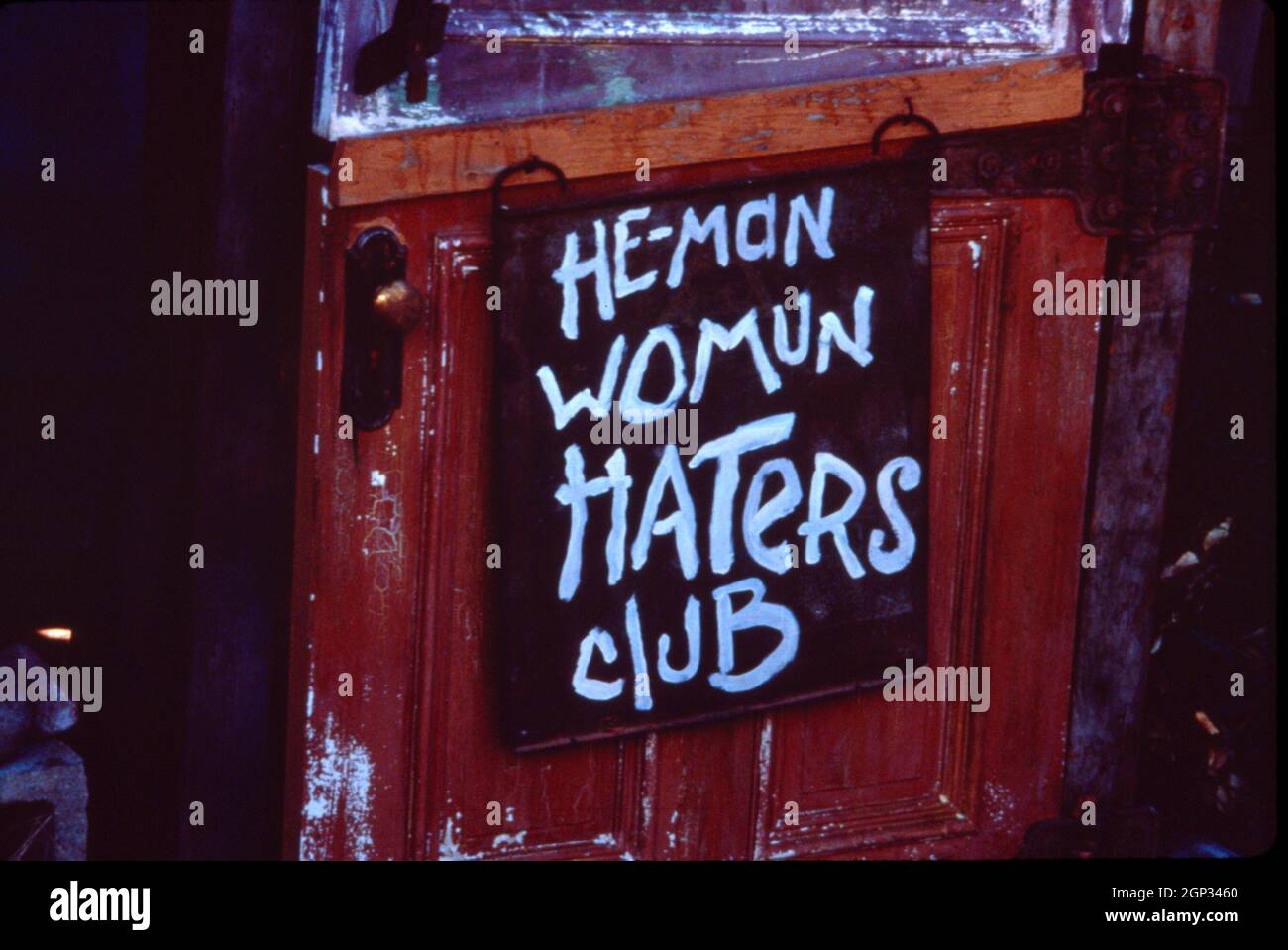
When political commentators reach for a metaphor to describe exclusionary backrooms or awkward factional squabbles, one cinematic touchstone surfaces with uncanny regularity. In January 2026, editorial desks seized on the mid-century parody once again when an NH Journal Report invoked the phrase to characterize contentious legislative clashes among New Hampshire Democrats. Decades after grade-schoolers nailed scraps of lumber together on a backlot soundstage, the He-Man Woman Haters Club remains the English language's ultimate shorthand for self-defeating male posturing.
📌 Quick Summary:
- Core Origin: Conceived in the 1930s by Hal Roach Studios for the Our Gang comedy shorts, the club satirized fraternal secret societies through the naive lens of childhood.
- Modern Resurgence: Director Penelope Spheeris codified the clubhouse into a global pop culture staple in the 1994 film adaptation The Little Rascals.
- Cultural Metaphor: Pundits across national outlets routinely deploy the title to mock boyish political posturing, unearned machismo, and exclusionary backroom pacts.
From Hal Roach Soundstages to Depressed-Era Theaters
Producer Hal Roach altered Hollywood comedy in 1922 when he gathered an ensemble of ragtag child actors who looked, sounded, and bickered like real kids. Before Roach launched Our Gang, studio casting directors favored porcelain-faced, heavily coached prodigies. Roach instead looked for scuffed knees and awkward accents. By the mid-1930s, the Depression had intensified, and moviegoers sought cheap, comforting escapism. Roach gave audiences an unvarnished neighborhood collective navigating childhood dilemmas with slapstick resourcefulness.
The infamous club originated during this high-water mark of two-reelers. The short that cemented the concept debuted in 1937 under the title Hearts Are Thumps, directed by Gordon Douglas. George "Spanky" McFarland, playing the exasperated neighborhood organizer, sought a fortress against Valentine's Day sentimentality. Childhood friendships were fracturing because romance had entered the schoolyard. Spanky's remedy was a fraternal pact designed to insulate his crew from feminine distraction.
The humor did not stem from actual misogyny. It hinged entirely on the absurdity of prepubescent boys attempting to emulate the stuffy lodge rituals of their fathers. Groups like the Freemasons, the Elks, and the Odd Fellows dominated adult civic life during the era. When Spanky pounded a gavel inside a rickety shed, the comedy exposed the pompous hypocrisy of grown-up secret societies.
The Darla Hood Romance and the Collapse of Clubhouse Discipline
No sooner was the charter drafted than its chief enforcer committed ideological treason. Carl "Alfalfa" Switzer, cursed with an uncooperative cowlick and an earnest vibrato, fell hopelessly for Darla Hood. This romantic friction provided the narrative engine for the club's finest comedic setups.
Alfalfa signed the pledge, took the oath, and immediately snuck off to deliver a homemade Valentine. In Hearts Are Thumps, Spanky and Porky retaliate by sabotaging Alfalfa’s lunch, spiking his cream puff with liquid soap. When Alfalfa attempts to serenade Darla in front of their schoolmates, soap bubbles burst from his lips instead of love notes. The scene worked because the club's dogma collapsed under the weight of Alfalfa's genuine infatuation.
Audiences understood the underlying joke. The clubhouse was never a fortress of patriarchal power; it was a transparent defense mechanism run by boys terrified of feelings they could not control. Every time Spanky tightened the clubhouse rules, Darla effortlessly outmaneuvered the organization. She never had to dismantle the lodge from the outside. The boys sabotaged themselves from within.
Evolving Across Eras: Key Milestones of the Clubhouse Trope
| Era & Production | Key Creative Figures | Clubhouse Function & Narrative Arc |
|---|---|---|
| 1937 (Hal Roach Short: Hearts Are Thumps) | Spanky McFarland, Alfalfa Switzer, Darla Hood | Anti-Valentine pact formed to block romantic distractions; derailed by Alfalfa's soap-bubble serenade. |
| 1937 (Hal Roach Short: Mail and Female) | Fred Newmeyer (Director), Gordon Douglas | Spanky forces Alfalfa to draft a manifesto against girls, forcing Alfalfa into disguise to recover the letter. |
| 1955, 1970s (Television Syndication) | King World Productions distribution network | Rebranded as The Little Rascals; syndicated across hundreds of local stations, embedding the oath into suburban pop culture. |
| 1994 (Universal Pictures Feature Film) | Penelope Spheeris, Travis Tedford, Bug Hall | Rebuilt as a sprawling multi-level treehouse with elaborate traps; club burns down during Alfalfa’s covert date. |
| 2010s, 2026 (Political Metaphor Era) | National journalism outlets, campaign strategists | Deployed to satirize homogenous legislative caucuses, hyper-masculine political rhetoric, and reality TV dynamics. |

Penelope Spheeris and the 1994 Big-Screen Reinvention
When Universal Pictures backed a feature film adaptation in 1994, director Penelope Spheeris faced a delicate cultural problem. How could a major studio produce a family movie revolving around a group that proudly named itself "Woman Haters" without alienating modern parents?
Spheeris leaned hard into the theatricality of childhood. Rather than softening the club, she made its rules, regalia, and architecture more ludicrous. Production designer Larry Fulton constructed a towering, ramshackle clubhouse fitted with pulleys, periscopes, secret passcodes, and spring-loaded boxing gloves. The oath was updated into an absurd recital featuring hand signals and spitshakes:
"I, [state your name], member in good standing of the He-Man Woman Haters Club, do solemnly swear to be a he-man, but never an itch, and to revere, promote, and protect the rules of the club with all my heart, mind, and soul... so help me, Spanky."
The film turned the clubhouse into a ticking clock. When Alfalfa secretly hosts Darla inside the sanctum, a misplaced candle catches fire. The entire wooden fortress burns to ash. The structural collapse served as a visual metaphor: rigid gender segregation cannot survive contact with real human connection. The film earned $67.3 million worldwide on an estimated $23 million budget, cementing the imagery for a generation of millennial moviegoers who had never seen an original black-and-white two-reeler.
Weaponizing the Trope in Modern Political Rhetoric
Over the past decade, political journalism adopted the phrase as a sharp rhetorical barb. Whenever a ticket, committee, or partisan backroom appears glaringly male-dominated or hostile toward female leadership, headline writers deploy the reference to deflate grandstanding.
In July 2024, The Nation criticized national campaign posturing with the headline "The He-Man, Woman-Hater’s GOP Presidential Ticket," arguing that specific policy platforms mirrored playground hostility toward women's autonomy. Entertainment writers had paved this road years earlier. Recapping reality television skirmishes in 2015, Vulture branded an all-male cast coalition on The Real Housewives of Atlanta as "The He-Man Woman-Haters Club" when husbands gathered off-camera to grumble about their spouses.
The metaphor works because it wounds through ridicule rather than sanctimony. Calling an opponent an autocrat invites debate over power and governance. Calling them a member of Spanky McFarland's secret society paints them as petulant children wearing oversized paper hats in a backyard shed. The comparison immediately undercuts serious political authority.
Why the Clubhouse Parody Never Disappears
Children naturally experiment with identity through exclusion. Sociologists have long tracked how elementary-school play groups divide along gender lines before hormones and social pressures scramble those boundaries. Hal Roach understood that dynamic intuitively in 1937, and Penelope Spheeris preserved it in 1994.
The secret society parody endures because it captures a universal stage of growth. The comedy lives in the friction between the solemnity of the rules and the frailty of the members. The boys declare women forbidden, yet they pine for maternal comfort the moment they scrape an elbow. They ban female affection, yet Alfalfa risks his social standing just to share a soda with Darla.
Audiences do not remember the club because they endorsed its doctrine. They remember it because the doctrine failed so spectacularly on screen. Every iteration concludes the same way: the doors open, the walls fall down, and the girls take their rightful place inside the clubhouse.
Frequently Asked Questions (FAQ)
Q1: Was the He-Man Woman Haters Club present in the very first Our Gang short?
A1: No. Our Gang began in 1922 during the silent film era. The club did not appear until fifteen years later, debuting in the 1937 sound short Hearts Are Thumps.
Q2: Why did Hal Roach create the club storyline?
A2: Roach and his writing team wanted to spoof the ubiquitous fraternal organizations and secret lodges that proliferated across Depression-era America, contrasting adult civic rituals with the innocence of childhood.
Q3: How does the 1994 Little Rascals movie conclude the club's story?
A3: After the clubhouse burns down and the boys win the annual go-kart derby with help from Darla and Jane, Spanky officially amends the charter to admit girls, renaming the organization the "Friends of the Clubhouse."
The Cultural Endurance of Backyard Rebellion
Nearly nine decades after Spanky McFarland first held court in a backyard alleyway, the He-Man Woman Haters Club remains an evergreen piece of American cinematic vocabulary. Its longevity owes everything to its balance of innocence and satire. Hal Roach crafted a parody of adult secret societies that resonated with working-class families, and modern adaptations turned that satire into a lasting visual archetype. Whether deployed by political columnists puncturing campaign arrogance or referenced by parents watching rerun matinees, the clubhouse survives because it tells an enduring truth about human nature: artificial boundaries invariably crumble the moment real life enters the room.
