Inside the Reinvention of 620 Avenue of the Americas: Burlington's Mega-Flagship and RXR's Secret Deals
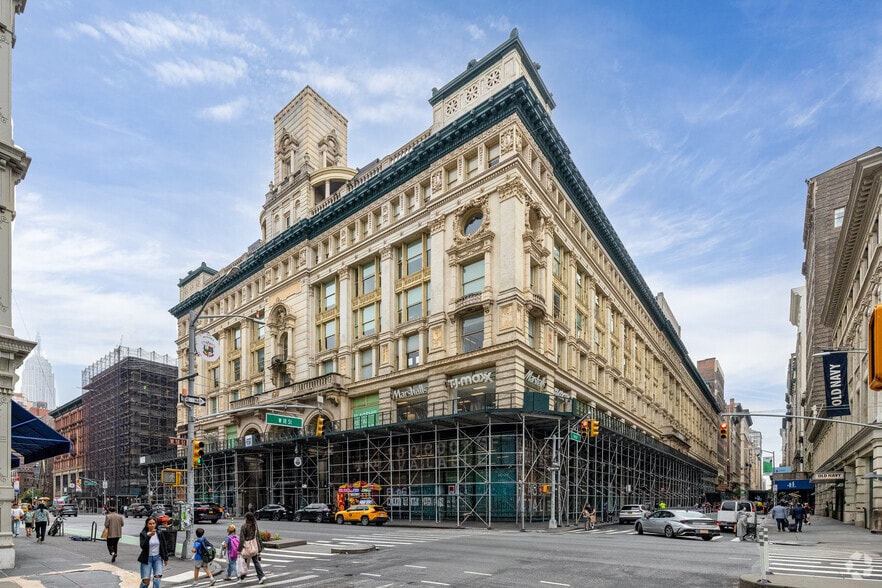
On Sixth Avenue between 18th and 19th Streets, the grand Beaux-Arts arches of the Ladies' Mile Historic District frame a dramatic urban retail reset. Burlington opened its newly minted 80,000-square-foot retail space at 620 Avenue of the Americas on April 2, 2026, cementing a sharp shift in off-price apparel strategy. As detailed in The Business Journals Report, the opening represents Burlington's formal transfer of flagship operations out of its aging Union Square location and into a tightly curated footprint in Chelsea.
The arrival ends months of speculation surrounding the landmark building, which endured severe vacancy pressures after the sudden collapse of Bed Bath & Beyond left massive multi-level voids in the corridor. Rather than carving the historic retail cavern into fractured office suites, landlord RXR Realty pursued a singular, credit-backed institutional tenant. The resulting lease reflects how Chelsea Manhattan commercial real estate balances historic preservation mandates with the hard realities of modern discount merchandising.
📌 Key Takeaways:
- The Opening: Burlington launched its brand-overhaul Chelsea flagship at 620 Avenue of the Americas on April 2, 2026, occupying 80,000 square feet.
- The Real Estate Rationale: The company exited an outdated multi-floor complex at Union Square, trading cavernous square footage for an efficient single-destination footprint.
- Landlord Strategy: RXR Realty secured an off-price anchor to stabilize one of the most prominent retail shells in the Ladies' Mile Historic District.
The Fall and Rebirth of a Gilded Age Department Store Shell
Built in 1896 as the Siegel-Cooper Dry Goods Store, 620 Sixth Ave was once hailed as "The Big Store", a monolithic six-story palace that defined Manhattan's premier shopping district at the turn of the twentieth century. Its sprawling floor plates offered scale rarely found south of 34th Street. For decades, that scale served category-killer chains well. Bed Bath & Beyond held down the address for nearly three decades, turning the mezzanine and lower levels into household destinations until filing for Chapter 11 bankruptcy in early 2023.
The sudden abandonment of more than 100,000 square feet left a gaping hole along Sixth Avenue. Nearby office buildings faced quiet Fridays, and commercial landlords across Midtown South confronted steep refinancings. RXR Realty resisted the urge to convert the space into lifestyle wellness clubs or divided pop-up storefronts. The ownership group recognized that while pure department stores are struggling, off-price retail continues to generate heavy foot traffic. Signing Burlington preserves the property's original lineage as a high-density shopping anchor while refreshing mechanical infrastructure dating back generations.
Footprint Consolidation: Trading Massive Footprints for Margins
Burlington's arrival at 620 Avenue of the Americas reflects a calculated shift in off-price store planning. In December 2024, corporate leadership confirmed plans to vacate the retailer's longtime outpost at 4 Union Square South, which spanned roughly 130,000 square feet across four distinct levels. Managing multi-story vertical layouts in older New York buildings creates major operational friction. Labor costs multiply when cash wraps, security teams, and stock clerks must cover multiple disconnected floors.
The Chelsea outpost slashes that excess square footage by nearly 40%. Instead of winding escalators and sprawling peripheral clearance racks, the new layout directs shoppers through wide, unobstructed sightlines on fewer levels. Every square foot of sales floor must pull its weight. Burlington's ongoing brand overhaul cuts out low-turnover inventory to spotlight fast-moving designer overstocks, premium athletic wear, and beauty lines. Moving to 620 Sixth Ave delivers a leaner operating model with higher sales per square foot.
Retail Blueprint Comparison: The Evolution of 620 Sixth Avenue
The physical transformation inside 620 Sixth Ave reflects broader shifts across New York City's commercial leasing market over the past three decades:
| Operating Era | Anchor Tenant | Square Footage | Operational Focus |
|---|---|---|---|
| 1995, 2023 | Bed Bath & Beyond | ~100,000 sq ft | Broad-line homewares; extensive non-apparel floor inventory |
| 2023, 2025 | RXR Transition & Renovation | N/A (Vacant) | Modernization of building elevators, HVAC, and egress corridors |
| 2026, Present | Burlington Chelsea Flagship | 80,000 sq ft | Dense off-price apparel; streamlined layout for high checkout velocity |

RXR Realty's Leasing Strategy in a Shifting Chelsea Market
Commercial leasing NYC brokers tracked negotiations at 620 Avenue of the Americas closely throughout 2024 and 2025. Large-format retail space in Manhattan carries heavy overhead. Property taxes, base rents, and unionized maintenance requirements create high financial hurdles. RXR Realty, led by CEO Scott Rechler, recognized that traditional full-price department stores could no longer justify multi-million-dollar annual rent commitments on Sixth Avenue.
Securing Burlington on a long-term commitment shields the property from ongoing retail market volatility. The transaction shows institutional landlords prioritizing cash-flow stability over speculative, high-rent office expansions. While surrounding tech and media office spaces deal with hybrid work patterns, ground-level retail requires steady, in-person shoppers. By pairing Burlington with existing co-tenants like T.J. Maxx in the immediate vicinity, RXR created a self-sustaining corridor for budget-conscious urban shoppers.
The Off-Price Battleground Along Ladies' Mile
The Sixth Avenue retail corridor operates on agglomeration economics. Shoppers rarely visit Chelsea for a single discount store. They cross the street between T.J. Maxx, Marshalls, and now Burlington to compare inventory. This three-way competition turns the corridor between 18th and 23rd Streets into Manhattan's primary destination for value-oriented apparel.
Consumer spending patterns in 2026 continue to reflect persistent price consciousness. Middle-income shoppers mix mid-tier basics with off-price brand hunting, driving consistent foot traffic to physical retail stores that offer discount discovery. Burlington's modernized flagship design addresses past complaints regarding long lines and disorganized displays. By adding wider merchandise lanes and centralized checkout banks, the store hopes to capture lunch-hour crowds and residential foot traffic from Chelsea and Flatiron.
Architectural Retrofitting in an 1890s Landmark
Remodeling an 80,000-square-foot footprint inside the Ladies' Mile Historic District brings significant architectural challenges. The New York City Landmarks Preservation Commission sets strict guidelines governing alterations to exterior streetwalls, arched cast-iron windows, and ornate limestone decorative work. Burlington could not simply bolt standard corporate channel lettering or bright red signage across the facade.
Engineers worked within the original column grid established in the late nineteenth century. Thick cast-iron columns spaced across the retail floor were incorporated into the store's interior circulation path rather than hidden behind drywall partitions. Freight elevators received deep mechanical upgrades to handle hundreds of rolling garment racks delivered through tight Midtown South loading bays each morning. The completed space highlights historic ironwork while housing the electrical infrastructure and fire-suppression systems required for a modern flagship retail space.
Frequently Asked Questions (FAQ)
Q1: Why did Burlington move its flagship from Union Square to 620 Avenue of the Americas?
A1: Burlington relocated to consolidate its Manhattan footprint from an unwieldy, multi-level 130,000-square-foot store at Union Square into an efficient 80,000-square-foot space in Chelsea. The move lowers overhead costs, improves in-store circulation, and aligns with the chain's broader brand modernization.
Q2: Who owns and manages 620 Avenue of the Americas?
A2: The building is owned and managed by RXR Realty, a prominent New York commercial real estate firm that oversees the asset's retail leases, historic preservation, and upper-floor commercial office tenants.
Q3: What former store occupied Burlington's new space at 620 Sixth Ave?
A3: The retail space was previously occupied by Bed Bath & Beyond, which served as the building's anchor tenant for roughly three decades before closing following the company's 2023 bankruptcy.
Chelsea's Commercial Corridor Faces the Test of 2026
The successful opening of Burlington at 620 Avenue of the Americas confirms that big-box retail still has a future in central Manhattan when sized correctly. By trading excessive, multi-floor layouts for targeted retail efficiency, national chains can survive high urban operating expenses. RXR Realty's ability to fill the massive void left by Bed Bath & Beyond provides a working playbook for other landlords managing historic commercial properties across the city.
Over the coming quarters, retail analysts will closely track Burlington's sales-per-square-foot metrics at the Chelsea address. The store's long-term performance will reveal whether discount apparel clusters can continue driving heavy foot traffic along Sixth Avenue, or if rising operational costs will force retailers to trim their urban footprints even further.
