Is Allan's Finale Really the End? Deconstructing Season 3's Closure
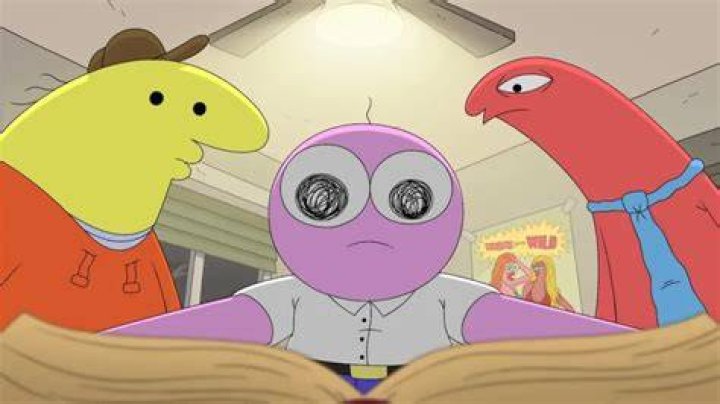
When the credits rolled on the latest season capstone, Allan Red stood in an unfamiliar position: at the emotional center of an existential romantic crossroads. As outlined in the recent Bleeding Cool News Report, the closing chapter played out in signature anti-climax fashion, leaving viewers questioning whether the red, monotone cynic actually found long-term romance or served as the setup for another elaborate comedic rug-pull. The broadcast provoked immediate debate across message boards and social feeds, where fans scrambled to untangle sincere narrative progression from calculated deadpan absurdity.
Series creators Michael Cusack and Zach Hadel built their cult Adult Swim property on subverting traditional episodic structures. While central protagonists Pim and Charlie handle high-strung optimism and working-stiff despondency, Allan anchors the office as an unbothered, flatly delivered anomaly obsessed with cheese and paperclips. Putting Allan on an emotional precipice challenges how audiences interpret character growth inside a show that treats continuity like loose suggestion paper.
📌 Key Takeaways:
- The Central Ambiguity: Allan's high-stakes romantic conclusion maintains absolute deadpan realism while quietly subverting emotional closure.
- Creative Precedent: Creators Zach Hadel and Michael Cusack routinely deploy genuine stakes only to detonate them for observational anti-humor.
- Future Implications: Production cues and network rollouts suggest Allan will remain the unbothered operational backbone of the office, unchanged by romantic melodrama.
From Office Pedant to Cult Sensation: Allan Red's Unlikely Rise
Allan debuted as office background texture: a scarlet stick figure sucking down hot dogs and managing supply closets with complete indifference to the moral missions of the firm. Where Pim radiates chaotic cheer and Charlie sinks into resigned exhaustion, Allan operates on absolute literalism. His iconic voice, provided by co-creator Michael Cusack using a dry, uninflected Australian cadence shifted down into flat American phonetics, turned mundane logistical grievances into viral soundbites.
His breakout vehicle, the universally acclaimed episode "Allan's Adventure," proved the character could sustain full narrative weight without sacrificing his emotional detachment. Tasked simply with buying more paper clips, Allan stumbled through hostage crises, mythical beasts, and rooftop chases with the exact same blank stare he gives the water cooler. That episode established a unique comedic rhythm: the world outside collapses into apocalyptic cartoon chaos, yet Allan cares solely about completing mundane errands on time.
By the time Season 3 arrived, the creative team realized Allan was no longer just an eccentric workplace foil. He became a ballast against the unhinged kinetic energy of Mr. Boss and the bizarre non-sequiturs of Glep. Fans gravitated toward his deadpan survival instincts, turning throwaway lines about stolen block cheese into ubiquitous internet catchphrases.
Deconstructing the Season 3 Finale: Did Allan Really Commit?
The closing moments of Season 3 put Allan in an unprecedented spotlight: an apparent genuine date that offered genuine domestic stability away from the firm. Cusack and Hadel shot the exchange with grounded, low-key lighting and hushed dialogue, stripping away background soundtrack gags to mimic prestige indie drama tropes. For three uninterrupted minutes, the episode asked viewers to take Allan's interior life seriously.
Historical precedent across Adult Swim programming suggests caution. The creative pair constantly alternate between micro-continuity and total narrative destruction. In previous runs, characters sustained horrific physical injuries that persisted across consecutive episodes, only for catastrophic neighborhood destruction to reset overnight. The date sequence carries all the hallmark pacing of a classic Hadel fake-out: protracted awkward pauses, hyper-realistic ambient background hum, and total avoidance of punchlines to make the audience squirm.
Community debate intensified when critics noted the closing credits lacked the show's customary jarring bumper music. Instead, viewers heard wind blowing through suburban foliage while Allan quietly organized his dinner receipts. That deliberate tonal pivot left two camps arguing across Reddit: one convinced Allan has permanently evolved, and another waiting for the inevitable April Fools return where the entire setup is revealed as an imaginary byproduct of expired dairy.
The Evolution of Allan Red Across Series Milestones
Understanding whether Allan's latest life choice sticks requires examining how Cusack and Hadel handled his major episodic appearances. The show maintains selective memory, carrying forward tiny physical gags while abandoning major life events whenever an anti-joke demands it.
| Episode / Era | Allan's Primary Role | Continuity Consequence |
|---|---|---|
| Pilot (2020) | Secondary desk-worker complaining about stolen cheese. | Established baseline deadpan personality and rivalry with pests. |
| Season 1 Finale (2022) | Passive observer during Charlie's trip to the underworld. | Demonstrated utter indifference to supernatural crises. |
| "Allan's Adventure" (2024) | Protagonist evading helicopters, pirates, and yeti creatures. | Solidified cult popularity; office paperclip inventory remained canon. |
| Season 3 Finale (2026) | Intimate romantic dinner featuring long pauses and understated tone. | Currently contested; sets up unresolved tension for future releases. |
Voice Actor Dynamics and the Creation of Allan's Logic
Behind Allan's distinct delivery lies a foundational creative philosophy developed during Cusack and Hadel's early independent animation days on Newgrounds and YouTube. Cusack voices Allan by keeping vocal modulation within a rigid three-note range. When high-stress conflicts erupt around him, Allan never raises his pitch; he merely emphasizes punctuation with mechanical precision.
Zach Hadel described this dynamic on animation podcasts as the "straight-man paradox." In classic comedies, the straight man acts surprised by absurd behavior. Allan acts exhausted by administrative disruption instead. If Mr. Boss runs through the corridor brandishing military hardware or Glep communicates through manic babble, Allan only reacts if someone smudges the reception desk glass.
This dynamic grounds the romantic setup. Presenting a romance without comedic explosions forces the audience into a state of hyper-vigilance. Viewers expect a monster to burst through the window. When nothing interrupts the awkward dinner dialogue, the joke becomes the audience's unfulfilled expectation of chaos.
The April Fools Legacy: Why Fans Still Suspect a Trap
Trusting any decisive finale in this franchise ignores Adult Swim broadcast traditions. The network has turned April 1 stunts into performance art for two decades, and the show's creative team embraces that lineage with absolute relish. Past seasonal events debuted puppet re-enactments, live-action recreations, and intentionally distorted audio tracks without advance warning.
Reporting around recent spring broadcasts revealed how readily the creators weaponize network airtime to subvert fan theories. Throwaway narrative threads often receive grandiose hype campaigns, only to vanish into five-second gags when new episodes air. A dramatic domestic development for Allan represents the ideal bait for an upcoming holiday broadcast: set up a sincere romance in April, only to open the following chapter with Allan back in the broom closet eating processed meat as if nothing happened.
Longtime viewers recognize this pattern. Serious emotional shifts rarely survive intact inside surrealist episodic animation. Even when characters experience genuine trauma or life transformations, the reset button remains one comedic beat away.
What Allan's Arc Signals for the Future of Smiling Friends
The finale proves the series can modulate its tone without abandoning its identity. By allowing Allan to carry an understated, ambiguous sequence, Cusack and Hadel proved their animated sandbox extends beyond loud gore, hyperactive visual gags, and rotoscoped jump scares. They understand that quiet, mundane awkwardness can be just as disarming as sudden cosmic horror.
Whether Allan's date leads to an enduring domestic subplot or gets vaporized in an off-screen explosion, the narrative experiment succeeded. It expanded the boundaries of a character originally drafted as an office prop. Allan Red remains the ultimate prism for the show's humor: utterly rational, entirely unbothered, and persistently determined to survive absurd workplace circumstances on his own mechanical terms.
Frequently Asked Questions (FAQ)
Q1: Did Allan officially leave the Smiling Friends charity at the end of Season 3?
A1: No. While the finale showed him pursuing a personal life outside office hours, nothing in the broadcast indicated resignation from his administrative post under Mr. Boss.
Q2: Who voices Allan Red in the series?
A2: Allan is voiced by series co-creator Michael Cusack, who also voices Pim Pimling and several background characters.
Q3: Is the romance in the finale considered permanent canon?
A3: Series canon is notoriously fluid. While the episode treats the dinner seriously, creators Zach Hadel and Michael Cusack frequently alter character circumstances between seasons for comedic effect.
Where the Office Stands Heading into the Next Phase
The closing moments of the broadcast solidified Allan's status as animation's favorite red minimalist. By refusing to deliver an obvious punchline, Cusack and Hadel left their audience in delicious discomfort. If future episodes honor the romance, it adds an eccentric layer to the office ecosystem. If they dismiss the entire evening with a three-second joke, it aligns perfectly with the show's foundational cynicism. Allan Red will return to his desk, sweep away loose paperclips, and carry on as if the world never changed.
