Is the Brown Siberian Husky Actually Rare? The Hidden Genetics Exposed
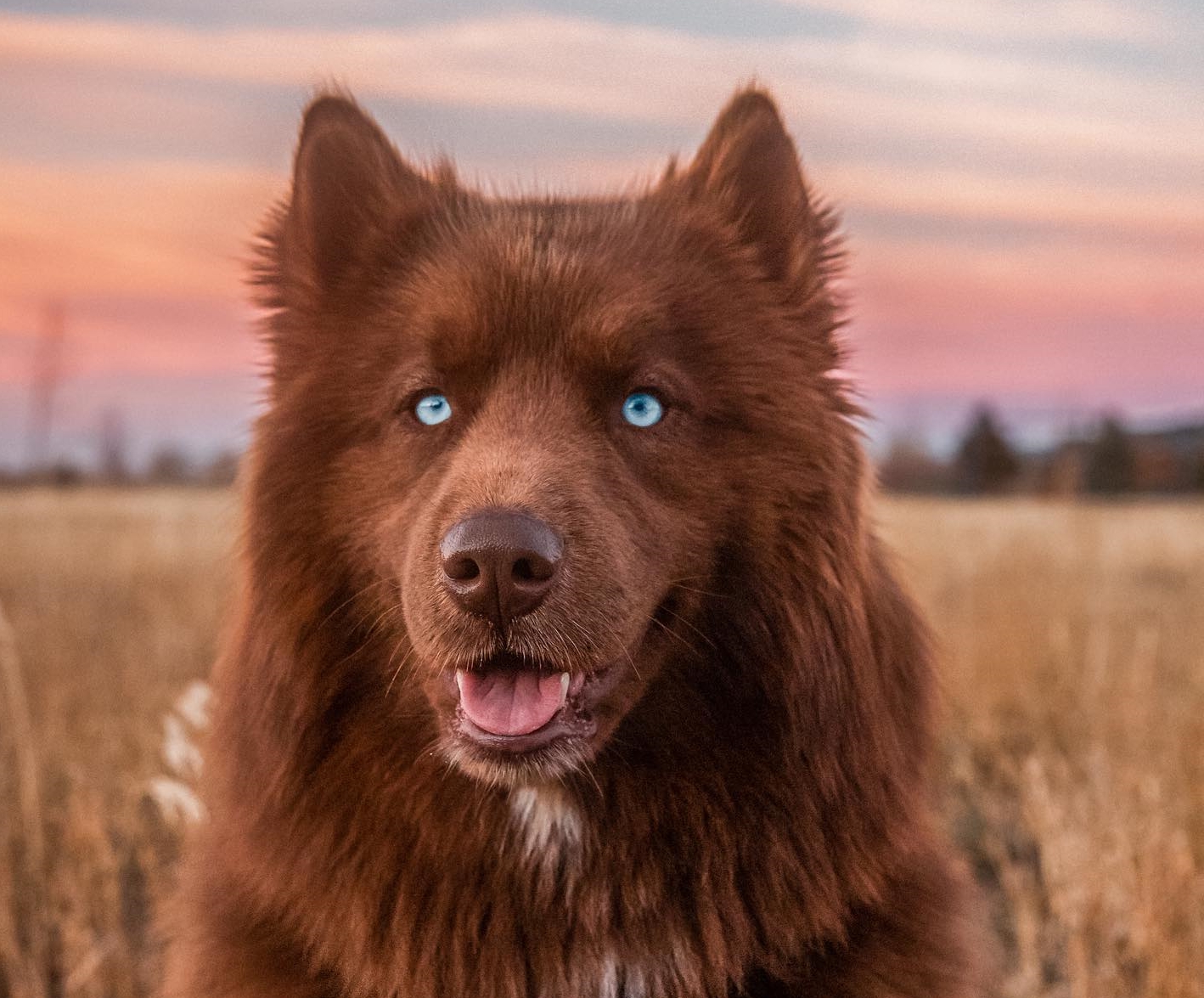
Social media feeds routinely circulate videos of striking, deep-tinted northern dogs branded as "ultra-rare chocolate huskies" or "wild timber wolves." Captions claim these mahogany-hued animals command eye-watering price tags because of their supposed genetic scarcity. Backyard breeders and commercial puppy brokers frequently use this mystique to drive up demand, attaching boutique labels to what they market as an exotic discovery in canine breeding.
The biological reality tells an entirely different story. Canine geneticists and kennel club registrars confirm that so-called brown dogs are standard variations recognized since the Siberian Husky joined official studbooks a century ago. The appearance stems from well-documented inherited traits rather than sudden mutations. Research into northern breeds, highlighted in an IFLScience Report tracking how commercial DNA test kits pinpointed the breed's striking facial markers, proves that these physical expressions follow clean, trackable genetic inheritance paths rather than accidental anomalies.
📌 Key Takeaways:
- Genetic Mechanism: Brown, copper, and chocolate coats emerge from the recessive B locus gene, which replaces black eumelanin with liver and brown pigmentation across the fur, eye rims, and nose.
- Official Breed Standing: The American Kennel Club classifies these dogs under the red and white husky umbrella, making the "rare brown" label a marketing invention rather than a distinct breed variant.
- Financial Exploitation: Unscrupulous sellers routinely markup brown husky puppy price points by 50% to 100%, despite the colorway occurring naturally in standard working lines.
How the Recessive B Locus Rewrites Siberian Husky Pigmentation
Canine coat colors depend primarily on two pigments: eumelanin (black) and phaeomelanin (red or yellow). In a standard wolf-gray or black-and-white Siberian Husky, dominant alleles at the B locus, designated as capital B, permit full expression of black pigment. This pigment saturates guard hairs, paw pads, lips, and eye rims.
A true brown coat happens when a puppy inherits two copies of the mutant allele, rendering the dog homozygous recessive (b/b). This recessive B locus gene blocks the production of black pigment entirely. Every hair shaft, epidermal surface, and keratinized claw that would otherwise register as black shifts instead to a rich brown spectrum. This shift produces shades from deep russet to dark cacao.
The defining visual marker of this genetic profile is liver nose pigmentation. If a dark-coated husky displays jet-black skin around its eyes, lips, or foot pads, it is not genetically brown. It is a sable or agouti dog with intense black tipping. A true b/b dog never produces black cells. The nose leather appears reddish-pink, liver, or faded brown, a trait often referred to among working dog mushers as a "snow nose" variant when seasonal hypopigmentation sets in.
Shade depth depends on secondary modifier genes. A copper siberian husky carries the same primary genetic engine as a chocolate husky coat, yet the red modifiers dictate whether the dog reflects a vivid autumn copper, an auburn tone, or an espresso brown. Both express identical recessive mutations at the cellular foundation.
Eye Color Inheritance: Ice Blue, Amber, and Heterochromia Realities
The juxtaposition of rich chocolate fur against piercing ice-blue eyes fuels viral interest across digital platforms. Historically, observers assumed this striking gaze was linked to the merle coat pattern, which often causes blue eyes in Australian Shepherds alongside systemic hearing and visual deficits. Siberian Huskies do not carry the merle gene.
Breeders map blue eye genetics in huskies to an entirely distinct non-coding duplication on canine chromosome 18. Specifically, a 98.6-kilobase duplication upstream of the ALX4 gene controls eye pigmentation in Siberian Huskies. This genetic mechanism functions independently from the coat color alleles, enabling a dog to inherit a deep liver coat alongside vivid blue irises without neurological or sensory impairment.
Eye phenotypes in these dogs generally manifest in three presentations:
Pure blue eyes emerge when the ALX4 duplication dramatically decreases melanin production in the iris stroma. The pale hue is not blue pigment; it is structural light scattering, identical to the physics behind Rayleigh scattering in the Earth's atmosphere.
The amber eye variation appears when the recessive b/b coat genotype acts on ocular eumelanin. When the ALX4 blue-eye duplication is absent, the eyes default to warm gold, hazel, or deep amber tones rather than standard canine brown, harmonizing directly with the dog's liver guard hairs.
Complete or sectoral heterochromia occurs when genetic expression differs across irises. One eye develops full ice-blue pigmentation while the other presents dark amber. In sectoral cases, a single iris contains split wedges of blue and gold. Kennel club standards fully accept all variations, confirming that eye asymmetry represents standard breed biology rather than developmental pathology.
The Marketing Premium: AKC Standards Versus Commercial Markups
Brokers frequently capitalize on cosmetic trends by renaming standard coat patterns with exotic monikers. A buyer searching classified listings in 2026 will find "timberline mocha," "arctic bronze," and "rare chocolate" sold at dramatic markups. The official registry standards paint a simpler picture.
Under AKC breed standard colors, these variations fall under "Red and White." The breed standard explicitly accepts all coat colors from pure white to jet black, explicitly approving liver nose pigmentation on red-coated dogs. The breed registry makes no formal distinction between an ordinary copper siberian husky and a luxury-marketed chocolate dog.
The pricing disparity in the companion animal market illustrates how commercial positioning alters buyer behavior:
| Phenotype / Coat Label | Underlying Genotype | Official AKC Category | Market Price Range (2024, 2026) |
|---|---|---|---|
| Standard Red and White | b/b (Recessive Brown, Standard Modifiers) | Red & White (Standard) | $1,000, $1,800 |
| Copper (Warm Rust Tones) | b/b (High Phaeomelanin Intensity) | Red & White (Standard) | $1,200, $2,000 |
| "Exotic Chocolate / Mocha" | b/b (Deep Brown Variant Modifiers) | Red & White (Standard) | $2,500, $4,500 |
| Agouti / Wolf Brown | aw/aw, B/- (Banded Black/Yellow Pigment) | Agouti & White (Standard) | $1,400, $2,200 |
A typical brown husky puppy price climbs when retail operations leverage buyer unfamiliarity with basic genetics. Ethical preservation breeders price litters based on lineage health screenings, orthopedic evaluations, and structural clearances rather than coat shades. When a seller prices a puppy at $3,500 purely because of its coat depth, the markup reflects marketing strategy rather than preservation breeding.

Verifying Identity: Genetic Testing and Health Panels
Commercial laboratories like Embark and UC Davis have demystified coat patterns. Running a canine DNA coat test provides definitive proof of a dog's inherited traits, identifying the presence of b/b alleles along with health clearances.
Prospective owners evaluating a brown Siberian Husky must prioritize structural health checks over color confirmation. The Siberian Husky Club of America (SHCA) mandates rigorous screening protocols that protect breed vitality:
Orthopedic Foundation for Animals (OFA) evaluations verify that parents possess clear hips, mitigating the risk of canine hip dysplasia. Hip issues occur at roughly 8% across tested huskies, a comparatively low rate maintained by selective breeding.
Annual Companion Animal Eye Registry (CAER) exams confirm that breeding pairs are free of juvenile cataracts, progressive retinal atrophy (PRA), and persistent corneal dystrophy. Because huskies exhibit high rates of inherited ocular disease, breeders who prioritize coat color over generational ophthalmic clearances risk producing dogs that suffer vision loss before age five.
DNA screening ensures that breeders do not accidentally cross lines carrying merle mutations from mixed herding stock into the lineage. Merle-colored dogs marketed as huskies are mixed-breed crosses carrying risks of microphthalmia and congenital deafness.
Double Coat Care and Grooming Realities
Living with a brown Siberian Husky means managing an authentic Arctic double coat. The fur consists of two layers: a soft, insulating undercoat and water-resistant guard hairs that protect against snow, brush, and intense ultraviolet radiation.
Husky double coat grooming requires specific mechanical routines. Owners must use an undercoat rake and a high-velocity dog dryer, especially during the bi-annual seasonal shed when dogs lose entire sheets of undercoat within three weeks. Pin brushes and slicker tools help untangle dead fur, keeping air circulating near the dermis.
Shaving a double coat is dangerous. Shaving damages the coat structure, often causing guard hairs to grow back coarse, patchy, or absent entirely, a condition known as post-clipping alopecia. Without an outer coat, a brown dog loses insulation against both sub-zero winter temperatures and summer heatwaves. Furthermore, the skin of a b/b liver dog lacks dense eumelanin protection, leaving the animal susceptible to sunburn and secondary dermatitis when the coat is cut short.
Evaluating Your Fit: Working Dog Traits Versus Modern Households
Potential owners must evaluate how working dog behaviors integrate with daily domestic life. Siberian Huskies retain the raw athleticism and behavioral profile of historic sledding teams.
The ideal home environment features active individuals who can provide between 60 to 90 minutes of strenuous daily exercise through running, skijoring, or heavy hiking. The household needs a securely fenced yard with buried wire or concrete footers at least six feet high, as the breed possesses exceptional athletic drive and wanderlust.
Homes to reconsider include apartment dwellers unprepared for high-volume shedding, working professionals who leave pets alone for ten hours a day, and households with free-roaming small animals like cats, rabbits, or poultry. Siberian Huskies retain an intense predatory drive that training rarely extinguishes. Without regular mental challenges, bored huskies redirect their energy into howling, chewing drywall, and digging out of enclosures.
Frequently Asked Questions (FAQ)
Q1: Are brown Siberian Huskies recognized by the American Kennel Club?
A1: Yes. The AKC officially registers brown and chocolate huskies under the standard color category of Red and White. The breed standard explicitly permits liver-colored points on the nose, lips, and eye rims.
Q2: Why do brown huskies have blue eyes?
A2: Their eye color stems from an inherited duplication near the ALX4 gene on chromosome 18. This trait operates independently of the B locus that turns their fur brown, allowing the dog to produce bright blue eyes without suffering health problems.
Q3: How much should a brown Siberian Husky puppy cost?
A3: Responsible preservation breeders charge between $1,200 and $2,000 for a healthy, fully health-tested puppy regardless of its coat shade. Advertisements asking $3,000 to $4,500 for "rare chocolate" pups reflect predatory markups rather than true scarcity.
Q4: Do brown huskies change color as they grow older?
A4: Yes. Puppy coats regularly shift as mature guard hairs emerge. Prolonged exposure to sunlight also bleaches dark chocolate fur into lighter auburn shades during the summer, while the nose leather often lightens in winter months.
Prioritizing Health Over Novelty in Dog Selection
The brown Siberian Husky represents the predictable outcome of recessive genetics meeting centuries-old northern heritage. The deep chocolate tones and icy blue irises remain compelling visual traits, but they reflect standard canine biology rather than genetic rarities. Buyers who cut through marketing jargon protect themselves from predatory pricing while helping preserve the physical health of this historic Arctic working breed.
