Is the Upside Down Smiley Actually Passive-Aggressive? The Hidden Meaning Revealed
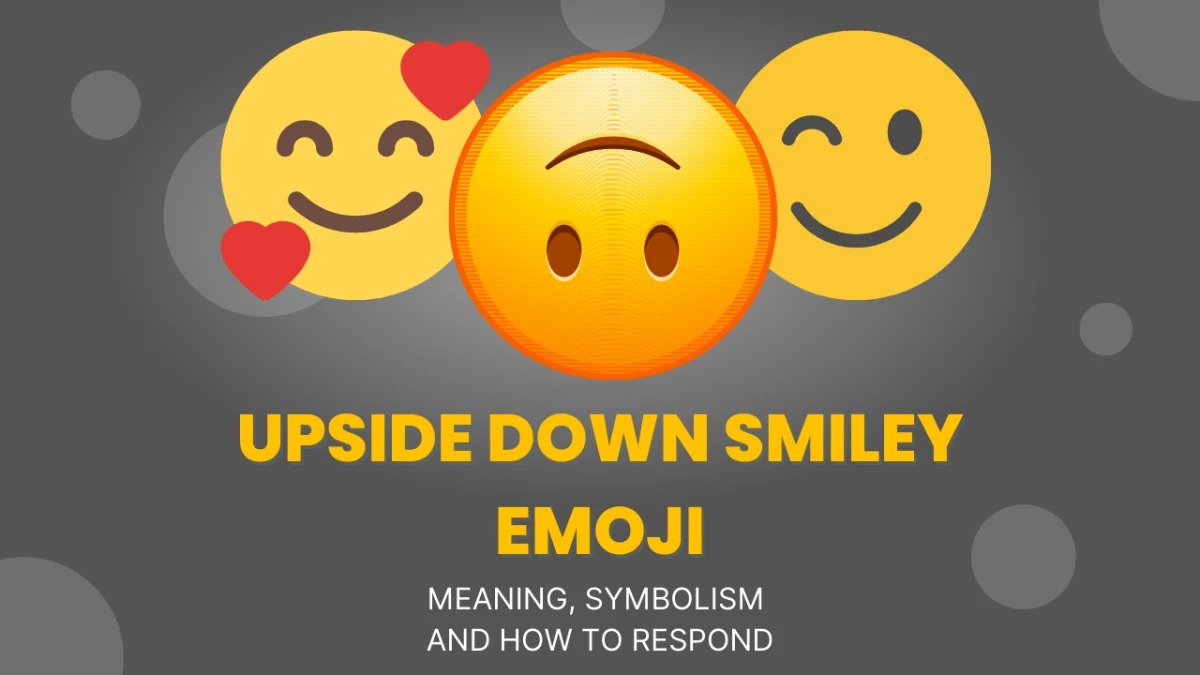
A coworker drops a quick update in your team channel: "The client moved the launch date up to tomorrow morning 🙃." On paper, the graphic displays an upturned grin. In practice, the emotional payload resembles a muted scream. Recent workplace studies highlighted in a news.web.baylor.edu Report emphasize that visual symbols carry heavy cognitive weight, directly shaping how teams interpret professional and personal intent. When traditional cheer gets rotated 180 degrees, the entire digital communication tone shifts into high-stakes irony.
Deciphering the upside down smiley emoji meaning requires looking past its literal pixels. What appears to be an innocent, inverted cartoon face actually functions as a sophisticated rhetorical device. It signals veiled irritation, existential resignation, and self-deprecating irony across millions of daily messages. Understanding its subtleties is now essential for anyone typing on a screen.
📌 Key Takeaways:
- The Core Meaning: The inverted face primarily signals sarcasm, irony, subtle frustration, or a sense of helplessness masked by forced cheer.
- The Behavioral Origin: Unlike sincere smileys, users deploy this symbol to convey coping humor in chat when external situations spiral out of their control.
- Workplace Impact: Context determines everything. Using it with cross-generational coworkers frequently leads to text messaging misinterpretation and perceived passive-aggression.
The Technical Origin of Unicode’s Inverted Face Symbol
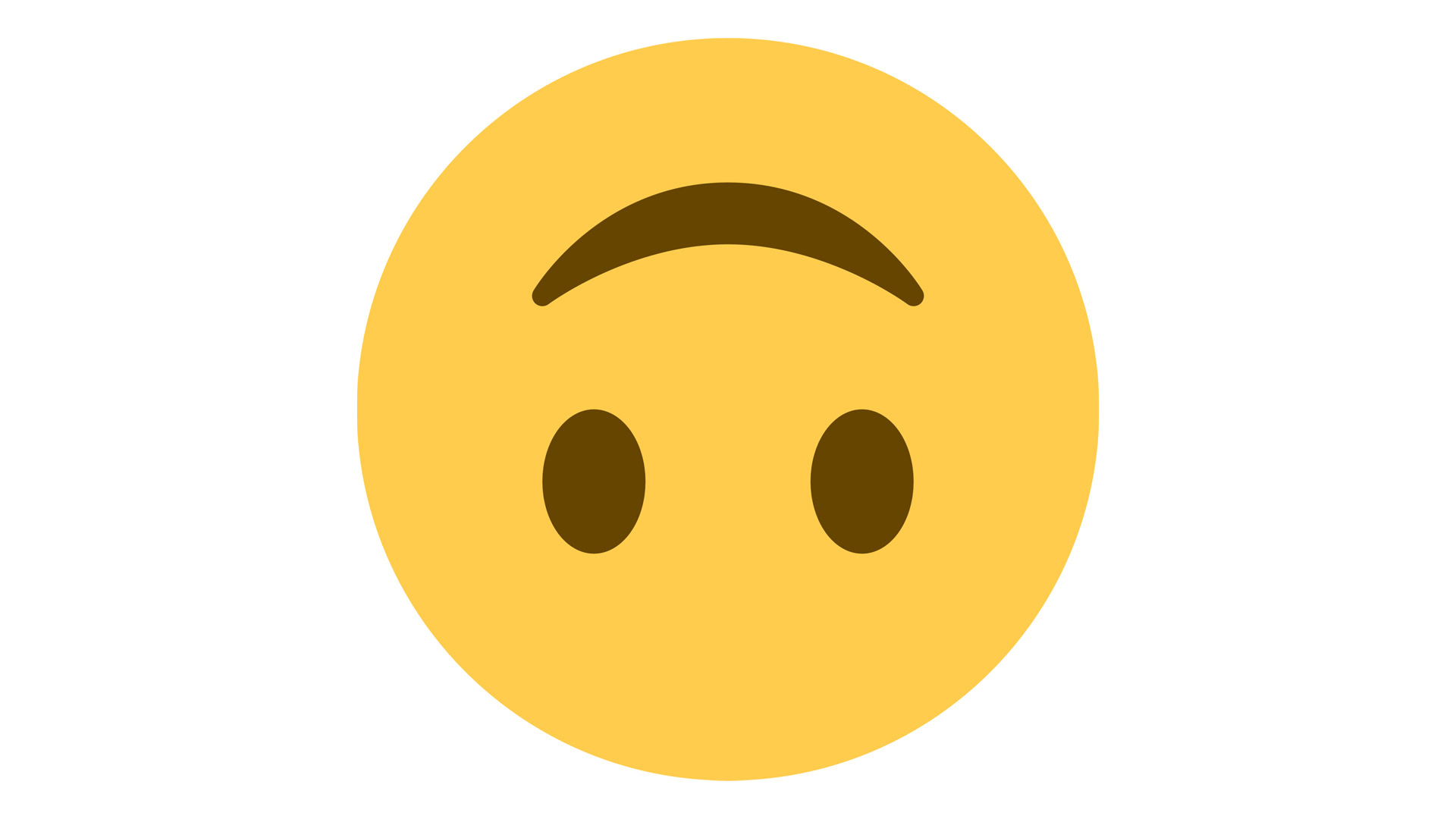
The symbol arrived officially as part of Unicode 8.0 in June 2015 under the designation U+1F643. Its official title was simple: "Upside-Down Face." When major tech platforms rolled it out to iOS and Android keyboards later that autumn, designers intended it as a playful, goofy alternative to the standard smiling face with open mouth. Early adopters, however, had entirely different plans for the glyph.
Human language adapts rapidly to fill conversational voids. In spoken dialogue, a speaker signals disbelief or exhaustion through vocal fry, a dropped pitch, or a deadpan stare. Plain digital text strips those acoustic cues away. Text messaging misinterpretation happens precisely because written words lack physical warmth. The inverted face symbol provided the missing tool: an instant visual shorthand for forced cheerfulness in the face of sheer absurdity.
Rather than expressing unbridled joy, the icon quickly absorbed the cultural energy of the famous "This is Fine" dog sitting in a room consumed by flames. By the late 2010s, digital platforms turned the glyph into an indispensable marker for existential dread wrapped in polite packaging.
Sarcasm, Helplessness, and Irony: Decoding the Emotional Subtext
At its core, the inverted smiley communicates emotional dissonance. The mouth says yes, but the orientation screams no. It thrives in situations where outright anger is socially unacceptable or simply futile.
Consider three distinct scenarios where the symbol frequently surfaces:
1. Subtle Frustration Signals. When your train gets cancelled for the third time in a week, typing "I love commuting 🙃" delivers far more biting humor than a generic frown. It highlights the vast gulf between expectations and reality.
2. Passive-Aggressive Pushback. In corporate environments, outright confrontation often violates workplace decorum. Writing "Thanks for letting me know two minutes before the call 🙃" acts as one of the most visible passive-aggressive emojis in circulation. It allows the sender to register displeasure while maintaining plausible deniability about their hostility.
3. Coping Humor in Chat. Sometimes things go wrong in ways that are purely comical. Burning dinner, spilling coffee over white pants, or watching a sports team blow a massive lead prompts the inverted face. It tells the recipient: "This situation is ridiculous, and I am laughing so I don't cry."
Comparing Modern Tone Indicators: Visual Cues and Intended Meaning
The emotional subtext in messages hinges on nuance. A standard smile conveys warmth, while other variants introduce sharp cynical edges. The table below illustrates how different smileys perform across everyday conversations.
| Emoji & Symbol | Primary Intended Subtext | Misinterpretation Risk | Best Social Setting |
|---|---|---|---|
| 🙃 Upside-Down Face | Sarcasm, quiet panic, forced optimism, irony | High (Often read as bitter or hostile) | Casual chats, peers, dark humor |
| 🙂 Slightly Smiling Face | Polite acknowledgment, suppressed irritation | Very High (Younger users view it as dismissive) | Formal correspondence, older demographics |
| 🫠 Melting Face | Overwhelming embarrassment, physical heat, dread | Moderate (Clear metaphor of dissolving) | Stressful situations, awkward encounters |
| 😀 Grinning Face | Genuine happiness, enthusiastic agreement | Low (Unambiguously cheerful) | Team announcements, personal celebrations |
| 😬 Grimacing Face | Vicarious discomfort, nervous tension, anxiety | Low (Facial contortion is globally understood) | Mishaps, unforced errors, tense waits |
Generational Divides and Gen Z Emoji Etiquette
Emoji literacy varies sharply between age brackets. As documented by cultural reporting from The Guardian examining how younger and older generations view smiles, what older communicators view as standard politeness can read as downright combative to digital natives. For Gen Z and digital-first millennials, standard unblinking smileys like 🙂 read as chilly, cold, or passive-aggressive. In contrast, the upside-down face offers emotional honesty through irony.
In Gen Z emoji etiquette, hyper-literalism is dead. Authenticity is conveyed through layered humor. A younger texter using 🙃 acknowledges the messiness of life openly. They invite the recipient to participate in a shared wink at reality. When a manager aged 50 or older sees the exact same symbol, they might mistake it for total confusion, an accidental orientation error, or blatant insubordination.
This generational gap creates friction in hybrid workplaces. Internal comms surveys across corporate environments consistently show that younger employees interpret deadpan text as hostility, while older supervisors find irony confusing. The inverted smile sits squarely at the center of this cultural crossfire.
Establishing Smart Rules for Contextual Emoji Usage
Deploying this symbol successfully requires reading the room before hitting send. Because the line between harmless coping humor and barbed passive-aggression is razor-thin, evaluating your relationship with the recipient is critical.
When to Deploy It:
Use the glyph with close friends, trusted coworkers, and peers who already understand your sense of humor. It works wonders when you are the victim of minor misfortune: a flat tire, an unexpected software update, or an overcooked meal. In these moments, it cements mutual empathy through shared eye-rolling.
When to Steer Clear:
Avoid using the inverted smile with executive leadership, clients, or people you are meeting for the first time. If an email thread involves project delays, budget cuts, or performance critiques, adding 🙃 will almost certainly be perceived as defensive sneering. In high-stakes situations, stick to explicit, unambiguous text.
Frequently Asked Questions (FAQ)
Q1: Is the upside down smiley always passive-aggressive?
A: No. While it frequently conveys biting sarcasm in workplace chats, its primary role among friends is self-directed coping humor. It usually means "I am overwhelmed, but I am rolling with the punches." Context and existing rapport dictate the tone.
Q2: How does 🙃 differ from the melting face 🫠 emoji?
A: The inverted face focuses on sarcasm, irony, and mild frustration. The melting face represents overwhelming physical exhaustion, deep social embarrassment, or intense dread. Use 🙃 when you want to mock a bad situation; use 🫠 when you feel utterly consumed by it.
Q3: Should I ever use this emoji in professional client emails?
A: Almost certainly not. External clients lack the personal context needed to parse your sarcasm accurately. In professional correspondence, the inverted face often reads as unpolished, unprofessional, or resentful.
Q4: How should I respond when someone sends me an upside-down smiley?
A: Acknowledge the tension or irony directly. You can match their tone with a supportive text ("Hang in there!"), share a laugh, or reply with another empathetic symbol such as the skull 💀 or grimace 😬.
Decoding Modern Digital Tone
Typing in modern digital environments requires constant translation. Punctuation marks, sentence lengths, and tiny pixelated icons carry conversational weight that rivals the spoken voice. The upside-down smiley has claimed its place as digital shorthand for life’s unavoidable absurdities.
Mastering modern communication means understanding that text is rarely just literal. Behind every inverted grin sits a human being balancing stress, irony, and resilience on a five-inch glass screen. Knowing when to laugh along, and when to choose clearer words, is the real secret to staying understood.
