Jacksonville to Miami Corridor Update: Sports Clashes, Touring Reroutes, and Road Alerts

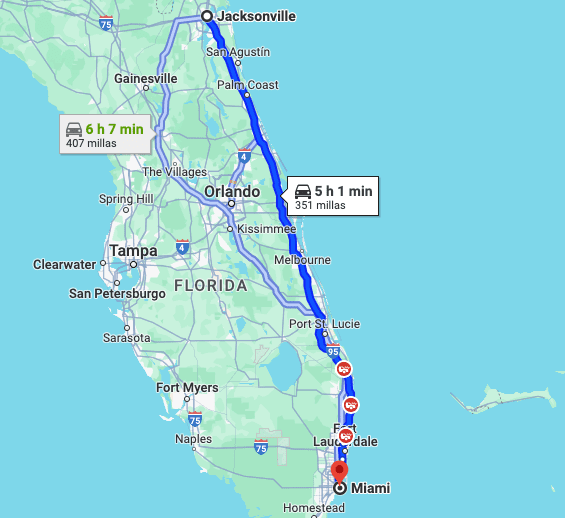
Connecting Northeast Florida to the state’s southern metropolis requires navigating a 345-mile stretch of asphalt and rail that functions as Florida's primary economic spine. Over the past several months, an influx of major athletic showdowns, statewide arena tours, and seasonal transit shifts has pushed this corridor to capacity. Recent scheduling announcements, including confirmed matchups detailed in an official FL Times-Union Report bringing Florida Gators basketball to Jacksonville, have prompted thousands of alumni and sports enthusiasts across Dade and Broward counties to coordinate cross-state journeys north, colliding with touring production fleets moving south.
For touring bands, traveling athletic programs, and regional commuters, timing the passage between Jacksonville and Miami has become an exercise in tactical planning. Congestion across Central Florida interchanges, fluctuating toll structures, and an evolving intercity rail landscape mean that a routine five-hour drive can stretch past eight hours without early intervention.
📌 Key Takeaways:
- Travel Window Volatility: The typical JAX to MIA drive time sits at 5 hours and 15 minutes under clear conditions, but afternoon freight along Interstate 95 South routinely pushes transit past 7 hours.
- Toll Strategy: Running Florida's Turnpike south of Fort Pierce saves 25, 40 minutes during peak hours, incurring approximately $18.50 to $24.75 in SunPass toll rates depending on vehicle class.
- Rail Realities: Direct track options remain anchored by the Amtrak Silver Meteor, while travelers linking through Orlando must blend coach or charter routes to access the high-speed Brightline rail connection down to Miami Central.
Cross-State Sports and Live Tours Reshaping the 345-Mile Spine
The movement of people between Duval County and South Florida spikes sharply around synchronized entertainment dates. When major collegiate programs stage showcase events in Jacksonville, ticket holders from Miami-Dade and Palm Beach flood northbound routes, while national arena tours run back-to-back dates between the VyStar Veterans Memorial Arena and Miami's Kaseya Center. Moving production freight overnight across this corridor leaves no margin for error.
Touring logistics directors often mandate departure from Jacksonville before 1:00 AM to clear Daytona and the Space Coast before morning commuter traffic builds. Athletic team transports face a different hurdle: navigating afternoon congestion through the Treasure Coast and West Palm Beach. When Friday evening kickoffs or Saturday basketball tip-offs align with heavy vacation travel, localized slowdowns cause severe cascading delays across county lines.
Navigating Interstate 95 South and Florida's Turnpike
Driving remains the dominant transit mode between the two hubs. Motorists leaving Jacksonville face an immediate choice at the junction of Interstate 95 South and Florida's Turnpike near Fort Pierce. Continuing along I-95 offers a toll-free route directly through Brevard, Indian River, St. Lucie, and Martin counties before hitting the urban density of Broward and Miami-Dade. However, that route carries heavy local commuter volume and unpredictable construction patterns.
Opting for the Turnpike at Wildwood or cutting across via State Road 70 allows drivers to skirt coastal surface jams, though it requires active toll transponders. Current SunPass toll rates from Central Florida interchanges to the Golden Glades Interchange in North Miami run between $18.50 and $24.75 for standard passenger cars. Drivers without transponders encounter TOLL-BY-PLATE surcharges that raise total corridor costs by 30% to 50%.
Fleet operators and regional commuters rely on continuous Florida highway traffic alerts through the state’s 511 network. Bottlenecks around Fort Pierce and Boca Raton frequently prompt sudden diversions onto parallel state roads. During summer storm bursts or sudden crash clearances, average travel speeds often drop below 25 mph over 40-mile stretches.
Transit Options: Highway, Rail, and Air Comparisons
| Travel Mode | Typical Duration | Estimated One-Way Cost | Primary Chokepoint / Bottleneck |
|---|---|---|---|
| Personal Vehicle / Van (I-95 & Turnpike) | 5h 15m, 7h 30m | $45, $75 (Fuel + SunPass tolls) | West Palm Beach to Golden Glades I-95 merge |
| Amtrak Silver Meteor (Direct Rail) | 8h 40m, 9h 25m | $48, $135 (Coach seat) | Freight dispatch delays on shared CSX trackage |
| Regional Shuttle + Brightline Rail Connection | 6h 00m, 7h 15m | $95, $170 (Combined ticketing) | Transfer window at Orlando International Airport |
| Commercial Aviation (JAX to MIA) | 1h 15m (flight) / 3h 45m (door-to-door) | $110, $280 | TSA queues & ramp weather holds at MIA |
Rail Logistics: The Brightline Connection Meets the Silver Meteor
Passenger rail choices along the Atlantic coast reflect two distinct philosophies of infrastructure. The Amtrak Silver Meteor delivers direct, single-seat service between the historic Jacksonville Amtrak Station on Clifford Lane and the Miami Amtrak Station in Hialeah. It offers low stress, spacious seating, and zero highway fatigue. However, because it shares lines with heavy freight rail networks, passenger runs face recurring schedule delays that push total travel time past the nine-hour mark.
The modern Brightline rail connection changed passenger travel across South and Central Florida by linking Miami Central directly to Orlando International Airport with 125-mph service. The line does not yet extend north along the coast to Jacksonville. Travelers wishing to use Brightline must drive, take regional coach service, or arrange private shuttles across the two-hour gap between Jacksonville and Orlando before boarding trains southbound toward West Palm Beach, Fort Lauderdale, and Miami.
Public transit agencies and regional planners continue evaluating right-of-way options along the Florida East Coast Railway corridor. Until dedicated financing closes the Jacksonville-to-Cocoa segment, through-passengers must either accept the longer direct crawl on Amtrak or execute a multi-modal vehicle transfer in Orange County.
Coastal Alternatives: St. Augustine and Daytona Beach Stopovers
When highway construction shuts down lanes on Interstate 95 South, drivers often detour onto coastal routes. Diverting onto the St. Augustine scenic route via Florida State Road A1A allows travelers to bypass commercial interstate freight while following the barrier islands through Vilano Beach, historic St. Augustine, and Crescent Beach.
The trade-off is velocity. Speed limits on coastal A1A drop to 35 mph through municipal centers, punctuated by pedestrian crosswalks and low-speed roundabouts. While this detour adds roughly 45 to 60 minutes to the total travel profile, it serves as a scenic bypass when emergency accidents halt interstate lanes in St. Johns County.
Further south, the Daytona Beach stopover along the I-4 / I-95 junction serves as the primary fueling and maintenance waypoint for touring logistics. The concentration of fleet facilities, 24-hour service centers, and dining hubs around International Speedway Boulevard provides drivers with a clean break before tackling the dense, fast-moving traffic from Melbourne south to Palm Beach County.
Fleet Logistics, Electrification, and Highway Infrastructure
Commercial haulers and electric vehicle operators face unique challenges on this run. The state has expanded its EV charging stations corridor along the Florida Turnpike service plazas, including Fort Pierce, Canoe Creek, and Turkey Lake, which feature high-output DC fast chargers rated up to 350 kW. Drivers operating electric pickups or battery-electric touring sprinters require at least two charging cycles to complete the run safely without risking battery degradation in extreme summer heat.
Airlines maintain direct service linking Jacksonville International Airport to Miami International Airport. These regional feeder flights serve corporate travelers and crew members moving between major live productions. While total air time rarely exceeds 75 minutes, TSA processing times, baggage transfers, and ramp holds during South Florida thunderstorm cycles often negate the speed advantage over a well-timed early-morning highway run.
Frequently Asked Questions (FAQ)
Q1: What is the current average driving time between Jacksonville and Miami?
A1: Under normal conditions with moderate traffic, driving straight through takes between 5 hours and 15 minutes and 5 hours and 45 minutes. Major accidents or peak Friday afternoon departures down Interstate 95 South routinely extend the trip to 7 hours or more.
Q2: Can travelers ride Brightline straight from Jacksonville to Miami?
A2: No. Brightline currently operates between Miami and Orlando International Airport. Passengers originating in Jacksonville must use private vehicles, intercity buses, or shuttles to reach Orlando before boarding the Brightline south.
Q3: How much money should drivers set aside for SunPass toll rates?
A3: Passenger car drivers taking Florida's Turnpike south of Central Florida will spend roughly $18.50 to $24.75 with a verified SunPass transponder. Without a pass, TOLL-BY-PLATE billing includes administrative surcharges that push the one-way total higher.
Long-Distance Transit Strategy for the East Coast Corridor
Traversing Florida from Duval County to Miami-Dade demands realistic scheduling. The state's rapid growth has erased true "off-peak" travel windows along major coastal freeways. Planning departures around midnight or early dawn remains the single most reliable way for touring operations and event attendees to bypass systemic highway bottlenecks.
Choosing between I-95, toll routes, regional aviation, or passenger rail comes down to balancing predictability against budget. As transit agencies advance feasibility studies for coastal rail expansion, highway readiness, real-time alert monitoring, and strategic fuel routing remain the essential tools for mastering Florida's busiest travel artery.
