Minecraft's Major Drop Adds Long-Awaited Stairs: Release Info and How to Build Them
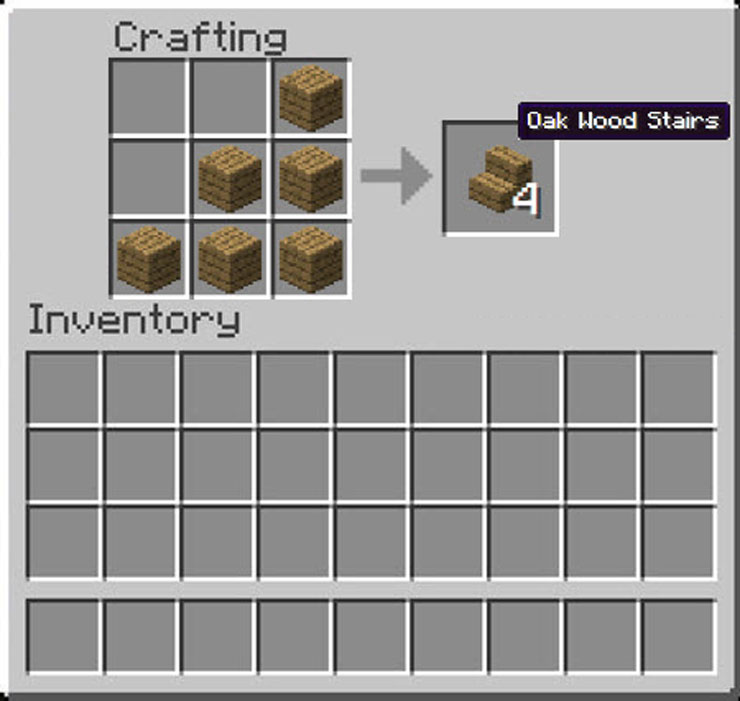
Builders across the sandbox community spent over a decade begging Mojang Studios for two specific architectural blocks: concrete and wool stairs. With the arrival of the Wilderness Bound drop (Java Edition 26.3), Mojang officially fulfilled that request while streamlining how players carve structural slopes across both Bedrock and Java platforms. Detailed patch coverage from this Minecraft Report highlights how the studio has expanded block palettes while balancing crafting economy.
Mastering stairs requires understanding more than basic grid arrangements. Whether you need seamless gradient transitions, watertight harbor channels, or high-efficiency builds that conserve scarce mining yield, understanding structural geometry fundamentally reshapes your world builds.
📌 Quick Summary:
- Core Mechanics: The standard crafting table recipe demands 6 matching source blocks arranged in an ascending step shape, yielding 4 stair blocks.
- Resource Efficiency: Cutting mineral blocks inside a stonecutter guarantees a strict 1:1 block crafting ratio, saving 33.3% of your raw resources compared to the crafting table.
- Update Timeline: The Wilderness Bound drop rolled out preview snapshots on August 4, 2026, before reaching Java Edition, Bedrock, and Nintendo Switch on September 15, 17, 2026.
The Standard Crafting Table Recipe and Block Mechanics
Stairs function as fractional blocks, standing exactly three-quarters of a standard block's volume. Their default hitboxes eliminate the need to jump while climbing, preserving player hunger bars during long mine ascents.
To fabricate stairs at a standard crafting grid, open a crafting table and place six matching blocks in an ascending three-tier pattern. Fill the entire bottom row with 3 blocks, place 2 blocks across the middle row (leaving one outer column empty), and drop 1 block on the top row directly above the two-block side. This arrangement produces 4 stair blocks.
The standard wooden stairs recipe works with any processed wood type in the game, including oak, spruce, birch, jungle, acacia, dark oak, mangel, cherry, pale oak, bamboo, and crimson or warped stems. You cannot mix wood varieties within a single six-block batch; each stair item retains the specific grain, tint, and flammability parameters of its parent timber.
The Stonecutter Advantage: Beating the Crafting Table Ratio
Crafting stone-family steps on a crafting table carries a built-in mathematical penalty. Feeding six solid stones into a table outputs four stairs, which effectively discards one-third of your excavated materials. For massive construction footprints, that loss adds up to thousands of raw blocks lost to grid overhead.
The stonecutter eliminates this conversion penalty entirely. Inserting a single piece of cobblestone, stone bricks, diorite, granite, andesite, sandstone, purpur, quartz, or deepslate stairs into the blade interface outputs one stair per source block. That yields a direct 1:1 block crafting ratio.
Deepslate variants highlight this dynamic clearly. Cobbled deepslate requires significantly longer break times underground compared to standard stone. Processing structural accents through a stonecutter ensures every single mined block ends up in your defensive fortress wall rather than disappearing into an inefficient crafting table equation.
Release Timeline: The Wilderness Bound Drop and Color Expansions
Mojang announced technical testing for its revised block variants in an early August development preview. The release timeline progressed rapidly across desktop and console distributions during late summer 2026, delivering long-requested palette options directly to survival inventories.
| Milestone Phase | Deployment Date | Key Features & Architectural Additions |
|---|---|---|
| Snapshot 26w31a Testing | August 4, 2026 | Initial experimental testing of wool stairs and concrete stair prototypes. |
| Bedrock & Java Full Drop | September 15, 2026 | Official launch of the Wilderness Bound game drop on PC and consoles. |
| Console & Mobile Parity | September 16, 17, 2026 | Wilderness Bound arrives on Nintendo Switch, iOS, Android, and Linux platforms. |
The Wilderness Bound release marked the arrival of all 16 dye shades of wool and concrete into the stair catalogue. For years, structural builders relied on dark oak or weathered stone blocks as rough substitutes for colored roofs. The addition of saturated concrete stairs allows crisp, modern builds without rough texture seams, while wool stairs create soft, upholstered interior seating without requiring trapdoor side-panels.

Advanced Geometry: Placement, Corner Wrapping, and Inversion
Stair block orientations depend on your cursor placement relative to block edge crosshairs. Aiming at the bottom half of a target block face places the stair right-side up. Targeting the upper half or the underside of an overhead ceiling produces upside down stairs. Inverted stairs allow creators to build archways, recessed ceiling lighting coves, and tapered wall trims.
Connecting intersecting walls activates the corner stairs mechanic. When you place a stair perpendicular to an existing step, the adjacent block recalculates its geometry dynamically into an inner or outer L-shaped corner. Inner corners tuck inward to form seamless 90-degree hips for roof hips, while outer corners project forward to shape protective cornices.
Rotational placement also pairs with fluid mechanics. The waterlogging stairs mechanic lets you submerge any stair block with a water bucket without knocking the stair loose. The water occupies the missing quarter of the block volume, allowing players to build hidden water sources, flush docks, and non-destructive redstone mob transportation flumes.
Material Behavior: Weathering Copper and Stone Gradients
Stair dynamics differ sharply across raw material classes. Copper stairs oxidation introduces a living time element to exterior builds. When exposed to rain and air, freshly placed cut copper stairs cycle through four distinct stages: raw orange, exposed dull brown, weathered muted teal, and fully oxidized green.
You can freeze copper stairs at any chosen stage by right-clicking them with a honeycomb item to wax them. Scraping an oxidized step with an axe reverses the aging process by one full stage. This mechanic gives historical roofs an authentic worn appearance when mixed alongside prismarine and oxidized copper variants.
Mastering staircase design techniques requires combining multiple stair types to establish realistic weight distribution. Structural columns look more natural when supported by upside-down cobblestone stairs at their base, transitioning upward into polished andesite and deepslate steps. Mixing materials breaks up repetitive grid lines, giving flat survival structures depth, shadow, and architectural scale.
Frequently Asked Questions (FAQ)
Q1: Why should I build a stonecutter instead of using a crafting table for stairs?
A1: The stonecutter saves 33.3% of your raw stone blocks. A crafting table requires six blocks to produce four stairs, whereas a stonecutter yields one stair per single block inserted. For large builds using deepslate or quartz, a stonecutter cuts material gathering times dramatically.
Q2: Can wool and concrete stairs catch fire like wooden stairs?
A2: Concrete stairs are completely immune to fire and lava damage, functioning identically to stone. Wool stairs remain flammable and can catch fire from nearby lava pools, open fire pits, or lightning strikes, so protect them with lightning rods on open roofs.
Q3: How do I stop copper stairs on my roof from turning green over time?
A3: Combine your copper stairs with honeycomb in a crafting grid, or interact directly with placed copper stairs while holding a honeycomb. This waxes the block, permanently locking in its current oxidation stage until you scrape it clean with an axe.
Modern Architectural Building Techniques
Stairs remain the most flexible detailing tools across the entire Minecraft block registry. By combining inverted placements, waterlogged plumbing, and the expanded palette introduced in recent updates, survival builders can create clean, realistic structures without relying on heavy mod packs. Take advantage of stonecutter recipes early in your survival worlds to conserve resources, and use corner stair angles to bring depth to flat exterior walls.
