New Marine Science Center Rises on Quahog Bay: Plans, Progress, and Impact

Heavy framing timbers and concrete footings now anchor the shoreline of Harpswell, Maine, where a derelict hospitality property once overlooked the water. As documented by The Harpswell Anchor Report, the Quahog Bay Conservancy is actively erecting a state-of-the-art marine science center on the footprint of a former coastal inn. The project transforms private commercial acreage into a dedicated marine research hub designed to address accelerating environmental shifts across Casco Bay.
The construction marks the culmination of a multi-year effort that began when the conservancy acquired the waterfront parcel in 2023. By combining environmental remediation with specialized lab architecture, the organization aims to bridge field-level conservation with academic research. The site stands at a critical junction: northern waters are warming faster than 99 percent of the world’s oceans, altering localized marine ecology and upending generations of traditional commercial fishing.
📌 Key Takeaways:
- The Project: The Quahog Bay Conservancy is transforming a shuttered Harpswell inn into a multi-use marine science center equipped with flow-through seawater labs and research staging docks.
- The Objective: Researchers will study coastal water chemistry, combat invasive European green crabs, and pilot sustainable shellfish habitat restoration projects.
- Community Access: The hub preserves historic working-waterfront access for commercial harvesters while offering community marine education programs for local schools.
From Historic Coastal Inn to Casco Bay Marine Research Hub
For decades, the parcel hosted tourists seeking quiet views of Harpswell’s tidal inlets. Over time, deferred maintenance and seasonal vacancy took a physical toll on the shoreline structures. When the property hit the commercial real estate market, conservationists worried it would be converted into an exclusive private compound, permanently cutting off another section of the coast.
The Quahog Bay Conservancy stepped forward in September 2023 with an ambitious vision. Rather than allowing another stretch of shoreline to slip behind locked residential gates, the nonprofit purchased the property to establish a regional headquarters for ecological monitoring. The initiative preserves vital shore access in an area where working-waterfront property has grown increasingly scarce.
Redeveloping a commercial hospitality site along Maine’s sensitive intertidal zone carries stringent regulatory oversight. Engineers had to clear complex approvals from the Maine Department of Environmental Protection and municipal boards, ensuring the new footprint would not disrupt sensitive mudflats or discharge contaminants into tidal channels. The transition represents a deliberate shift from tourist infrastructure to environmental defense.
Structural Engineering and Wet Lab Infrastructure on the Harpswell Shore
Building a laboratory directly on the intertidal ledge requires specialized civil engineering. Maine’s coastline faces rising sea levels, stronger storm surges, and erratic winter freeze-thaw cycles. Contractors had to strip the former inn down to its core framing, removing uninsulated partitions and antiquated electrical systems while preserving the building's historic maritime profile.
The core of the new facility is an advanced flow-through wet lab. High-capacity intake pumps will draw ambient water straight from Quahog Bay into controlled experimental tanks, allowing biologists to study local marine organisms under real-time conditions. This setup eliminates the biological stresses associated with artificial closed-loop aquariums.
The exterior features a reinforced dock system designed to support conservation vessels, dive operations, and water sampling gear. Structural pilings were driven into the bedrock to withstand 100-year storm surge projections, providing researchers with secure access to the bay year-round. Solar arrays and high-efficiency heat exchangers were integrated directly into the structural framing to lower the facility's carbon footprint.
Rebuilding the Coastline: Project Milestones and Ecological Metrics
The transformation of the Harpswell property is measured across construction milestones and tangible environmental targets. The table below outlines how the conservancy progressed from land acquisition to active structural completion and lab deployment.
| Phase / Timeframe | Site Action & Infrastructure | Primary Research / Ecological Target |
|---|---|---|
| Phase I (2023, 2024) | Acquisition of former inn; municipal permitting and environmental remediation | Site runoff reduction; baseline Casco Bay water quality assessment |
| Phase II (2024, 2025) | Structural demolition; reinforced bulkhead installation; dock engineering | Tidal surge resilience; safe staging for marine monitoring vessels |
| Phase III (2025, 2026) | Construction of wet lab; installation of ambient seawater intake plumbing | Shellfish larval survival trials; continuous real-time pH and salinity tracking |
| Phase IV (2026+) | Classroom outfitting; public boat launch integration; collaborative residency spaces | Community marine education; aquaculture workforce development programs |
Combating Acidification and the Casco Bay Shellfish Shift
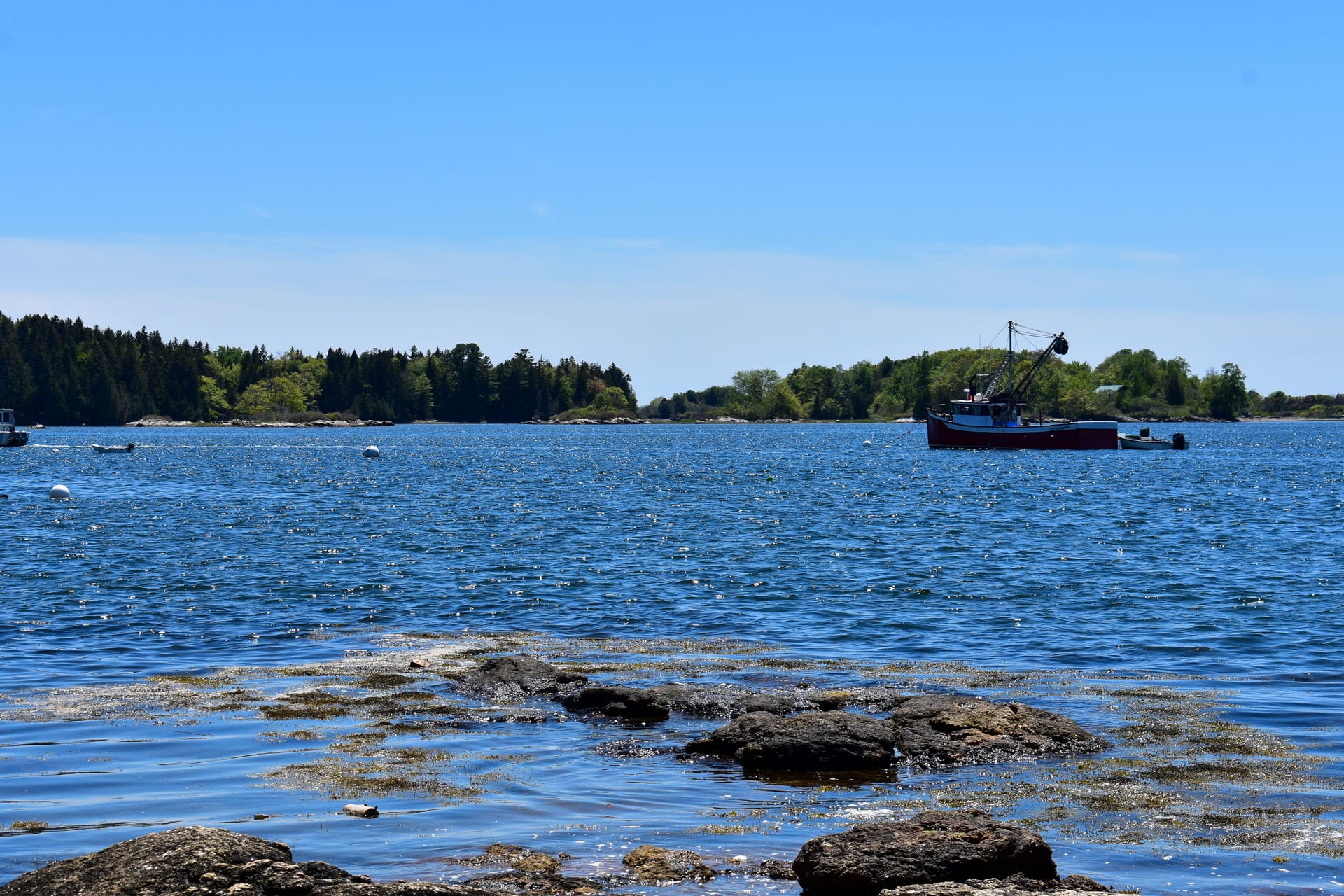
The waters of Casco Bay tell a complex story. Soft-shell clam populations, long a backbone of the coastal economy, have suffered steep declines over the past two decades. The driver is two-fold: unchecked predation by invasive European green crabs and increasing ocean acidification. Acidic mud flats eat away at the thin calcium carbonate shells of juvenile clams before they can bury themselves to safety.
Meanwhile, the region has experienced an aquaculture pivot. Hardy eastern oysters, raised in floating mesh bags and bottom cages, are flourishing in the same estuaries where wild clams struggle. The new lab enables biologists to track local seawater chemistry down to subtle diurnal shifts, generating granular data sets that state regulators and commercial growers desperately need.
Research conducted on site will test innovative sediment buffering techniques. By returning crushed, weathered oyster and clam shells directly into mud flats, scientists can reduce acidity in the top centimeters of sediment. This simple intervention gives juvenile bivalves a window of survival, proving that targeted habitat restoration can safeguard wild fisheries alongside commercial oyster farming.
Hands-On Science and Working-Waterfront Access for Harpswell
Preserving coastal communities requires keeping people tied to the water. In towns like Harpswell, rising coastal real estate prices often push watermen away from traditional tie-ups. The conservancy's strategic design protects dock space for commercial harvesters, researchers, and local students alike.
Community marine education is built into the facility’s operating plan. Dedicated laboratory classrooms will host students from local public school districts, offering hands-on experiences with microscopes, water testing meters, and marine specimens. These programs are designed to cultivate interest in coastal management careers among local youth, helping to maintain generational stewardship of Casco Bay.
Collaborative research agreements are already being developed with regional institutions, including the University of Maine, Bowdoin College, and regional shellfish growers. Rather than operating in an ivory tower, visiting scientists will share pier access and bench space with commercial growers who know the bay's currents through daily manual labor. This balance ensures science remains practical and grounded in working-class waterfront realities.
Frequently Asked Questions (FAQ)
Q1: Why did the Quahog Bay Conservancy select a former inn for this marine science center?
A1: The former inn offered an existing commercial footprint with direct shoreline access and deep-water frontage on Quahog Bay. Redeveloping this disturbed parcel avoided breaking new ground on pristine coastal ecosystems while permanently protecting working-waterfront access from private residential development.
Q2: What primary research will take place in the new wet lab?
A2: The facility focuses on ocean water quality monitoring, ocean acidification patterns, European green crab population dynamics, and sustainable shellfish aquaculture techniques. Researchers will evaluate larval shellfish survival under varying temperature and pH regimes.
Q3: Will the public and local fishermen have access to the site?
A3: Yes. The conservancy designed the facility to preserve working-waterfront access for commercial watermen while providing public educational spaces. Local K-12 students will participate in field science workshops, and collaborative dock access will be available for municipal and educational vessels.
What Lies Ahead for Quahog Bay in 2026 and Beyond
The construction under way in Harpswell demonstrates how degraded hospitality assets can be reclaimed for community science. As coastal development pressures intensify along southern and midcoast Maine, the Quahog Bay Conservancy provides an alternative template: holding the shoreline for long-term ecological stability rather than private leisure.
With operational launches slated for later this year, the facility will soon transition from construction trades to full-time scientific investigation. Real-time data loggers deployed from its piers will feed directly into regional marine models, clarifying how localized estuaries respond to global oceanic disruption. For the working communities along Casco Bay, the new center represents a physical anchor in a rapidly changing marine economy.
