Pink-and-Green Variegated String of Hearts: Real Care Routine for Vibrant Color
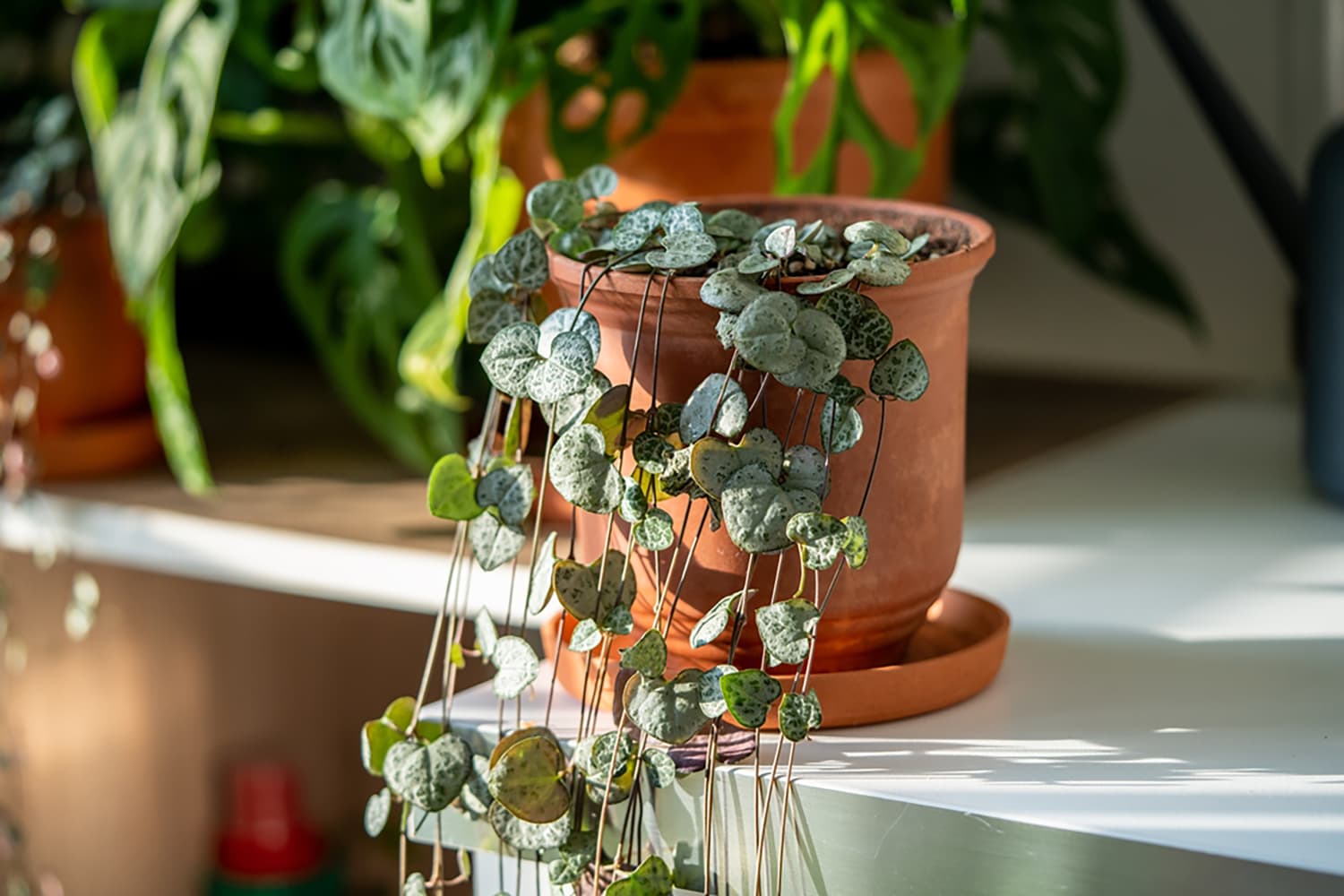
Few houseplants command visual attention quite like a cascading variegated string of hearts. Known botanically as Ceropegia woodii, this semi-succulent vine produces fleshy, heart-shaped leaves patterned with marbled silver and creamy margins. When cultured under precise environmental parameters, those pale edges blush an intense magenta-pink. Yet thousands of indoor growers watch in frustration as vibrant nursery specimens revert to muted grey-green foliage or collapse into stringy, bare stems within months of arrival.
The secret to preserving that prized pink coloration lies in understanding the plant's native habitat along the rocky cliffs of southern Africa. As highlighted in a recent Homes and Gardens Report on spatial balance and botanical styling, positioning trailing species like Ceropegia woodii requires harmonizing aesthetic placement with direct physiological needs. Keeping these delicate vines healthy demands a calculated balance of high-intensity filtered light, specialized root aeration, and disciplined watering rituals.
📌 Key Takeaways:
- The Pink Pigment Trigger: Intense, bright indirect sunlight triggers anthocyanin production, converting cream borders into saturated bubblegum pink without scorching leaf tissue.
- Substrate Mechanics: A mineral-heavy mix containing at least 60% pumice or perlite prevents moisture entrapment around delicate aerial tubers.
- Hydration Precision: The bottom watering method saturates active feeder roots while shielding the vulnerable crown and surface tubers from fungal decay.
Why Variegated Ceropegia woodii Loses Its Pink Hue Indoors
The pink coloration in variegated string of hearts is a photoprotective adaptation driven by anthocyanins. These red and purple pigments shield sensitive plant cells from excessive UV radiation. The variegated form lacks chlorophyll along its leaf margins; in response to ample light exposure, the plant floods those chlorophyll-deficient cells with anthocyanins to safeguard the foliage. When light levels fall below 1,000 foot-candles, the vine halts pigment synthesis to maximize light absorption through whatever green tissue remains. The brilliant pink fades into a dull cream or washed-out white.
Low light levels alter the plant's architecture. Internodes, the stem segments separating each pair of heart-shaped leaves, stretch drastically as the vine searches for a brighter light source. This phenomenon produces leggy growth, leaving wide gaps along the runners and turning a dense canopy into sparse strings. Reversing this progression requires an immediate bump in photon density. Ambient indoor lighting tucked away from windows will sustain survival, but it will never sustain color.
The Lighting Threshold: Engineering Bright Indirect Light for Color Saturation
Locating the sweet spot between gentle morning illumination and destructive scorch determines the success of your variegated vine. Position the plant within 2 to 3 feet of an unobstructed east- or south-facing window. Morning sun delivers gentle direct rays that saturate the leaves with energy without generating thermal heat capable of burning thin succulent tissue. If your only option is a fierce western exposure, filter the afternoon light through a sheer linen curtain to prevent leaf blistering.
Indoor growers relying on artificial fixtures should install full-spectrum LED grow lights delivering between 1,500 and 2,500 lux at canopy level. Keep the light source suspended 8 to 12 inches above the top of the pot. Light must strike the crown directly. Hanging the plant high above window frames ensures the trailing vines receive light while the top of the container sits in perpetual shade. That common positioning error causes crown dieback, leaving the soil surface bare while strings hang below.
Root Structure and Substrate: Protecting Tubers and Aerial Nodes
Ceropegia woodii develops swollen, potato-like underground storage organs known as tubers, alongside small aerial tubers that emerge along trailing nodes. These structures act as moisture reservoirs during prolonged droughts in their native subtropical scrublands. In home environments, tubers represent the plant's greatest vulnerability. Standard commercial potting soils hold capillary water far too long, suffocating root hairs and initiating rapid tuber rot.
A resilient soil mix relies on coarse texture and rapid drainage. Blend high-grade organic potting soil with gritty mineral amendments using a strict ratio:
- 40% organic base: Coco coir, peat moss, or screened compost to anchor the micro-roots.
- 40% coarse mineral grit: Horticultural pumice or perlite to maintain permanent air pockets.
- 20% sharp sand or fine orchid bark: Facilitates rapid drainage and prevents particle compaction.
Terracotta containers significantly outperform glazed ceramics or plastic nursery pots. The unglazed clay breathes, drawing excess moisture outward through evaporative cooling and stabilizing the root zone between waterings.

Watering Protocols: Bottom Soaking Versus Surface Crown Rot
Surface watering often spells disaster for a variegated string of hearts. Pouring water directly onto the crown allows moisture to pool inside dense foliage clumps and sit against surface tubers. Damp conditions combined with limited indoor air circulation invite pathogens like Pythium and Phytophthora, causing stems to turn translucent, soften, and detach at the soil line.
Adopting the bottom watering method sidesteps moisture-related crown rot entirely. Fill a shallow basin with 1 to 2 inches of room-temperature filtered water. Set the pot into the basin and allow capillary action to draw moisture upward through the drainage hole for roughly 20 to 30 minutes. Once the top layer of substrate feels slightly cool to the touch, lift the pot, allow excess water to drain completely for 10 minutes, and return it to its hanging location.
Never water on a rigid calendar schedule. Use the "taco test" to evaluate physical hydration levels. Select a mature pair of leaves near the base of the plant and gently compress them along their edges. If the leaves are rigid and resist bending, the tubers are fully hydrated. If the leaves yield easily, showing faint micro-wrinkles on their undersides, the root zone is dry and ready for a thorough bottom soaking.
Cultivation Profiles: Environmental Baselines and Foliage Outcomes
The table below summarizes common care environments, pinpointing how specific cultural inputs dictate foliage health, growth density, and color expression.
| Growing Variable | Optimized Regimen (Vibrant Pink) | Sub-Optimal Regimen (Common Failure) | Observable Foliage Result |
|---|---|---|---|
| Light Intensity | 1,500, 2,500 FC bright indirect; direct morning sun | Deep shade or low ambient interior light ( | Broad leaf spacing; margins revert to plain cream/green |
| Irrigation Method | Bottom soaking driven by leaf-firmness tactile checks | Frequent top-dribbling on a fixed weekly schedule | Crown rot; mushy tubers; sudden vine shedding |
| Substrate Mix | 60% pumice/perlite grit blended with 40% organic base | Standard moisture-retentive peat potting soil | Anaerobic root suffocation; failed growth flushes |
| Container Type | Shallow, porous terracotta with wide drainage opening | Deep, non-draining decorative ceramic or plastic | Persistent damp perched water tables; sour root zone |
Propagation and Crown Density: Fixing Bald Pots and Leggy Stems
Over time, downward vine weight and low overhead illumination can leave the top surface of an indoor hanging planter looking sparse. Rather than discarding stretched stems, use them to repopulate the pot's crown. The most reliable approach for thickening the base is the coil method. Take an existing, healthy trailing stem, curl it gently back across the exposed soil surface, and pin the nodes into the substrate using unfolded bobby pins or floral U-pins. Keep the surface lightly misted; within 14 to 21 days, those pinned nodes will generate new roots and distinct aerial tubers, sending fresh vertical shoots upward.
For expanding your collection or starting fresh pots, propagation by cuttings using the "butterfly method" yields exceptional success rates. Slice a healthy vine into individual sections, ensuring each cutting contains one node with its accompanying pair of heart leaves and a short 0.5-inch stem segment. Position these cuttings into moist sphagnum moss or a shallow perlite bed inside a clear, sealed plastic container to maintain 70% to 80% humidity. Set the propagation box under moderate grow lights. Root clusters and miniature tubers typically form within three weeks, producing sturdy plantlets ready for standard potting media.
Architectural Styling and Spatial Placement Indoors
Variegated string of hearts works best visually when elevated. Suspending the plant in a macramé hanger or mounting it on a high architectural shelf allows the vines to drape naturally, showing off the contrasting pink undersides and silver-patterned upper leaf surfaces. In contemporary interior schemes, designers often pair its soft, cascading habit against stark industrial materials like matte black metal or poured concrete.
Spatial positioning also intersects with traditional interior layout philosophies. As examined in recent analyses of feng shui plant placement, trailing plants with soft, rounded leaves are used to soften sharp interior angles and direct Chi smoothly through rooms. The southeast corner of a living space, associated with wealth and abundance, serves as a natural home for *Ceropegia woodii*, provided the location meets the plant's lighting baseline. Placing an indoor hanging planter near an eastern balcony doorway creates a balanced aesthetic display while giving the vine the bright, indirect illumination it requires to thrive.
Frequently Asked Questions (FAQ)
Q1: Why are the leaves on my variegated string of hearts thin, pale, and wrinkled?
A1: Wrinkled, papery leaves indicate systemic dehydration. This condition stems from two opposing causes: severe underwatering where the soil has dried out completely, or root rot caused by prolonged moisture that has destroyed the feeder roots, preventing the plant from taking up water. Inspect the base: if the stems are firm and white beneath the soil line, give the plant a thorough bottom soak. If the subterranean stems are brown and mushy, take stem cuttings above the rot line to restart the plant.
Q2: Can reverted green vines produce pink leaves again?
A2: Yes, provided the vine possesses true variegated genetics. If the leaf margins remain white or pale cream under dim light, moving the pot into 1,500 to 2,000 foot-candles of bright, filtered light will trigger anthocyanin synthesis, turning those margins pink on new growth. However, if a vine has fully mutated back to pure solid-green wild-type tissue without pale edges, that specific stem will not regain variegation and should be pruned away to preserve the variegated sections.
Q3: How often should I fertilize a variegated string of hearts during active growth?
A3: Variegated cultivars grow slower than their wild green counterparts due to reduced chlorophyll concentrations. Apply a balanced, urea-free liquid succulent fertilizer diluted to one-quarter strength once every 4 to 6 weeks from spring through early autumn. Suspend all fertilization throughout late autumn and winter when cooler temperatures and lower light levels slow plant metabolism.
Managing the Fine Line Between Light Stress and Foliage Damage
Maintaining vibrant pink tones across *Ceropegia woodii* requires reading the plant's physiological signals. Anthocyanin accumulation is a natural reaction to abundant light, but excessive exposure can damage plant cells. If the silver marbling starts turning an uneven, bleached yellow, or if dry, crispy brown spots appear on leaf surfaces, the vine is crossing from protective pigmentation into chronic tissue scorch. Back the container away from intense light sources by 6 to 12 inches until the leaves stabilize.
Monitor your plant's water needs as seasons change. During warm summer stretches with long daylight hours, transpiration accelerates, requiring frequent tactile leaf checks and more regular bottom watering sessions. When winter arrives, shorten watering frequency, keep the plant away from drafty windows, and let the soil dry thoroughly. Striking that balance will reward you with dense, healthy vines that cascade several feet, their bright pink margins framing silver-patterned hearts all year long.
