Pokémon Character Naming Overhaul: From Game Boy Freedom to Switch Censorship
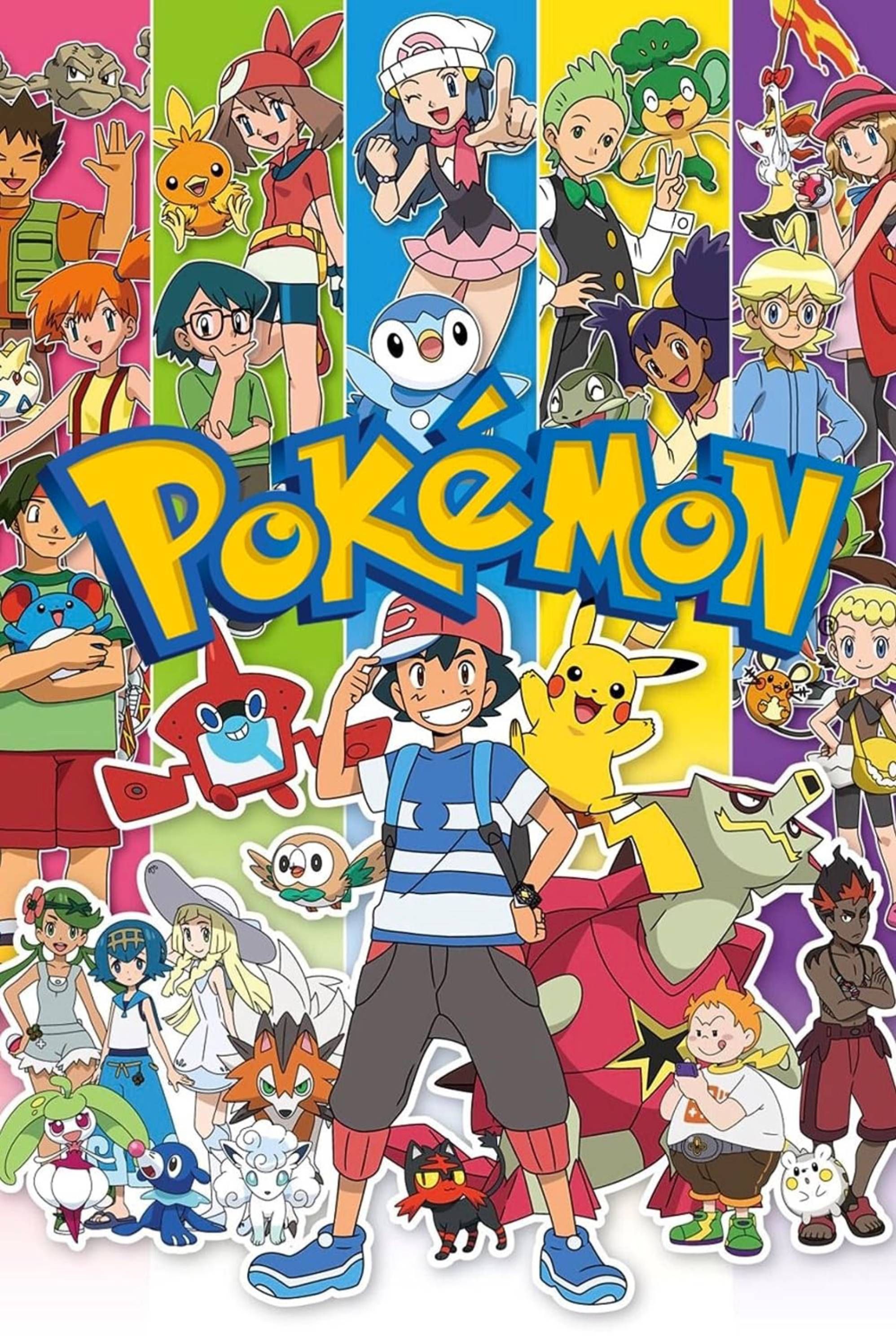
When Satoshi Tajiri sent Pocket Monsters Red and Green to Japanese retail shelves in February 1996, the names assigned to monsters, rivals, and trainers carried minimal corporate baggage. Players had five Japanese katakana characters to express themselves, while developers chose names grounded in botanical registers, playful onomatopoeia, and dry humor. Three decades later, the mechanics of identity within the franchise look radically different. As documented in coverage surrounding the franchise's landmark anniversary broadcasts via the Pokemon.com Report, naming has shifted from an uninhibited offline sandbox into a tightly controlled, globally synchronized intellectual property ecosystem.
What began as an intimate translation exercise has hardened into an enterprise managed by linguistic compliance committees, automated profanity scrubbers, and strict brand bibles. The transition from physical Game Boy cartridges to cloud-linked Nintendo Switch software stripped away the informal liberties players enjoyed during the late nineties. At the same time, the creative frameworks shaping human non-player characters (NPCs) and signature pocket monsters evolved from ad-hoc puns into elaborate cross-cultural metaphors.
📌 Quick Summary:
- The Regulatory Shift: Hardware memory limits once dictated character monikers, but modern online ecosystems enforce real-time, global string-matching algorithms that often flag benign regional names.
- The Creative Pivot: Early localization replaced Japanese cultural puns with punchy Western wordplay, whereas modern regional rosters rely on complex, pan-global botanical and mineralogical themes.
- The Modern Consequence: The freedom to assign irreverent, off-color monikers to rivals and traded partners has been replaced by cloud-level automated moderation across contemporary Switch and mobile platforms.
Memory Constraints and the Wild West of Generation 1 Localized Names
The Game Boy's hardware specifications imposed brutal discipline on early script translation. In the original Japanese code, strings allocated five characters for names, because five katakana glyphs can express substantial narrative information. English text strings required significantly more space to convey identical ideas. When Nintendo of America’s localization team tackled Red and Blue ahead of their September 1998 North American debut, memory constraints pushed them against severe storage boundaries.
Names could not exceed 7 to 10 characters across various user interface fields. That constraint forged the identity of Generation 1 localized names. The design team had to scrap direct phonetic mappings. Monsters received punchy compound titles that married appearance and natural elements: Hitmonchan and Hitmonlee emerged as localized tributes to Jackie Chan and Bruce Lee, replacing the Japanese tributes to boxer Hiroyuki Ebihara (Ebiwalar) and kickboxer Tadashi Sawamura (Sawamular).
Trainer monikers experienced identical pressures. The protagonist, known to Japanese audiences as Satoshi, named directly after creator Satoshi Tajiri, became Ash Ketchum in the West, establishing a phonetic hook to the brand's commercial tagline. His counterpart Shigeru, named after legendary designer Shigeru Miyamoto, turned into Gary Oak. Early rival default naming history shows that Game Freak provided simple, expressive presets on cartridges: Red, Ash, and Jack stood on one side; Blue, Gary, and John sat on the other.
Off-line cartridges had no internet connectivity, meaning players could label rivals whatever crude insult crossed their minds. The game’s code did not care. The narrative simply processed whatever string the player punched into the character grid, yielding famously profane dialogue boxes across millions of handheld screens.
From Botanical Puns to Culinary Registers: Evolution of NPC Name Translations
The philosophy guiding human NPC name translations has grown dramatically more complex across nine generations. In early Kanto and Johto titles, Gym leader etymology followed simple, direct elemental wordplay. Brock derived from rock; Misty tied to mist; Lt. Surge was a military rank affixed to electrical energy. Blaine evoked a blaze. The naming conventions were legible, accessible, and fast to parse for elementary schoolers reading tiny LCD screens under clip-on worm lights.
By the time the series ventured into Galar and Paldea, the linguistic matrix had matured into high-concept thematic systems. Paldea character naming motifs draw heavily on Mediterranean culinary terminology, herbs, and ingredients, matching the Iberian geography that underpins the region.
Consider Paldea’s Elite Four and instructional staff at the Naranja and Uva academies. Brassius references Brassica, the genus of plants including cabbages and mustards. Hassel, the Dragon-type specialist, draws his name from haselnuss, the German term for hazelnut. Arven directly references the wild herb arvense. Miriam, the academy nurse, borrows her name from miracle fruit, a berry known for altering taste receptors.
Even minor NPC name translations reflect sophisticated adaptation. In Japanese, casual trainers frequently share names with mundane wild plants, insects, or technical terminology. Localizers do not merely swap words; they reconstruct the character's social register. A schoolboy in Unova gets a name that feels distinctly like suburban North America, while an elderly sage in Sinnoh is given an archaism that honors Japanese regional speech patterns.
The Architecture of Censorship: Hardware Rules Across Three Decades
The technical boundary separating early handheld freedom from modern restrictions is best illustrated through the storage evolution of the physical cartridges and the subsequent rise of persistent online services.
| Console Generation | Character Limit | Filtering Mechanism | Trade Enforcement |
|---|---|---|---|
| Game Boy / Color (1996, 2000) | 7, 10 Characters | Zero native software filters | Unchecked via physical Link Cable |
| Game Boy Advance (2002, 2005) | 7, 10 Characters | Zero native software filters | Unchecked via Wireless Adapter / Cable |
| Nintendo DS (2006, 2012) | 7, 10 Characters | Primitive string match (Gen 5) | Global Trade System (GTS) trade bans |
| Nintendo 3DS (2013, 2017) | 12 Characters | Multi-language regex dictionary | Network-level rejection at input |
| Nintendo Switch (2018, 2026) | 12 Characters | Dynamic cloud-updated blacklist | System-wide lockouts across HOME & battles |
The transition point arrived in Generation 5 with Black and White on the Nintendo DS. Once creatures could move globally through the Global Trade System without physical tethering, Nintendo faced legal and cultural liability. An American child could receive an aggressively offensive nickname traded from an anonymous console thousands of miles away.
To address this, Game Freak integrated a multi-language regex filter. The algorithm, however, suffered from the infamous "Scunthorpe problem", a classic computer science failure where clean strings are flagged because they contain a sequence of letters matching a forbidden substring.
For years, the monster Cofagrigus could not be traded on the GTS under its default species name unless nicknamed by the trainer, because the internal letters triggered an English homophobic slur filter. Froslass ran into French vulgarity traps. Nosepass failed German profanity scans. Localizers had to scramble to issue firmware and software patches to prevent the game from censoring its own official library.
The Banned Nickname Filter List and Modern Cloud Moderation
By the release of Scarlet, Violet, and modern updates on the Nintendo Switch family of systems, Game Freak had divorced nickname filtering from local game code. Today, the banned nickname filter list operates via unified cloud services managed alongside Pokémon HOME and the Nintendo Network infrastructure.
The contemporary filter captures far more than overt vulgarity. It monitors political slogans, hate speech, references to narcotics, sexual innuendo, and alphanumeric homoglyphs, the practice of substituting numbers or Cyrillic characters for Latin letters to bypass censors (such as replacing "E" with "3").
The rules have also expanded into competitive play integrity. As tracked across seasonal competitive tournaments and mobile integrations like Pokémon GO, highlighted in the GO Battle League Memories in Motion competitive circuit, player trainer names and team rosters undergo stringent pre-screening. Entering an official championship series event with an ambiguous or suggestive nickname results in immediate disqualification or forced default renaming by tournament judges.
The scope of this multi-decade shift is cataloged in depth inside the Pokémon Deluxe Character Guide, which documents over three hundred pages of franchise history and character profiles. The compendium illustrates how standardized modern character identity has become. Every regional champion, gym assistant, and route-blocking hiker now adheres to strict international naming bibles managed by The Pokémon Company International in Bellevue, Washington, and Tokyo. The days of rogue localization deviations are dead.
Japanese vs English Pokémon Names: The Enduring Cultural Gap
Despite rigorous central oversight, a deep aesthetic divide remains between Japanese and English naming conventions. Japanese monster nomenclature frequently relies on direct ports of English loanwords or frank, descriptive labels that sound exotic to native Japanese speakers but juvenile when translated literally into English.
- Pikachu (ピカチュウ): Unchanged worldwide. It blends pikapika (the Japanese onomatopoeia for sparkling light) with chūchū (the sound of a mouse squeaking). The universal phonetics allowed the creature to serve as an international corporate ambassador without modification.
- Charizard (リザードン, Lizardon): The Japanese name straightforwardly affixes "don" (Spanish for lord, or the Greek suffix for tooth/dinosaur) to "lizard". English localizers turned it into Charizard, fusing "char" and "blizzard-like scale" to convey elemental wrath.
- Umbreon (ブラッキー, Blacky): Japanese developers favored direct, blunt visual description. English localizers rejected "Blacky" for obvious cultural and racial sensitivities, pivoting instead to Umbreon, derived from the Latin umbra (the dark inner part of a shadow).
- Greninja (ゲッコウガ, Gekkouga): The Japanese combines gekkō (moonlight) with kōga (a legendary ninja clan). English localizers balanced this by marrying the French word for frog (grenouille) with the English term ninja, preserving the stealth aesthetic while making the biological taxon obvious to Western audiences.
This linguistic division reveals the tension at the heart of localization. The Japanese team constructs names that rely on cadence and exotic Western phonemes. The Western localization wing has to deconstruct those names, strip away unintended cultural baggage, and rebuild them using Latin roots, Greek affixes, and clever portmanteaus.
Frequently Asked Questions (FAQ)
Q1: Why did Nintendo change Satoshi's name to Ash Ketchum in the West?
A1: Satoshi was named directly after franchise creator Satoshi Tajiri. For the Western launch in 1998, Nintendo of America localized the name to Ash, retaining the soft phonetic "sh" sound while integrating the franchise's English marketing tagline, "Gotta catch 'em all," into the surname Ketchum.
Q2: Can you still give your rival offensive names in modern Pokémon games?
A2: No. In recent generations, including Sword & Shield and Scarlet & Violet, rivals are distinct narrative characters with fixed, canonical identities (such as Hop, Bede, and Nemona). Players are no longer prompted to name their rivals at the start of the adventure, entirely removing the loophole that allowed profane names on early Game Boy hardware.
Q3: What causes the "Scunthorpe problem" in Pokémon name filters?
A3: The issue occurs when automated text filters search for exact vulgar substrings inside innocent words. Monsters like Cofagrigus and Bulbasaur historically triggered false positives on the Global Trade System because portions of their names matched banned words in English, German, or French dictionaries.
What Modern Moderation Means for the Series
The evolution of character naming in Pokémon mirrors the transformation of video games from self-contained plastic toys into persistent, internet-connected media properties. What worked inside an isolated Game Boy cartridge in 1996 cannot survive within a shared global space where millions of players trade, battle, and stream daily.
The loss of uninhibited player expression is clear. You can no longer slap an offbeat, crude nickname on a digital monster and send it into the wild. Yet the discipline demanded by global standards pushed localization into an art form. Translators no longer throw quick puns into dialogue boxes to meet arbitrary ROM size limits. They assemble intricate linguistic frameworks, mining European botany, global mineralogy, and regional dialects to ensure that characters feel rooted in their digital environments.
As the franchise steps deeper into modern multi-platform engines, the filter lists will inevitably grow longer and the algorithms will catch more nuances. The era of the anarchic, unmonitored playground has passed, replaced by an orderly, globally balanced corporate lexicon.
