Roblox Headless UGC Fact-Check: Can Creators Legally Sell Invisible Heads?
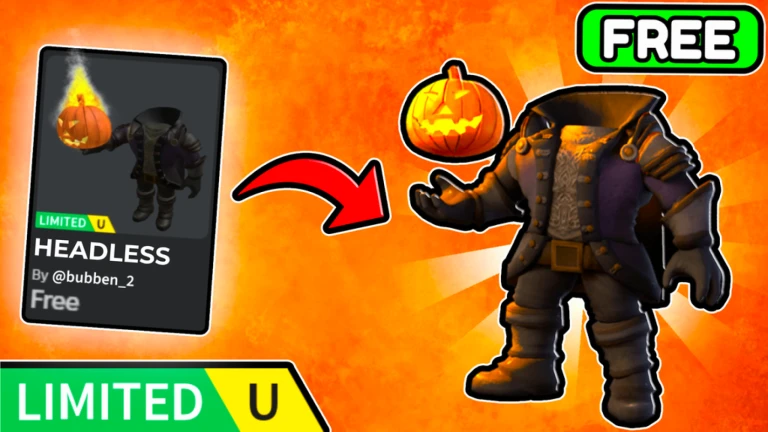
Every October, Roblox re-releases the iconic Headless Horseman package for 31,000 Robux, roughly $387 in real-world currency. For over a decade, this single cosmetic item has served as the ultimate flex across games like *Blox Fruits*, *Dress to Impress*, and *Murder Mystery 2*. Yet, inside the search bars of the Avatar Shop, players rarely hunt for the full costume. They want the invisible head. As tracking monitors like the Sportskeeda Report document rapid market shifts across the ecosystem, community-made workarounds have exploded. Independent developers constantly upload cheap headless alternatives for as little as 50 to 250 Robux, sparking a multi-million-dollar enforcement fight between digital fashion designers and platform moderators.
The core tension is both legal and financial. When independent creators upload dynamic heads engineered to disappear inside gameplay, they bypass Roblox's most lucrative artificial scarcity model. Are these items creative community innovations, technical exploits, or intellectual property violations? Examining the developer terms, creator guidelines, and the actual mechanics of the marketplace reveals why selling invisible cosmetics remains a direct violation of platform rules.
📌 Key Takeaways:
- The Direct Policy: Roblox explicitly forbids assets designed to mimic, duplicate, or circumvent premium first-party items, making invisible UGC heads clear policy violations.
- The Technical Method: Creators bypass detection using shrink-wrap meshes, microscopic dynamic heads, and layered clothing geometry rather than traditional alpha transparency.
- The Financial Reality: Uploaders face account termination and DevEx forfeiture, while buyers end up trapped in an endless cycle of asset purges and delayed platform refunds.
The 31,000 Robux Status Symbol and Marketplace Clones
The Headless Horseman first arrived in October 2013. Its signature prize, the completely transparent "Headless Head," immediately warped avatar aesthetics. Players realized that an absent head highlighted hair combos, hats, and high-end accessories far better than standard blocky or Rthro faces. As social spaces on the platform matured, the item transformed from a seasonal Halloween gag into digital couture.
That premium status created an enormous pricing gulf. Millions of younger players wanted the aesthetic, but spending hundreds of dollars on a virtual bundle was out of reach. When Roblox expanded the Creator Marketplace and rolled out dynamic heads, third-party modders seized the opportunity. By shrinking head meshes down to a fraction of a millimeter or hiding the geometry inside avatar torsos, designers flooded the Avatar Shop with items labeled "Clean Neck," "Invisible Brain," or "Void Head."
These assets generated tens of thousands of sales within hours of appearing. The economics were simple: a creator could price a fake headless cosmetic at 100 Robux, net several thousand dollars in profit over a single weekend, and cash out before automated sweeps caught up. What began as a scattered series of asset hacks quickly organized into a lucrative underground market.
How Creators Exploit the Invisible Head Glitch
Roblox does not allow fully transparent textures on basic head meshes. The upload portal routinely flags any skin file with 100% alpha transparency to prevent players from turning entirely invisible in competitive multiplayer games. To circumvent this, developers turned to geometry rather than texture tricks.
The initial workaround exploited dynamic heads, custom facial models designed for facial tracking and animations. If a creator flattened the 3D vertex cluster so the entire mesh collapsed into a microscopic dot, the game engine still registered the asset as a complete head, yet the human eye saw empty space. Another common method relied on a layered clothing bypass. By designing high-collar sweaters, neck warmers, or floating hair pieces that clipped through the shrunken mesh, the avatar appeared completely headless from all standard camera angles.
The engineering was undeniably clever, but it broke core avatar standards. Custom heads must adhere to strict bounding-box limits. They cannot collapse into the torso, shrink below standard proportions, or disrupt standard hitboxes. As these glitch meshes multiplied across social hubs, game developers began reporting broken camera behaviors and combat exploits, forcing platform engineers to intervene.
Roblox Marketplace Policy: Copyright vs. Asset Replication Rules
Does selling an invisible head violate United States copyright law? In a strict courtroom context, claiming exclusive intellectual property ownership over "the absence of a 3D model" is a difficult legal argument. Emptiness itself is not copyrightable. Yet inside the Roblox ecosystem, intellectual property law is only the second line of defense. The primary rulebook is the Roblox Marketplace policy.
The UGC creator guidelines explicitly state that developers cannot upload items that mimic, clone, or provide visual substitutes for exclusive Roblox-created assets. The rule exists specifically to protect platform revenue and limited-edition items. It covers everything from replica Valkyrie helms to imitation Dominus hoods.
| Cosmetic Option | Price Point | Platform Compliance | Enforcement Outcome |
|---|---|---|---|
| Official Headless Horseman | 31,000 Robux | Fully Compliant | Permanent account inventory |
| Dynamic Mini-Head UGC | 50, 250 Robux | Violates Asset Replication Terms | Asset deletion within 24, 72 hours |
| Layered Clothing Bypass Bundle | 75, 175 Robux | Violates Bounding-Box Limits | Moderation purge; bundle split |
| Neck-Choker Hair Illusion | 50, 85 Robux | Conditionally Compliant | Remains active if geometry is normal |
When an upload attempts to replicate the single functional selling point of the 31,000 Robux bundle, Avatar Shop moderation treats it as a duplicate asset bypass. The platform does not need to file a formal federal copyright claim against a 16-year-old 3D modeler. Under its Terms of Service, Roblox operates as a walled garden with absolute authority to delete any asset that devalues its official product catalog.
Avatar Bundle Moderation and the Robux Refund Cycle
The speed of enforcement has created a strange sub-economy of disposable fashion. Automated moderation scripts now scan newly uploaded avatar bundles for irregular mesh bounds, extreme skin-weight compression, and suspiciously small vertex densities. When an invisible head triggers these filters, it is marked as a banned marketplace asset and purged.
For buyers, this triggers the automated Robux refund policy. When an item in your inventory is deleted by moderation, Roblox dispatches an automated system message granting a credit refund. However, these refunds do not happen instantly. They typically take 3 to 14 days to process. In some cases, accounts that repeatedly buy known exploit items have experienced delays or temporary restrictions on their marketplace accounts.
The process resembles a low-stakes shell game. Players spend 75 Robux on an invisible head, wear it across popular servers for two days, watch it vanish from their inventory on Tuesday, and wait for a platform message to return their balance by the following week. Then, they simply buy the next clone uploaded under a different throwaway creator group.
Creator Bans, DMCA Disputes, and Financial Penalties
While buyers risk minor inconvenience, uploaders face severe financial consequences. In 2024, Roblox introduced stricter onboarding criteria and upfront listing fees for UGC bundles. This change was designed specifically to curb burner accounts from spamming fake headless items. Even so, rogue creators still find ways to game the system.
When an account is flagged for uploading asset clones, moderation does not stop at deleting the item. The creator faces immediate account strikes, suspension from the Developer Exchange (DevEx) program, and permanent asset confiscation. If an uploader accumulated 500,000 Robux selling a trending fake headless mesh over a weekend, those earnings are frozen instantly upon asset takedown, blocking real-world cash out.
Furthermore, Roblox has increasingly used formal DMCA takedown frameworks against asset rings that systematically rip first-party meshes or automate mesh distortion. While hobbyist creators argue that making an empty mesh is fair game, Roblox's legal standing as a closed digital platform gives it complete jurisdiction over what can and cannot be sold inside its virtual marketplace.
Frequently Asked Questions (FAQ)
Q1: Can my Roblox account get banned just for buying a cheap headless head?
A1: No. Standard players who buy fake headless assets are not banned simply for purchasing them. If the item violates policy, Roblox deletes the mesh from your inventory and issues an automated Robux credit refund through your system messages. However, intentionally exploiting inventory glitches to bypass moderation repeatedly can lead to marketplace warnings.
Q2: Why are some fake headless accessories still allowed in the Avatar Shop?
A2: Items that remain active are usually optical illusions rather than true invisible meshes. High-collar scarves, hollow animal heads, or specific hair accessories that cover the standard default head do not violate bounding-box rules. As long as the actual 3D head mesh remains within standard size requirements, the item complies with UGC guidelines.
Q3: Does Roblox ever plan to reduce the price of the official Headless Horseman?
A3: There is no indication that Roblox will lower the price. The 31,000 Robux price point anchors the high-end virtual economy and generates millions in revenue every October. Lowering the price or officially permitting cheap UGC clones would destroy the artificial scarcity that makes the asset valuable.
The Battle Over Digital Scarcity in Roblox's Open Economy
The persistent cat-and-mouse game over headless UGC highlights a fundamental contradiction in Roblox's platform philosophy. On one hand, corporate executives champion a decentralized creator economy where independent developers can build, market, and monetize anything their imaginations produce. On the other hand, the company's financial model still relies heavily on defending legacy artificial scarcity.
As dynamic heads and procedural avatar creation tools become more accessible, the barrier between an authorized cosmetic and an unauthorized hack will continue to blur. Modders will develop new ways to manipulate vertex visibility, and platform moderators will update their scanning algorithms to close those loopholes. Until Roblox rethinks how it values legacy status items, the invisible head will remain the marketplace's most heavily contested piece of digital real estate.
