Spotting the Hidden Quick: Visual Clues for Trimming Dog Black Claws Safely
Dark dog claws strike dread into owners. Unlike translucent white nails where the pink blood vessel shines through under ambient light, pigmented claws obscure the canine vascular bed entirely. Cutting blindly leads to sudden yelps, fractured trust, and profuse bleeding across carpets. Yet, as highlighted in comprehensive equipment testing by pet health monitors like the Dogster Report on modern clippers, managing dark claws does not require guesswork or blind luck.
Veterinary technicians and Fear Free certified groomers read distinct anatomical indicators inside the horn material itself. By observing micro-changes on the cut surface, moving deliberately from dry dead horn to a distinct internal focal point, you can trim black claws down to their optimal biomechanical length without causing pain or drawing blood.
📌 Quick Summary:
- Visual Milestones: A dry, flake-like cross-section turns into a chalky white center, which immediately precedes the shiny black or dark gray pulp spot marking the live tissue border.
- The Shaving Protocol: Never remove large chunks at once. Taking paper-thin, one-millimeter slivers parallel to the natural slope avoids sudden vascular breaches.
- Prepared Contingencies: Always uncap styptic powder or keep a slurry of cornstarch first aid within arm's reach before touching the paw.
Understanding Dog Paw Anatomy and the Hidden Vascular Bed
A dog's claw consists of two primary layers: an exterior protective sheath of hard keratin called the ungual wall, and an interior living core known as the dog nail quick. This inner core contains sensitive nerve branches and the canine vascular bed, which supplies nutrients directly from the distal phalanx bone of the toe. Severing this tissue produces sharp pain followed by persistent, high-volume capillary bleeding.
In light-colored claws, melanin absence leaves the keratin transparent. In black claws, dense eumelanin deposits turn the structural horn opaque. While the exterior looks uniform, internal geometry remains consistent across all breeds. The vascular bed does not extend all the way to the tip of an overgrown nail. Instead, it tapers to an apex, leaving a hollowed, dead horn projection at the claw's distal end.
Neglecting these nails alters a dog's posture. When overlong claws touch flat ground, they drive reverse torque into the pastern joints, forcing compensatory weight shifts that trigger chronic osteoarthritis in senior canines. Routine maintenance keeps the internal blood vessels short because the quick naturally recedes when dead horn tissue is consistently pared back.
Reading the Cross-Section: From Chalky White Center to the Pulp Groove
Safe trimming of dark nails relies on inspecting the cut surface after every slice. Instead of clipping from side to side, you view the claw head-on. The internal tissue changes character three times before the blood supply begins.
The first slice through the tip reveals a dry, grayish-white, fibrous interior resembling chalky cardboard. This dead keratin contains zero nerves. Make another millimeter cut. The outer dark ring will frame a distinctive chalky white center. This solid, homogeneous pale disc indicates that you have removed the dead apex and are nearing living structures.
Make your next cut fractions of a millimeter thick. The dry white field will show a moist, dark gray or black circular spot directly in the center. Groomers refer to this as the pulp groove or the fleshy pre-quick ring. The texture shifts from brittle horn to a rubbery, jelly-like disc. Stop cutting immediately. This glistening dot is the outer protective membrane enclosing the vascular bed. Taking another slice will breach the capillary wall.
Diagnostic Lighting and the Underside Notch Method
Holding a strong flashlight directly behind a pitch-black claw rarely reveals the internal vessel because eumelanin blocks standard light spectra. Instead, reposition the light source to examine the ventral underside of the nail.
Turn the dog's paw upward so you are looking directly at the claw's underside. Towards the tip, you will see a defined structural groove where the hard lateral walls curve downward without fully joining. This hollow shelf is completely free of living tissue. Follow this groove toward the paw pad. You will see where the groove terminates and the nail swells into a thicker, rounded, solid underside.
That expansion point marks the exact ventral emergence of the quick. You can safely remove the pointed hook extending beyond that transition point. Angle your clippers at 45 degrees, matching the natural slant of the paw floor, to shave down dead horn while clearing the vital core underneath.
Selecting the Hardware: Cutters, Rotary Stones, and Safety Specs
Tool selection directly governs claw integrity. Dull blades apply crush pressure across the ungual wall, fracturing brittle horn layers inward against the sensitive vascular core before the blade finishes cutting. High-grade tools slice through cleanly without pinching.
| Tool Category | Primary Mechanism | Precision Margin | Best Used For |
|---|---|---|---|
| Heavy Duty Scissor Clippers | Bypass dual-blade shear action | 1.0 mm slices | Bulk reduction of thick, overgrown horns |
| Electric Nail Grinder | Rotary diamond-drum abrasion (8,000, 12,000 RPM) | 0.2 mm micro-layers | High-anxiety dogs, smooth edges, precision stopping |
| Guillotine Clippers | Single-blade vertical drop channel | 1.5 mm slices | Small breeds; avoid on hard, thick, dense nails |
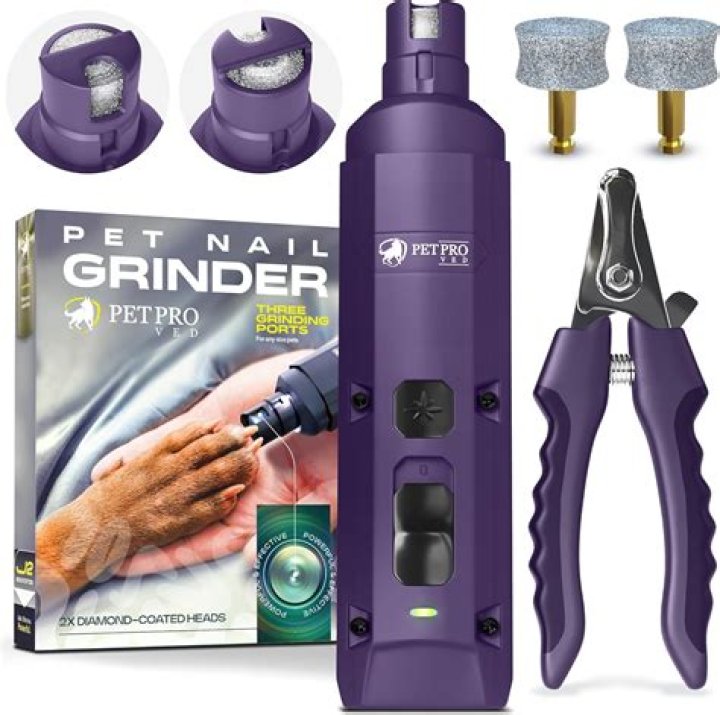
For dogs with thick, dark claws, bypass style heavy duty clippers made from hardened 3.5 mm stainless steel deliver the cleanest cuts. In tests by veterinary panels and evaluations published by Wirecutter, an electric nail grinder provides the safest option for dark nails. A rotary grinding stone removes fractions of a millimeter at a time, allowing you to watch the cross-section shift in real-time. Keep contact bursts under 3 seconds to prevent thermal friction from heating up the live nerve inside.
Executing the Gradual Shaving Method and Dewclaw Trimming
Attempting to remove the full excess claw in a single snap invites injury. Instead, use the gradual shaving method. Seat your dog in a well-lit area, stabilizing individual toes between your thumb and forefinger. This isolates the digit and prevents sudden movement.
Slice slivers at a 45-degree angle off the bottom edge, then touch up the top edge. This creates a rounded tip rather than a blunt cliff. Check the face of the cut after each touch. Once that moist dark circle emerges in the middle of the chalky white field, stop.
Pay close attention to dewclaw trimming. Located higher on the inner leg, dewclaws do not touch the ground and experience zero abrasive wear. As a result, dewclaws grow faster and curl inward toward the carpal pad. Left alone, an overgrown dewclaw loops into a complete circle, piercing the leg tissue and causing severe infections. Because dewclaws sit at an awkward angle, carefully stabilize the digit against the canine leg bone before shaving down the tip.
Emergency Hemostasis: Immediate Protocols to Stop Nail Bleeding
Even seasoned veterinary surgeons occasionally nick a quick. When a sudden jerk causes a cut, panic is your worst enemy. Dogs read cortisol spikes instantly, associating paw maintenance with trauma.
Press your thumb firmly against the tip of the claw to slow blood flow while reaching for your hemostatic agent. The gold standard treatment is commercial styptic powder containing active ferric subsulfate. This compound acts as a microvascular vasoconstrictor, coagulating blood proteins immediately to seal the exposed vessel.
Pour a small amount of powder directly into the container cap. Dip the bleeding nail directly into the dry powder with moderate upward pressure for 15 to 30 seconds. Avoid wiping away blood continuously, as wiping strips away forming fibrin mesh. If commercial products are unavailable, use cornstarch first aid mixed with a drop of cold water to form a thick paste. Press the paste firmly onto the tip, packing the cavity until bleeding ceases. Keep your dog off slick hardwood and restrain them from running for 20 minutes to ensure the clot stabilizes.
Frequently Asked Questions (FAQ)
Q1: How do I shorten the quick if my dog's black nails are severely overgrown?
A1: You cannot push a quick back in one aggressive trim. File or shave the excess horn down to the very edge of the pulp groove once every 7 to 10 days. Constant exposure to air and gentle pressure triggers biological regression, causing the canine vascular bed to withdraw roughly one millimeter per week.
Q2: Why does my dog jerk their foot away before I even cut?
A2: Dogs possess sensitive mechanoreceptors around the digital pads. Squeezing the pad too hard triggers a spinal withdrawal reflex. Firmly anchor the individual nail at its base rather than pinching the pad, and use high-value food rewards to condition their tolerance over time.
Q3: Is an electric nail grinder better than clippers for dense black nails?
A3: Yes. Grinders eliminate blade-crush pressure and strip away microns of horn per second. This fine control allows you to monitor the cut surface and stop the moment the chalky white center shifts toward the dark pulp spot, reducing accidental nicks by over 80 percent.
Building a Consistent Paw Maintenance Routine
Regular maintenance is far easier than fixing neglected, overgrown claws. Make claw care part of your standard grooming routine every two weeks. Regular checks prevent long vascular extensions and eliminate the anxiety that comes with sudden, heavy cuts.
Inspect the underside of each nail, watch for the shift from dry chalk to the dark center, and use quality tools with fresh blades. When handled methodically, trimming dark dog nails becomes a calm, safe part of keeping your dog comfortable and mobile.
