St. Patrick’s Cathedral and the New York Archdiocese: Sorting Fact from Fiction on Current Legal Deals
St. Patrick's Cathedral and the New York Archdiocese: Inside Midtown's Financial Realities
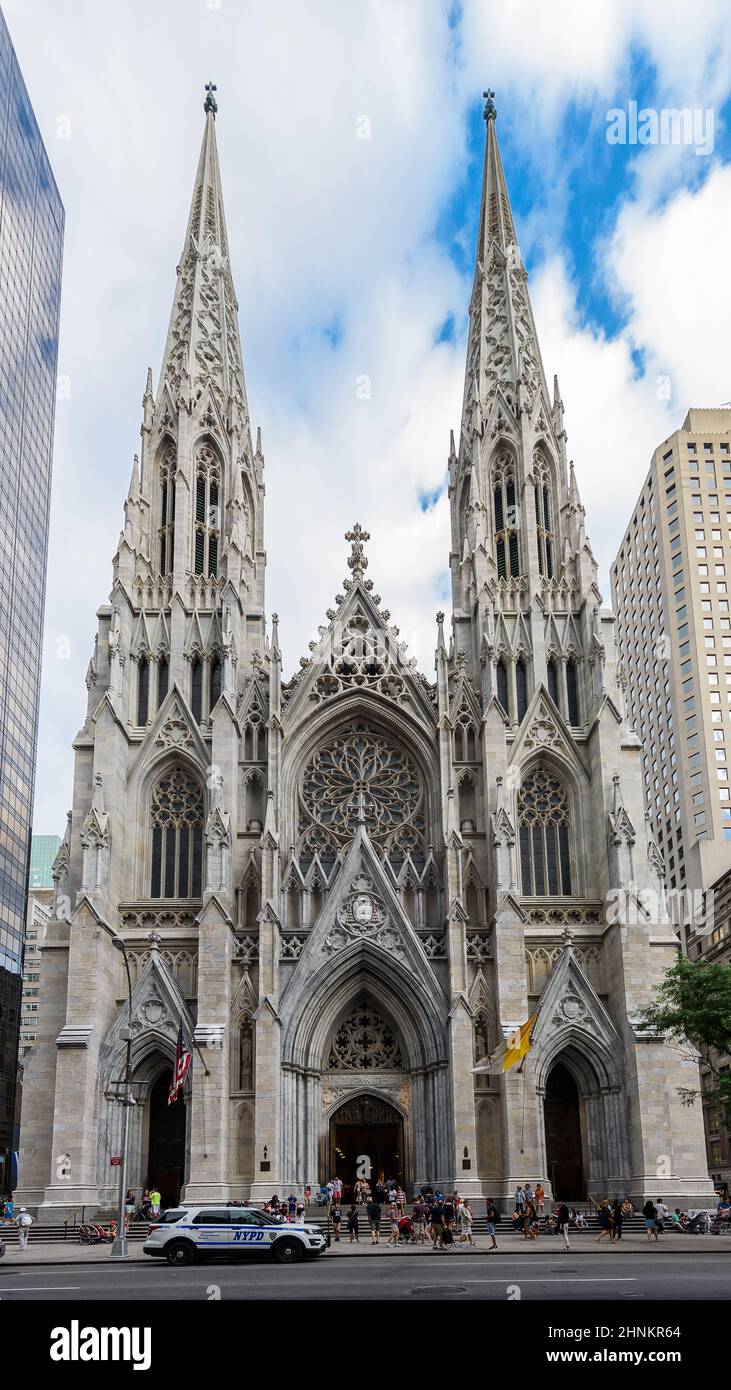
Every March, Midtown Manhattan becomes an unbroken ribbon of kelly green as hundreds of thousands gather along the Fifth Avenue parade route to mark the city's signature holiday. Across from Rockefeller Center, the marble twin spires of St. Patrick’s Cathedral command the intersection of 50th Street and Fifth Avenue, functioning simultaneously as a global religious center, an architectural icon, and the central administrative seat for the Roman Catholic Archdiocese of New York. Yet behind the grand Neo-Gothic facade and the surge of visitors mapping out local itineraries highlighted in the recent Yelp Report on Manhattan celebrations, the archdiocese faces complex financial pressures and ongoing legal restructurings that continue to spur rumors about the landmark's daily operations.
📌 Key Takeaways:
- Operational Status: St. Patrick’s Cathedral remains fully operational, solvent, and protected under strict New York State landmark laws, unaffected by parish-level restructuring or broader archdiocesan liabilities.
- Financial Firewalls: The Archdiocese of New York operates under legally distinct corporate entities; the cathedral’s maintenance endowments and operating funds are legally walled off from external liability settlements.
- Midtown Dynamics: Despite persistent rumors regarding property liquidation, daily masses, the official cathedral tour schedule, and the annual St. Patrick's Day celebrations proceed entirely uninterrupted along Fifth Avenue.
The Fifth Avenue Anchor Amid Midtown's Shifting Real Estate
Midtown Manhattan real estate ranks among the most valuable commercial corridors on earth. St. Patrick’s Cathedral occupies a full city block bordered by Fifth Avenue, Madison Avenue, 50th Street, and 51st Street. Completed in 1879 under the supervision of architect James Renwick Jr., the structure stands as an engineering feat of Tuckahoe marble, European stained glass, and soaring rib vaults.
Because the cathedral stands directly across from Rockefeller Center, commercial developers and tourists alike often speculate on the property's sheer paper value. Estimates value the underlying land alone at north of $1.2 billion. However, speculative chatter about real estate sales ignores basic legal realities. Designated an official New York City landmark in 1966 and a National Historic Landmark in 1976, the property cannot be altered, subdivided, or sold off for private development. Even its air rights, a subject of repeated municipal zoning debates over the past decade, are subject to strict East Midtown governing statutes that direct development revenues back into the historic architecture's permanent preservation.
Untangling Archdiocesan Settlement Proposals and Asset Rings
The Archdiocese of New York, which oversees more than 280 individual parishes across Manhattan, the Bronx, Staten Island, and seven northern counties, has navigated severe financial headwinds over the past five years. Following hundreds of claims filed under New York's Child Victims Act, archdiocesan leadership entered court-supervised mediation to hammer out global settlement terms. These high-stakes negotiations produced wild rumors across social channels: that the archdiocese was considering liquidating flagship real estate, including its central cathedral.
Those rumors mistake corporate identity for physical holdings. In Catholic canon law and New York Religious Corporations Law, individual parishes and cathedral entities operate as independent legal corporations. St. Patrick’s Cathedral is incorporated separately from the central administrative offices of the archdiocese located at 1011 First Avenue. Consequently, liabilities incurred by the archdiocese cannot simply be collected by seizing the physical assets of separately incorporated parish trusts.
Court filings show the archdiocese funded previous settlement programs, including the Independent Reconciliation and Compensation Program, which paid out more than $400 million to hundreds of claimants, through a combination of long-term commercial loans, insurance coverage, and the strategic sale of non-parish commercial properties. Administrative buildings, suburban plots, and closed institutional campuses bore the brunt of those sales, not the historic landmarks anchoring Fifth Avenue.
| Category | Archdiocese Central Administration | St. Patrick’s Cathedral Entity |
|---|---|---|
| Legal Structure | Central administrative non-profit entity | Separate 501(c)(3) religious corporation |
| Primary Revenue Streams | Parish assessments, donor appeals, investment portfolio | Visitor donations, gift shop, private endowments, tour tickets |
| Restoration Capital | Excluded from general operations budget | Dedicated preservation capital campaign ($177M raised 2012, 2015) |
| Legal Liability Exposure | Direct subject to ongoing CVA mediation and settlements | Protected by asset ring-fencing under religious trust doctrine |
Preservation Budgets, Endowments, and Daily Operations
The cathedral’s day-to-day balance sheet operates separately from parish balance sheets in Upper Manhattan or Staten Island. A monumental multi-year restoration concluded in late 2015 carried a total price tag of approximately $177 million. That massive undertaking cleaned exterior stone, replaced cracked marble spires, restored interior plasterwork, and installed a deep-well geothermal heating and cooling system under the brick pavers.
Funding for that project did not draw down from parish operational contributions. Instead, the archdiocese established a dedicated, restricted capital campaign funded by major philanthropic donors, corporate trusts, and private foundations specifically earmarking contributions for historic preservation. Under New York non-profit law, funds donated to a restricted endowment cannot be diverted to settle legal claims or balance unrelated operational shortfalls.
Daily foot traffic sustains operational expenses. More than 5 million people walk through the heavy bronze doors annually. While admission to the cathedral remains completely free for worship, optional self-guided audio tours, official guided group visits, and the cathedral gift shop generate steady cash flow that covers security, facility maintenance, and electrical costs.
The Cultural Nexus: Parade Day and East Midtown Heritage
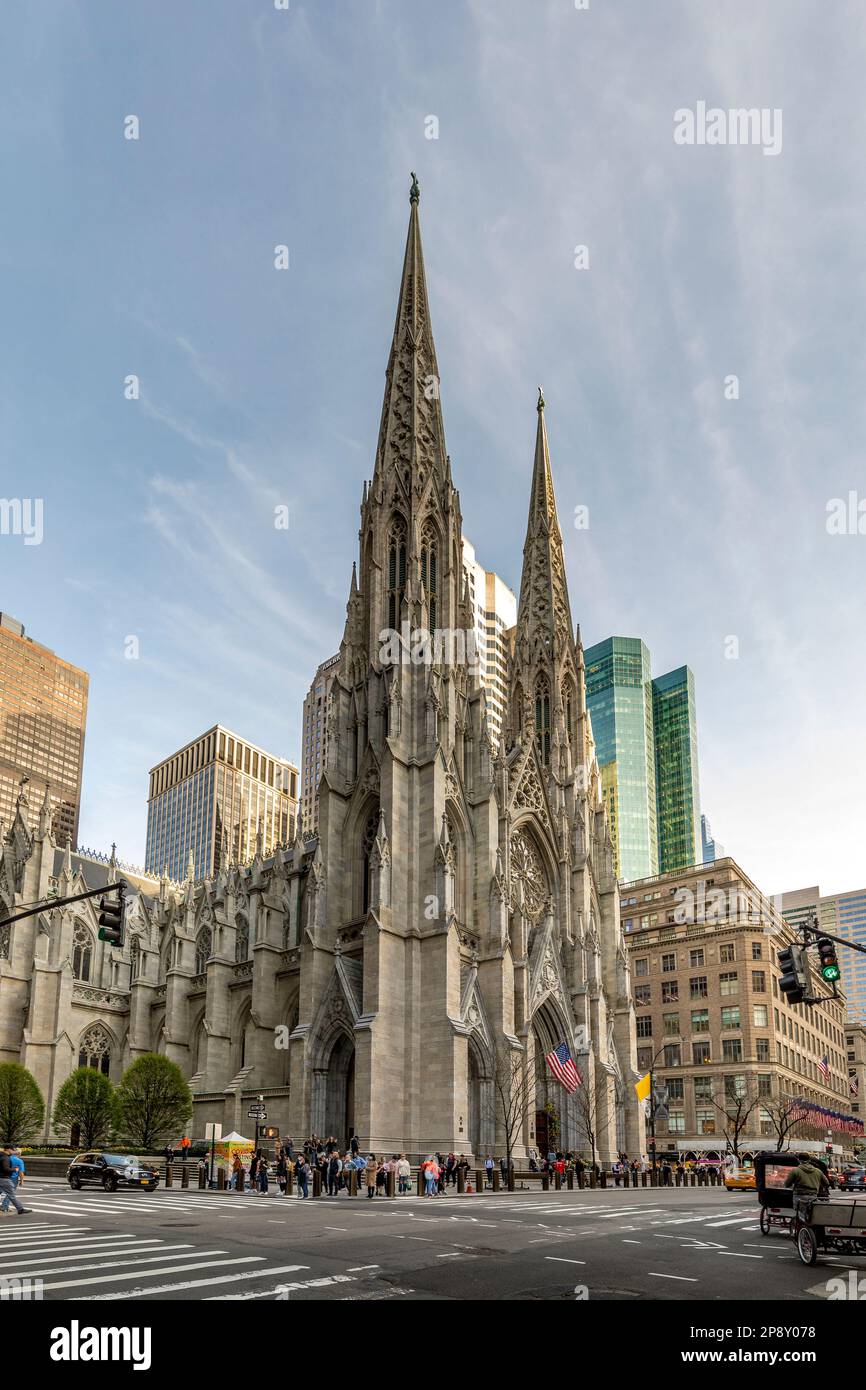
Beyond its legal and administrative structure, St. Patrick’s Cathedral serves as the symbolic heartbeat for New York’s Irish diaspora. The relationship crystallizes every March 17th. The New York City St. Patrick's Day Parade, the oldest civilian parade in the world, dating back to 1762, runs north up Fifth Avenue from 44th Street to 79th Street, passing directly in front of the cathedral steps.
Parade day begins not with bagpipes, but with an 8:30 AM mass celebrated inside the packed nave, attended by civic leaders, military honor guards, and foreign dignitaries. By mid-morning, the steps become the parade’s official viewing center. Archbishops and city officials review thousands of marching members of the Fighting 69th, pipe and drum bands, and cultural societies.
The influx creates a massive ripple across Midtown. An East Midtown walking tour during holiday week links ecclesiastical history with the city's historic hospitality culture. Within walking distance of the cathedral, Irish heritage pubs such as The Perfect Pint on 45th, Connolly’s on 47th, and Rosie O’Grady’s legacy establishments serve tens of thousands of visitors running independent local pub crawl itineraries. This seasonal crush provides a critical economic windfall for Midtown hospitality, which relies on the cathedral's enduring draw as a cultural cornerstone.
Evaluating the Cathedral's Real-World Access and Visitor Experience
Visiting St. Patrick's Cathedral requires balancing its role as a living house of worship with its status as one of the busiest New York City landmarks.
For casual travelers and architecture enthusiasts, planning ahead makes the difference between an inspiring visit and a frustrating squeeze. Weekday mornings between 9:00 AM and 11:00 AM offer the quietest access. Sunlight streams through the 330-foot clear-span nave, and the acoustics allow visitors to appreciate the cathedral's 7,855-pipe organ without the midday din.
Tourists seeking structured architectural insights should consult the cathedral tour schedule online. The official audio tour, narrated by Cardinal Timothy Dolan and local architectural historians, costs $25 and provides rich context on the Louis Comfort Tiffany altars and French stained-glass medallions. For budget travelers, self-guided access remains completely unrestricted during non-mass hours; visitors can walk the perimeter chapels, admire the Pieta sculpted by William Ordway Partridge, and view the crypt where former archbishops are entombed beneath the high altar at zero charge.
Visitors seeking total quiet should reconsider Sunday afternoons or mid-day holy days. Security checkpoints at both the Fifth Avenue entrance and the Madison Avenue Lady Chapel entrance require bag screenings that can back up onto the sidewalk during peak hours, particularly around the Christmas and St. Patrick's Day celebrations.
Frequently Asked Questions (FAQ)
Q1: Is St. Patrick’s Cathedral in danger of closing or being sold due to archdiocese lawsuits?
A1: No. The cathedral is a legally distinct non-profit corporation, an interior and exterior New York City landmark, and a registered National Historic Landmark. State laws and historic landmark designations prevent the property from being sold, repurposed, or liquidated to settle legal claims.
Q2: How much does it cost to visit St. Patrick's Cathedral?
A2: Entry to the cathedral for personal prayer, contemplation, or independent viewing is completely free. Visitors wishing to take the self-guided architectural audio tour or book a private docent-led group tour pay between $20 and $25, which funds historical preservation programs.
Q3: Can visitors attend the annual St. Patrick's Day Mass at the cathedral?
A3: Because of extreme demand and security protocols along the Fifth Avenue parade route, the annual March 17th morning mass requires advance tickets distributed via lottery through the cathedral's parish office. The cathedral does, however, stream the liturgy live, and the steps remain a central viewing landmark along the parade route.
The Road Ahead for St. Patrick's and Midtown in 2026
The Archdiocese of New York will continue to navigate the financial settlements emerging from historic legal claims, likely requiring further consolidation among outer-borough parishes and sales of non-essential administrative real estate. But the structural firewall separating individual landmark foundations from diocesan debt pools protects the core cathedral.
St. Patrick’s Cathedral remains what it was engineered to be: an unshakable public presence in the heart of Manhattan. As Fifth Avenue evolves with luxury towers, corporate retail flagships, and changing pedestrian flows, the cathedral continues to operate normally, holding daily services, opening its doors to millions of international pilgrims, and serving as the focal point for New York's historic traditions.
