Tested Palworld Storage Blueprints: Proven Container Layouts That Eliminate Clutter
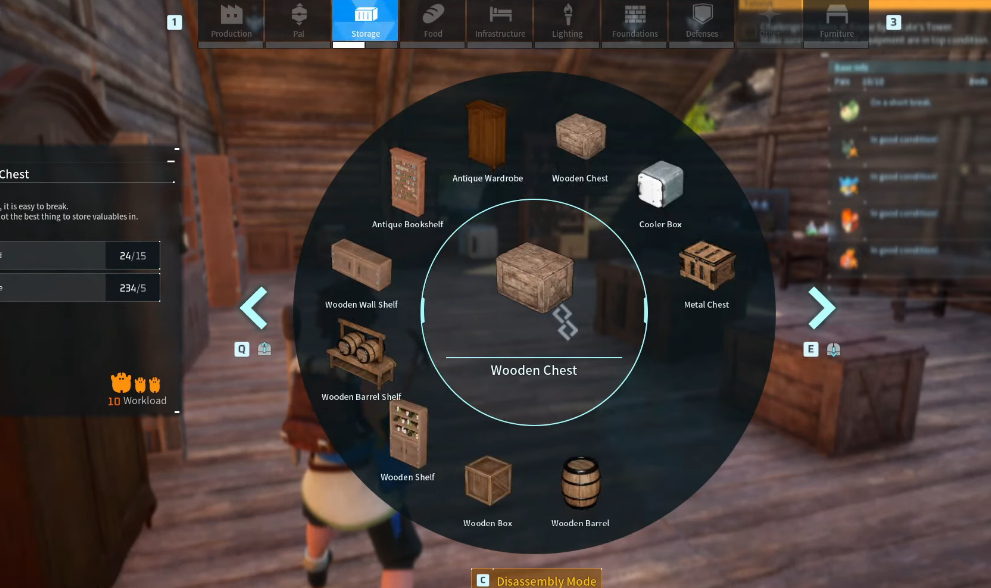
Base clutter remains one of the fastest ways to stall progression across the Palpagos Islands. Unsorted lumber litters production yards, overburdened characters crawl across work floors, and transport Pals freeze in looping pathing animations when containers sit outside their navigational geometry. With structural updates and sorting systems detailed in recent coverage like the IGN Report on Palworld's release milestones, warehouse efficiency is no longer an afterthought. It is the operating engine of any endgame assembly line.
Messy bases bleed productive hours. When Pals spend three-quarters of their shift dragging stone three paces at a time to an arbitrary wooden crate on a high terrace, smelters starve and weapon production halts. Establishing clean, functional storage requires strict container positioning, ruthless inventory filtering, and blueprints built directly around AI path logic.
📌 Key Takeaways:
- Container Hierarchy: Dropping small wooden chests creates navigational bottlenecks, while standardized refined metal chest hubs cut worker travel distance by roughly 60%.
- The Pal Box Anchor: Placing primary logistics chests within arm's reach of the Pal Box hub completely sidesteps character encumbrance management penalties during fast travel.
- Granular Sorting: Built-in item sorting filters prevent autonomous transport workers from contaminating production runs with extraneous drops like seeds, wool, or bone.
The Mechanics Behind Broken Base Logistics
Every base operates inside a fixed blue boundary circle, defining your base radius layout. Transporting Pals do not think ahead; their routine follows simple, reactive code. When an item hits the ground at a logging camp, an idle transport Pal detects the dropped entity, checks for the nearest valid storage container with an open slot or matching stack, plots an A* navigational vector, and walks toward it.
If that container sits atop an unsupported staircase or behind awkward clutter, the AI recalculates repeatedly. The Pal drops the material, picks it back up, loops in circles, and eventually resets at the Pal Box with an idle status warning.
A single poorly placed wooden box disrupts the entire automated crafting flow. Transport Pals always target the closest viable crate rather than the most sensible one. When miners toss thousands of raw metal chunks into a decorative container tucked beside an egg incubator, your smelters stand empty on the opposite edge of camp.
Eliminating this friction requires designing your compound around line of sight. Pals move items fastest across flat surfaces without vertical elevation changes, narrow doorframes, or uneven exterior rocks.
Pal Box Proximity and the Fast-Travel Drop Point
Your Pal Box serves as both a teleporter and a worker dispensary. It also creates a severe vulnerability: arriving with thousands of pounds of mined materials instantly caps your character speed to a crawl. Overcoming this requires building your main distribution point within instant reach of the spawn point.
Mounting a refined metal chest immediately adjacent to the Pal Box terminal eliminates the problem entirely. When you teleport into base carrying 5,000 weight of raw ore, you should not need to grapple-hook across a courtyard. You must be able to turn your camera, interact with the container without taking a single step, and stash the entire haul directly into the base network.
This hub functions as an airlock. You offload raw building components, schematics, and high-value drops right at the threshold. From there, local logistical workers clear materials into specialized, filtered bins, keeping production moving without tying up your personal inventory.
Chest Capacities and Blueprint Metrics Compared
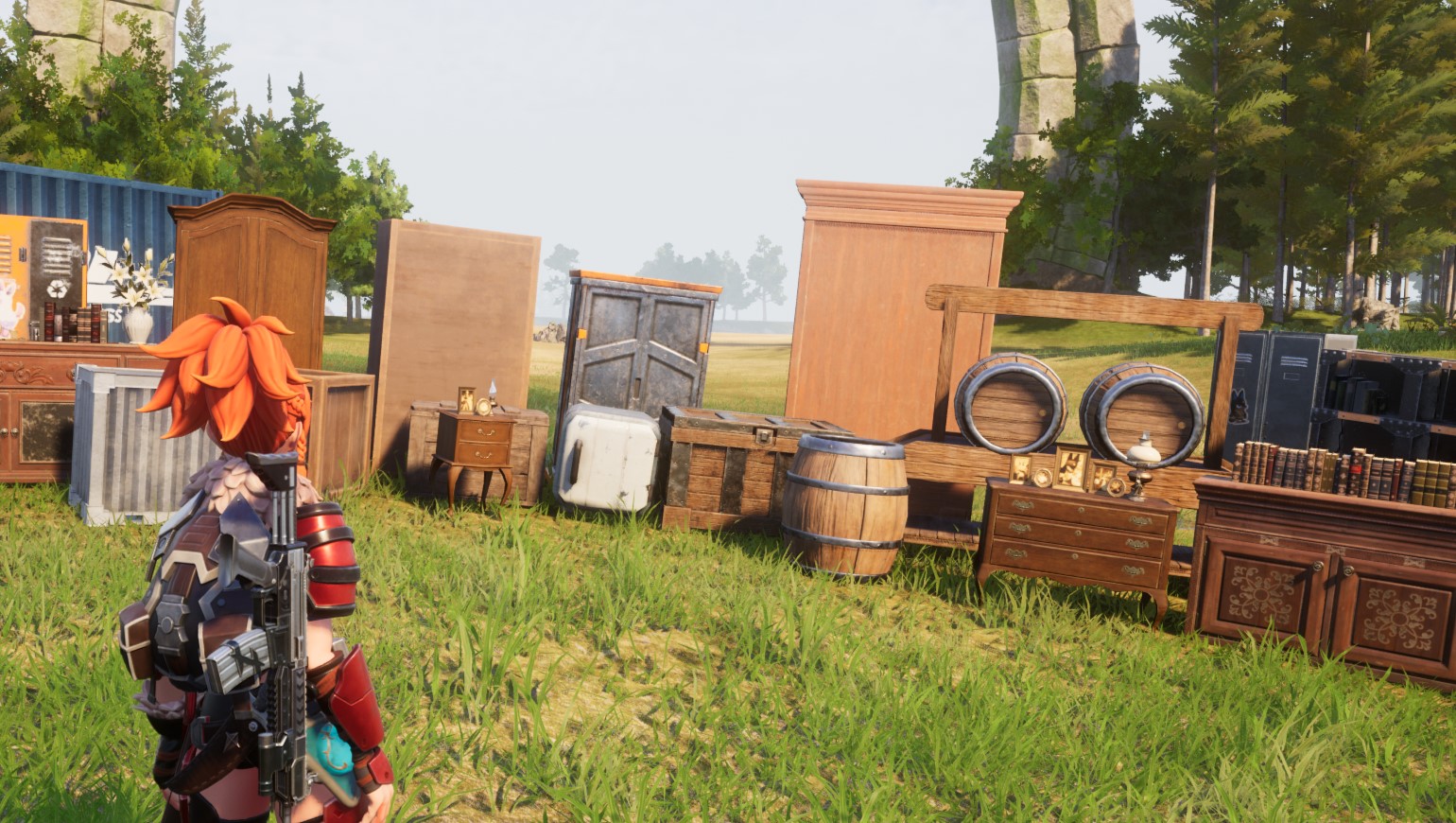
Choosing the correct container dictates both footprint size and worker path clearings. Dropping dozens of starter crates generates endless collision hurdles for larger Pals such as Wumpo Botan or Mossanda, whereas higher-tier infrastructure condenses storage volume into compact spaces.
| Container Type | Storage Capacity | Footprint Size | Optimal Strategic Placement |
|---|---|---|---|
| Wooden Chest | 16 Slots | Small (1x0.5 grid) | Early game only; dismantle by level 20 to avoid path snags. |
| Metal Chest | 32 Slots | Medium (1x1 grid) | Workbenches, weapon benches, and satellite farming outposts. |
| Refined Metal Chest | 40 Slots | Medium (1x1 grid) | Central workshops, furnace clusters, and main Pal Box drop hubs. |
| Shipping Container | 40 Slots | Massive (3x2 grid) | Peripheral bulk dumping zones; poor for tight interior factory floors. |
| Cooler Box / Refrigerator | 10, 25 Slots | Small to Medium | Kitchen zones, ranches, and berry plantations to stop decay. |
While the shipping container blueprint offers massive durability and an industrial aesthetic, its actual storage container capacity matches that of the far smaller refined metal chest. Using shipping containers inside production rooms chokes floor plans and ruins worker routes. Save them for perimeter decoration or deep-yard bulk overflow.
Configuring Item Filters to Stop Worker Chaos
The native item sorting filters let players toggle categorical permissions on individual containers. Leaving every box open to all item classes causes hauling Pals to dump lettuce into weapon crates, gunpowder into farm bins, and pal fluids next to ranches.
Lock down your containers through a strict four-zone filter regimen:
- Raw Extraction Zones: Place two refined chests directly between your ore and wood stockpiles. Configure the filter checkmarks strictly for raw materials: Stone, Wood, Ore, Coal, Sulfur, and Quartz. Turn off all equipment, food, and monster drops. Workers dump raw materials within two strides of the mining pit, keeping haul cycles under three seconds.
- Ranch and Farm Collection: Place a dedicated crate right at the gate of the ranch. Filter it exclusively for eggs, milk, wool, honey, and leather. If transport Pals have to walk across the base radius to deposit wool, they spend their day traveling instead of harvesting fresh ground drops.
- Foundry and Assembly Hubs: Set chests immediately between your high-tier furnaces and assembly lines. Enable only intermediate craft materials: Ingot, Refined Ingot, Pal Metal Ingot, Circuit Boards, Carbon Fiber, and Cement. Craftsmen pull directly from these boxes without checking distant perimeter zones.
- The Armory and Schematics Vault: Place an isolated container on an elevated platform accessible only by ladder or player jump. Turn off every automatic hauling category. This ensures Pals never dump loose arrows, damaged armor, or valuable legendary schematics into transit bins.
Thermal Management for Food Preservation
Perishable agricultural yields require dedicated logistical rules. Food items rot on internal count timers. Leaving food in open chests or letting transport Pals drop crops onto regular storage tables burns valuable nutrition and medicine stock.
Placing a dedicated cooler box refrigeration unit or powered refrigerator adjacent to your plantations ensures cooking ingredients don't vanish. The cooler requires a dedicated cooling Pal (such as Vanwyrm Cryst or Frostallion) on assigned station duty.
To automate agricultural processing, place the cooling unit closer to the plantation harvest zones than the central feed basket. Hauling Pals consistently target the nearest container that accepts agricultural drops. If the feed box is closer, they fill worker food slots with raw wheat or unwashed berries instead of letting cooks turn them into jam-filled buns or salads.
Filter your general feed boxes to permit only finished, cooked meals. Transport Pals, barred from putting raw ingredients into the feed troughs by the sorting rules, take the harvest directly to the cooler.
Base Pathing Optimization and Spatial Layouts
Pals possess large hitboxes. Even moderately sized logistics Pals like Anubis require clear clearance paths to prevent navigation lockups.
To maintain clean base pathing optimization, observe the three-tile clearance rule. Build all processing and storage warehouse floors at least three building tiles wide, with ceilings three wall segments high. Cramming chests into two-tile corridors triggers persistent climbing errors where workers climb onto the box, fall off, re-path, and freeze.
Keep functional containers entirely off natural dirt terrain wherever possible. Building on flat foundation tiles eliminates clipping issues where items drop slightly underneath ground meshes, causing hauling Pals to stand indefinitely over an unreachable item. Foundations normalize pathing vectors across the whole compound, ensuring predictable delivery loops.
Frequently Asked Questions (FAQ)
Q1: Do crafting benches automatically pull materials from chests across the entire base?
Yes. Any item stored in an accessible chest anywhere within your base boundary circle is available for immediate use at workbenches, spheres benches, and assembly lines. You do not need to haul ingredients manually to start a queue.
Q2: Why do transport Pals stand idle even when there are items lying on the ground?
This happens when all available containers are full, their item filters exclude the dropped objects, or the path to the items is blocked by an unnavigable wall, foundation edge, or oversized crafting structure.
Q3: Is the Large Shipping Container better than the Refined Metal Chest?
No. Both structures hold 40 inventory slots, but the shipping container takes up roughly six times more floor surface. The Refined Metal Chest is significantly better for interior space management and AI route clearance.
Layout Discipline Wins the Late Game
As your compound expands into advanced automated lines, structural discipline separates productive factories from broken work camps. Arranging production zones around strict three-tile corridors, setting clear filter restrictions on every crate, and locking down your fast-travel drop zone turns raw chaos into an orderly production loop. Build out clean foundation grids, phase out small wooden boxes, and let your logistical network run itself.
