The Complete Costco BBQ Platter Guide: Pricing, Reheating, and Smarter Buys
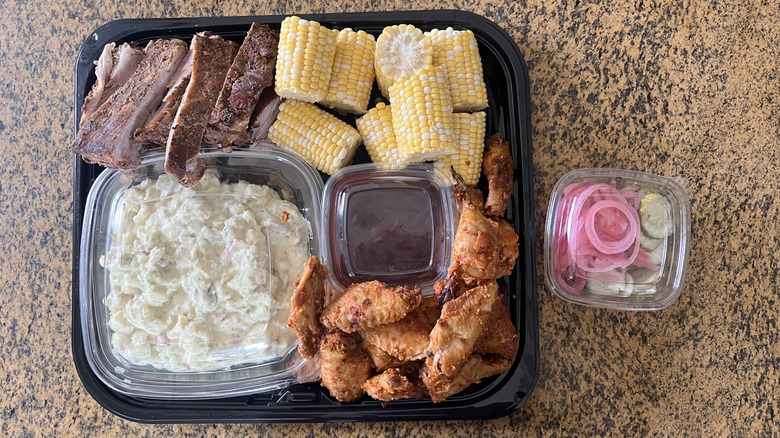
Costco’s prepared foods department recently rolled out a heavy-duty meat combo targeted directly at holiday hosts looking to dodge hours of backyard smoker duty. As detailed in a Yahoo Report, the warehouse retailer positioned this ready-to-eat barbecue platter as a time-saving centerpiece for holiday cookouts. The package gathers multiple smoked proteins beneath clear plastic domes, offering convenience that seems tailored for large gatherings.
The rollout has sparked significant conversation among frequent warehouse shoppers. While the convenience factor is undeniable, food safety advocates and backyard barbecue purists quickly noticed mixed signals regarding preparation, temperature guidelines, and meat textures.
📌 Key Takeaways:
- The Package: The Kirkland Signature deli barbecue platter bundles pre-smoked meats with sauce, marketed as an instant summer cookout party food solution.
- The Heating Confusion: Conflicting packaging labels have caused customer uncertainty over whether the meat requires full cooking or simple warming.
- The Budget Reality: At roughly $6.99 to $8.99 per pound, the convenience premium adds up quickly compared to buying standalone bulk cuts from the raw meat aisle.
Kirkland’s Deli Gamble: Inside the Ready-to-Eat BBQ Platter
Warehouse delis thrive on convenience staples like rotisserie chickens and street taco kits. The introduction of a dedicated barbecue assembly marks an effort to capture catering spending that typically flows to independent smokehouses or restaurant chains. Sold refrigerated in aluminum trays, the kit generally combines three core proteins: seasoned pork ribs, smoked pulled pork, and beef brisket portions, flanked by sides of barbecue sauce glaze.
The appeal lies in speed. Instead of managing charcoal, wood chunks, and internal temperature probes over a 12-hour cook window, a host can pick up an 8-pound aluminum tray on the way home from work. The total purchase price generally lands between $45 and $60, depending on exact tray weight. That price point sits well below commercial barbecue catering orders, which often exceed $20 to $28 per person before delivery fees.
Yet smoking meat in commercial quantities for refrigerated re-heating presents difficult hurdles. Barbecue relies on rendered intramuscular fat and gelatins that firm up when chilled. How a consumer restores that moisture determines whether the meal tastes like tender pit-smoked barbecue or dry cafeteria rations.
The Reheating Dilemma: Deciphering Oven Instructions and Label Confusion
Customer reception grew complicated almost immediately after regional rollouts. Multiple shoppers flagged unclear packaging text, a development highlighted when industry watchdog reports documented confusing cooking instructions across select Kirkland meat items. Deli labels on some batches instructed buyers to heat the already-cooked proteins to internal temperatures exceeding 165°F, while other inserts offered brief warming times that left thick cuts cold in the center.
The root of the issue is thermal density. Ribs, dense brisket slices, and shredded pork conduct heat at wildly different rates. Blasting the entire tray at once often dries out the brisket edges before the bone-in pork ribs reach an appetizing temperature.
For reliable results, bypass the single-tray approach:
- Separate the proteins: Divide the pulled pork from the ribs and brisket rather than warming the tray intact.
- Add supplemental moisture: Splash two to three tablespoons of apple juice or low-sodium beef broth over the brisket and pork before sealing tightly with aluminum foil.
- Dial in the oven reheating instructions: Set your oven to 275°F to 300°F. Gentle convection prevents the sugar in the barbecue sauce glaze from scorching.
- Track pork ribs heating time: Rib slabs need approximately 25 to 35 minutes wrapped in foil to loosen the collagen, whereas shredded pork typically warms through in 15 to 20 minutes.
Meat by Meat Taste Test: Ribs, Pulled Pork, and Brisket
In a direct taste test comparison, the three meats display noticeable variations in seasoning, smoke absorption, and texture retention.
The smoked pulled pork performs the most consistently. Because pulled pork features high intermuscular fat, it handles chilling and reheating without losing its structural tenderness. The rub leans sweet, carrying hints of brown sugar and paprika, though it lacks the sharp bark found on pork shoulders cooked fresh over hickory coals. Mixed with a small splash of sauce, it makes solid sandwiches for a casual crowd.
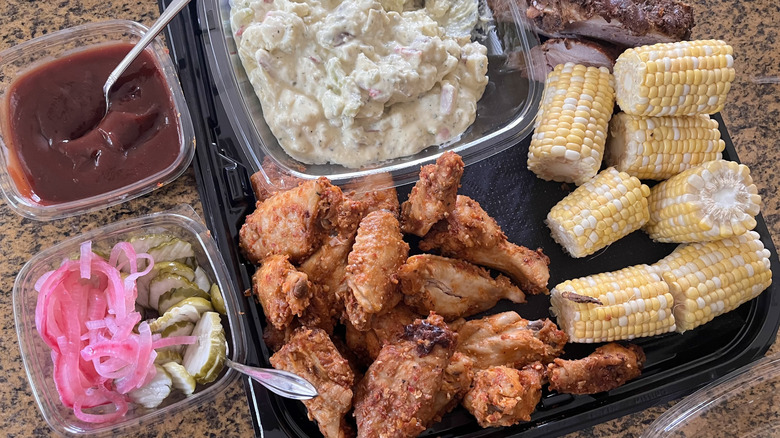
The ribs land in the middle tier. They exhibit an artificial smoke-ring coloration and a heavy sweet glaze that helps lock in surface moisture. However, the texture tends toward hammy and soft rather than delivering the clean bite preferred in competition-style ribs. They pull off the bone cleanly, making them accessible for children and casual party guests, though smoke aficionados will notice the absence of deep wood smoke flavor.
The beef brisket portions struggle the most. Reheating lean brisket flat cuts in a home kitchen is notoriously unforgiving. Slices can turn rubbery or chalky within minutes if left uncovered. While the outer edges show decent peppery seasoning, the interior meat lacks the rich, melt-in-your-mouth fat cap necessary to survive commercial refrigeration.
Bulk Feeding Cost: The Platter Versus Raw Cuts and Local Smokehouse Catering
To understand the financial trade-off, we analyzed the per-pound cost, yield, and prep requirements of Costco's prepared option against purchasing raw cuts from the Costco meat department and ordering takeout from an authentic smokehouse.
| Option | Price per Pound | Estimated Prep Time | Flavor & Texture Rating |
|---|---|---|---|
| Kirkland Deli Platter | $6.99, $8.99 / lb | 30, 45 minutes | Average (leans sweet, uneven textures) |
| DIY Raw Cuts (Costco Meat Dept) | $2.49, $4.29 / lb | 6, 14 hours | Superior (authentic bark and smoke profile) |
| Local Smokehouse Catering | $18.00, $26.00 / lb | 0 minutes (ready to serve) | Exceptional (tender, fresh wood smoke) |
When calculating bulk feeding cost for a group of 15 to 20 adults, buying three deli platters runs roughly $150 to $175. In contrast, picking up two raw pork butts and a vacuum-sealed pack of ribs in the butcher case costs around $60 to $75, yielding significantly more edible protein once rendered. The deli platter charges a steep markup for its assembly work, yet sits far beneath the culinary standard of a dedicated smokehouse.
Smarter Buys Across the Costco Meat Department
Shoppers who want a balance between convenience and barbecue quality can construct a better menu by looking elsewhere in the warehouse aisles. The deli platter bundles items together, but individual refrigerated items throughout the store often provide higher quality.
Costco routinely stocks vacuum-sealed packs of Mission Hill Bistro smoked brisket or Curly's pulled pork in the specialty refrigerated cases. Buying pulled pork individually allows hosts to sidestep the inconsistent brisket portions entirely. Pair that with a three-pack of pre-trimmed Swift St. Louis ribs from the refrigerated butcher section, and you cut overall expenses while gaining complete control over seasoning.
Another alternative rests in the freezer section: fully cooked smoked wings and artisan sausages. Sliced smoked kielbasa or jalapeño cheddar sausages heat thoroughly in under 15 minutes on an outdoor grill, providing dependable snap and seasoning that hold up under buffet heat lamps much better than pre-sliced deli brisket flat.
Frequently Asked Questions (FAQ)
Q1: Is the Costco BBQ platter fully cooked or raw when purchased?
A1: The meats inside the Kirkland Signature deli barbecue platter are fully smoked and cooked prior to packaging. You are reheating the contents rather than cooking them from a raw state, though bringing them up to proper serving temperature is essential for texture and safety.
Q2: How many people does one Costco BBQ platter feed?
A2: A standard platter weighing between 6 and 8 pounds feeds approximately 6 to 8 adults as a main course, or up to 10 to 12 guests if served alongside heavy sides like mac and cheese, potato salad, and baked beans.
Q3: Can you freeze the platter if you don't eat it immediately?
A3: Yes, but you should freeze the meats separately. Remove them from the deli tray, portion them into airtight freezer bags, and press out excess air. The pulled pork freezes well for up to three months, though the ribs and brisket will lose moisture upon thawing.
The Practical Verdict on Costco’s Barbecue Deli Platter
The Kirkland Signature barbecue platter succeeds strictly as a time-saver. If you face a tight deadline for a backyard party and lack the hours needed to manage a smoker, this prepared meal kit delivers acceptable pulled pork and sweet, crowd-pleasing ribs in roughly 40 minutes of oven time. It removes the stress of prep work and keeps dirty dishes to a minimum.
For true barbecue enthusiasts, the shortcuts show up immediately on the plate. The lean brisket struggles through the reheating cycle, and the uniform sweetness of the sauce glaze drowns out nuanced wood smoke. Hosts seeking genuine smokehouse flavor are better off smoking their own meat from the raw butcher coolers or ordering a half-pan of brisket directly from a local pitmaster. Choose this platter for convenience, but reheat it low, slow, and separate from its original packaging to get your money's worth.
