The Complete Definition of Hype: Origins, Modern Meanings, and Everyday Examples
Every market cycle produces its own vocabulary of frenzy. When corporate boardrooms and online forums fixate on an unproven concept, reality takes a back seat to sheer momentum. As financial markets grapple with corporate experiments like digital asset treasuries, scrutinized in a recent cnbc.com report detailing how balance-sheet crypto allocations have become the latest speculative obsession, the line separating visionary innovation from hollow theater has rarely been thinner.
Hype is neither pure deception nor authentic value. It exists in the volatile space between potential and proof. It creates fortunes overnight and vaporizes savings just as quickly. Understanding how this engine operates is essential for anyone trying to protect capital, parse marketing noise, and survive the digital economy intact.
📌 Key Takeaways:
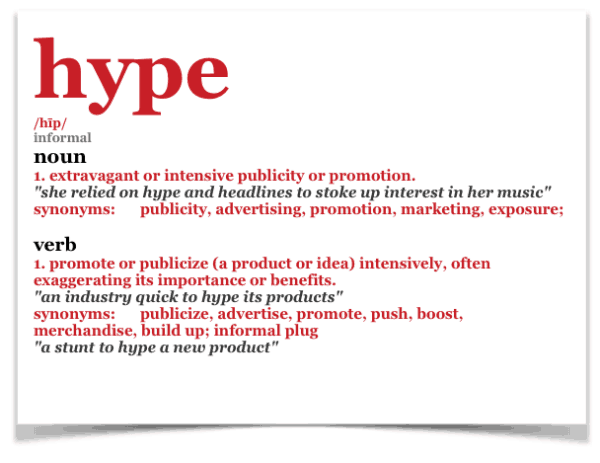
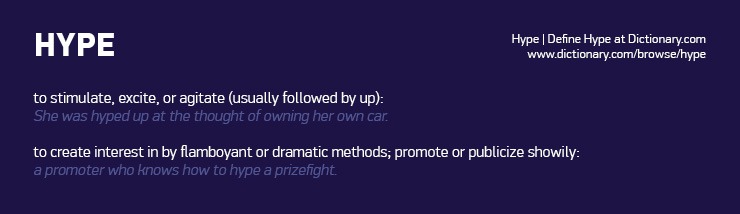
- Core Meaning: Hype refers to exaggerated publicity, aggressive promotion, and inflated claims engineered to generate artificial demand and immediate emotional engagement.
- Linguistic Roots: The word stems from early 20th-century American slang, blending the medical shorthand for hypodermic needle deception with the classical rhetoric of hyperbole.
- Economic Danger: Left unchecked, viral trends morph into financial speculation, pushing products along an unforgiving hype cycle before market reality triggers a sharp correction.
From Street Corner Slang to Wall Street Shorthand
The term carries a split lineage. Etymologists trace the noun back to early 20th-century American underworld vernacular. Around 1914, con artists and street hustlers used "hyp" or "hype" as shorthand for shortchanging customers through sleight-of-hand cash tricks. Parallel to that usage, early medical slang used "hype" to describe a hypodermic needle injection, a quick, artificial high that injected synthetic stimulation into the bloodstream.
Over the decades, language purists argued that the word evolved from "hyperbole," the Greek figure of speech denoting deliberate exaggeration for dramatic effect. By the 1930s, carnival barkers and circus publicists had adopted the term to describe "ballyhoo," the calculated amplification of an exhibit to lure ticket buyers into tents. The promotion was theatrical. The prize inside was almost always underwhelming.
By the late 1960s, counterculture publications and music critics used "hype" as an insult against corporate record labels that spent massive sums manufacturing artificial rock stars. The modern noun represents an engineered social stimulant. It is publicity untethered from performance.
Consumer Psychology and the Architecture of Artificial Demand
Hype thrives because human nervous systems respond predictably to manufactured scarcity and social validation. Marketers rarely sell utility when launching an ambitious product. Instead, they sell entrance into an elite cohort of early adopters.
The machinery relies on behavioral levers:
- Social Proof and Algorithmic Amplification: Platforms reward velocity over verity. When thousands of creators simultaneously showcase a product, algorithms register engagement and blast the content to millions more, manufacturing the illusion of universal cultural consensus.
- The Scarcity Trap: Controlled drops, tiered access passes, and artificial waitlists ignite deep loss aversion. Buyers stop evaluating the actual utility of an item and focus entirely on the panic of missing out.
- Aspirational Projection: Promoters sell an upgraded identity. The consumer does not purchase software or streetwear; they buy membership in an imagined future.
Once consumer psychology locks onto these levers, the hype train phenomenon gains self-sustaining mass. Participants become brand evangelists voluntarily. They defend questionable design decisions and inflated price tags to protect their own early investment.
Tracking the Frenzy: A Century of Inflated Expectations
Manufactured mania follows a distinct mathematical and emotional arc across different eras. The technology changes; the cycle does not.
| Era & Dominant Channel | Promotional Trigger | Structural Fallout |
|---|---|---|
| 1920s, 1930sSideshows, Print Ballyhoo | Carnival barker hyperbole and theatrical press stunts | Individual ticket losses; establishment of initial truth-in-advertising laws |
| 1997, 2001Dot-Com Super Bowl Ads | Metrics like "eyeballs" and page impressions over cash flow | The Nasdaq plummeted over 75%; hundreds of cash-burning firms shuttered |
| 2020, 2026Social Feeds & Algorithmic Trading | Digital asset mania, tokenized treasuries, and autonomous agents | Multibillion-dollar corporate drawdowns; regulatory enforcement and investor litigation |
Every era traces the classic trajectory formalized by market researchers: an innovation trigger gives birth to a dizzying Peak of Inflated Expectations. When performance lags, public sentiment crashes into the Trough of Disillusionment. Only tools with real, cash-generating utility climb back up toward sustainable adoption.
When Marketing Buzz Crosses Into Financial Speculation
The economic stakes escalate rapidly when marketing buzz leaves consumer goods and enters capital allocation. A misleading ad for a luxury beverage costs a shopper five dollars. Media sensationalism around an unvetted asset class costs pension funds, retail traders, and corporate treasuries billions.
In corporate finance, the pressure to demonstrate forward-looking vision drives executives into speculative bubbles. When companies see their competitors gaining double-digit valuation multiples simply by uttering specific buzzwords during quarterly earnings calls, fiscal discipline collapses. Press releases take the place of audited revenue.
Financial history demonstrates that financial speculation fed by artificial demand always ends the same way. When the narrative outruns the balance sheet by a factor of ten, the math eventually asserts itself. Liquidity contracts. Early insiders cash out during peak marketing campaigns, leaving latecomers holding illiquid, overvalued paper.
A Bullshit Detector: Spotting the Warning Signs
Separating authentic innovation from aggressive smoke and mirrors requires a clear evaluative framework. Hype relies on emotional vulnerability, vague metaphors, and urgency. Substance relies on verifiable balance sheets, measurable performance benchmarks, and calm execution.
Look for these telltale flags when evaluating a new venture, product, or investment:
- Vocabulary Inflation: The founders lean heavily on grand adjectives while actively dodging questions about technical architecture or current margins.
- Manufactured Urgency: The pitch implies that hesitating for even forty-eight hours means permanent financial or social obsolescence.
- Opaque Governance: Executive teams spend more time staging elaborate conference appearances and social video campaigns than publishing audited product logs.
- No Direct Customers: The enterprise makes its money by recruiting other promoters, affiliates, or speculative liquidity providers rather than selling a functional product to end users.
Frequently Asked Questions (FAQ)
Q1: What is the primary difference between genuine hype and marketing buzz?
A1: Marketing buzz is an umbrella term for focused public interest, word-of-mouth momentum, and visibility around a product or event. Hype, by contrast, carries an inherent degree of exaggeration, distortion, and unearned inflation that exceeds the underlying reality.
Q2: How does the Gartner Hype Cycle explain this phenomenon?
A2: Formulated in 1995, the model maps the lifecycle of new technologies across five phases: Innovation Trigger, Peak of Inflated Expectations, Trough of Disillusionment, Slope of Enlightenment, and Plateau of Productivity. It illustrates how early human overexcitement consistently outpaces actual technological capability.
Q3: Can hype ever produce a positive outcome for a business?
A3: It can provide initial velocity. Early buzz lowers customer acquisition costs, attracts top-tier engineering talent, and secures venture funding during the formative stages. However, if product delivery fails to match the promised narrative within twelve to eighteen months, that same promotional noise turns toxic, ruining customer trust.
Navigating the Noise in an Accelerated Economy
Hype is an inescapable tax on human attention. As publishing tools democratize and financial instruments evolve at breakneck speeds, the volume of promotional noise will only increase. Public relations firms and algorithmic distribution networks have perfected the science of turning unproven ideas into cultural imperatives.
The antidote is disciplined skepticism. Look past the high-gloss keynote speeches, the social media feeding frenzies, and the breathless promotional cycles. Demand unit economics, operational roadmaps, and functional deliverables. The most valuable products and businesses in history rarely relied on shouting; they let their performance command the room.
