The Definitive Coolmath Games Ranking: 10 Timeless Hits Still Worth Playing
Millions of students discovered a shared subversion in school computer labs over the past two decades: while administrative filters blocked mainstream entertainment, one neon-bright URL remained wide open. Coolmath Games, launched in 1997 by a certified mathematics teacher named Karen, survived corporate internet consolidation by masquerading as educational software. Long after the death of Adobe Flash in late 2020, the platform retains massive cultural resonance. According to an investigative YouTube Report on retro web games and browser history, community interest in these unblocked browser games has surged again, driven by nostalgia, open-source emulation, and lightweight accessibility on modern hardware.
Educational gaming has expanded into complex platforms like Prodigy, which took top honors in the 2026 EdTech Cool Tool Awards for structured curriculum software. Yet Coolmath Games occupies a distinct niche. It bypasses rigid math drills in favor of pure spatial reasoning, physics simulations, and reflex management. Rebuilding these titles for modern web standards required intense conversion work, transitioning thousands of legacy .swf files into HTML5 and WebAssembly engines. Here is the verified ranking of the platform's ten greatest, fully playable titles, evaluated on mechanical depth, technical performance, and replay value.
📌 Key Takeaways:
- The Preservation Shift: Over 90% of the site's legacy catalog runs seamlessly today via HTML5 ports and client-side Flash game emulation using the open-source Ruffle engine.
- Mechanical Excellence: Titles like Run 3 and Bloons Tower Defense survived because their core mechanics rely on spatial mathematics, timing, and optimization rather than raw arithmetic drills.
- The Modern Audience: Despite competition from dedicated gaming clients, browser-based computer lab classics generate millions of monthly visits from both desktop school devices and mobile web browsers.
How a 1990s Math Site Became a Gaming Fortress
Karen designed Coolmath in 1997 with a straightforward pedagogical thesis: children learn logic and problem-solving through play faster than through repetitive memorization worksheets. When sister domain Coolmath-Games.com split off in the mid-2000s, it retained the educational domain classification. Network administrators categorized the site alongside encyclopedias and classroom utilities. That specific classification allowed the site to sail through commercial content filters like Fortinet, Lightspeed Systems, and GoGuardian.
Generations of students spent study halls playing physics puzzle titles instead of revising algebra notes. By 2018, the site was averaging over 70 million page visits per month during peak academic quarters. When Adobe terminated Flash Player support on December 31, 2020, industry commentators predicted the immediate collapse of the entire catalog. Instead, the portal’s engineering team collaborated with developers from open-source projects like Ruffle, rewriting legacy ActionScript code into WebAssembly and native JavaScript. The site preserved its identity without requiring desktop browser plugins or security compromises.
The Ten Greatest Coolmath Games Ranked for 2026
Ranking these titles requires looking past pure nostalgia to examine whether their design holds up without childhood rose-tinted glasses. The following ten titles represent the absolute pinnacle of the platform, verified for instant playability on current desktop and mobile browsers.
1. Run 3
Joseph Cloutier’s infinite runner stands as the undisputed masterpiece of the catalog. Set inside an ever-shifting cylindrical tunnel floating in deep space, Run 3 turns gravity into an interactive canvas. Running onto a side wall rotates the entire physical universe, turning vertical drops into stable floors. With dozens of unlockable characters, from the nimble Skater to the floaty Gentleman, and a sprawling Story Mode featuring hundreds of distinct levels, Run 3 delivers a degree of kinetic precision rarely found in free web games.
2. Fireboy and Watergirl in the Forest Temple
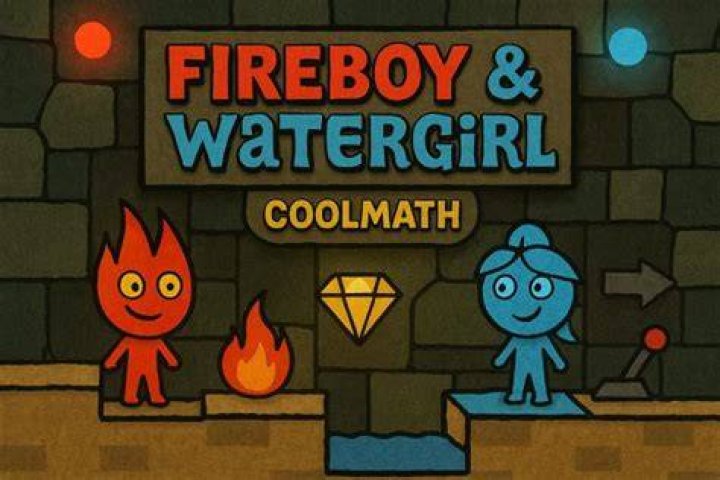
Created by Oslo Albet, this cooperative puzzle platformer formed the social fabric of computer lab culture. Two players share a single keyboard: one uses the arrow keys to guide Fireboy through lava pools, while the other uses W-A-S-D to maneuver Watergirl across toxic water hazards. Green poison kills both instantly. The puzzle design demands split-second synchronization to hold switches, slide light reflectors, and time door openings. It remains the ultimate exercise in real-time communication.
3. Bloons Tower Defense
Before Ninja Kiwi expanded the series into complex cross-platform commercial releases, the original iterations found their widest audience here. Players strategically place dart-slinging monkeys, tack shooters, and ice towers to intercept waves of color-coded balloons along winding pathways. Balancing attack speed, pierce radius, and income management creates an accessible lesson in economic compounding and spatial coverage.
4. Papa's Pizzeria
Flipline Studios struck digital gold with its culinary multitasking simulation. Taking orders, spreading sauce, calculating precise topping placement percentages, and baking crusts to exact golden-brown specifications creates genuine tension. A customer waiting at the front counter demands constant situational awareness. Papa's Pizzeria laid the foundation for an entire empire of time-management games, proving that industrial task execution can be intensely addictive.
5. Moto X3M
MadPuffers delivered high-octane speedrunner physics with this motocross franchise. Players tilt their bikes through loop-de-loops, navigate explosive dynamite traps, and survive crushing hydraulic presses. Every mid-air flip trims a half-second off your final completion clock, rewarding aggressive risk calculation. The responsive physics engine ensures that player deaths feel earned rather than arbitrary.
6. The World's Hardest Game
Stephen Critoph’s brutally minimalist grid puzzle lives up to its arrogant title. You control a red square, tasked with collecting yellow coins while navigating past undulating patterns of blue circles before reaching the green safe zone. Movement speed is static. There are no power-ups, upgrades, or shortcuts. Every completed stage requires pure spatial memorization, rhythmic timing, and intense emotional discipline.
7. Learn to Fly 2
Light Bringer Games took the simple premise of an angry flightless penguin and transformed it into a compelling loop of progressive upgrades. Earning cash from flight distance, altitude, and obstacle destruction feeds directly into buying gliders, rockets, and payloads. It offers a masterclass in behavioral reward pacing, turning incremental aerodynamic improvements into addictive gameplay.
8. Chess
While specialized portals like Chess.com dominate competitive tournament play, the site's stripped-back implementation remains remarkably popular. Offering clean, ad-light boards with local multiplayer and difficulty-tiered AI bots, it functions as a zero-friction entry point for players seeking straightforward tactical practice without rating anxiety or account registrations.
9. B-Cubed
This isometric spatial puzzle challenges players to slide a yellow block across a suspended grid of tiles, reaching the red final square while stepping on every single intermediate space exactly once. Yellow tiles collapse after a single touch, requiring players to visualize the entire traversal path before executing their first move. It remains one of the purest logic puzzle games on the web.
10. Duck Life 4
Wix Games combined pet-raising mechanics with RPG progression in this multi-stage athletic simulator. Players train their duck in running, swimming, flying, and climbing mini-games to boost statistical attributes before entering tournaments across distinct regional maps. The loop of training drills followed by high-stakes championship races provides a rewarding sense of tangible character growth.
Evaluating Performance, Mechanics, and Technical Longevity
Understanding why specific retro web games survive while others disappear into digital obsolescence requires evaluating their underlying architecture. The transition from vector-based Adobe Flash plugins to canvas-driven HTML5 frameworks transformed rendering speeds, input latency, and mobile compatibility across the board.
| Game Title | Core Genre | Technical Engine | Mobile Touch Support |
|---|---|---|---|
| Run 3 | 3D Tunnel Runner | HTML5 / WebAssembly | Native Virtual Controls |
| Fireboy and Watergirl | Cooperative Platformer | HTML5 Canvas | Screen Split On-Screen Buttons |
| Papa's Pizzeria | Time Management Simulation | Ruffle Emulation / HTML5 | Direct Tap & Drag |
| Bloons Tower Defense | Grid Strategy | HTML5 Re-release | Tap-to-Place Grid |
| Moto X3M | Physics Trial Platformer | Native WebGL / HTML5 | Responsive Virtual D-Pad |
| The World's Hardest Game | Precision Grid Puzzle | HTML5 Canvas | Not Recommended (Keyboard Required) |
The Engineering Triumph of Flash Game Emulation
When Google Chrome and Mozilla Firefox pulled the plug on NPAPI plugin support, billions of lines of independent web game code faced permanent erasure. Digital archivists scrambled to preserve these assets through standalone offline collections like Flashpoint. Coolmath Games, however, had to solve this preservation challenge directly inside modern, locked-down mobile and desktop web browsers.
The solution came through Flash game emulation powered by WebAssembly. By implementing Rust-based emulators like Ruffle, client browsers translate legacy ActionScript 1.0 and 2.0 instructions directly into native vector instructions on an HTML5 canvas. No administrative permissions are required. Security sandboxing remains entirely intact.
For more complex titles built on ActionScript 3.0, developers manually reconstructed game code using JavaScript frameworks like Phaser and PixiJS. The results are striking. Input latency on modern browser ports often clocks in lower than the original Flash Player runtime, while native resolution scaling eliminates the pixelated fuzziness that once plagued high-DPI monitors.
Educational Legitimacy Versus Pure Entertainment
School administrators frequently question whether these games deliver measurable educational value. Critics point out that jumping a virtual dirt bike in Moto X3M or tossing pepperoni onto a pizza crust has nothing to do with solving quadratic equations or understanding calculus principles.
That criticism misunderstands how spatial reasoning works. Developmental psychologists separate computational calculation from executive function training. A student navigating Run 3 performs split-second mental rotations, anticipating directional changes along three-dimensional axes. Bloons Tower Defense requires continuous resource optimization, trade-off analysis, and dynamic cost-benefit modeling.
Titles like Fireboy and Watergirl demand sustained executive coordination, working memory, and collaborative hypothesis testing. Karen’s original design hypothesis remains structurally sound: embedding mathematical logic inside game physics fosters analytical stamina. While formal classroom tools handle standard curricula, browser puzzle classics build the fundamental cognitive pathways required to tackle complex problem-solving.
Frequently Asked Questions (FAQ)
Q1: Are Coolmath Games still free to play without a paid subscription?
Every core game on the platform remains completely free to play directly within standard web browsers. The platform generates revenue through programmatic display advertising, though an optional premium tier exists to eliminate ads entirely.
Q2: Why do school Chromebooks rarely block the Coolmath network?
The domain originated as an educational mathematics resource in 1997. Most district filtering databases categorize the primary domain under educational tools rather than general gaming, allowing it to pass automated web filters.
Q3: How do Flash games continue running without Adobe Flash installed?
The website utilizes open-source WebAssembly emulators such as Ruffle alongside native HTML5 rebuilds. The translation occurs directly in your browser's rendering engine without requiring external plugins or security compromises.
Q4: Can these browser games run smoothly on modern smartphones?
Most catalog titles rebuilt in HTML5 feature responsive virtual buttons or tap-and-drag controls. However, high-precision titles like The World's Hardest Game still perform significantly better with a physical keyboard.
The Enduring Appeal of Frictionless Web Gaming
Modern gaming culture is dominated by multi-gigabyte installations, mandatory user registrations, microtransactions, and intrusive live-service battle passes. Against that bloated backdrop, the simplicity of Coolmath Games feels remarkably refreshing. You type an address into a navigation bar, press enter, and begin playing within three seconds.
The platform endures because it respects player autonomy. It preserves an era of the internet built on accessible, creative micro-experiences rather than predatory engagement algorithms. Whether you are revisiting Run 3 to beat an old high score or sharing Fireboy and Watergirl with a new generation on a laptop, these titles remain genuinely brilliant pieces of interactive software. In a web increasingly cluttered with walled gardens, that frictionless accessibility is something worth keeping.
