The Evolution of Steve Smith's Songs: How American Dad Built a Musical Empire

When American Dad! debuted on Fox in 2005, Steve Smith appeared designed strictly as an archetype: an anxious, glasses-wearing teenage nerd with a cracking voice and zero romantic prospects. Nothing about his early squeaks suggested that actor Scott Grimes would turn the character into modern television's most accomplished animated R&B crooner. Over two decades and more than 350 episodes, Steve evolved from a punchline into a vocal powerhouse, producing viral singles that rivals genuine chart-toppers in vocal dexterity and production value.
That shift reshaped the show's identity. While sister show Family Guy leans into classic Broadway pastiche and vaudeville showstoppers, American Dad! built an entirely different sonic playbook centered on 1990s slow jams, modern neo-soul runs, and over-the-top boy band melodrama. Critical retrospectives regularly highlight this stylistic turn; a comprehensive Collider report tracking the funniest running gags in the series singled out Steve's spontaneous, emotionally devastating musical performances as a key reason the show developed its own distinct, die-hard cult following.
📌 Key Takeaways:
- Vocal Heritage: Scott Grimes brought legitimate pop-star bona fides to the recording booth, having scored a Top 20 Billboard Adult Contemporary hit with "Sunset Blvd" in 2005 before writers tapped his four-octave range.
- Stylistic Pivot: Rather than mimicking Seth MacFarlane's signature Golden Age theatricality, Steve Smith's tracks parody late-90s Teddy Riley, Boyz II Men, and R. Kelly melodrama with pitch-perfect arrangements.
- Network Longevity: The transition from Fox to TBS allowed music directors like Walter Murphy and series co-creator Matt Weitzman to expand these bits into fully scored, genre-bending set pieces.
The Accidental Genesis of Scott Grimes' R&B Supernova
The transformation happened almost entirely by chance. In early seasons, Steve's voice was defined by abrasive, adolescent screeching. Scott Grimes, known for dramatic roles in ER and Band of Brothers, played Steve with an exaggerated, cracking register designed to telegraph social awkwardness. Yet Grimes held a secret weapon: decades of professional vocal training and a legitimate recording career, having released self-titled pop albums in 1989 and 2005.
Showrunners Matt Weitzman and Mike Barker stumbled onto Grimes' real capabilities during table reads and off-camera breaks, where the actor would casually belt out intricate soul runs. In Season 4's "Phantom of the Telethon," the writers tested the waters with a fleeting operatic riff. The audience reaction was immediate. Rather than playing the song strictly as a vocal disaster, the joke worked because Steve sounded legitimately extraordinary while singing about adolescent absurdity.
By treating the vocal performance with total sincerity, the writers discovered a potent comedic mechanism. When a cartoon character sings horribly, the joke burns out in thirty seconds. When a cartoon character delivers world-class melisma about abandoned laundry or teenage desperation, the absurdity grows the longer the track plays.
Deconstructing the Hits: From "Daddy's Gone" to "Boyz 12"
The turning point arrived in the Season 7 premiere, "Hot Water." Teaming up with guest star CeeLo Green, Grimes delivered "Daddy's Gone," an atmospheric mid-tempo ballad modeled on 1990s neo-soul that captured Steve and an alien partner processing Stan's abandonment. Dressed in unbuttoned silk shirts amidst rain machines and moody shadows, Steve belt-sang about his father walking out of his life. Grimes utilized sweeping vibrato, climbing effortlessly from a chesty middle register into a ringing high C, creating an earnest track that fans immediately ripped from broadcasts to upload to streaming forums.
That formula reached peak parody in Season 8's "Can I Be Frank With You," introducing the twelve-member pop outfit Boyz 12 and their signature single, "Girl You Need a Shot of B12."
Grimes voiced all twelve singers simultaneously, layering harmonies across varying octaves to mimic early 2000s boy band production. The track featured hyper-slick synth lines, coordinated choreography, and hilariously aggressive health-related lyrics delivered with the urgency of a Backstreet Boys chorus. The song demonstrated Grimes' astonishing ear for multi-part harmony, requiring precise vocal tracking to give each fictitious group member a distinct timbre before stacking them into a unified, commercial-grade hook.
Then came "Criss-Cross Applesauce: The Ballad of Billy Jesusworth" in Season 13, where the series unleashed "Trapped in the Locker." Directing a microscopic parody of R. Kelly’s cinematic opus Trapped in the Closet, the episode followed Steve narrating a mundane gym-class misunderstanding using identical syncopated rhyme structures, dramatic strings, and conversational cadence. Grimes matched the breathless, paranoid pacing of the original track beat for beat, cementing Steve’s position as animation’s sharpest musical mimic.
The R&B Parody Engine: Vocal Arrangements and Production Secrets
What sets Steve Smith's tracks apart from standard animated jokes is the rigorous production standard behind them. Behind the scenes, composer Walter Murphy, longtime musical director across Seth MacFarlane's properties, approaches Steve's R&B tracks with the technical precision of a major label record session.
Instead of writing simple comedy tunes with basic chord progressions, the production crew emulates the exact mixing techniques of iconic eras:
- Recreating the Roland TR-808 kicks and crisp snare snaps characteristic of Jimmy Jam and Terry Lewis productions.
- Stacking Grimes' vocal takes five to eight times to create the rich, choral wall-of-sound familiar to Boyz II Men records.
- Employing live string sections rather than cheap digital midi patches to sell dramatic weight in tracks like "Is She Not Hot Enough."
- Maintaining high-flown emotional poetics right alongside intensely juvenile subject matter, like Steve singing about his mother's swimsuit modeling career with absolute emotional devastation.
Grimes' natural tessitura allows him to sail through upper-register transitions without thinning out, shifting from soft falsetto whispers to resonant belt notes without slipping pitch. The studio treats these recordings as genuine pop assignments first and comedic deliveries second, ensuring that the parody lands entirely on the strength of its execution.
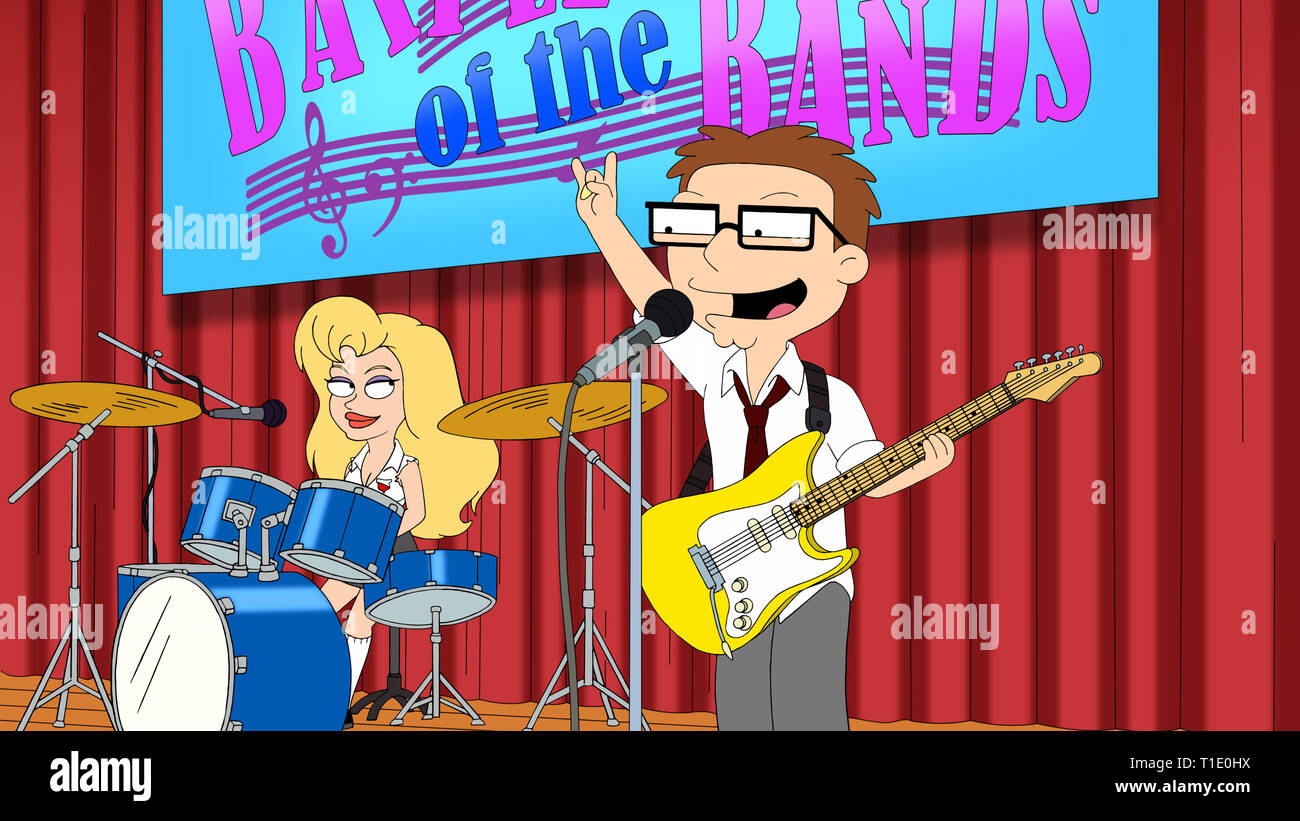
Steve Smith's Iconic Discography Across Eras
Tracking the evolution of Steve's musical output reveals how the production team escalated their ambitions over twenty years, shifting from quick visual jokes into complex thematic episodes built entirely around musical numbers.
| Song Title | Episode & Season | Musical Genre Parodied | Vocal Highlight / Peak Range |
|---|---|---|---|
| "Is She Not Hot Enough" | The Scarlett Getter (S06E06) | 90s Slow Jam / Usher-style Ballad | Extended falsetto runs and belt notes hitting sustained A4s. |
| "Daddy's Gone" | Hot Water (S07E01) | Neo-Soul / Slow Groove R&B Duet | Dynamic belt up to high B4 paired with deep chest harmonies. |
| "Girl You Need a Shot of B12" | Can I Be Frank With You (S08E03) | Early-2000s Boy Band Max Martin Pop | 12-track stacked harmonies spanning baritone to soprano whistles. |
| "Trapped in the Locker" | Criss-Cross Applesauce (S13E17) | Operatic Hip-Hop Narrative (R. Kelly style) | Monotone dramatic narration shifting into soaring pitch jumps. |
| "Steve's Sunday Stroll" | Julia Rogerts (S12E19) | Motown / Upbeat Soul Pop | Rhythmic syncopation with smooth middle-register transitions. |
Why Steve Outshines the Standard MacFarlane Broadway Tradition
Seth MacFarlane's personal affinity for the Great American Songbook is clear across his television footprint. Family Guy frequently relies on full big-band arrangements, tapping into Frank Sinatra, Cole Porter, and classic musical theater tropes. Those songs are technically brilliant, yet they often feel like deliberate disruptions designed to showcase MacFarlane’s personal vocal interests rather than organic character developments.
Steve Smith's musical excursions operate on a completely different structural frequency.
First, they originate directly from Steve's profound psychological fractures. When Steve sings, he does not sing because he is putting on a show for the audience; he sings because his adolescent reality is so overwhelming that spoken dialogue cannot contain his feelings. A broken friendship, an embarrassing encounter at school, or romantic rejection pushes him into full operatic delirium.
Second, the stylistic choice of R&B creates an immediate comic contradiction. Golden Age showtunes suggest artifice and theatrical choreography. Modern R&B, by definition, demands raw passion, sensory intimacy, and sexual vulnerability. Seeing that visual grammar enacted by a spindly, unathletic high school freshman in oversized glasses creates an unshakeable comic contrast. The joke never punches down at the genre; it honors the sound completely while highlighting the absolute absurdity of the character performing it.
When the series moved to TBS, the creative team leaned further into this freedom, allowing numbers to breathe across entire acts rather than confining them to brief 30-second cutaways.
Frequently Asked Questions (FAQ)
Q1: Does Scott Grimes actually sing all of Steve's songs on American Dad?
A1: Yes, Scott Grimes performs every vocal track himself without digital pitch correction or ghost vocalists. Grimes is an accomplished recording artist with multiple studio albums and decades of professional singing experience.
Q2: Why did American Dad focus on R&B rather than broadway showtunes?
A2: While Seth MacFarlane prefers Golden Age orchestral music, American Dad! co-creator Matt Weitzman and the writers specifically tailored Steve's musical bits to Scott Grimes' vocal skillset, finding that smooth 90s R&B provided the sharpest comedic contrast to Steve's nerdy visual identity.
Q3: Are Steve Smith's songs available on major streaming platforms like Spotify?
A3: Many songs, including "Daddy's Gone" and "Girl You Need a Shot of B12," have been officially released through television soundtrack packages and network streaming profiles, while extended versions and live convention performances maintain massive play counts on digital video platforms.
The Cultural Staying Power of Steve's Soulful Anthems
What began as an impromptu vocal riff in a recording booth evolved into one of adult animation's most beloved traditions. Scott Grimes transformed Steve Smith from an ordinary cartoon punchline into a dynamic musical vehicle, proving that comedy songs hit hardest when executed with world-class vocal chops. As American Dad! continues its broadcast run, Steve's soulful, melodramatic anthems remain a gold standard for animated comedy, demonstrating that extraordinary musicianship and unhinged satire can coexist in perfect, four-part harmony.
